ToolMage
Sign in

Best 1 Career Training AI tools for Education

Popular Career Training AI tools in Education include Stepful, helping you work more efficiently.

Stepful
Paid

Stepful

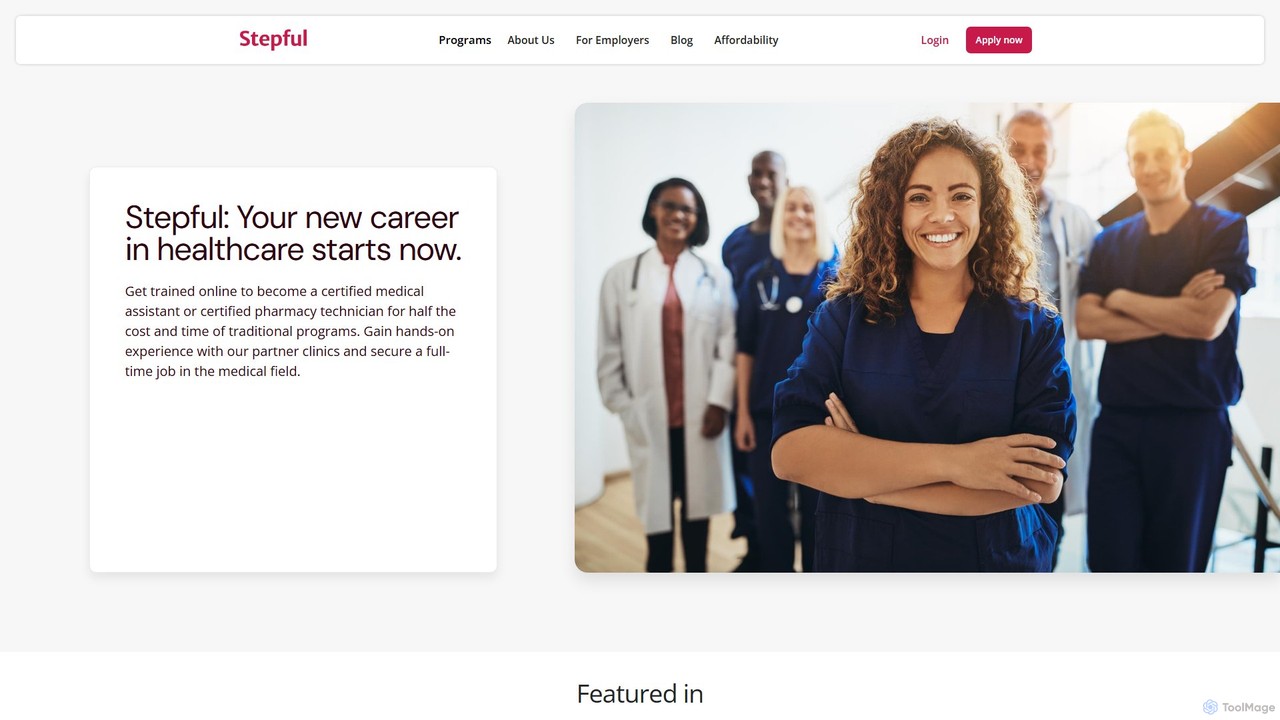
Stepful is an online training platform dedicated to preparing individuals for in-demand healthcare careers like Medical Assistant and Phlebotomist. It offers comprehensive online courses, certification preparation, and dedicated job placement support to help students launch their careers in the medical field quickly and effectively.

Career Training
Visits 507KFavorites 141Likes 122

About Career Training

AI Career Training tools are specialized platforms that use artificial intelligence to deliver personalized job skill development and career preparation. These tools leverage machine learning to analyze user skills, simulate real-world job scenarios, and create customized learning paths. They are designed to bridge the gap between education and employment, helping users acquire in-demand skills, prepare for interviews, and navigate their career progression effectively. The primary value lies in providing scalable, data-driven, and objective feedback to enhance professional competitiveness.

Core Features

  • Personalized Learning Paths: AI assesses current competencies and career goals to generate tailored courses and skill-building exercises.
  • AI Interview Simulation: Users practice interviews with an AI coach that provides real-time feedback on answers, speech clarity, and body language.
  • Resume and Cover Letter Optimization: Analyzes documents against specific job descriptions to improve keyword relevance and pass through Applicant Tracking Systems (ATS).
  • Skill Gap Analysis: Identifies the specific skills needed for a desired role or promotion and recommends relevant training modules.

Applicable Scenarios

These tools are widely used by individual job seekers aiming to enter the workforce, professionals seeking to upskill or change careers, and corporate HR departments for employee training and development. For instance, a recent graduate can use an AI simulator to gain interview confidence, while a mid-career professional can use a platform to learn new software skills required for a promotion.

Selection Criteria

When choosing an AI Career Training tool, consider the relevance and depth of its skill library to your industry. Evaluate the quality and actionability of the feedback provided, especially in interview simulators. Also, assess its user interface, integration capabilities with platforms like LinkedIn, and the pricing model to ensure it aligns with your budget and learning objectives.

Career Training use cases

1

AI Interview Preparation for Graduates

A recent university graduate preparing for their first job interviews uses an AI career training tool. They select their target industry, such as software engineering, and the tool generates a series of mock interviews with relevant technical and behavioral questions. The AI coach provides instant, detailed feedback on their performance, analyzing aspects like answer structure, use of keywords, speaking pace, and filler word usage. After several practice sessions, the graduate's confidence improves, and their STAR method responses become more concise and impactful, increasing their chances of success in real interviews.

2

Resume Optimization for a Career Change

A marketing manager transitioning to a project management role uses an AI tool to overhaul their resume. They upload their existing resume and a few target job descriptions. The AI analyzes both, identifies key project management skills and keywords (e.g., 'Agile', 'Scrum', 'Stakeholder Management') missing from the resume, and suggests specific edits. It helps rephrase marketing achievements into project management outcomes, such as quantifying campaign success as 'managing a $50k project budget'. This process ensures the new resume is highly relevant and optimized to pass ATS scans for project manager positions.

3

Upskilling for an Internal Promotion

A software developer aiming for a 'Senior Developer' position uses their company's internal AI training platform. The platform analyzes the job description for the senior role and compares it to the developer's current skill profile, identifying gaps in areas like 'System Architecture' and 'Team Mentorship'. It then recommends a personalized learning path consisting of video modules, coding challenges, and leadership simulations. By completing this path over three months, the developer systematically acquires the necessary competencies, demonstrates initiative, and builds a strong case for their promotion during their next performance review.

4

Corporate Training for a New Software Rollout

An enterprise HR department needs to train 500 sales employees on a new CRM system. Instead of traditional workshops, they use an AI career training platform. The platform provides interactive, self-paced modules that simulate the CRM environment. It tracks each employee's progress and identifies areas where they struggle, offering targeted micro-learning exercises to reinforce knowledge. This approach reduces training time by 40% compared to in-person sessions and ensures a consistent level of proficiency across the entire sales team, verified by AI-proctored final assessments.

5

Developing Soft Skills for New Managers

A newly promoted team lead uses an AI coaching tool to improve their soft skills, particularly in handling difficult conversations. The platform offers role-playing scenarios, such as giving constructive feedback to an underperforming team member. The user speaks their response, and the AI analyzes their word choice, tone of voice, and clarity. It provides immediate, private feedback, suggesting alternative phrasing to be more empathetic and effective. This allows the new manager to practice and refine their communication skills in a safe, simulated environment before applying them in real-life situations.

6

Validating Technical Skills for Freelancers

A freelance web developer wants to prove their proficiency in a new programming language to attract higher-paying clients. They use an AI career platform that offers technical skill assessments. The platform presents them with a series of real-world coding challenges and a project to build within a time limit. The AI automatically evaluates their code for correctness, efficiency, and adherence to best practices. Upon successful completion, the developer receives a verifiable digital certificate, which they can add to their portfolio and LinkedIn profile, providing concrete evidence of their expertise to potential clients.

Career Training FAQ

What are AI Career Training tools?

AI Career Training tools are software platforms that use artificial intelligence to help individuals develop job-specific skills and prepare for career advancement. Unlike general learning platforms, they focus specifically on employment outcomes. Key features often include personalized learning paths based on skill assessments, AI-powered mock interviews that provide feedback on communication, and resume optimizers that tailor documents for specific job applications. They are used by job seekers, professionals looking to upskill, and companies for employee development.

How to choose the right AI Career Training tool?

Choosing the right tool depends on your specific goals. Consider the following factors:

  • Skill Relevance: Does the platform offer training in the specific hard skills (e.g., Python, Salesforce) or soft skills (e.g., leadership, communication) you need for your career path?
  • Feedback Quality: For tools like interview simulators, check if the feedback is detailed and actionable. Does it analyze tone, pace, and content, or just keywords?
  • Personalization Level: Look for tools that adapt to your progress and offer customized learning paths rather than a one-size-fits-all curriculum.
  • Cost and ROI: Evaluate the pricing model (subscription vs. one-time fee) and consider the potential return on investment in terms of landing a better job or promotion.
What's the difference between AI Career Training and general AI Education tools?

The primary difference is their focus and goal. General AI Education tools (like AI language tutors or math solvers) aim to broaden knowledge or teach academic subjects. Their goal is knowledge acquisition. In contrast, AI Career Training tools are vocational and outcome-driven. They focus on job-readiness, teaching specific skills required by employers, and preparing users for the hiring process (resumes, interviews). Their ultimate goal is to help users secure a job, get a promotion, or make a successful career transition.

Can AI tools really help me pass job interviews?

Yes, AI interview simulators can significantly improve your performance. They provide a safe space to practice answering common and difficult questions without the pressure of a real interview. The key benefit is the objective, data-driven feedback. An AI can analyze your speech for filler words, pace, and clarity, and some advanced tools can even assess non-verbal cues via webcam. This feedback helps you identify and correct weaknesses you might not be aware of, leading to more confident and polished interview performance. However, they are a preparation tool and should be combined with research and genuine interest in the role.

Who can benefit most from AI Career Training tools?

A wide range of individuals can benefit, but some groups find them particularly useful:

  • Recent Graduates & Entry-Level Job Seekers: To gain interview experience and learn how to present their academic projects as professional experience.
  • Career Changers: To identify transferable skills, optimize their resumes for a new industry, and prepare for interviews in an unfamiliar field.
  • Mid-Career Professionals: To upskill with new technologies or develop soft skills like leadership and strategic thinking for promotion.
  • Non-Native Speakers: To practice professional communication and interviews in a new language, receiving feedback on clarity and grammar.