ToolMage
Sign in

Best 2 Career AI tools for Education

Popular Career AI tools in Education include AccioJob and CaseStudyPrep.ai, helping you work more efficiently.

CaseStudyPrep.ai
Freemium

CaseStudyPrep.ai

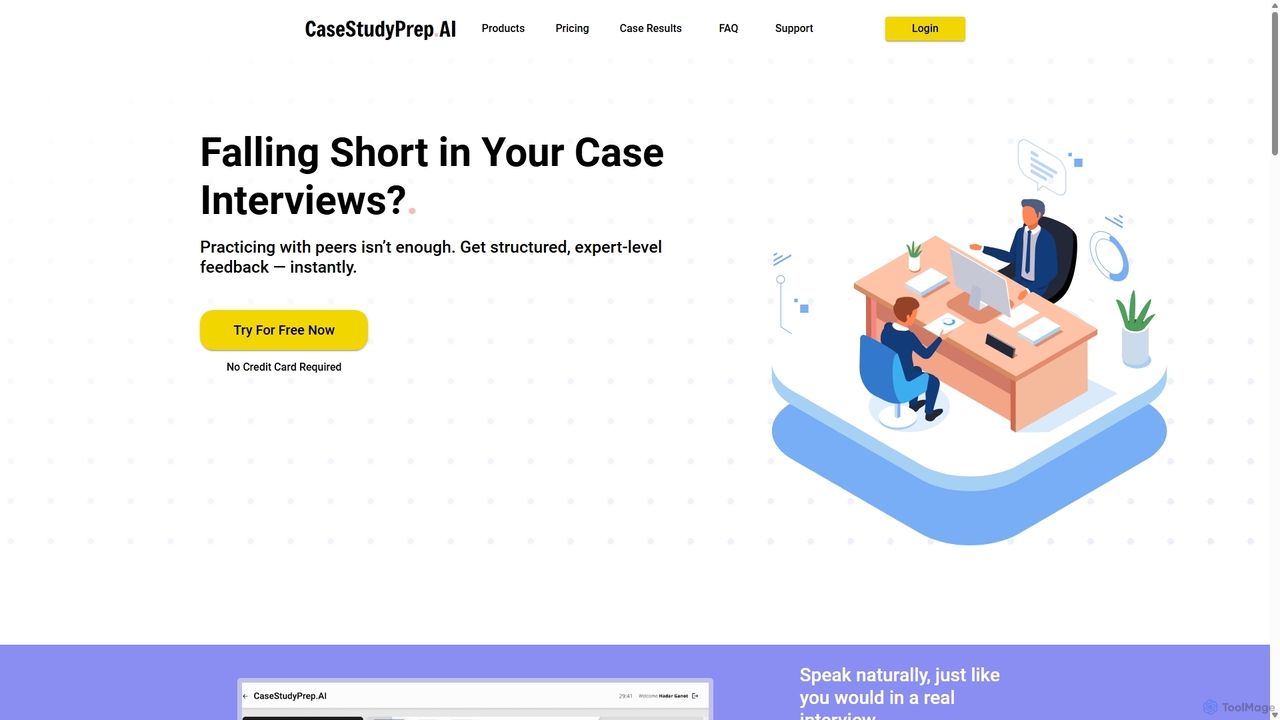
CaseStudyPrep.ai is an AI-powered platform for aspiring management consultants. It offers realistic, interactive case study interview simulations tailored for top firms like McKinsey, BCG, and Bain. Users can practice various case types, receive detailed, personalized feedback from an AI interviewer, and access a full library of cases to master their skills and land their dream job.

Personalized Learning
Visits 7.9KFavorites 141Likes 142
AccioJob
Paid

AccioJob

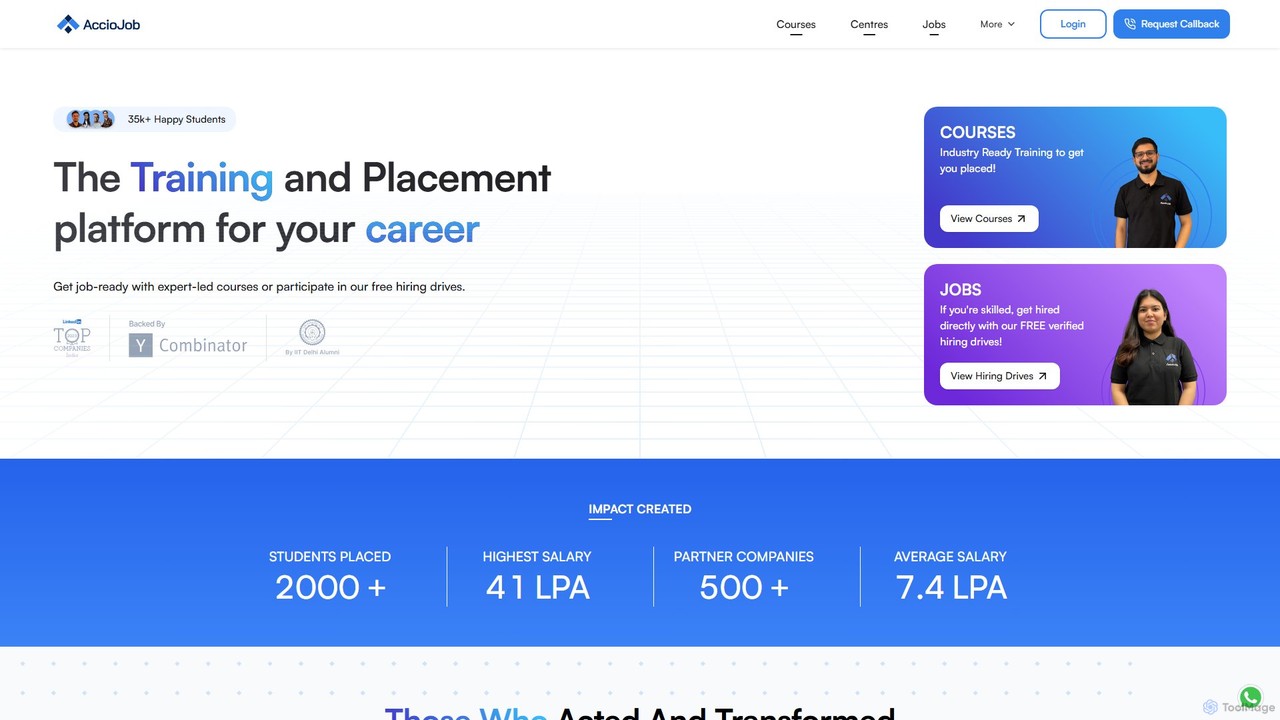
AccioJob is an EdTech platform offering expert-led courses in Full Stack Development, Data Science, and AI. It provides comprehensive training with flexible learning modes (online, offline, self-paced) and robust placement support to help students launch their careers in top tech companies.

Training
Visits 788KFavorites 134Likes 139

About Career

AI Career tools are specialized applications designed to assist individuals in navigating and advancing their professional journey. They leverage machine learning and natural language processing to analyze resumes, match skills with job descriptions, and offer personalized guidance. These tools provide data-driven insights for job seekers, students, and professionals aiming to optimize their job search, prepare for interviews, or strategically plan long-term career growth. They act as a personal career coach, enhancing application materials and interview readiness.

Core Features

  • Resume Analysis & Optimization: Scans resumes against job descriptions to suggest keyword improvements and formatting adjustments for Applicant Tracking Systems (ATS).
  • Personalized Job Matching: Uses algorithms to connect a user's unique skills and experience with the most relevant job openings.
  • AI-Powered Interview Coaching: Provides mock interview simulations with real-time feedback on speech patterns, answer content, and confidence.
  • Career Path Planning: Maps out potential career trajectories based on a user's profile and industry trends, identifying necessary skills for advancement.
  • Skill Gap Analysis: Compares a user's current abilities to a target role's requirements and suggests specific learning resources to bridge the gap.

Use Cases

These tools are widely used by recent graduates entering the workforce, mid-career professionals seeking a promotion or career change, and experienced individuals re-entering the job market. They are particularly effective for tailoring applications to specific roles at scale, preparing for competitive interviews in tech and corporate sectors, and for individuals needing structured guidance on long-term professional development.

How to Choose

When selecting an AI Career tool, consider its primary focus—whether it excels in resume building, interview prep, or comprehensive career planning. Evaluate its data privacy policy to understand how your personal information is handled. Assess the quality and actionability of the AI-generated feedback. Finally, consider its integration capabilities with professional networks like LinkedIn and its pricing model, whether it's a one-time fee or a subscription.

Career use cases

1

Optimizing Resumes for Applicant Tracking Systems (ATS)

A job seeker applying for a competitive corporate role uploads their resume and the target job description to an AI career tool. The platform instantly analyzes both documents, providing a match score. It then highlights keywords and skills from the job description that are missing in the resume. The user receives specific suggestions, such as replacing generic phrases with action verbs and quantifying achievements. By implementing these changes, the resume is better tailored to pass through the company's automated ATS screening, significantly increasing the chances of it being reviewed by a human recruiter.

2

AI-Powered Mock Interview Practice

A university student is preparing for their first major job interview. Using an AI interview coach, they start a simulated video interview for a software engineering role. They answer a series of technical and behavioral questions posed by an AI avatar. After the session, the tool provides a detailed report analyzing their performance. The feedback covers speaking pace, use of filler words like 'um' and 'ah', eye contact, and even the sentiment of their responses. It also suggests stronger ways to phrase answers, helping the student build confidence and polish their delivery before the real interview.

3

Personalized Job Opportunity Discovery

A mid-career marketing professional feels stagnant in their current role and wants to explore new opportunities. They create a profile on an AI career platform, detailing their skills in SEO, content marketing, and data analysis, along with their salary expectations and preferred work culture. The AI algorithm scans thousands of job boards, company career pages, and professional networks daily. Instead of a flood of irrelevant listings, the professional receives a curated daily digest of 5-10 highly relevant job opportunities, including roles like 'Growth Marketing Manager' they hadn't previously considered, saving them hours of manual searching.

4

Crafting Compelling and Tailored Cover Letters

A recent graduate is applying for multiple entry-level positions, each requiring a unique cover letter. The process is time-consuming and repetitive. They use an AI career tool that generates cover letters. For each application, they input their resume and the specific job description. The AI analyzes the requirements of the role and identifies the most relevant experiences and skills from the resume. It then drafts a compelling cover letter that highlights these specific qualifications in a professional tone, tailored precisely to that job. This allows the graduate to apply to more jobs in less time with higher quality, personalized applications.

5

Strategic Career Path Planning

An ambitious project manager wants to advance to a 'Director of Operations' role within five years. They use an AI career planning tool to map out a strategic path. After inputting their current role, skills, and goal, the AI analyzes industry data and typical career progressions. It generates a visual timeline suggesting key milestones, such as obtaining a PMP certification, leading a cross-functional project of a certain scale, and gaining experience in budget management. The tool also recommends online courses and mentors, providing a clear, actionable roadmap to help the manager stay focused and achieve their long-term career objective.

6

Identifying and Bridging Professional Skill Gaps

A graphic designer wants to transition into a UX/UI design role. They use an AI career tool to understand the necessary skill shift. The tool compares their existing portfolio and resume against hundreds of UX/UI job descriptions. It generates a detailed report identifying their strengths (e.g., visual design) and critical gaps (e.g., user research, wireframing, prototyping software). Based on this analysis, the platform recommends a personalized learning path, suggesting top-rated online courses on platforms like Coursera and specific projects to build a relevant portfolio, providing a structured approach to their career change.

Career FAQ

What are AI Career tools?

AI Career tools are software applications that use artificial intelligence to help individuals manage and advance their careers. They go beyond simple job listings by providing personalized services like resume analysis, interview coaching, and skill gap identification. These tools analyze your data against market trends and job requirements to offer actionable advice, acting as a data-driven personal career advisor to enhance your job search and professional development.

How do I choose the right AI Career tool?

To choose the right AI Career tool, first identify your primary need. Are you focused on resume building, interview practice, or long-term career planning? Look for a tool that specializes in that area. Next, consider these factors:

  • Quality of Feedback: Check reviews or trial versions to see if the AI's advice is specific, actionable, and relevant.
  • Data Privacy: Read the privacy policy to understand how your resume and personal data are used and protected.
  • Integrations: See if the tool connects with platforms you already use, like LinkedIn, to streamline your workflow.
  • User Interface: Choose a tool with an intuitive and easy-to-navigate interface to ensure a smooth experience.
How do AI Career tools differ from traditional job boards like LinkedIn?

Traditional job boards like LinkedIn or Indeed are primarily passive databases; they are platforms for you to search for job listings. AI Career tools are active, personalized assistants. The key difference is the direction of analysis: on a job board, you analyze the market. With an AI tool, the tool analyzes you (your resume, skills, interview performance) in the context of the market. They provide tailored feedback and strategic guidance, rather than just presenting a list of opportunities.

Can AI tools guarantee me a job?

No, AI career tools cannot guarantee you a job. They are powerful assistants designed to significantly improve your chances of success. They enhance the quality of your application materials, help you perform better in interviews, and streamline your job search strategy. However, the final hiring decision always rests with human recruiters and hiring managers, involving factors like cultural fit and team dynamics that AI cannot fully assess. Think of them as a coach that gets you into the best possible shape for the competition.

Is my personal data safe with AI Career tools?

Data security is a critical consideration. Reputable AI career tools prioritize user privacy and employ strong security measures like data encryption to protect your information. However, the level of security can vary between providers. Before using a tool, it is essential to read its privacy policy to understand what data is collected, how it is used, and with whom it might be shared. Choose platforms that are transparent about their data handling practices and offer you control over your personal information.