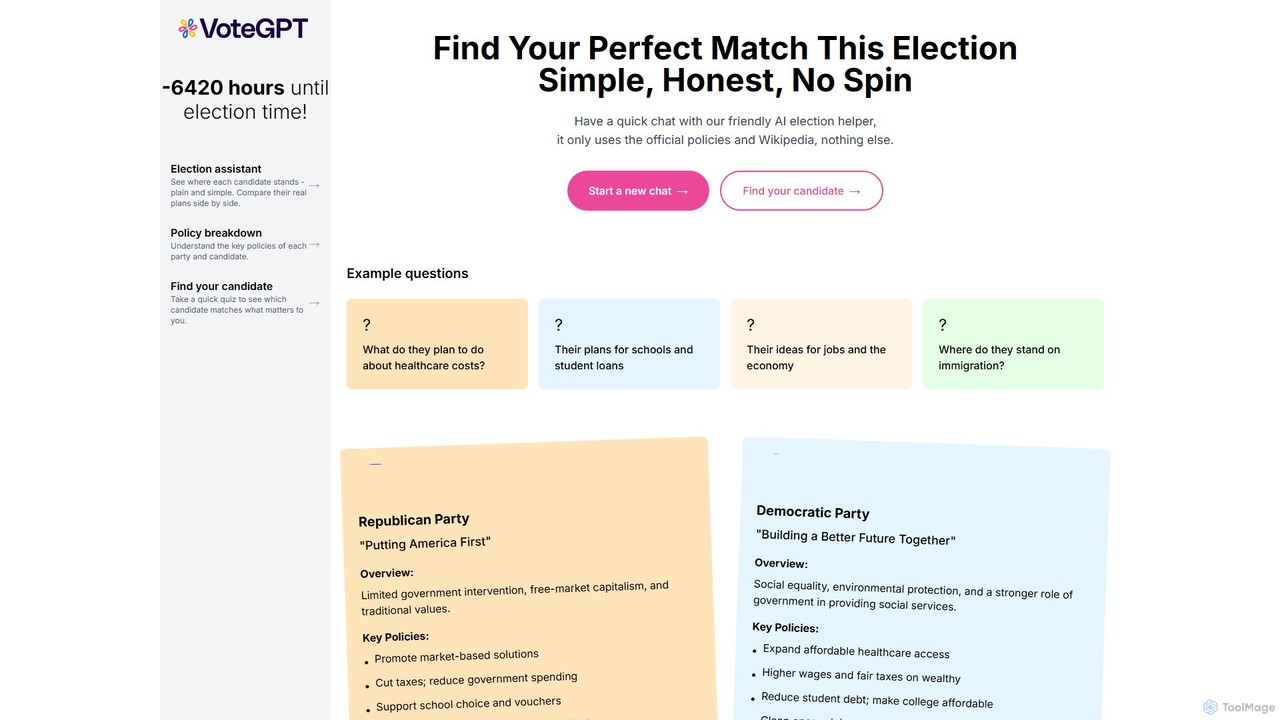
Civics AI tools are specialized artificial intelligence applications designed to enhance the understanding and teaching of civic education, government, law, and citizenship. Leveraging natural language processing, simulation, and data analysis, these tools provide interactive and personalized learning experiences. They aim to foster civic literacy, critical thinking, and active participation by making complex societal structures and political processes more accessible and engaging for learners of all ages.
Core Features
- Interactive Simulations: Model governmental processes, historical events, or policy impacts to provide hands-on learning.
- Concept Simplification: Break down complex legal, political, or economic terms into easily digestible explanations.
- Debate & Discussion Facilitation: Guide structured discussions on current events or ethical dilemmas, ensuring balanced perspectives.
- Personalized Learning Paths: Adapt content and quizzes to individual learner progress and knowledge gaps in civics.
- Document Analysis: Assist in analyzing historical documents, legal texts, or public policy proposals for key themes and arguments.
Use Cases
Educators utilize Civics AI tools to create dynamic classroom environments, allowing students to engage with virtual governments or simulate historical elections. Individual learners benefit from personalized tutors that clarify constitutional principles or prepare them for citizenship exams. Policy analysts can leverage these tools to quickly grasp the implications of new legislation or analyze public sentiment on civic issues.
How to Choose
When selecting Civics AI tools, prioritize accuracy and the reliability of the information provided, ensuring alignment with established civic curricula. Evaluate the level of interactivity and engagement features, such as simulations or gamified learning, to match learner needs. Consider the tool's ability to offer personalized feedback and track progress, alongside its ease of integration into existing educational platforms and its adherence to data privacy standards.