ToolMage
Sign in

Best 1 Coding Bootcamp AI tools for Education

Popular Coding Bootcamp AI tools in Education include BloomTech, helping you work more efficiently.

BloomTech
Paid

BloomTech

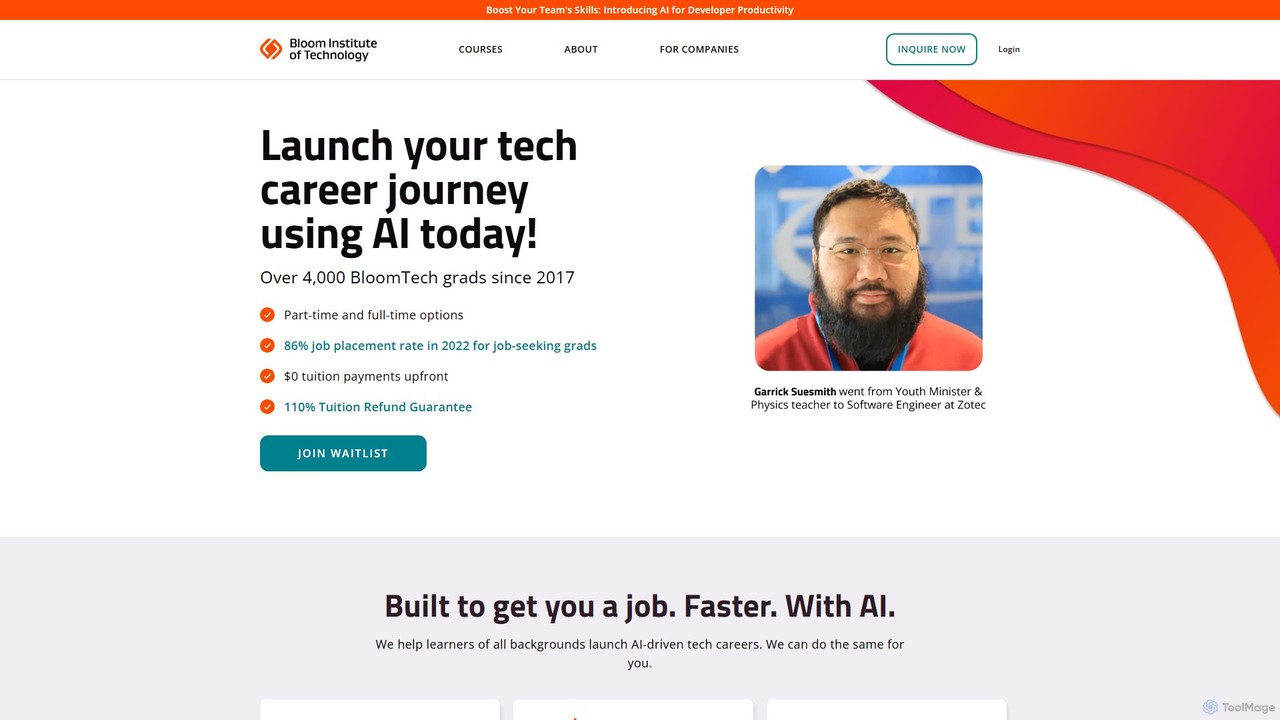
BloomTech is an AI-powered online coding and data science bootcamp designed to launch or advance your tech career. It offers flexible, job-focused training with comprehensive career support, multiple tuition options including deferred payment, and a 110% tuition refund guarantee. The curriculum integrates AI to prepare students for modern tech roles.

Job Training
Visits 38.4KFavorites 96Likes 100

About Coding Bootcamp

Coding Bootcamps are intensive, short-term educational programs designed to equip individuals with practical programming skills for rapid entry into the tech industry. Unlike traditional academic degrees, they focus on hands-on projects and in-demand technologies, offering a fast-track pathway to becoming a software developer, data analyst, or cybersecurity specialist. These immersive programs often leverage project-based learning and mentorship to simulate real-world development environments, providing a focused alternative within the broader field of education.

Core Features

  • Project-Based Learning: Students build a portfolio of real-world applications, demonstrating practical coding abilities to potential employers.
  • Industry-Relevant Curriculum: Focus on current programming languages, frameworks, and tools highly sought after by tech companies.
  • Career Services: Often includes resume building, interview preparation, and job placement assistance to facilitate career transition.
  • Expert Mentorship: Direct guidance and feedback from experienced developers and industry professionals.
  • Accelerated Learning: Condensed, full-time or part-time schedules designed for rapid skill acquisition.

Applicable Scenarios

Coding Bootcamps are ideal for individuals seeking a career change into technology, recent graduates looking to gain practical skills quickly, or professionals aiming to upskill in specific programming domains. They cater to those who thrive in fast-paced, hands-on learning environments and prioritize immediate job readiness over theoretical academic exploration.

How to Choose

When selecting a Coding Bootcamp, consider the curriculum's alignment with your career goals, the instructors' industry experience, and the program's career support services. Evaluate the cost, financing options, and student reviews, along with the bootcamp's job placement rates and alumni network to ensure a valuable investment.

Featured tool rankings

Coding Bootcamp use cases

1

Career Transition for Non-Tech Professionals

Individuals from non-technical backgrounds, such as marketing or finance, can enroll in a Coding Bootcamp to acquire foundational programming skills in languages like Python or JavaScript. This enables them to pivot into roles like junior software developer, web developer, or data analyst within 3-6 months, significantly faster than traditional academic routes, opening up new career opportunities in the tech sector.

2

Upskilling for Existing Developers

Experienced developers can attend specialized Coding Bootcamps to quickly master new technologies or fill specific skill gaps, such as learning a new framework (e.g., React, Vue.js) or diving into a niche area like machine learning or blockchain. This targeted training allows them to stay competitive, expand their technical repertoire, and qualify for more advanced or specialized roles without committing to a lengthy degree program.

3

Startup Founders Building MVPs

Entrepreneurs with a startup idea but limited technical background can leverage Coding Bootcamps to acquire the necessary skills to build their Minimum Viable Product (MVP). By learning full-stack development, they can independently develop initial prototypes, test market demand, and iterate on their product without immediate reliance on external hires or expensive contractors, saving significant time and capital in the early stages.

4

Acquiring Data Science & AI Skills

Professionals seeking to enter the rapidly growing fields of data science, machine learning, or artificial intelligence can attend specialized Coding Bootcamps focused on these areas. These programs teach essential skills like Python programming for data analysis, statistical modeling, and machine learning algorithms, enabling participants to transition into roles such as data scientist, AI engineer, or business intelligence analyst, leveraging practical, project-based learning.

5

Building a Professional Portfolio for Job Applications

Aspiring developers, especially those without a traditional computer science degree, utilize Coding Bootcamps to build a robust portfolio of practical projects. These projects, often developed collaboratively and mimicking real-world scenarios, serve as tangible evidence of their coding abilities and problem-solving skills, significantly enhancing their attractiveness to potential employers and improving their chances of securing a tech job.

6

Learning Specific Web Development Stacks

Individuals aiming to specialize in a particular web development stack, such as MERN (MongoDB, Express.js, React, Node.js) or LAMP (Linux, Apache, MySQL, PHP), can attend focused Coding Bootcamps. These programs provide in-depth training on the chosen technologies, enabling participants to become proficient full-stack or front-end/back-end developers ready to contribute to projects using that specific tech stack, accelerating their entry into specialized roles.

Coding Bootcamp FAQ

What are Coding Bootcamps?

Coding Bootcamps are intensive, short-term educational programs focused on teaching practical programming skills for rapid entry into the tech industry. They typically feature a project-based curriculum, expert mentorship, and strong career support, designed to equip students with job-ready skills in a condensed timeframe, often ranging from 3 to 9 months. These programs prioritize hands-on experience over theoretical knowledge.

How do Coding Bootcamps differ from traditional computer science degrees?

Coding Bootcamps differ significantly from traditional computer science degrees primarily in their duration, focus, and cost. Bootcamps are much shorter (months vs. years), emphasize practical, job-ready skills and specific technologies, and are generally less expensive. Computer science degrees offer a broader, theoretical foundation, cover a wider range of academic topics, and typically lead to a more comprehensive understanding of computing principles, but with a longer time commitment.

What programming languages are typically taught in Coding Bootcamps?

Coding Bootcamps typically focus on in-demand programming languages and frameworks relevant to current industry needs. Common languages include Python (for data science, web development, AI), JavaScript (for front-end, back-end with Node.js, and full-stack development), Ruby (often with Ruby on Rails), and sometimes Java or C. Frameworks like React, Angular, Vue.js, Express.js, and Django are also frequently covered, depending on the bootcamp's specialization.

Who should consider attending a Coding Bootcamp?

Coding Bootcamps are ideal for individuals seeking a rapid career change into technology, recent graduates looking to quickly acquire practical, job-ready skills, or professionals aiming to upskill in specific programming domains. They are also suitable for entrepreneurs who want to build their own products or anyone who thrives in a fast-paced, hands-on learning environment focused on immediate employment outcomes.

What should I look for when choosing a Coding Bootcamp?

When choosing a Coding Bootcamp, prioritize a curriculum that aligns with your career goals and is up-to-date with industry demands. Evaluate the instructors' experience, the program's career services (job placement rates, interview prep), and the learning environment (in-person vs. online, class size). Also, consider the cost, financing options, student reviews, and the bootcamp's accreditation or reputation to ensure a quality and valuable educational experience.