ToolMage
Sign in

Best 1 Consulting AI tools for Education

Popular Consulting AI tools in Education include philipp_stelzel, helping you work more efficiently.

philipp_stelzel
Freemium

philipp_stelzel

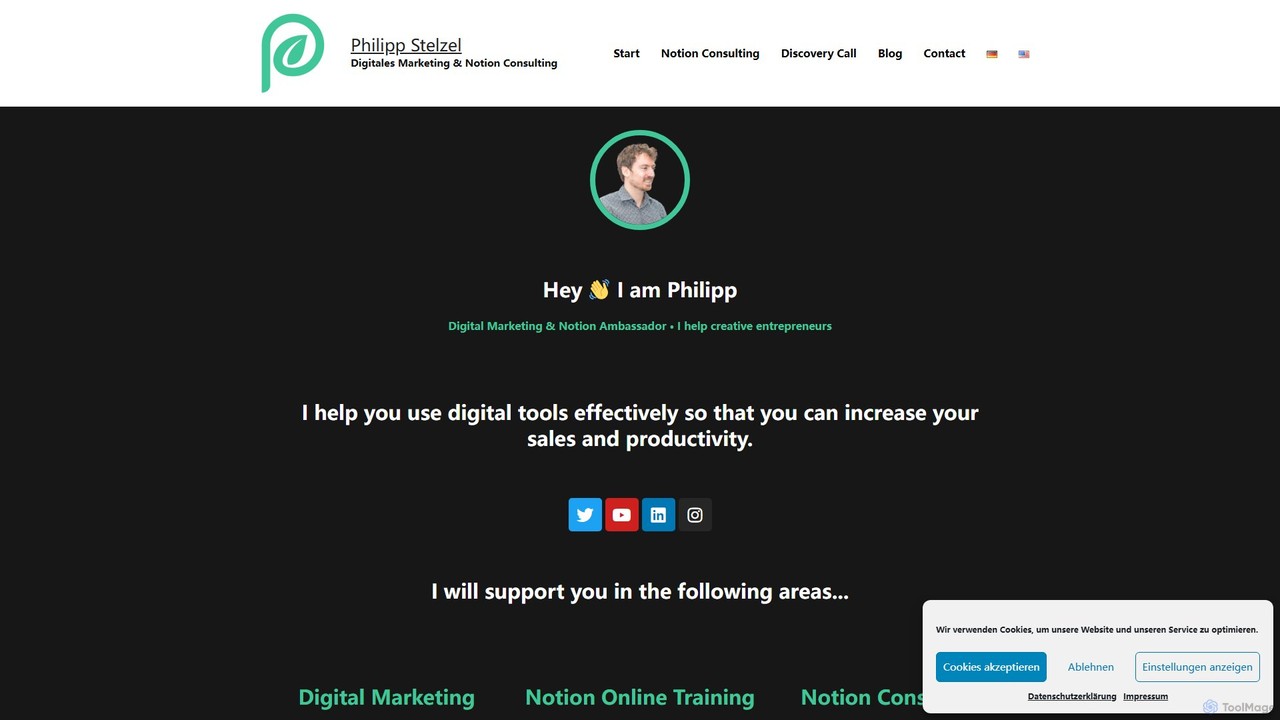
A resource hub by Philipp Stelzel, a Notion Ambassador and digital marketing expert. It offers specialized Notion templates, AI-powered tools like a Midjourney Prompt Generator, online courses, and consulting services to help creative entrepreneurs enhance productivity and optimize their digital strategy.

Consulting
Visits 4.2KFavorites 123Likes 145

About Consulting

AI Consulting tools are a specialized category of artificial intelligence applications designed to provide data-driven advice, strategic insights, and personalized recommendations across various domains. Leveraging advanced analytics, machine learning, and natural language processing, these tools can process vast amounts of information to offer expert guidance, often complementing or enhancing human expertise. Within the broader context of education, AI consulting tools empower individuals and institutions to make informed decisions regarding academic paths, career development, skill acquisition, and organizational strategy.

Core Features

  • Personalized Recommendation Engines: Analyze user data to suggest tailored academic programs, career paths, or skill development resources.
  • Data-Driven Insights: Provide actionable intelligence on market trends, student performance, and educational outcomes to inform strategic planning.
  • Automated Q&A and Knowledge Retrieval: Offer instant answers to common consulting queries by accessing and synthesizing vast knowledge bases.
  • Strategic Planning & Scenario Modeling: Assist in developing future strategies by simulating various outcomes based on different inputs and market conditions.
  • Interactive Guidance Interfaces: Enable users to engage with AI for real-time advice and iterative problem-solving.

Use Cases

These tools are invaluable for educational institutions, career counselors, students, and professionals. They can guide students in selecting optimal courses, help universities refine their program offerings based on market demand, or assist individuals in navigating complex career transitions by identifying relevant skills and opportunities.

How to Choose

When selecting an AI consulting tool, consider its specialization (e.g., career, academic, business strategy), its ability to integrate with existing data systems, the accuracy and transparency of its recommendation algorithms, and its user interface design. Evaluate the scalability to ensure it can meet your current and future consulting demands, and assess the level of human oversight or customization required.

Featured tool rankings

Consulting use cases

1

Career Path Planning for Students

University career services can deploy AI consulting tools to help students explore potential career paths. The AI analyzes a student's academic record, interests, skills, and personality traits, cross-referencing them with real-time labor market data and industry trends. It then recommends suitable professions, required qualifications, and relevant internships, providing a personalized roadmap for their future, significantly reducing the time human counselors spend on initial guidance.

2

Optimizing Academic Program Selection

Prospective students often struggle with choosing the right academic program. AI consulting tools can assist by evaluating their academic background, career aspirations, and learning preferences against available university courses. The tool provides data-backed insights into program outcomes, alumni success rates, and potential job placements, enabling students to make more informed decisions and institutions to better match applicants with suitable programs.

3

Personalized Skill Development Recommendations

Professionals seeking to upskill or reskill can leverage AI consulting for tailored learning advice. The AI assesses their current skill set, career goals, and industry demands, then suggests specific online courses, certifications, workshops, or learning platforms. This ensures that individuals invest their time and resources in acquiring skills that are most relevant and impactful for their career advancement, fostering continuous professional growth.

4

Strategic Planning for Educational Institutions

Educational leaders can utilize AI consulting tools to inform institutional strategy. By analyzing enrollment trends, student performance data, market demand for specific programs, and competitor offerings, the AI provides insights for curriculum development, resource allocation, and marketing strategies. This helps institutions adapt to changing educational landscapes, optimize their offerings, and enhance their competitive edge.

5

Enhancing Student Retention Strategies

Universities and colleges face challenges with student attrition. AI consulting tools can analyze various student data points, including academic performance, engagement levels, and demographic information, to identify students at risk of dropping out. The AI then recommends proactive intervention strategies, such as personalized mentorship, academic support programs, or mental health resources, allowing institutions to improve student success and retention rates.

6

Business Consulting for EdTech Startups

EdTech entrepreneurs can use AI consulting to refine their business models and market entry strategies. The AI analyzes market gaps, competitor analysis, user feedback, and funding trends within the education technology sector. It provides recommendations on product features, pricing strategies, target audiences, and potential partnership opportunities, accelerating growth and increasing the likelihood of success for new educational ventures.

Consulting FAQ

What are AI Consulting tools?

AI Consulting tools are advanced software applications that use artificial intelligence, including machine learning and natural language processing, to offer expert advice, strategic insights, and personalized recommendations. Unlike traditional software, they can analyze complex data patterns, learn from interactions, and provide dynamic guidance, making them invaluable for decision-making in various fields, including education.

How do AI Consulting tools benefit the education sector?

In education, AI Consulting tools provide significant benefits by offering personalized guidance for students on academic and career paths, helping institutions optimize program offerings based on market demand, and assisting educators in developing tailored learning plans. They enhance efficiency, improve decision-making, and make expert advice more accessible, ultimately contributing to better educational outcomes and student success.

What's the difference between AI Consulting tools and traditional human consultants?

AI Consulting tools excel at processing vast datasets, identifying complex patterns, and providing scalable, consistent recommendations quickly and cost-effectively. Human consultants offer nuanced understanding, emotional intelligence, ethical judgment, and the ability to build rapport. While AI tools can augment human consultants by handling data analysis and routine queries, human expertise remains crucial for complex, sensitive, or highly subjective situations.

What kind of data do AI Consulting tools typically use?

AI Consulting tools utilize a wide array of data, depending on their specialization. In education, this often includes student academic records, demographic information, learning preferences, career aspirations, labor market statistics, industry trends, course catalogs, and institutional performance data. For business consulting, it might involve market research, financial data, competitor analysis, and operational metrics.

How can I choose the best AI Consulting tool for my needs?

To choose the best AI Consulting tool, first define your specific consulting needs, whether it's career guidance, academic planning, or institutional strategy. Then, evaluate tools based on their specialization, data integration capabilities with your existing systems, the accuracy and transparency of their recommendation algorithms, user-friendliness, and scalability. Consider also the vendor's support, security protocols, and pricing model.