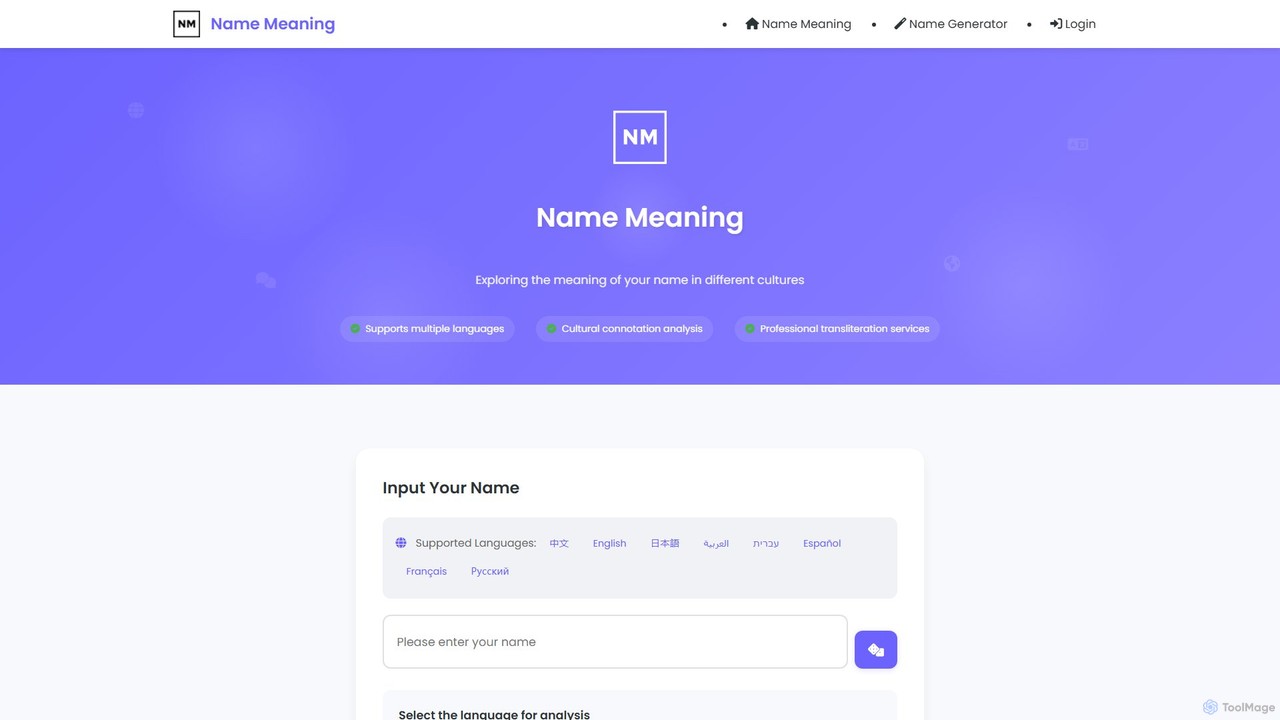
namemeaning
An AI-powered platform for exploring name meanings and generating unique names for babies and pets. It offers deep …
An AI-powered platform for exploring name meanings and generating unique names for babies and pets. It offers deep cultural insights, phonetic guides, and customizable options across multiple languages and styles.
About Culture
AI Culture tools are a specialized category of educational AI designed to help users explore, understand, and interact with global cultures. These tools leverage machine learning, natural language processing, and computer vision to analyze historical artifacts, simulate cultural scenarios, and provide context-rich learning experiences. They make the study of humanities, arts, and social sciences more accessible and engaging by transforming static information into interactive explorations. This enables a deeper appreciation of global diversity and historical heritage.
Core Features
- Cultural Context Analysis: Analyzes texts, images, or music to provide detailed historical, artistic, and social context.
- Immersive Simulations: Creates interactive environments for exploring historical sites or practicing cross-cultural communication.
- Language in Context: Teaches languages by integrating cultural norms, idioms, and etiquette into lessons.
- Art & Artifact Recognition: Identifies artworks, architectural styles, or historical objects and explains their significance.
- Personalized Learning Paths: Adapts content to a user's interests, guiding them through related cultural topics and historical periods.
Use Cases
These tools are valuable for students, educators, historians, art enthusiasts, and travelers. For example, a history student can use an AI to simulate a conversation with a historical figure, while a traveler can use a tool to learn essential cultural etiquette before visiting a new country. They are also used in museums to create interactive exhibits and by linguists to study language evolution.
How to Choose
When selecting an AI Culture tool, consider the depth and accuracy of its cultural database. Evaluate the level of interactivity—whether it offers passive information or active simulations. Check for specialization in specific regions, languages, or historical periods that match your interests. Finally, assess the credibility of its data sources to ensure an unbiased and well-rounded perspective.

CultureUse Cases
Interactive History Lesson for Students
A high school history teacher prepares a lesson on ancient Rome. Instead of relying solely on textbooks, they use an AI Culture tool to create an immersive experience. Students can access a 3D reconstruction of the Roman Forum, navigate through it, and click on structures to get AI-generated explanations about their purpose and history. The tool also features a 'chat with a historical figure' module, allowing students to ask a simulated version of Julius Caesar questions about his life and military campaigns, receiving contextually accurate answers based on historical records. This transforms a passive reading assignment into an active exploration, significantly improving student engagement and retention of information.
Art Style Analysis for Museum Curators
A museum curator is researching a newly acquired, unsigned painting. They use an AI Culture tool with advanced image recognition capabilities. By uploading a high-resolution image of the artwork, the AI analyzes brushstrokes, color palette, composition, and subject matter. It then compares these features against a vast database of known artists and art movements, suggesting potential artists and providing a confidence score for each match. The tool also highlights specific elements in the painting that are characteristic of a particular style, such as the 'sfumato' technique in Renaissance art, helping the curator to build a strong case for attribution and understand the piece's historical context more deeply.
Cultural Etiquette Training for Global Business
A multinational corporation is preparing a team for an important negotiation in Japan. To ensure the team understands and respects local business customs, they use an AI-powered cultural training simulator. Team members engage in realistic, simulated conversations with AI avatars representing their Japanese counterparts. The AI provides real-time feedback on their language use, non-verbal cues (if using video), and adherence to etiquette, such as the proper way to exchange business cards (meishi). The simulator presents various scenarios, from initial greetings to closing a deal, helping the team build confidence and avoid cultural missteps that could jeopardize the business relationship. This targeted training is more efficient and scalable than traditional in-person coaching.
Contextual Language Learning for Travelers
A tourist planning a trip to Italy wants to learn more than just basic phrases. They use an AI Culture and language app that teaches Italian within its cultural context. When learning how to order coffee, the app doesn't just provide translations; it explains the cultural significance of different coffee types (e.g., a cappuccino is typically a morning drink). It uses interactive scenarios, like a simulated conversation with a barista, where the AI corrects pronunciation and suggests more natural, colloquial phrasing. The app also includes modules on dining etiquette, gestures, and regional customs, providing a holistic cultural education that enriches the travel experience and facilitates more meaningful interactions with locals.
Virtual Museum Tour and Exhibit Enhancement
An individual unable to travel to Paris uses an AI Culture tool to take a virtual tour of the Louvre. They can 'walk' through the galleries in high-resolution 3D and select any artwork to learn more. The AI acts as a personal docent, providing detailed information about the artist, the historical period, and an analysis of the piece's symbolism. The user can ask specific questions like, 'What does the ermine symbolize in this portrait of Cecilia Gallerani?' and receive an instant, detailed answer. This technology is also used within physical museums, where visitors can scan a QR code next to an exhibit to interact with an AI guide on their smartphone, offering a richer, more personalized experience than a standard audio guide.
Genealogy and Heritage Exploration
A person researching their family history uses an AI Culture tool to analyze old documents and understand their ancestors' lives. They upload scanned copies of letters, census records, and diaries from the 19th century. The AI tool uses optical character recognition (OCR) to transcribe the handwritten text and then analyzes the content. It identifies names, dates, and locations, automatically cross-referencing them with historical databases. More importantly, it provides cultural context, explaining regional dialects mentioned in letters, the social significance of an ancestor's occupation, or the historical events that shaped their lives. This transforms genealogy from simple data collection into a rich narrative of family heritage.