Education Best in category 1 results Data Analysis AI Tool

Popular AI tools in the Data Analysis field of Education include Zelma, etc., helping you quickly improve efficiency.

Free
Zelma

Zelma

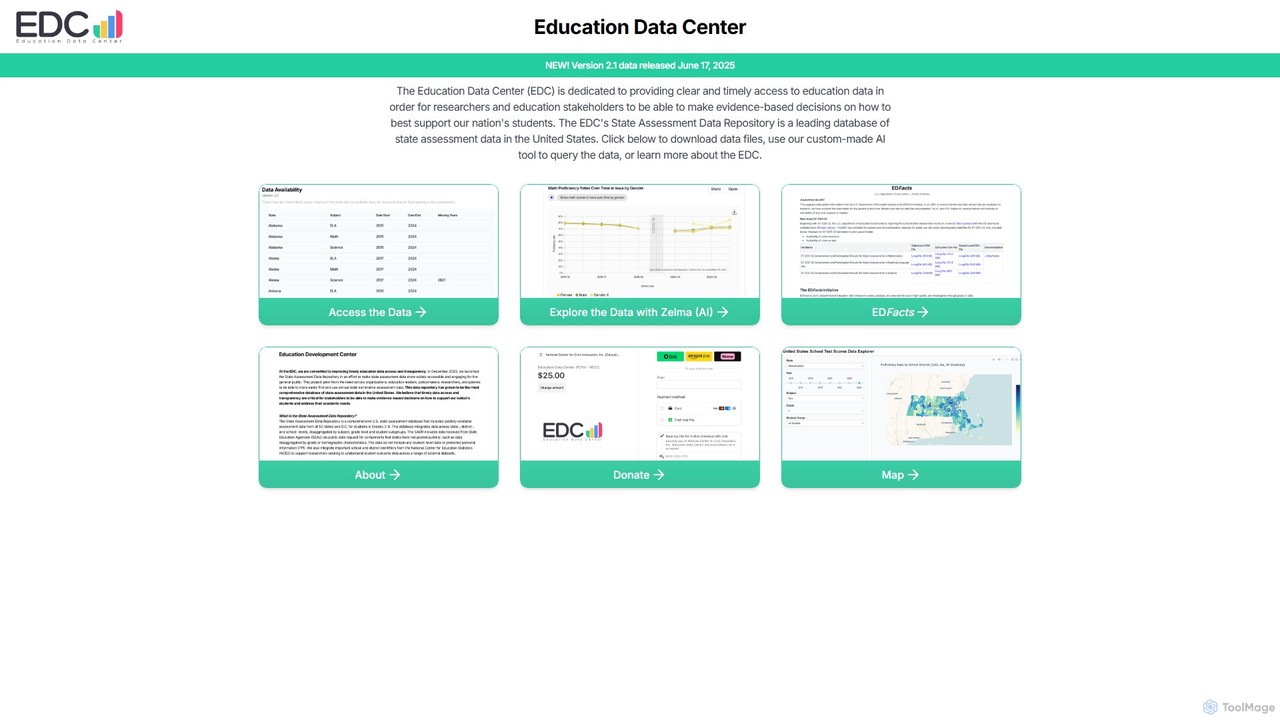
Zelma is an AI assistant for the Education Data Center (EDC), providing natural language access to the most …

5.3K

About Data Analysis

AI Data Analysis tools are applications that use machine learning and natural language processing to interpret complex datasets automatically. These tools go beyond traditional spreadsheets by identifying hidden patterns, generating predictive models, and creating interactive visualizations with minimal manual input. In an educational context, they empower researchers, students, and administrators to derive meaningful insights from academic, operational, or experimental data without requiring deep statistical expertise. This accessibility accelerates research cycles and enhances data-driven decision-making within institutions.

Core Features

  • Automated Insight Generation: Automatically discovers trends, correlations, and anomalies in data, presenting them in plain language.
  • Predictive Modeling: Builds and deploys models to forecast future outcomes, such as student performance or resource needs.
  • Natural Language Querying: Allows users to ask questions about their data in conversational language (e.g., "Show me the top performing departments").
  • Interactive Visualization: Creates dynamic charts and dashboards that users can explore to understand data from multiple perspectives.
  • Data Cleaning & Preparation: Automates the process of handling missing values, correcting errors, and formatting data for analysis.

Applicable Scenarios

These tools are valuable for academic researchers analyzing survey or experimental results, university administrators optimizing resource allocation and student retention, and educators teaching data science concepts. For instance, a social scientist could use them to quickly identify key themes in qualitative data, while an institutional research department could predict enrollment trends to inform strategic planning.

Selection Criteria

When choosing an AI Data Analysis tool, consider the types of data sources it supports (e.g., CSV, SQL databases, APIs). Evaluate the complexity of its analytical models and whether it offers a no-code, low-code, or code-based interface that matches your team's technical skills. Also, assess its collaboration features for team-based projects and its integration capabilities with other educational or business intelligence platforms.

Data AnalysisUse Cases

1

Analyzing Academic Research Survey Data

A postgraduate researcher in sociology needs to analyze thousands of survey responses for their thesis. Instead of spending weeks learning complex statistical software like SPSS or R, they upload their dataset to an AI Data Analysis tool. Using natural language queries, they ask the tool to identify correlations between demographic data and survey answers. The tool automatically generates visualizations, statistical summaries, and even suggests potential hypotheses, reducing the analysis time from weeks to a few days and allowing the researcher to focus on interpretation and writing.

2

Predicting Student At-Risk Factors

An institutional research office at a university wants to proactively support student success. They use an AI Data Analysis tool to combine historical data from various sources, including grades, attendance records, and library usage. The tool builds a predictive model that identifies students who are at a higher risk of dropping out. This allows academic advisors to intervene early with targeted support, such as tutoring or counseling, ultimately improving student retention rates and fostering a more supportive learning environment.

3

Optimizing University Resource Allocation

A university's operations department is tasked with optimizing the use of campus facilities. They feed data on classroom schedules, energy consumption, and student traffic patterns into an AI analysis tool. The platform identifies underutilized spaces and peak usage times. Based on these insights, the department can adjust class schedules to better distribute load, implement energy-saving measures during off-peak hours, and justify budget requests for new facilities with concrete data, leading to significant cost savings and improved campus efficiency.

4

Enhancing Data Science Education

An instructor teaching an introductory data science course wants to make complex concepts more accessible to students from non-technical backgrounds. They use an AI Data Analysis tool with a natural language interface in their classroom. Students can upload datasets and ask questions like "What is the relationship between study hours and final grades?" The tool visualizes the data and explains the correlation in simple terms. This hands-on, intuitive approach helps demystify data analysis, increases student engagement, and allows them to grasp core statistical concepts faster.

5

Automating Analysis of Scientific Experiment Data

A biology lab generates large volumes of data from genetic sequencing experiments daily. Manually processing this data is time-consuming and prone to error. The lab implements an AI Data Analysis tool that connects directly to their equipment's output. The tool automates data cleaning, identifies significant genetic markers, and flags anomalies for review. It generates daily summary reports with key findings and visualizations, allowing scientists to spend less time on data wrangling and more time on experimental design and interpretation.

6

Analyzing Library Usage for Collection Development

A university librarian wants to make data-driven decisions about purchasing new books and digital resources. They use an AI analysis tool to consolidate data from their library management system, including checkout history, digital resource access logs, and interlibrary loan requests. The tool identifies borrowing trends, highlights subject areas with high demand but low availability, and predicts which upcoming publications are likely to be popular. This enables the library to optimize its budget by investing in resources that directly meet the needs of students and faculty.

Data AnalysisFrequently Asked Questions