LoveHeart
LoveHeart (now Mana) is an AI-powered platform designed for Early Childhood Education (ECE). It acts as an educator's …
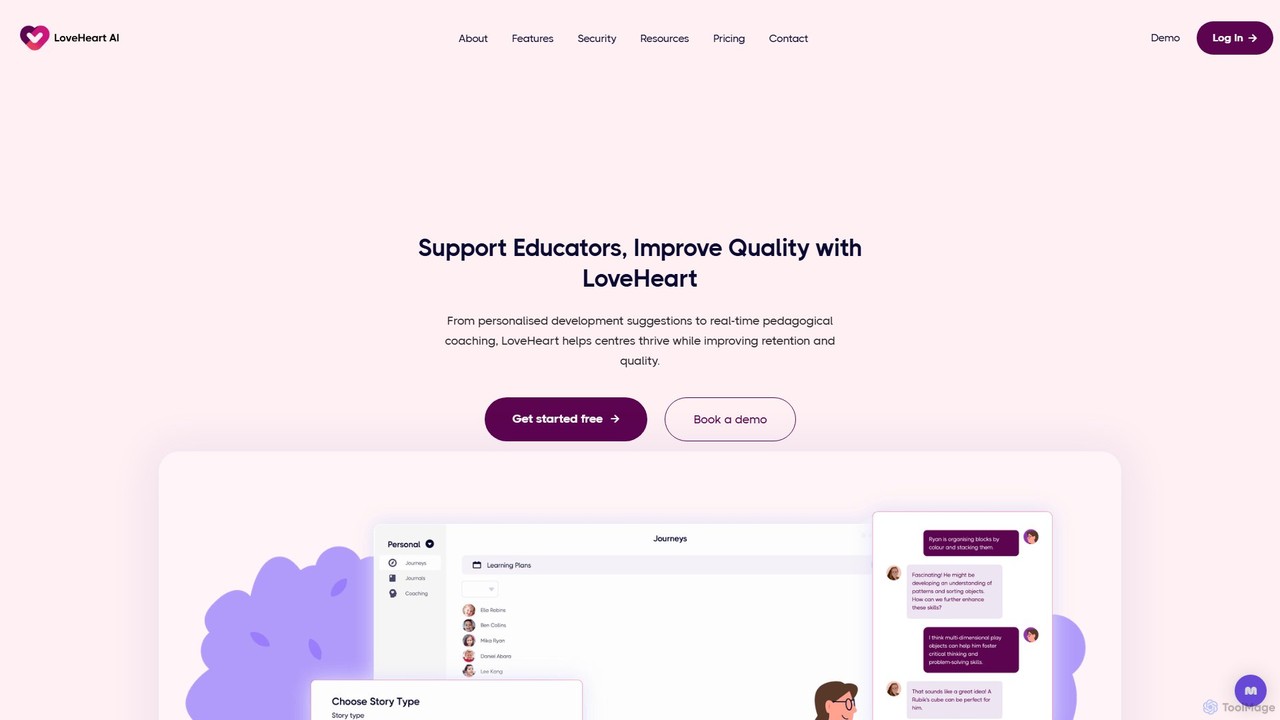
LoveHeart (now Mana) is an AI-powered platform designed for Early Childhood Education (ECE). It acts as an educator's aide, automating documentation, generating personalized learning plans, and providing pedagogical coaching. It saves time, improves quality, and supports educators in creating better outcomes for children.
About Early Childhood
Early Childhood AI tools are specialized applications designed to support the cognitive, social, and emotional development of young children, typically from preschool to early elementary ages. Leveraging adaptive learning algorithms and interactive interfaces, these tools create personalized educational experiences that adjust to a child's individual pace and learning style. They transform foundational learning—such as literacy, numeracy, and problem-solving—into engaging, play-based activities. As a key part of the broader Education category, they focus specifically on age-appropriate content and developmental milestones.
Core Features
- Adaptive Learning Paths: Automatically adjusts the difficulty of activities based on the child's performance.
- Interactive Storytelling: Generates personalized stories or allows children to influence the narrative.
- Gamified Skill Practice: Teaches core concepts like letters, numbers, and shapes through engaging games.
- Speech Recognition for Pronunciation: Provides real-time feedback on phonics and language learning.
- Parental Analytics Dashboard: Offers parents and educators insights into a child's progress and areas for improvement.
Use Cases
These tools are widely used by parents at home for supplemental education, by preschool and kindergarten teachers to diversify classroom activities, and by speech therapists to create engaging exercises. They are also valuable for creating personalized learning materials and introducing children to new languages in an interactive format.
How to Choose
When selecting an Early Childhood AI tool, prioritize age-appropriateness and alignment with educational standards. Evaluate the platform's safety features, data privacy policies, and parental controls. Consider the balance between entertainment and educational value, and look for tools that provide clear progress tracking for parents or educators.
Early ChildhoodUse Cases
Personalized Reading Skill Development
A parent of a 4-year-old uses an AI app to help their child learn to read. The tool starts with basic letter recognition and phonics games. As the child masters these skills, the AI automatically introduces simple words and interactive stories with highlighted text. The app's speech recognition feature listens to the child read aloud, offering gentle corrections on pronunciation. This creates a pressure-free environment that adapts to the child's pace, building reading confidence more effectively than static worksheets.
Interactive Math Games for Preschoolers
A preschool teacher incorporates an AI-powered tablet game into their math center. The tool presents counting, sorting, and simple addition concepts through a fun, story-driven adventure. The AI adjusts the challenges for each student; one child might be practicing number recognition up to 10, while another is guided through basic shape-sorting puzzles. The teacher can later review a dashboard to see which concepts the class is grasping and where individual students might need extra support.
Creating Custom Bedtime Stories
A user wants to create unique bedtime stories for their child. Using an AI storytelling tool, they input prompts like "a brave squirrel who wants to fly to the moon" and select an art style. The AI generates a complete, illustrated storybook in minutes. The parent can further customize character names or plot points, creating a highly personal and engaging reading experience every night, fostering a love for stories and creativity without needing any artistic or writing skills.
Early Language Acquisition Support
A family wants to introduce their 5-year-old to Spanish. They use an AI language app designed for children, which uses gamification to teach basic vocabulary and phrases. The app features animated characters and interactive conversations where the child speaks into the microphone. The AI's speech recognition provides instant feedback on their pronunciation in a playful way, helping them build foundational conversational skills and a positive association with learning a new language.
Assisting with Speech Therapy Practice
A speech therapist assigns an AI-powered app as homework for a child working on specific phonetic sounds. The app presents games where the child has to correctly pronounce words to advance. For example, to make a character jump, they must clearly say "ship" or "sun." The AI provides visual and auditory feedback, turning repetitive drills into a rewarding game. The therapist can access a report on the child's practice sessions, tracking accuracy and frequency to better plan their next in-person session.
Developing Problem-Solving Skills
An educator uses an AI tool that offers interactive logic puzzles and coding-precursor games for young children. The platform presents challenges, such as guiding a character through a maze by sequencing simple commands (e.g., "up," "right," "up"). The AI provides hints when a child is stuck and gradually increases the complexity of the puzzles as their skills improve. This helps develop critical thinking, spatial reasoning, and foundational computational skills in a playful, screen-time-positive manner.