EcoSnap
EcoSnap is an AI-powered web tool that helps you recycle plastics more effectively. Simply take a picture of …
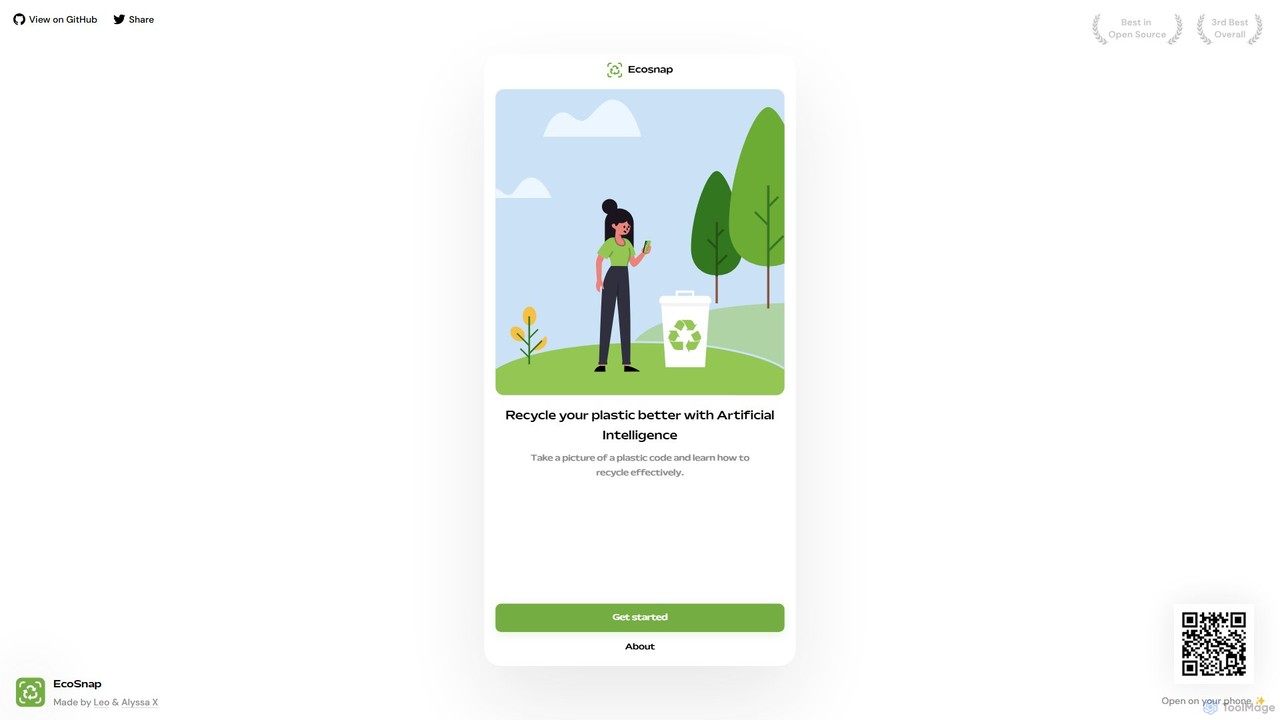
EcoSnap is an AI-powered web tool that helps you recycle plastics more effectively. Simply take a picture of a plastic's recycling code (the number inside the triangle), and the AI will instantly identify the plastic type and provide you with clear, actionable recycling instructions.
About Environment
Environment AI tools are specialized artificial intelligence applications designed to significantly enhance education and research across environmental science, sustainability, and ecological studies. These innovative tools leverage AI to process and interpret complex environmental data, create highly interactive simulations of natural phenomena, and deliver personalized learning experiences. By making intricate topics like climate change impacts, biodiversity conservation, and resource management more accessible and engaging, they empower students and educators to deeply understand global environmental challenges and foster actionable sustainable practices within various educational settings.
Core Features
- Interactive Environmental Simulations: Enable users to model and explore complex ecological systems, climate change scenarios, and the impacts of human activities or pollution, providing immersive experiential learning opportunities.
- Environmental Data Visualization & Analysis: Tools to process, analyze, and present vast datasets related to climate patterns, biodiversity metrics, and natural resource management, transforming raw data into understandable and actionable insights.
- Personalized Learning Paths for Environmental Topics: Dynamically adapt environmental curriculum content, quizzes, and resources to individual student needs, learning pace, and preferred styles, ensuring more effective knowledge acquisition.
- AI-powered Research Assistance: Facilitate comprehensive literature reviews, synthesize findings from numerous environmental studies, and identify emerging trends or patterns within vast scientific databases for advanced research projects.
- Sustainability Project Planning & Assessment: Offer frameworks and analytical capabilities to help design, monitor, and evaluate educational initiatives or community projects focused on environmental conservation, waste reduction, or renewable energy.
Applicable Scenarios
These AI tools are invaluable for university environmental science departments, K-12 schools integrating comprehensive sustainability education into their curriculum, and academic researchers analyzing complex ecological trends. They support hands-on, inquiry-based learning in classrooms, facilitate robust citizen science projects by simplifying data collection and interpretation, and assist in developing impactful community environmental awareness programs, bridging the gap between theory and real-world application.
How to Choose
When selecting Environment AI tools for educational purposes, prioritize the accuracy, currency, and scientific rigor of their environmental data sources. Evaluate the depth, interactivity, and pedagogical effectiveness of their simulations, and ensure strong alignment with specific educational standards or curriculum goals. Additionally, consider the tool's overall ease of use for both educators and students, its ability to integrate seamlessly with existing learning management systems (LMS), and the level of support and resources provided for implementation.

EnvironmentUse Cases
Designing Interactive Climate Change Lessons
Educators in high schools and universities utilize Environment AI tools to create dynamic and engaging lessons on climate change. By inputting specific parameters, they can generate interactive simulations that visualize global temperature increases, sea-level rise, or extreme weather events, allowing students to explore cause-and-effect relationships and potential mitigation strategies in a virtual environment. This fosters deeper understanding and critical thinking.
Analyzing Local Environmental Data for School Projects
Students undertaking environmental science projects can leverage AI tools to collect, process, and visualize local environmental data, such as air quality, water pollution levels, or biodiversity counts. The AI assists in identifying trends, anomalies, and correlations within the data, enabling students to conduct authentic scientific investigations and present their findings with professional-grade charts and maps, enhancing their research skills.
Personalized Learning Paths for Sustainability Education
AI-powered Environment tools offer personalized learning experiences for students studying sustainability topics like renewable energy, waste management, or circular economy principles. The AI assesses individual student progress and understanding, then adapts the curriculum, recommends supplementary resources, and provides targeted feedback, ensuring each student receives tailored support to master complex sustainability concepts at their own pace.
Simulating Ecosystem Dynamics for Research
Advanced students and researchers in ecology can use Environment AI tools to build and run complex simulations of ecosystem dynamics. This includes modeling population changes of species, predicting the spread of invasive species, or understanding the impact of habitat loss. These simulations provide a safe and efficient way to test hypotheses and explore long-term ecological consequences without real-world intervention, aiding scientific discovery.
Assessing Environmental Impact of School Initiatives
School administrators and student environmental clubs can employ AI tools to quantitatively assess the environmental impact of campus initiatives, such as waste reduction programs, energy efficiency upgrades, or water conservation efforts. The AI helps track metrics, analyze consumption patterns, and calculate carbon footprints, providing data-driven insights to measure success, identify areas for improvement, and report on sustainability achievements.
Facilitating Global Environmental Collaboration Projects
Environment AI tools can bridge geographical and linguistic barriers for international student collaboration on environmental issues. These tools can automatically translate research papers, standardize data formats from different regions, and facilitate real-time communication among students working on shared projects like global pollution monitoring or comparative biodiversity studies. This fosters cross-cultural understanding and collective problem-solving.