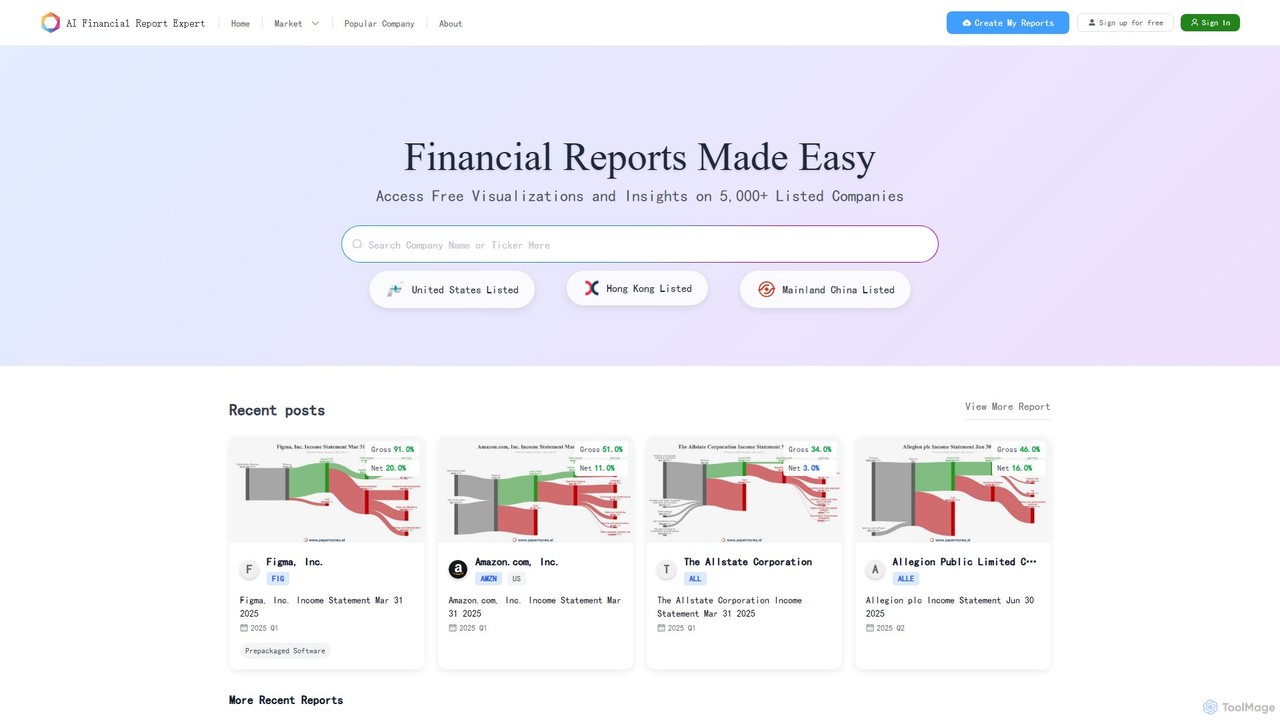
AI Finance tools are a category of AI-powered applications specifically designed to enhance financial education and learning. Leveraging technologies like machine learning, natural language processing, and predictive analytics, these tools provide personalized learning experiences, simulate market scenarios, and offer data-driven insights for educational purposes. They aim to equip students, professionals, and lifelong learners with practical financial literacy, analytical skills, and informed decision-making capabilities within an academic context.
Core Features
- Personalized Learning Paths: AI algorithms adapt content and pace to individual learning styles and knowledge gaps in finance.
- Financial Market Simulation: Realistic virtual environments for practicing trading, investment, and risk management without real-world financial exposure.
- Data Analysis & Visualization: Tools to process and visualize complex financial data, aiding in understanding economic trends and financial reports.
- Automated Tutoring & Feedback: AI assistants provide instant explanations for financial concepts and constructive feedback on assignments or simulations.
- Risk Management Training: Interactive modules that teach identification, assessment, and mitigation of financial risks through simulated scenarios.
Applicable Scenarios
These tools are invaluable for university finance departments, business schools, corporate training programs, and individual learners. They support students in mastering complex financial theories, help aspiring investors practice strategies, and enable professionals to stay updated on financial regulations and market dynamics through interactive, AI-driven modules.
How to Choose
When selecting AI Finance tools for education, consider the breadth and depth of financial topics covered, the realism and accuracy of simulations, and the adaptability of personalized learning paths. Evaluate the user interface for ease of use, the quality of data sources for analysis, and the integration capabilities with existing learning management systems. Also, assess the level of interactive feedback and the tool's ability to track and report learning progress effectively.