ToolMage
Sign in

Best 2 Homeschooling AI tools for Education

Popular Homeschooling AI tools in Education include Nautilus Homeschool and Infinilearn, helping you work more efficiently.

Infinilearn

Infinilearn

Infinilearn is an AI-powered personalized learning companion designed for homeschoolers. It combines an adaptive curriculum with a unique social learning platform, allowing students to learn at their own pace while connecting with peers in a safe, moderated environment. It aims to make homeschooling more engaging, effective, and socially enriching for both students and parents.

Homeschooling
Visits 8.6KFavorites 148Likes 151
Nautilus Homeschool
Freemium

Nautilus Homeschool

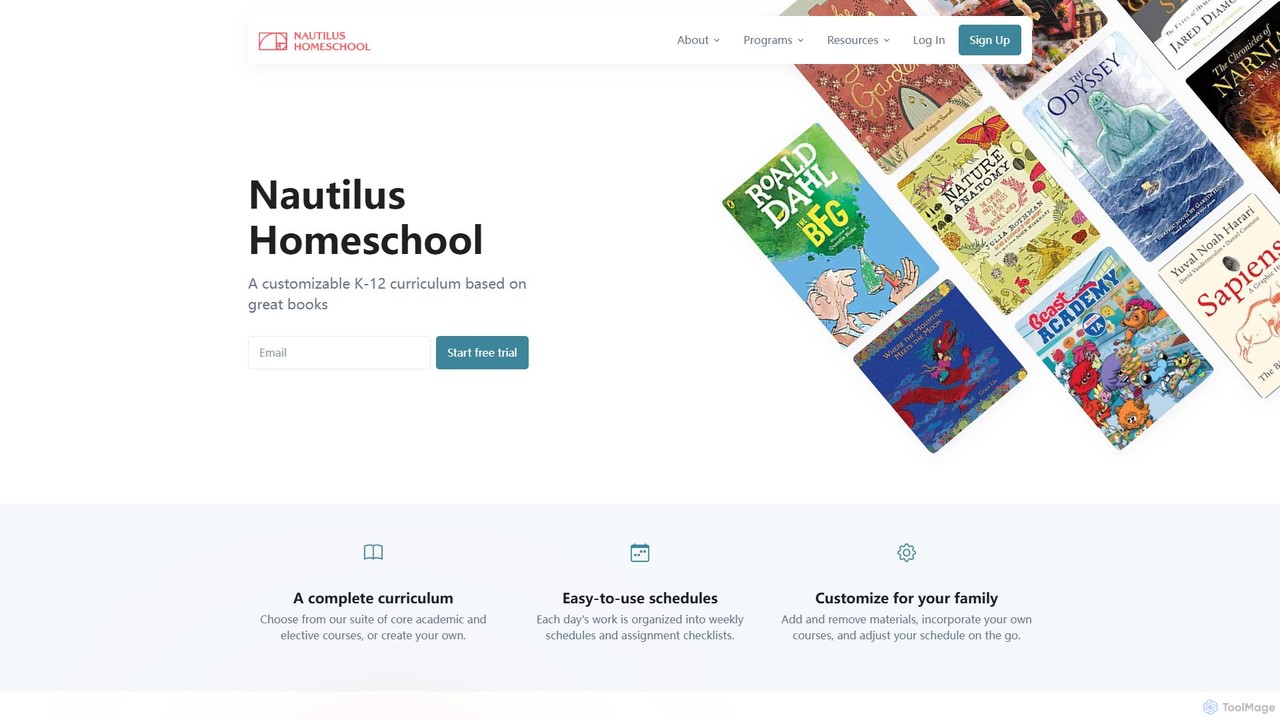
Nautilus Homeschool offers a customizable K-12 curriculum for homeschooling families. Based on a secular, 'great books' philosophy, it provides flexible weekly schedules, over 100 courses, and a single affordable plan for the entire family. It empowers parents to create a personalized, academically rigorous education.

Curriculum Builder
Visits 14.5KFavorites 131Likes 127

About Homeschooling

AI Homeschooling tools are specialized platforms designed to support and streamline home-based education. These tools leverage artificial intelligence to create personalized learning paths, generate custom curricula, and automate administrative tasks for parents acting as educators. They provide a structured yet flexible framework, adapting content to a student's individual pace and learning style. This enables parents to deliver a high-quality, tailored education without needing to be subject matter experts in every field.

Core Features

  • Adaptive Curriculum Generation: Automatically creates lesson plans, activities, and assessments based on a child's age, skill level, and interests.
  • AI-Powered Tutoring: Offers real-time assistance, explanations, and step-by-step solutions for challenging subjects like math and science.
  • Automated Progress Tracking: Monitors student performance, identifies areas of weakness, and generates detailed reports for parents.
  • Interactive Learning Content: Creates engaging educational materials such as quizzes, interactive stories, and gamified exercises.
  • Resource Curation: Discovers and organizes relevant educational videos, articles, and online resources to supplement lessons.

Applicable Scenarios

These tools are ideal for homeschooling parents of children from kindergarten through high school. They are particularly valuable for families managing multiple children at different grade levels or for parents who need support in specific subjects. Tutors also use them to manage personalized learning plans for their students, while families with children requiring special educational accommodations benefit from the high degree of customization.

Selection Criteria

When choosing an AI Homeschooling tool, consider the breadth of subject coverage and its alignment with your educational philosophy. Evaluate the adaptability of the curriculum and the quality of the parent-facing dashboard for tracking progress. Also, assess the level of interactivity in the learning modules and the pricing structure, whether it's a per-child subscription or a family plan.

Homeschooling use cases

1

Create a Custom Science Curriculum

A homeschooling parent of a 5th grader wants to create an engaging science curriculum focused on astronomy. Using an AI Homeschooling tool, they input the child's grade level, topic of interest (astronomy), and desired learning duration (one semester). The AI instantly generates a complete 16-week curriculum, including weekly lesson plans, hands-on experiment ideas, links to relevant documentaries, and automated quizzes. This saves the parent dozens of hours of research and planning, ensuring a comprehensive and captivating learning experience.

2

Automate Math Practice and Grading

A parent is struggling to provide consistent math practice and timely feedback for their 8-year-old. They use an AI Homeschooling platform with an adaptive math module. The AI assesses the child's current skill level and generates targeted practice problems. It provides instant feedback on incorrect answers with step-by-step explanations. The parent's dashboard shows real-time progress, highlighting concepts that have been mastered and areas needing more attention. This automates the tedious process of creating worksheets and grading, allowing the parent to focus on conceptual understanding.

3

Develop Reading Comprehension Skills

To improve their 7-year-old's reading comprehension, a parent uses an AI tool that generates personalized short stories. The parent can select themes, vocabulary levels, and even include the child's name as the main character. After each story, the AI generates a set of questions that test recall, inference, and vocabulary. The system tracks performance over time, gradually increasing the complexity of the texts and questions as the child's skills improve. This provides a fun, interactive, and highly effective way to build foundational literacy skills at home.

4

Manage Learning for Multiple Children

A parent homeschooling a 2nd grader and a 6th grader uses an AI platform to manage their disparate educational needs. From a central dashboard, the parent can access and assign separate, age-appropriate curricula for English, Math, and History for each child. The AI helps schedule their daily activities to avoid conflicts and ensures both children receive adequate attention. The platform consolidates progress reports, allowing the parent to quickly review each child's performance, upcoming assignments, and areas needing support, simplifying the complex logistics of multi-child homeschooling.

5

Generate Foreign Language Learning Activities

A family wants to introduce Spanish to their elementary-aged children as part of their homeschool curriculum. They use an AI tool to generate engaging language learning content. The parent specifies the proficiency level (beginner) and topics (animals, food, family). The AI creates interactive flashcards with audio pronunciation, simple conversational scripts for role-playing, and short, illustrated stories in Spanish with English translations. This provides a rich, multi-sensory learning environment without requiring the parent to be fluent in the language themselves.

6

Prepare a High Schooler for Standardized Tests

A homeschooled high school student is preparing for the SAT. Their parent uses an AI-powered test prep platform. The student first takes a diagnostic test, and the AI analyzes the results to identify specific weaknesses, such as geometry or vocabulary in context. Based on this analysis, the AI creates a personalized study schedule with targeted video lessons, practice drills, and full-length simulated exams. The platform tracks improvement over time and adjusts the study plan accordingly, maximizing study efficiency and building the student's confidence for test day.

Homeschooling FAQ

What are AI Homeschooling tools?

AI Homeschooling tools are software applications that use artificial intelligence to assist parents in educating their children at home. They go beyond simple digital resources by actively creating personalized learning plans, generating custom educational content, and automating administrative tasks like progress tracking and lesson planning. Their primary goal is to make homeschooling more effective, manageable, and tailored to the individual needs of each child, acting as an intelligent assistant for the parent-educator.

How to choose the right AI tool for my family's homeschooling needs?

Choosing the right tool depends on your specific needs. Consider these factors:

  • Curriculum & Subjects: Does the tool cover the subjects and age ranges you need? Does its educational approach align with your family's philosophy?
  • Adaptability: How well can the tool personalize content? Look for features like adaptive learning paths that adjust to your child's performance.
  • Parent Dashboard: Evaluate the reporting and tracking features. A good tool should make it easy for you to see progress, identify struggles, and adjust plans.
  • Engagement: Is the content interactive and engaging for your child? Look for gamification, videos, and hands-on project suggestions.
  • Budget: Compare pricing models, such as monthly subscriptions per child versus a one-time family plan.
What's the difference between general AI Education tools and specific AI Homeschooling tools?

The main difference lies in the target user and environment. General AI Education tools are often designed for traditional classroom settings, focusing on features for teachers managing large groups of students (e.g., plagiarism checkers, bulk assignment grading). AI Homeschooling tools, in contrast, are built for the parent-educator and the one-on-one or small-group dynamic of a home. They prioritize features like full curriculum generation, flexible scheduling, and parent-friendly progress reports over classroom management functionalities.

Can AI tools replace a parent's role in homeschooling?

No, AI tools are designed to be assistants, not replacements. They excel at handling the structured, administrative, and content-generation aspects of education. This frees up the parent's time and energy to focus on the uniquely human elements of teaching: mentoring, providing emotional support, fostering curiosity, and guiding real-world experiences. The most effective homeschooling environments use AI to augment the parent's efforts, allowing them to be more present and effective as a guide and facilitator of learning.

Are AI Homeschooling tools suitable for children with special learning needs?

Yes, many AI Homeschooling tools can be highly beneficial for children with special learning needs. Their core strength is personalization. These tools can adapt the pace of learning, present information in multiple formats (text, audio, visual), and break down complex topics into smaller, more manageable steps. For students with conditions like ADHD or dyslexia, the ability to create a customized, low-distraction, and self-paced learning environment can significantly improve educational outcomes. However, it's important to choose a tool specifically designed with these adaptive features in mind.