ToolMage
Sign in

Best 2 Language Arts AI tools for Education

Popular Language Arts AI tools in Education include TextFX and Sonnet, helping you work more efficiently.

Sonnet
Freemium

Sonnet

Sonnet is an AI-powered creative writing assistant designed to help writers, poets, and creators overcome writer's block and enter a state of flow. It combines a minimalist, distraction-free editor with intelligent tools for idea generation, stylistic enhancement, and poetic composition, fostering a seamless connection between thought and text.

Poetry
Visits 31KFavorites 135Likes 154
TextFX
Free

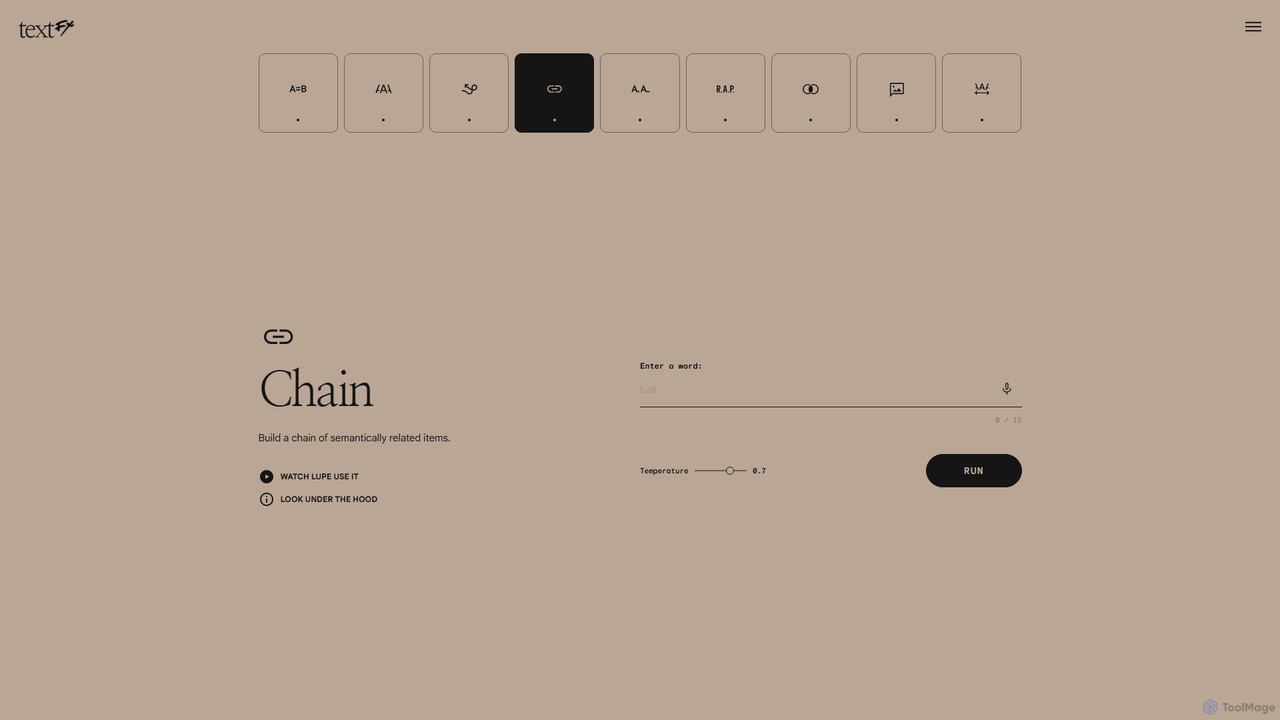
TextFX

TextFX is a collection of experimental AI-powered writing tools from Google, designed in collaboration with artist Lupe Fiasco. It helps writers, rappers, and creators explore the creative potential of text by generating similes, acronyms, alliterations, and other literary devices. Built on Google's advanced language models, TextFX acts as a creative partner to spark new ideas and overcome writer's block.

Brainstorming
Visits 83.3KFavorites 145Likes 146

About Language Arts

Language Arts AI tools are a specialized category of educational software that uses artificial intelligence to improve reading, writing, and communication skills. These tools leverage natural language processing (NLP) and machine learning to provide personalized feedback, interactive exercises, and targeted instruction. They are designed to assist students, educators, and writers in mastering grammar, expanding vocabulary, refining writing style, and enhancing reading comprehension. Unlike general writing assistants, these tools often incorporate pedagogical principles to actively teach and reinforce language concepts.

Core Features

  • Grammar and Style Analysis: Provides real-time feedback on syntax, punctuation, tone, and clarity, often with explanations of the underlying rules.
  • Reading Comprehension Support: Generates summaries, identifies key themes, defines complex vocabulary, and creates quizzes to assess understanding of a text.
  • Interactive Writing Prompts: Offers dynamic and creative prompts, story starters, and exercises to stimulate writing and overcome writer's block.
  • Pronunciation and Phonics Feedback: Utilizes speech recognition to analyze pronunciation, intonation, and fluency for language learners and early readers.

Use Cases

These tools are widely used in K-12 and higher education classrooms to supplement traditional teaching. They are also valuable for corporate training programs focused on improving business communication, for ESL (English as a Second Language) learners practicing their skills, and for individual writers seeking to hone their craft.

How to Choose

When selecting a Language Arts AI tool, consider its curriculum alignment and the specific skills it targets (e.g., creative writing vs. academic essays). Evaluate the quality and depth of the feedback provided. Check for integration capabilities with Learning Management Systems (LMS) like Canvas or Moodle, and assess the user interface for age-appropriateness and ease of use.

Language Arts use cases

1

Automated Essay Feedback for Teachers

An English teacher uses a Language Arts AI tool to provide initial feedback on a batch of student essays. The tool automatically checks for grammatical errors, spelling mistakes, plagiarism, and structural coherence. It highlights issues and suggests improvements, allowing the teacher to save significant time on mechanical corrections. This enables them to focus their valuable time on providing more in-depth feedback on argumentation, critical thinking, and creative expression, ultimately enhancing the quality of instruction.

2

Interactive Vocabulary Building for Students

A middle school student uses a gamified AI application to expand their vocabulary for an upcoming exam. The tool presents new words in the context of interactive stories and quizzes. It adapts the difficulty level based on the student's performance, reintroducing words they struggle with through different activities. This personalized learning path makes studying more engaging and effective than traditional flashcards, helping the student retain information better and improve their test scores.

3

Pronunciation Practice for Language Learners

An adult learning English as a second language (ESL) uses an AI tool to improve their pronunciation. They read sentences aloud, and the tool's speech recognition technology provides instant feedback. It visualizes their sound waves compared to a native speaker's, highlights specific phonemes they mispronounce, and offers video tutorials on correct mouth and tongue placement. This targeted, private practice helps the learner build confidence and clarity in their spoken English without the fear of making mistakes in front of others.

4

Creative Writing Assistance for Aspiring Authors

A novelist experiencing writer's block uses an AI tool to generate fresh ideas. By inputting a basic premise, such as 'a detective in a futuristic city,' the tool suggests various plot twists, character archetypes, and dialogue snippets. It doesn't write the story for them but acts as a brainstorming partner, providing creative prompts that help the author explore new narrative directions. This process helps break through creative stagnation and allows the writer to regain momentum on their project.

5

Improving Business Communication Clarity

A project manager uses a Language Arts AI tool integrated into their email client to refine professional communications. Before sending an important email to a client, the tool analyzes the text for tone, clarity, and conciseness. It might suggest replacing jargon with simpler terms, rephrasing passive sentences into active ones for greater impact, and ensuring the overall tone is professional and polite. This helps prevent miscommunication and ensures that all written correspondence from the team maintains a high standard of quality.

6

Reading Support for Students with Dyslexia

A student with dyslexia uses a specialized Language Arts AI tool to assist with reading assignments. The tool offers text-to-speech functionality, highlighting words as they are read aloud, which improves tracking and focus. It can also simplify complex sentences or provide definitions for difficult words with a single click. Some tools offer dyslexia-friendly fonts and customizable background colors to reduce visual stress. This assistive technology empowers the student to engage with grade-level texts independently, fostering confidence and improving comprehension.

Language Arts FAQ

What are AI Language Arts tools?

AI Language Arts tools are educational software designed to enhance skills in reading, writing, and communication using artificial intelligence. They go beyond simple grammar checking by incorporating pedagogical features to actively teach users. Key functions include providing in-depth stylistic feedback, generating reading comprehension questions, offering interactive writing exercises, and using speech recognition for pronunciation practice. They are essentially digital tutors that offer personalized, on-demand support for language learning.

How to choose the right AI Language Arts tool?

To choose the right tool, first identify your primary goal. Are you a teacher needing grading assistance, a student practicing for exams, or a writer seeking creative prompts? Consider these factors:

  • Skill Focus: Does the tool specialize in grammar, reading comprehension, vocabulary, or creative writing?
  • User Age and Level: Ensure the interface and content are appropriate for the intended user (e.g., K-12 student vs. business professional).
  • Feedback Quality: Look for tools that provide clear, actionable feedback with explanations, not just corrections.
  • Integration: If for classroom or work use, check if it integrates with your existing platforms like Google Docs or an LMS.
What's the difference between AI Language Arts tools and general AI writers?

The primary difference is their purpose. General AI writers (like large language models) are designed for content generation—their goal is to produce human-like text. AI Language Arts tools, however, are designed for skill development. Their goal is to teach and improve a user's own language abilities. While an AI writer might write an essay for you, a Language Arts tool will analyze the essay you wrote, identify areas for improvement, and explain the underlying grammatical or stylistic principles to help you become a better writer yourself.

Who can benefit from using AI Language Arts tools?

A wide range of users can benefit from these tools. This includes:

  • K-12 and University Students: For help with homework, essay writing, and test preparation.
  • Educators and Tutors: To automate grading of basic errors and provide supplementary, personalized practice for students.
  • Non-Native Speakers (ESL/EFL): To practice pronunciation, expand vocabulary, and understand grammatical nuances.
  • Writers and Bloggers: To refine their style, overcome writer's block, and proofread their work.
  • Business Professionals: To improve the clarity, tone, and professionalism of their emails, reports, and presentations.
Can these tools replace human teachers or tutors?

No, AI Language Arts tools are designed to be assistive technologies that supplement, rather than replace, human instruction. A human teacher can understand a student's unique context, provide emotional support, and foster critical thinking in ways that AI currently cannot. These tools are most effective when used as a supplement to traditional teaching, allowing educators to offload repetitive tasks like basic grammar correction and focus on higher-level instruction and mentorship.