ToolMage
Sign in

Best 1 Learning Companion AI tools for Education

Popular Learning Companion AI tools in Education include Pi, helping you work more efficiently.

Pi
Free

Pi

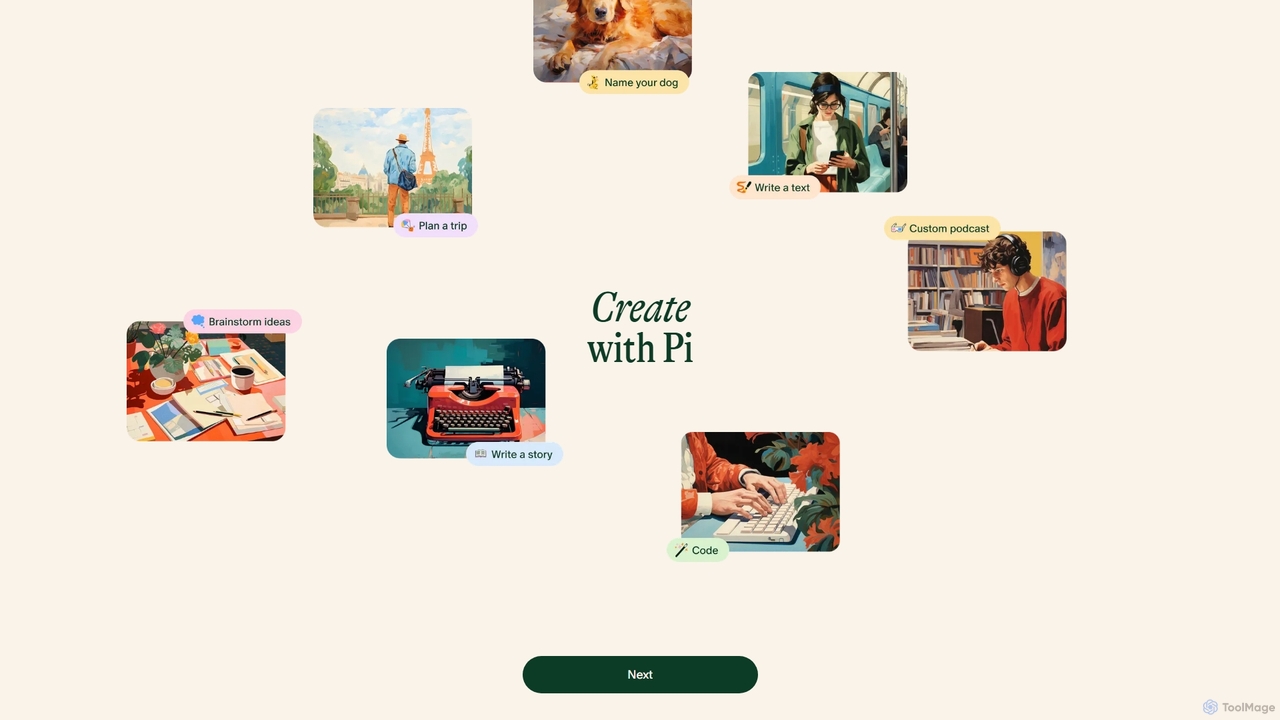
Pi is a personal AI designed to be a supportive and intelligent companion. Developed by Inflection AI, it focuses on natural, empathetic conversations. You can use Pi for brainstorming ideas, getting advice, learning new things, or simply having a friendly chat. With its high-quality voice options and multi-platform availability, Pi aims to provide a kind and helpful AI experience, making it more than just a tool—it's a personal companion for your daily life.

Conversational Ai
Visits 582.3KFavorites 103Likes 107

About Learning Companion

AI Learning Companions are a class of educational tools that provide personalized, interactive academic support to individual learners. They leverage conversational AI and adaptive learning algorithms to answer questions, explain complex concepts, and generate practice exercises on demand. This creates a dynamic, one-on-one tutoring experience, making self-study more engaging and effective. Unlike general search engines, these companions offer structured guidance tailored to a user's specific learning materials and pace.

Core Features

  • Personalized Tutoring: Adapts explanations and content difficulty based on the user's understanding and progress.
  • Interactive Q&A: Provides real-time, contextual answers to specific questions about study materials.
  • Concept Simplification: Breaks down complex topics, theories, and formulas into easily digestible explanations.
  • Automated Quizzing: Generates practice questions, quizzes, and flashcards from uploaded documents or topics to test knowledge.
  • Content Summarization: Condenses long texts, lecture notes, or research papers into key points and summaries.

Applicable Scenarios

These tools are widely used by university and high school students for exam preparation and homework assistance. Professionals also use them for upskilling and mastering new technical subjects, while lifelong learners leverage them to explore new areas of interest. They are particularly effective for subjects requiring deep conceptual understanding, such as science, mathematics, history, and literature.

Selection Criteria

When choosing an AI Learning Companion, consider the range of subjects it covers and its ability to process different file types (e.g., PDF, DOCX, URLs). Evaluate the quality and depth of its explanations and the interactivity of its features. Also, assess the pricing model—whether it's subscription-based or pay-per-use—and ensure it aligns with your learning frequency and budget.

Learning Companion use cases

1

University Student Prepares for Final Exams

A university student studying economics uploads weeks of lecture notes, textbook chapters in PDF format, and past exam papers into an AI Learning Companion. The tool quickly processes the materials and creates a personalized study hub. The student asks specific questions like, 'Explain the concept of elasticity in the context of last week's lecture.' The AI provides a tailored explanation, referencing the uploaded notes. It then generates a series of practice quizzes focusing on the student's identified weak areas, helping them efficiently prepare and gain confidence before the exam.

2

Professional Upskilling in a New Technology

A software developer needs to learn a new programming framework for an upcoming project. They use an AI Learning Companion by feeding it official documentation, tutorials, and code repositories. Instead of reading linearly, the developer asks targeted questions like 'What are the best practices for state management in this framework?' or 'Show me a code example for handling API errors.' The AI acts as an expert mentor, providing instant, context-aware code snippets and explanations, significantly accelerating the learning curve compared to traditional self-study methods.

3

High School Student Tackles Complex Physics Concepts

A high school student is struggling with concepts in Newtonian physics. They upload their textbook chapter on motion and forces to an AI Learning Companion. When they encounter a difficult problem, they can ask the AI to 'explain this problem step-by-step' or 'give me an analogy for inertia.' The AI breaks down the problem-solving process and provides relatable, real-world examples, transforming abstract theories into understandable concepts. This interactive approach helps the student build a foundational understanding that rote memorization cannot achieve.

4

Language Learner Practices Conversational Skills

Someone learning Spanish uses an AI Learning Companion as a conversation partner. They can initiate a text-based chat in Spanish about various topics, from ordering food at a restaurant to discussing current events. The AI responds naturally, corrects grammatical mistakes in real-time, and suggests more appropriate vocabulary. For example, if the user makes a mistake with verb conjugation, the AI can gently correct it and provide a brief explanation. This provides a safe, non-judgmental environment for consistent practice, which is crucial for gaining fluency.

5

Lifelong Learner Explores a New Hobby

An amateur astronomer uses an AI Learning Companion to deepen their knowledge. Instead of navigating complex websites or textbooks, they can ask conversational questions like 'What's the difference between a nebula and a galaxy?' or 'Why is Mars red?'. The AI provides clear, concise answers and can even suggest related topics for further exploration, such as 'Would you like to learn about the types of galaxies?'. This creates a personalized and curiosity-driven learning journey, making it easy and enjoyable to explore a new field of interest without a formal curriculum.

6

Content Creator Researches Complex Topics

A YouTuber creating a documentary on ancient Rome needs to quickly grasp complex historical timelines and cultural nuances. They feed historical texts, academic papers, and articles into an AI Learning Companion. They can then query the aggregated knowledge base with questions like 'Summarize the key events of the Second Punic War' or 'What was the daily life of a Roman plebeian like?'. The tool synthesizes information from multiple sources to provide comprehensive answers, saving hours of manual research and cross-referencing, ensuring the content created is both accurate and well-informed.

Learning Companion FAQ

What is an AI Learning Companion?

An AI Learning Companion is a personalized educational tool designed to act as an interactive tutor or study partner. Unlike passive resources, it uses conversational AI to understand a user's questions about specific learning materials (like textbooks or lecture notes) and provides tailored explanations, summaries, and practice quizzes. Its primary goal is to make learning more active, efficient, and adapted to an individual's pace and style.

How to choose the right AI Learning Companion?

When selecting an AI Learning Companion, consider these factors:

  • Subject Coverage: Ensure the tool specializes in or adequately supports the subjects you need to study.
  • Input Flexibility: Check if it can process various formats like PDFs, text, URLs, or even audio/video content.
  • Interactivity Level: Look for features beyond simple Q&A, such as quiz generation, flashcards, and concept mapping, that match your learning style.
  • Quality of Explanation: Test the tool to see if its explanations are clear, accurate, and provide sufficient depth.
  • Pricing Model: Compare subscription costs, free-tier limitations, and pay-per-use options to find what best fits your budget and usage frequency.
What's the difference between an AI Learning Companion and a search engine?

The key difference lies in their purpose and interaction model. A search engine is a tool for information retrieval; it finds and presents links to existing resources based on keywords. An AI Learning Companion is a tool for knowledge synthesis and guided learning. It ingests specific content you provide and helps you understand it through conversation, explanation, and practice. Instead of just pointing you to information, it actively helps you process and learn it.

Can AI Learning Companions replace human teachers?

No, AI Learning Companions are not intended to replace human teachers. They are best viewed as supplementary tools that enhance the learning process. Teachers provide mentorship, critical thinking skills, and emotional support that AI cannot replicate. These tools handle the more repetitive aspects of learning, like answering factual questions and providing practice, freeing up teachers to focus on higher-level instruction and personalized student engagement.

Who can benefit most from an AI Learning Companion?

While useful for many, AI Learning Companions are particularly beneficial for:

  • Self-directed Learners: Individuals who study independently and need a tool to structure their learning and answer questions on the fly.
  • University and College Students: Those dealing with large volumes of complex information who need efficient ways to review, summarize, and test their knowledge.
  • Professionals in Technical Fields: People who need to constantly update their skills and quickly get up to speed on new documentation or frameworks.
  • Students Needing Extra Support: Learners who require additional explanations or practice outside of classroom hours to master difficult subjects.