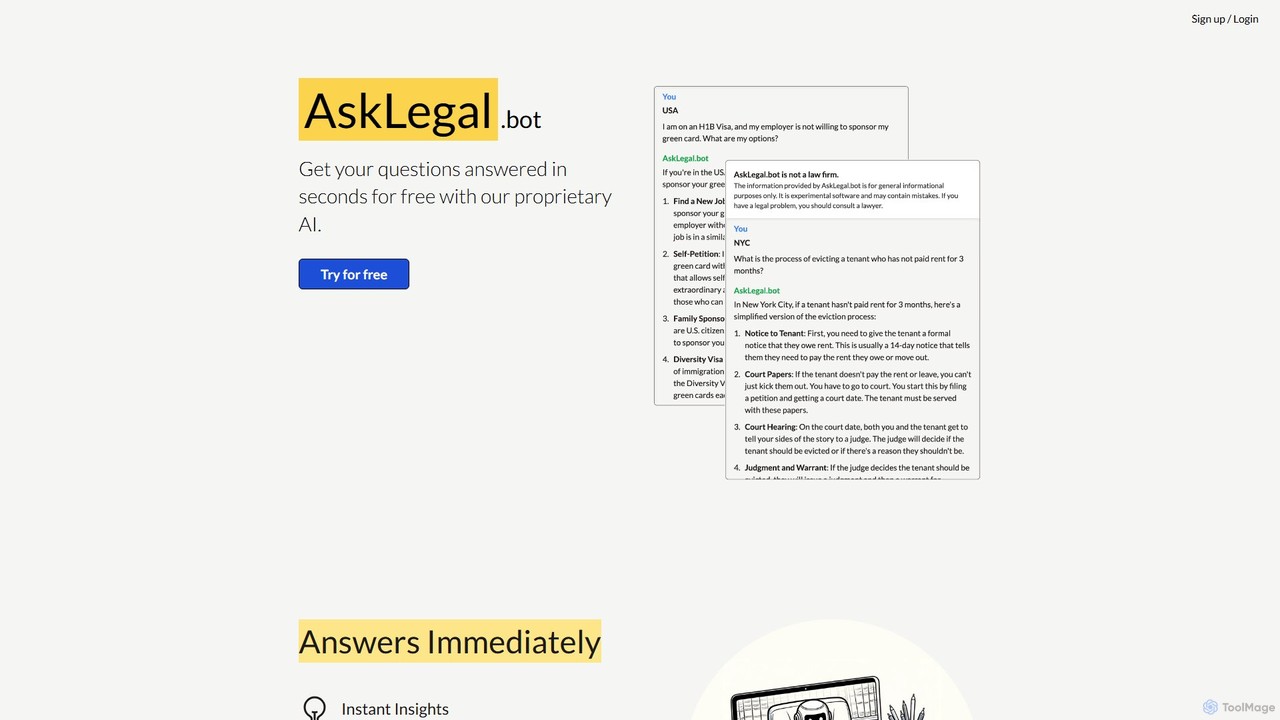
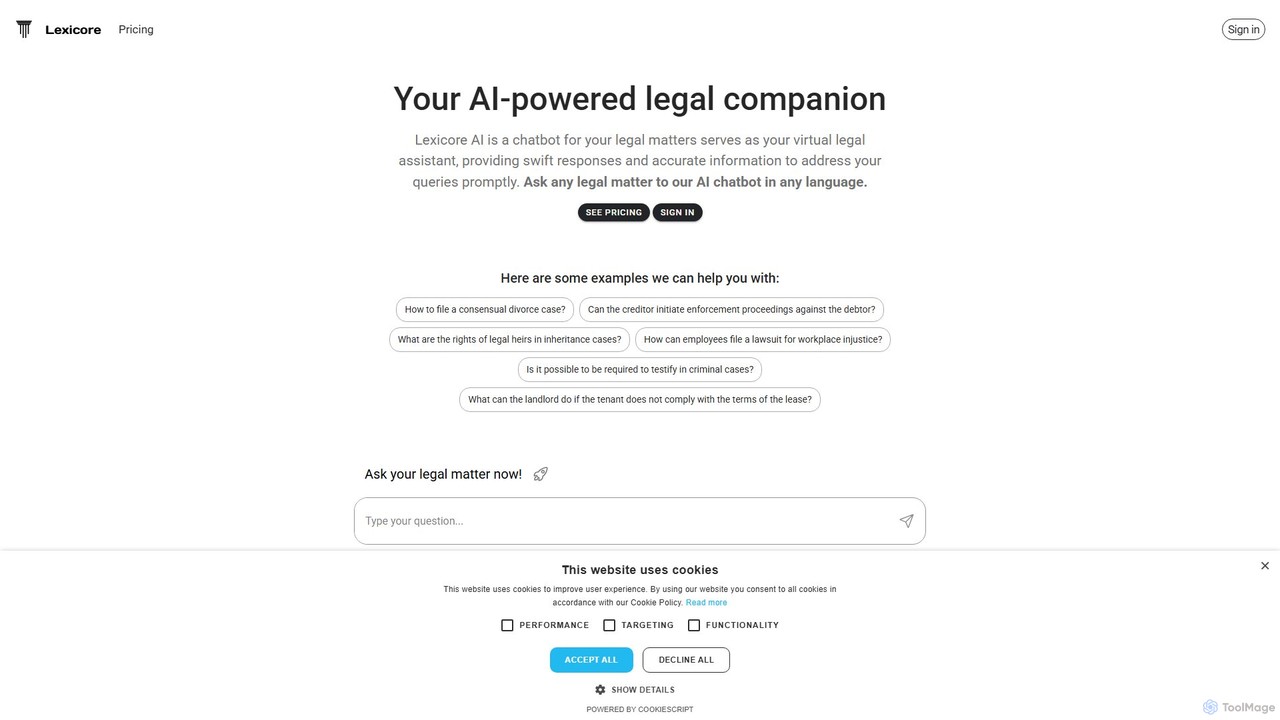
AI Legal Studies tools are a specialized category of educational software designed to enhance the learning and research process in the field of law. These tools leverage Natural Language Processing (NLP) and machine learning to analyze vast amounts of legal text, simulate real-world scenarios, and automate research tasks. They provide students, educators, and researchers with powerful capabilities to dissect complex cases, understand legal precedents, and practice argumentation. This technology transforms traditional legal education by making it more interactive, efficient, and data-driven.
Core Features
- Case Law Analysis: Automatically extracts key information, identifies legal precedents, and summarizes judicial opinions from large case databases.
- Legal Research Automation: Utilizes intelligent search to quickly find relevant statutes, regulations, and academic articles, significantly reducing research time.
- Interactive Simulation: Provides virtual environments for practicing moot court arguments, contract negotiations, or client counseling sessions.
- Document Drafting & Review: Assists in drafting standard legal documents and offers AI-powered feedback on clarity, completeness, and potential issues.
- Predictive Analytics: Analyzes historical legal data to forecast potential case outcomes, helping students understand legal strategy.
Applicable Scenarios
These tools are primarily used in academic and training settings. Law students use them for case briefing, exam preparation, and skills development. Legal educators and academics integrate them into curricula to create dynamic learning experiences and conduct large-scale jurisprudential research. They are also valuable for paralegal training programs and continuing legal education (CLE) for practicing attorneys.
Selection Criteria
When choosing an AI Legal Studies tool, consider the breadth and currency of its legal database. Evaluate the accuracy and transparency of its analytical models. Assess its user interface for ease of use in an educational context and check for integration capabilities with existing Learning Management Systems (LMS). Finally, consider whether the tool's focus aligns with specific areas of law, such as litigation, corporate law, or intellectual property.