shooketh_ai
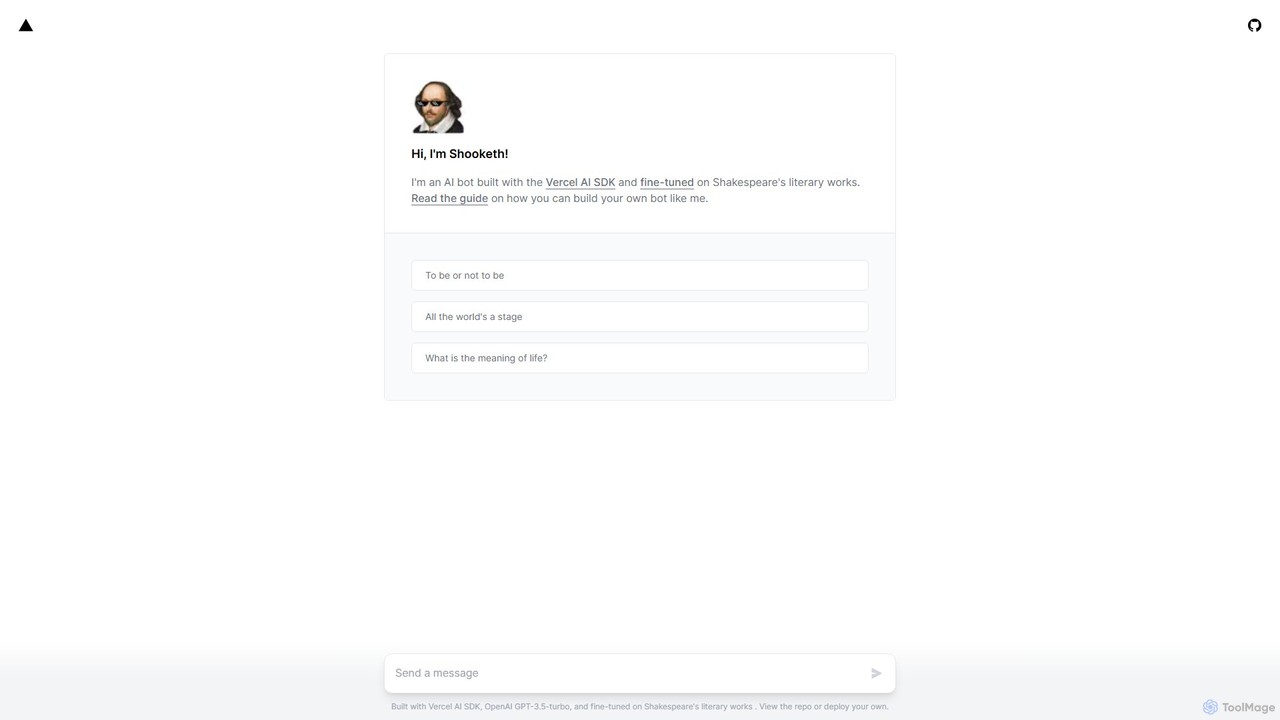
An AI chatbot fine-tuned on the complete literary works of William Shakespeare. It generates text, answers questions, and …
An AI chatbot fine-tuned on the complete literary works of William Shakespeare. It generates text, answers questions, and converses in an authentic Elizabethan style, serving as a tool for education, creative writing, and entertainment.
Hyravision
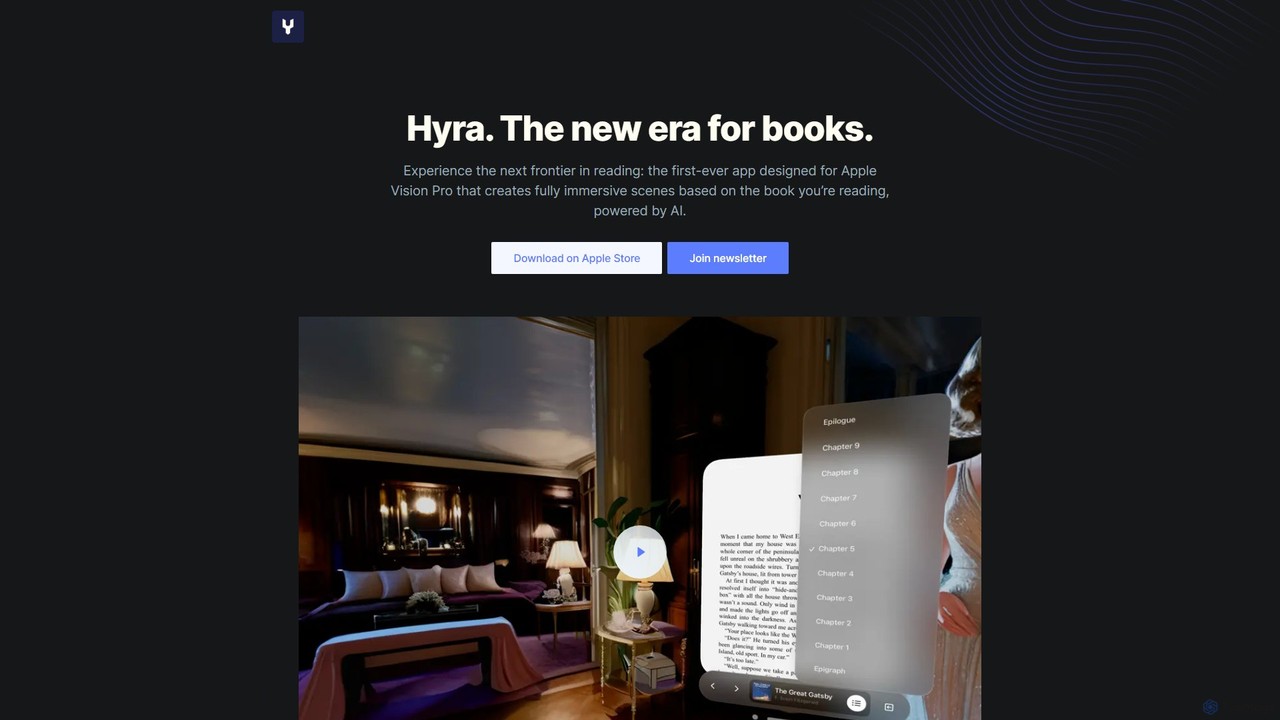
Hyravision is a revolutionary AI-powered app for Apple Vision Pro that transforms reading into a fully immersive experience. …
Hyravision is a revolutionary AI-powered app for Apple Vision Pro that transforms reading into a fully immersive experience. As you read, it generates dynamic, 360-degree visual scenes based on the book's text, bringing literary worlds to life around you. Explore classic novels like never before through the new era of spatial reading.
PoemGenerator.com
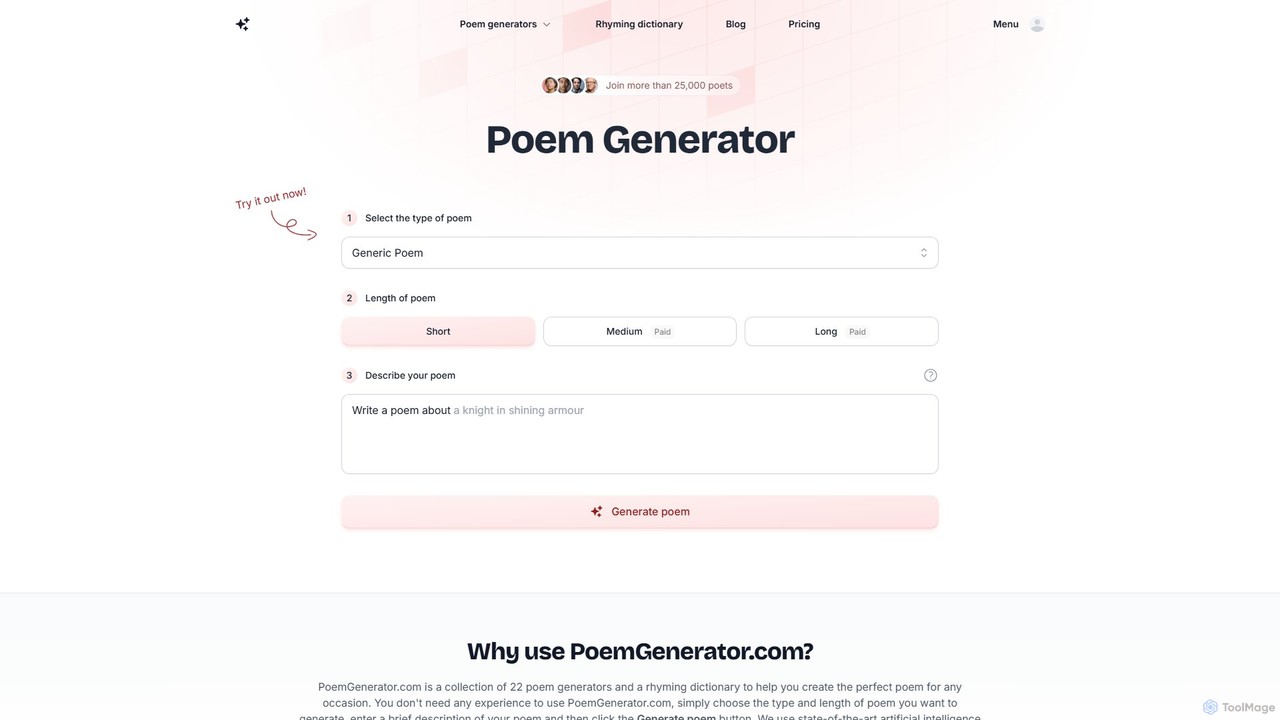
An AI-powered platform offering 22 distinct poem generators and a rhyming dictionary. Instantly create various poetic forms, from …
An AI-powered platform offering 22 distinct poem generators and a rhyming dictionary. Instantly create various poetic forms, from sonnets and haikus to free verse and limericks. Ideal for poets, students, and writers seeking creative inspiration or help with complex poetic structures. Get started for free and generate poems in seconds.
Gnod
Gnod (Global Network of Discovery) is a suite of AI-powered discovery engines designed to help you find new …
Gnod (Global Network of Discovery) is a suite of AI-powered discovery engines designed to help you find new music, movies, authors, and art based on your tastes. It also features a versatile meta-search tool for comparing results from various search engines.
About Literature
AI Literature tools are specialized AI-powered applications designed to assist with the creation, analysis, and enhancement of literary content. Leveraging advanced natural language processing (NLP) and generation models, these tools can generate text in various styles, analyze complex narratives, and provide creative inspiration. They serve as valuable aids for writers, researchers, and educators within the broader field of education, fostering innovation in literary studies and creative writing.
Core Features
- Text Generation: Creates prose, poetry, or scripts based on prompts, themes, or stylistic preferences.
- Style Analysis & Emulation: Identifies and replicates the stylistic nuances of specific authors or literary movements.
- Plot & Character Development: Assists in outlining story arcs, generating character backstories, and resolving plot inconsistencies.
- Literary Summarization: Condenses long literary works into concise summaries while preserving key themes and events.
- Thematic & Sentiment Analysis: Automatically identifies recurring themes, motifs, and emotional tones within texts.
Applicable Scenarios
These tools are invaluable for authors seeking creative inspiration or assistance with writer's block, helping to generate new ideas or refine existing drafts. Academics and students utilize them for in-depth literary analysis, identifying patterns, and summarizing complex texts for research or study. Educators can also employ them to create diverse examples of literary styles or to generate comprehension questions for students.
How to Choose
When selecting an AI Literature tool, consider its primary function (generation, analysis, or both), the range of literary styles it supports, and its language capabilities. Evaluate the quality and originality of its output, its integration with existing writing platforms, and the ethical guidelines it provides regarding authorship and plagiarism. User-friendliness and the ability to customize outputs are also crucial for a seamless creative or analytical workflow.

LiteratureUse Cases
Creative Novel Writing Assistance
A novelist struggling with writer's block can use AI literature tools to generate diverse plot outlines, develop intricate character backstories, or brainstorm alternative narrative directions. By inputting initial ideas or existing manuscript sections, the AI can provide fresh perspectives, suggest dialogue, or even draft entire scenes, significantly accelerating the creative process and helping to overcome narrative hurdles.
Poetry & Lyrical Composition
Aspiring poets or songwriters can leverage AI tools to experiment with different poetic forms, rhyme schemes, and thematic expressions. The AI can generate verses in specific styles, suggest evocative imagery, or help refine rhythm and meter. This allows creators to explore new artistic avenues, overcome creative plateaus, and produce unique lyrical content more efficiently.
Academic Literary Research & Analysis
Literary scholars and students can employ AI tools to perform deep textual analysis on large corpuses of literature. The AI can identify recurring themes, stylistic patterns, sentiment shifts, and intertextual connections across hundreds of texts. This capability streamlines the research process, uncovers insights that might be missed by manual review, and supports the formulation of robust academic arguments.
Scriptwriting & Dialogue Generation
Screenwriters and playwrights can utilize AI literature tools to develop compelling dialogue, flesh out scene descriptions, or generate multiple script variations. By providing character profiles and plot points, the AI can craft natural-sounding conversations that fit the characters' personalities and advance the story, saving considerable time in the drafting phase and enhancing creative output.
Educational Content Creation for Literature Studies
Educators can use AI literature tools to create customized learning materials, such as simplified versions of classic texts for younger readers, generate comprehension questions, or produce examples of different literary devices. This helps make complex literary concepts more accessible to students, diversifies teaching resources, and supports differentiated instruction in literature classrooms.
Personalized Storytelling & Interactive Narratives
Individuals interested in personalized reading experiences or creating interactive fiction can use AI tools to generate unique story branches or adapt existing narratives. The AI can respond to user choices, creating dynamic plot developments and character interactions, offering a novel way to engage with storytelling and explore infinite narrative possibilities.