AI Math tools are specialized applications that use artificial intelligence to solve mathematical problems and explain concepts. They leverage algorithms for symbolic computation, natural language processing, and computer vision to interpret and break down equations, word problems, and even handwritten notes. These tools provide step-by-step solutions, making them valuable for students seeking homework help, teachers creating educational content, and professionals needing quick, accurate calculations. Their ability to visualize complex functions and geometric shapes enhances understanding beyond traditional methods.
Core Features
- Step-by-Step Solutions: Provides detailed, sequential explanations for solving problems, not just the final answer.
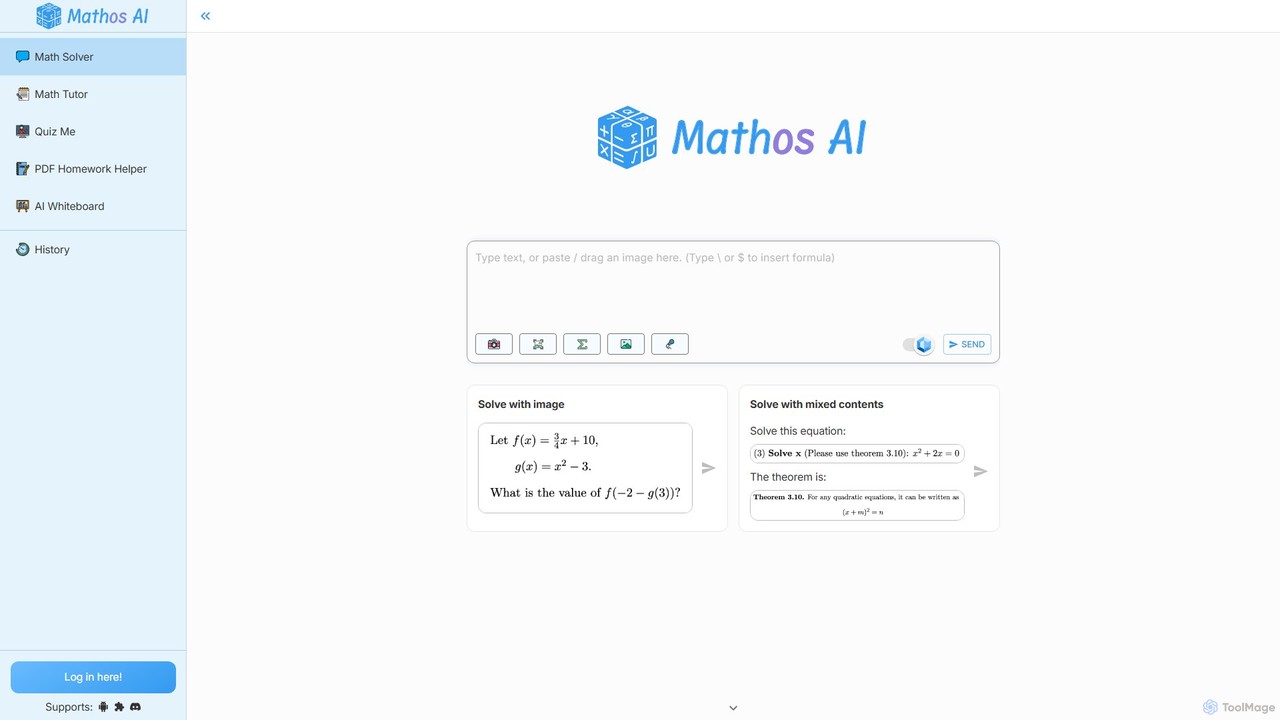
- Multi-Format Problem Input: Accepts problems via text, photos of handwritten equations, or uploaded documents.
- Interactive Graphing: Generates dynamic graphs for functions and equations to visualize relationships.
- Word Problem Interpretation: Uses NLP to understand and translate text-based problems into mathematical expressions.
- Geometric Analysis: Calculates properties and visualizes 2D and 3D geometric shapes.
Use Cases
These tools are widely used in academic settings from K-12 to university levels for learning and teaching. Students use them for homework assistance and exam preparation, while educators use them to generate practice questions and demonstrate complex concepts. In professional fields like engineering, finance, and data science, they serve as powerful calculators for modeling and analysis.
How to Choose
When selecting an AI Math tool, consider the range of mathematical subjects it covers (e.g., algebra, calculus, statistics). Evaluate the quality and clarity of its step-by-step explanations. Check its input capabilities—does it support photo recognition for handwritten problems? Finally, assess the user interface and pricing model to ensure it fits your needs and budget.