ToolMage
Sign in

Best 3 Medical AI tools for Education

Popular Medical AI tools in Education include Neural Consult, memrizz, and Ora AI, helping you work more efficiently.

memrizz
Freemium

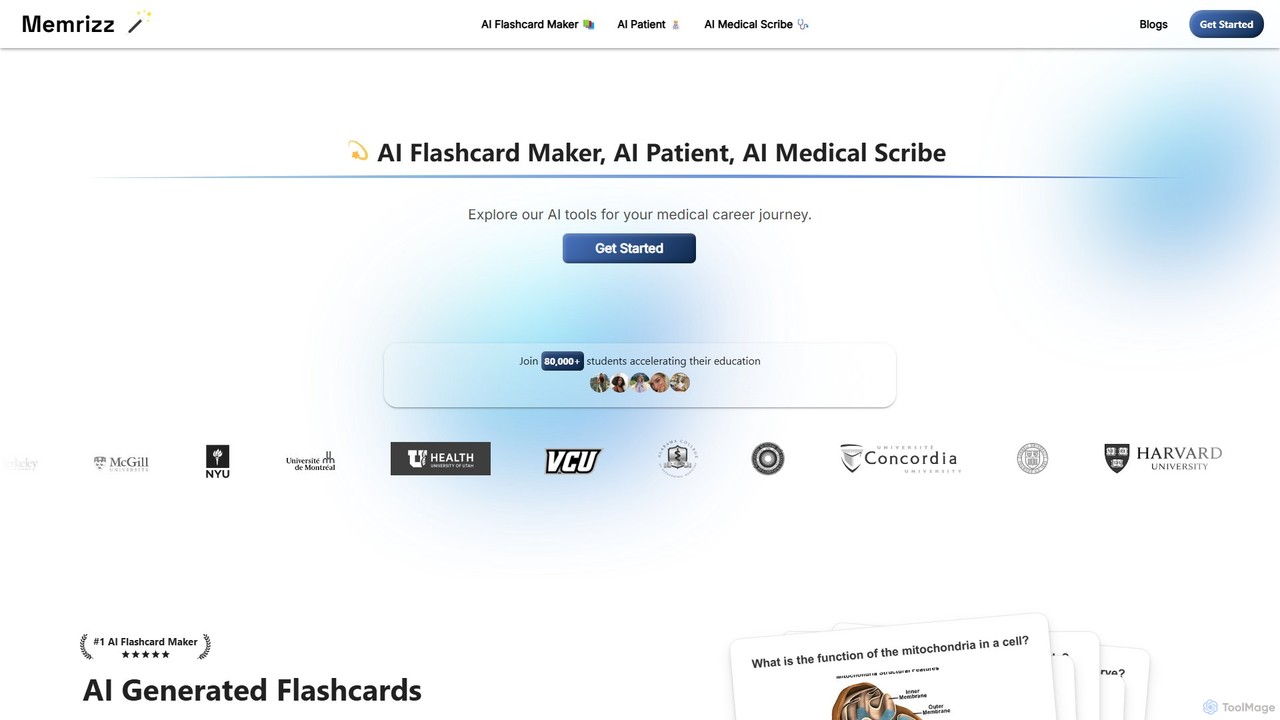
memrizz

Memrizz is an AI-powered suite for medical students, featuring an AI Flashcard Maker, an AI Patient Simulator, and an AI Medical Scribe. It automates study material creation from lectures, offers realistic clinical practice with virtual patients, and helps master documentation skills, accelerating the medical learning journey.

Medical
Visits 54KFavorites 133Likes 130
Neural Consult
Freemium

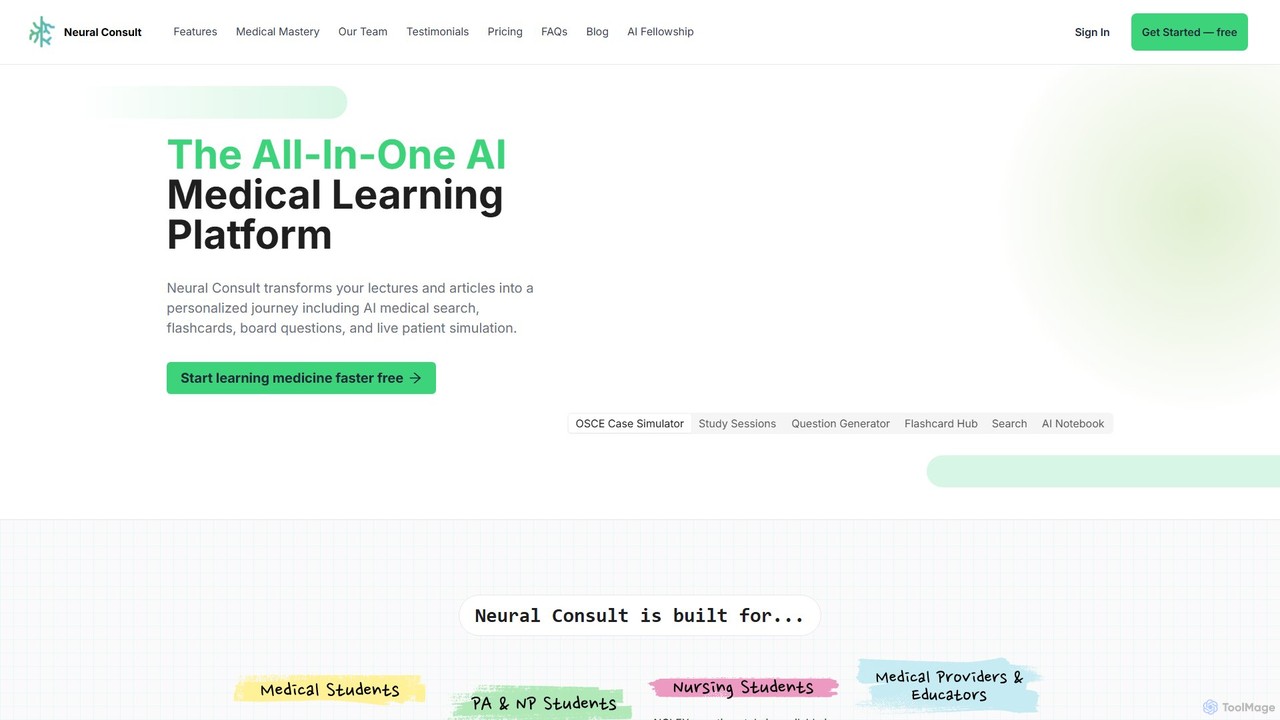
Neural Consult

Neural Consult is an all-in-one AI medical learning platform for medical, PA, and nursing students. It transforms your lectures and articles into personalized study materials, including AI-powered medical search, flashcards, board-style questions (USMLE, PANCE, NCLEX), and live patient simulations to accelerate learning and improve clinical reasoning.

Medical
Visits 230.8KFavorites 126Likes 117
Ora AI
Freemium

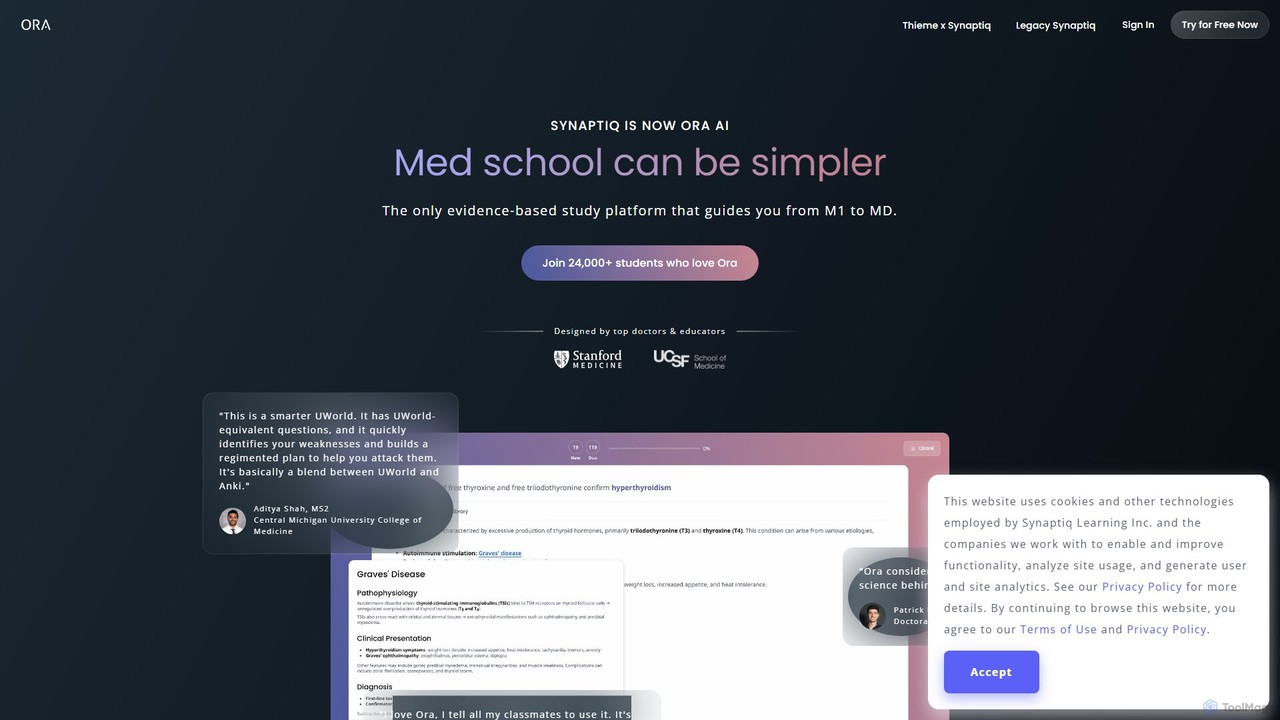
Ora AI

Ora AI (formerly Synaptiq) is an evidence-based, AI-powered study platform for medical students and professionals. It uses adaptive learning, high-quality question banks, and spaced repetition to create personalized study plans, identify weaknesses, and optimize preparation for board exams and medical coursework.

Medical
Visits 8.7KFavorites 95Likes 99

About Medical

Medical AI tools are specialized artificial intelligence applications designed to enhance healthcare processes, from diagnosis and treatment to research and patient management. Leveraging advanced machine learning, computer vision, and natural language processing, these tools provide data-driven insights that support medical professionals and accelerate scientific discoveries. They represent a critical intersection of AI technology and healthcare, offering innovative solutions within the broader field of AI in education and research.

Core Features

  • AI-Assisted Diagnostics: Analyzes medical images (X-rays, MRIs, CT scans) and patient data to identify anomalies and support early disease detection.
  • Drug Discovery & Development: Accelerates the identification of potential drug candidates, predicts molecular interactions, and optimizes clinical trial design.
  • Personalized Treatment Plans: Processes patient genomic data, medical history, and lifestyle factors to suggest tailored treatment strategies.
  • Predictive Analytics for Health: Forecasts disease outbreaks, patient deterioration, or treatment responses based on large datasets.
  • Automated Medical Record Management: Extracts, summarizes, and organizes information from electronic health records, improving data accessibility and efficiency.

Applicable Scenarios

Medical AI tools are indispensable across various healthcare settings. Clinicians use them for more accurate and faster diagnoses, while researchers leverage them to accelerate drug development and understand complex biological processes. Hospitals employ these tools for operational efficiency, patient monitoring, and resource allocation, ultimately enhancing patient care and outcomes.

How to Choose

When selecting Medical AI tools, prioritize solutions with proven clinical validation, robust data security and privacy compliance (e.g., HIPAA, GDPR), and seamless integration capabilities with existing healthcare IT systems. Consider the specific medical domain it addresses, the level of human oversight required, and the vendor's commitment to ongoing support and regulatory adherence.

Medical use cases

1

AI-Assisted Medical Image Analysis for Radiologists

Radiologists utilize AI tools to quickly scan and analyze large volumes of medical images, such as X-rays, MRIs, and CT scans. The AI highlights potential anomalies or areas of concern, like early-stage tumors or subtle fractures, reducing the time spent on initial screening and improving diagnostic accuracy. This allows radiologists to focus on complex cases and provide more timely patient care.

2

Accelerating Drug Discovery in Pharmaceutical Research

Pharmaceutical researchers employ Medical AI tools to significantly speed up the drug discovery process. By analyzing vast databases of chemical compounds and biological targets, AI can predict potential drug candidates, simulate molecular interactions, and identify optimal compounds with higher efficacy and fewer side effects. This drastically reduces the time and cost associated with traditional drug development, bringing new treatments to patients faster.

3

Generating Personalized Treatment Plans for Oncology Patients

Oncologists leverage Medical AI to create highly personalized treatment plans for cancer patients. By integrating a patient's genomic profile, tumor characteristics, medical history, and response to previous therapies, AI algorithms can recommend the most effective combination of treatments, including chemotherapy, radiation, and targeted therapies. This precision medicine approach aims to maximize treatment efficacy while minimizing adverse effects, improving patient outcomes.

4

Predictive Analytics for Early Detection of Disease Outbreaks

Public health organizations and epidemiologists use Medical AI tools for predictive analytics to monitor and forecast disease outbreaks. By analyzing vast amounts of data from various sources, including electronic health records, social media, environmental factors, and travel patterns, AI can identify early warning signs of potential epidemics. This enables proactive public health interventions, resource allocation, and timely communication to mitigate the spread of diseases.

5

Virtual Health Assistants for Patient Support and Information

Healthcare providers deploy Medical AI-powered virtual assistants to offer round-the-clock support and information to patients. These AI chatbots can answer common medical questions, provide medication reminders, help schedule appointments, and guide patients through pre-operative instructions or post-discharge care plans. This improves patient engagement, reduces the burden on human staff, and ensures patients have access to reliable information whenever needed.

6

Automating Medical Record Summarization for Clinicians

Clinicians and administrative staff use Medical AI tools to automate the summarization of complex electronic health records (EHRs). AI algorithms can quickly extract key patient information, such as diagnoses, medications, allergies, and treatment history, and present it in a concise, digestible format. This saves significant time for healthcare professionals, allowing them to rapidly grasp a patient's medical context and make informed decisions more efficiently during consultations.

Medical FAQ

What are Medical AI tools?

Medical AI tools are specialized artificial intelligence applications designed to assist and enhance various aspects of healthcare. They leverage technologies like machine learning, deep learning, and natural language processing to analyze complex medical data, provide diagnostic support, accelerate drug discovery, and personalize treatment plans. These tools aim to improve efficiency, accuracy, and patient outcomes across the medical field.

How do AI tools assist in medical diagnosis?

AI tools assist in medical diagnosis by analyzing vast amounts of patient data, including medical images (X-rays, MRIs), lab results, and electronic health records. They can identify subtle patterns or anomalies that might be missed by the human eye, flag potential risk factors, and provide differential diagnoses. This support helps clinicians make more accurate and timely diagnostic decisions, especially in complex or rare cases, ultimately leading to earlier intervention and improved patient outcomes.

What are the ethical considerations for using Medical AI?

Ethical considerations for Medical AI include data privacy and security, ensuring patient consent for data usage, and addressing algorithmic bias that could lead to disparities in care. Transparency in AI decision-making (explainability), accountability for AI-driven errors, and maintaining human oversight are also crucial. Striking a balance between technological advancement and patient well-being, while adhering to regulatory frameworks, is paramount.

How do Medical AI tools differ from general health and fitness apps?

Medical AI tools differ significantly from general health and fitness apps in their purpose, regulatory requirements, and data handling. Medical AI tools are designed for clinical use, diagnosis, treatment planning, or drug discovery, often requiring rigorous validation and regulatory approval (e.g., FDA). They process sensitive patient data under strict privacy laws. In contrast, general health and fitness apps focus on wellness, tracking activities, or providing lifestyle advice, typically without clinical claims or the same level of regulatory oversight and data privacy requirements.

Who benefits most from Medical AI tools?

Medical AI tools benefit a wide range of stakeholders in the healthcare ecosystem. Clinicians (doctors, radiologists, pathologists) gain from enhanced diagnostic accuracy and efficiency. Researchers and pharmaceutical companies accelerate drug discovery and development. Hospital administrators improve operational efficiency and resource allocation. Most importantly, patients benefit from more personalized treatments, earlier disease detection, and improved access to care, leading to better health outcomes and quality of life.