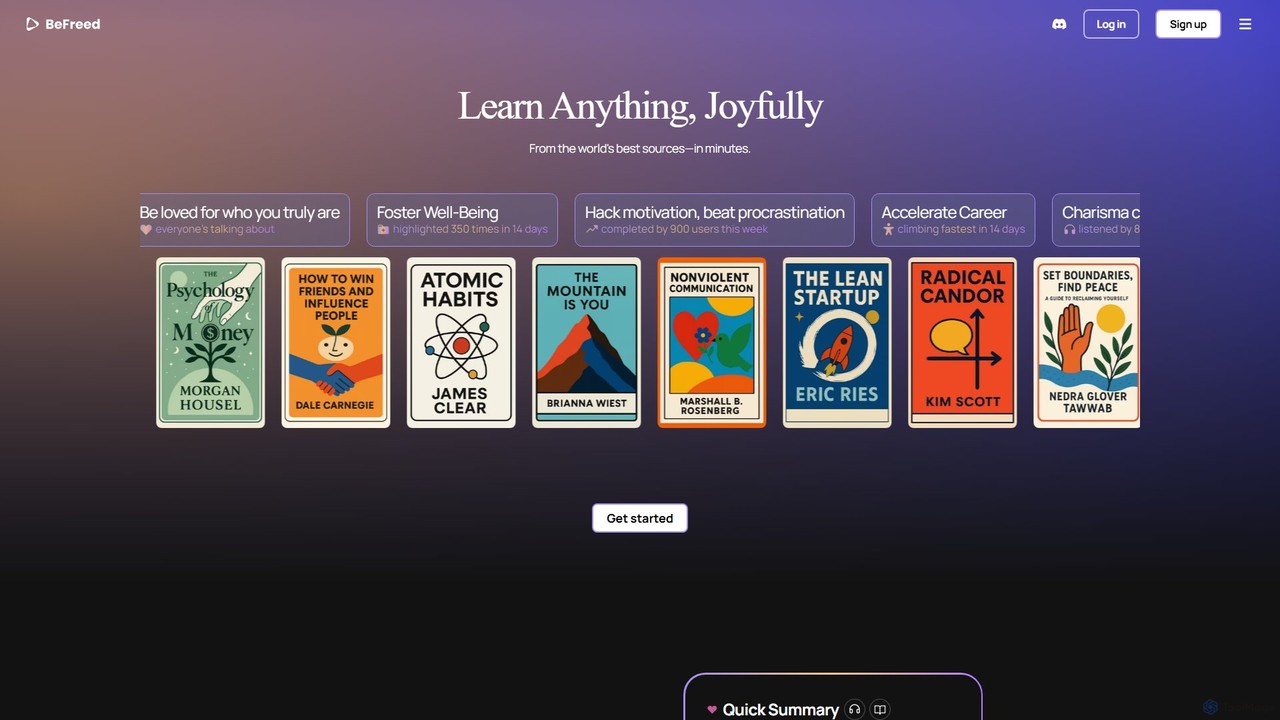
AI Microlearning tools are platforms that use artificial intelligence to create, deliver, and personalize bite-sized learning content. These tools leverage AI algorithms to analyze large documents, videos, or other source materials and automatically break them down into focused, easily digestible modules like short videos, quizzes, or flashcards. The primary value lies in delivering just-in-time knowledge that fits into the flow of work, significantly improving learner engagement and knowledge retention. AI further enhances this by adapting learning paths to individual user performance and knowledge gaps.
Core Features
- Automated Content Curation: AI automatically extracts key information from existing documents or web content to generate concise learning modules.
- Personalized Learning Paths: The system dynamically adjusts the sequence and difficulty of content based on a learner's real-time performance and goals.
- Interactive Assessment Generation: AI creates relevant quizzes, flashcards, and interactive exercises from the learning material to reinforce concepts.
- Performance Analytics: Provides detailed insights into learner progress, knowledge gaps, and content effectiveness, often with predictive recommendations.
- Multi-format Content Delivery: Delivers learning nuggets in various formats (video, text, audio, interactive simulations) optimized for different devices, especially mobile.
Use Cases
AI Microlearning is widely adopted in corporate environments for employee training, including new hire onboarding, compliance updates, and leadership development. Sales teams use it for rapid product knowledge training, while customer support departments leverage it for continuous skill enhancement. It is also effective for customer education, delivering quick tutorials on software features or product usage.
How to Choose
When selecting an AI Microlearning tool, evaluate its content authoring capabilities—specifically, how effectively its AI can process your existing materials. Assess the sophistication of its personalization engine and the depth of its analytics. Consider its integration capabilities with your existing Learning Management System (LMS), HRIS, or communication platforms like Slack and Teams. Finally, review its mobile experience and support for various content formats.