ToolMage
Sign in

Best 1 Planning AI tools for Education

Popular Planning AI tools in Education include VisFlow, helping you work more efficiently.

VisFlow
Freemium

VisFlow

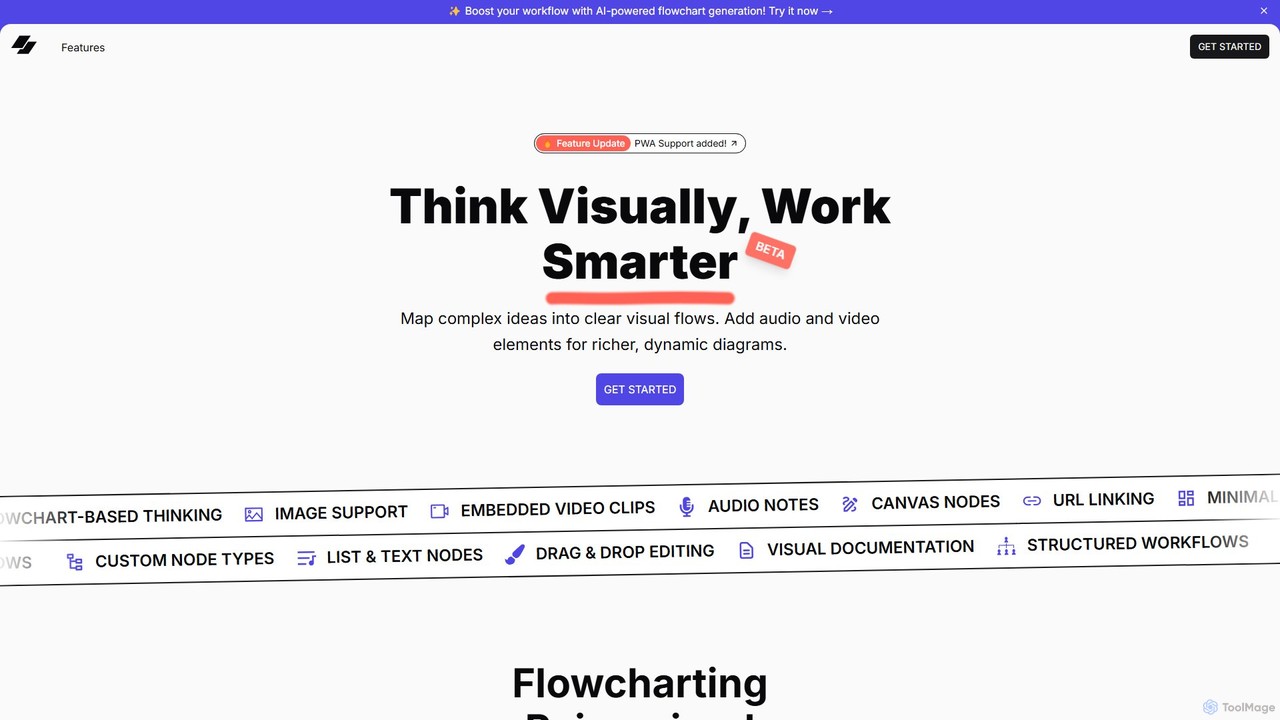
VisFlow is an AI-powered visual workspace that redefines flowcharting and mind mapping by integrating rich multimedia. It allows users to embed images, audio, and video directly into their diagrams, fostering a more dynamic and contextual way to brainstorm, plan, and collaborate. With a focus on privacy through local-first storage and an intuitive drag-and-drop interface, VisFlow is designed for creatives, educators, and teams who think visually.

Whiteboard
Visits 5KFavorites 103Likes 134

About Planning

Planning AI tools are specialized applications that leverage artificial intelligence to assist in structuring, organizing, and strategizing various educational activities and learning processes. These tools utilize algorithms to analyze data, generate schedules, and propose optimal pathways, significantly enhancing efficiency in academic and personal development. They empower educators, students, and institutions to create more effective and personalized learning experiences.

Core Features

  • Automated Lesson Plan Generation: Creates detailed lesson plans, including objectives, activities, and assessments, based on curriculum standards and student needs.
  • Personalized Study Schedule Creation: Generates optimized study timetables for students, considering their learning pace, subject difficulty, and exam dates.
  • Curriculum Development Support: Assists educators in designing comprehensive and coherent curricula by suggesting content, sequencing, and learning outcomes.
  • Educational Project Management: Facilitates the planning, tracking, and resource allocation for academic projects, from group assignments to research initiatives.
  • Career Pathway Guidance: Provides AI-driven recommendations for educational paths and career choices based on student interests, skills, and market trends.

Applicable Scenarios

These AI planning tools are invaluable for a range of educational stakeholders. Teachers can streamline the creation of engaging lesson plans and manage classroom activities more effectively. Students benefit from personalized study schedules that adapt to their progress, helping them achieve academic goals. Educational institutions can use these tools for strategic curriculum development and efficient resource allocation, ensuring a well-structured learning environment.

How to Choose

When selecting an AI planning tool for education, consider its specific functionality, such as lesson planning, study scheduling, or curriculum design, to match your primary need. Evaluate its integration capabilities with existing learning management systems (LMS) and other educational platforms. Assess the level of customization offered for tailoring plans to individual student or institutional requirements. Finally, review user-friendliness and the quality of AI-driven recommendations to ensure practical applicability.

Planning use cases

1

Automating Daily Lesson Plan Creation

A high school teacher, overwhelmed with administrative tasks, uses an AI planning tool to generate daily lesson plans. By inputting curriculum topics, learning objectives, and student demographics, the AI suggests activities, resources, and assessment methods, saving hours of manual preparation time each week and ensuring alignment with educational standards.

2

Personalized Study Schedule for University Students

A university student preparing for multiple exams utilizes an AI planning tool to create a personalized study schedule. The tool analyzes their course load, exam dates, preferred study times, and past performance data to optimize a timetable, suggesting specific topics to review and allocating time efficiently across subjects, reducing stress and improving retention.

3

Developing a New Vocational Training Curriculum

A vocational school curriculum developer employs AI planning software to design a new training program. The AI analyzes industry skill gaps, job market trends, and existing course materials to propose relevant modules, learning outcomes, and assessment strategies, ensuring the curriculum is up-to-date and highly effective for student employability.

4

Managing Collaborative Student Research Projects

A professor overseeing several student research groups uses an AI planning tool to manage project timelines and resource allocation. The tool helps define milestones, assign tasks, track progress, and identify potential bottlenecks, ensuring that complex group projects stay on schedule and within scope, fostering better collaboration and accountability.

5

Strategic Resource Allocation for School Districts

A school district administrator leverages AI planning to optimize the allocation of educational resources, including textbooks, technology, and teaching staff, across multiple schools. The AI analyzes student enrollment data, budget constraints, and facility availability to propose efficient distribution plans, maximizing impact and minimizing waste.

6

AI-Powered Career Path Exploration for High Schoolers

High school guidance counselors integrate an AI planning tool to help students explore potential career paths. Students input their interests, strengths, and academic performance, and the AI generates personalized recommendations for higher education programs, vocational training, and potential career fields, along with suggested steps to achieve those goals.

Planning FAQ

What are AI Planning tools in Education?

AI Planning tools in Education are applications that use artificial intelligence to automate and optimize various planning processes within academic settings. They help in structuring learning activities, managing educational resources, and guiding academic or career development. These tools leverage data analysis and predictive modeling to create efficient and personalized plans for students, educators, and institutions.

How do AI Planning tools differ from traditional planning software?

Unlike traditional planning software that relies on manual input and rule-based logic, AI Planning tools can learn from data, adapt to changing conditions, and generate more intelligent, personalized recommendations. They can analyze complex variables like student performance, learning styles, and curriculum standards to create dynamic plans, whereas traditional tools offer static templates and require constant manual updates.

Who benefits most from using AI Planning tools in Education?

A wide range of users benefit from AI Planning tools. Educators can save time on lesson planning and curriculum design. Students gain personalized study schedules and career guidance. Administrators can optimize resource allocation and strategic planning for institutions. Essentially, anyone involved in structuring and managing educational processes can leverage these tools for enhanced efficiency and effectiveness.

What are the key features to look for in an educational AI Planning tool?

When choosing an educational AI Planning tool, prioritize features like automated plan generation (e.g., lesson plans, study schedules), personalization capabilities, and integration with existing educational platforms (LMS). Look for robust data analysis features, intuitive user interfaces, and strong privacy and security measures to protect sensitive student data. Customization options for different educational contexts are also crucial.

Can AI Planning tools help with personalized learning paths?

Yes, AI Planning tools are highly effective in creating personalized learning paths. By analyzing individual student data such as learning pace, strengths, weaknesses, and interests, these tools can dynamically adjust content recommendations, suggest specific learning activities, and optimize study sequences. This ensures that each student receives a tailored educational journey that maximizes their engagement and learning outcomes.