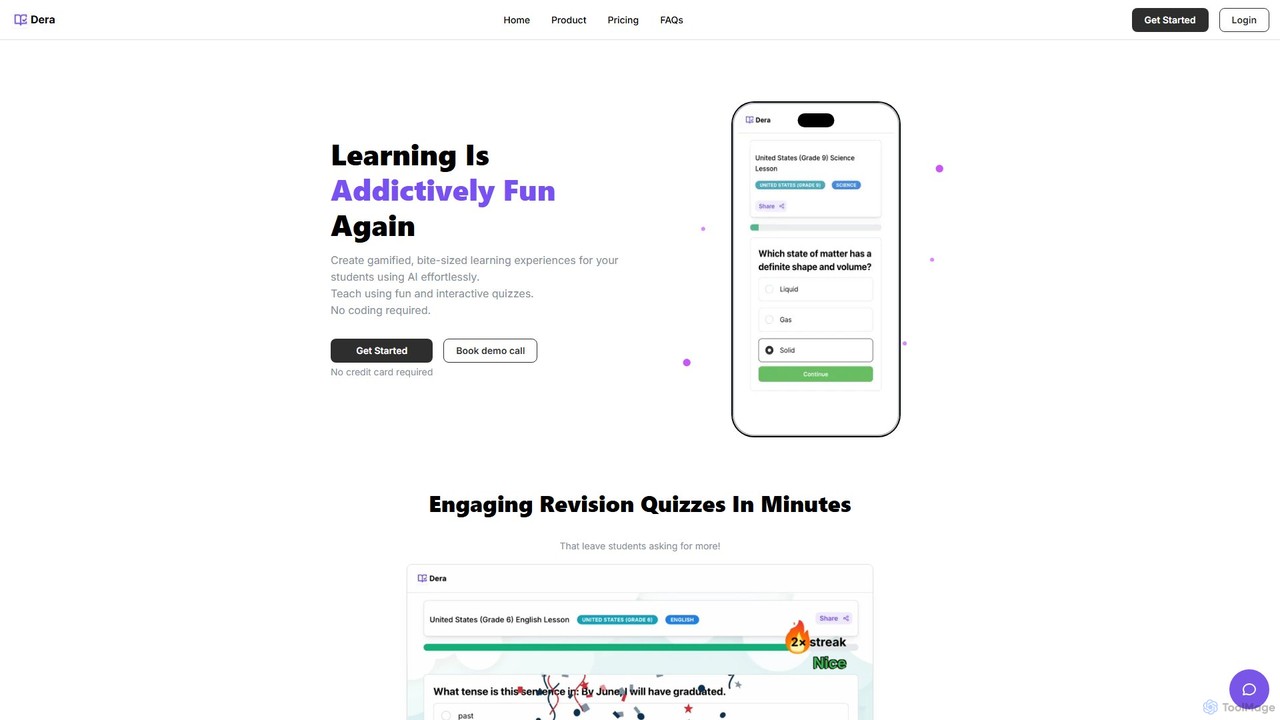
Quiz Generators are AI-powered tools designed to automatically create quizzes, tests, and assessments from various inputs like text, documents, or videos. These tools leverage natural language processing (NLP) and machine learning to understand content and formulate relevant questions and answers. They significantly streamline the assessment creation process, saving educators, trainers, and content creators valuable time. This technology enhances learning engagement and provides efficient evaluation methods across diverse educational and professional settings.
Core Features
- Automatic Question Generation: Creates multiple-choice, true/false, fill-in-the-blank, and open-ended questions from provided content.
- Diverse Question Types: Supports various formats to cater to different learning objectives and assessment styles.
- Customization Options: Allows users to adjust difficulty levels, question count, topic focus, and add custom feedback.
- Multimedia Integration: Enables the inclusion of images, videos, and audio within quizzes for richer content.
- Instant Feedback & Analytics: Provides immediate results to learners and detailed performance insights for instructors.
Applicable Scenarios
Educators use Quiz Generators to quickly create formative and summative assessments for students, adapting quizzes to specific curriculum topics. Corporate trainers leverage them to develop engaging knowledge checks for employee onboarding and skill development programs. Content creators can generate interactive quizzes to boost audience engagement on blogs, websites, or social media, making learning more dynamic.
How to Choose
When selecting a Quiz Generator, consider the variety of question types it supports and its ability to generate questions from diverse content formats. Evaluate its customization options for difficulty, feedback, and branding. Look for integration capabilities with existing learning management systems (LMS) or content platforms. Finally, assess the analytics features for tracking learner progress and identifying knowledge gaps.