Education Best in category 1 results Reports & Publications AI Tool

Popular AI tools in the Reports & Publications field of Education include Frontier Model Forum, etc., helping you quickly improve efficiency.

Free
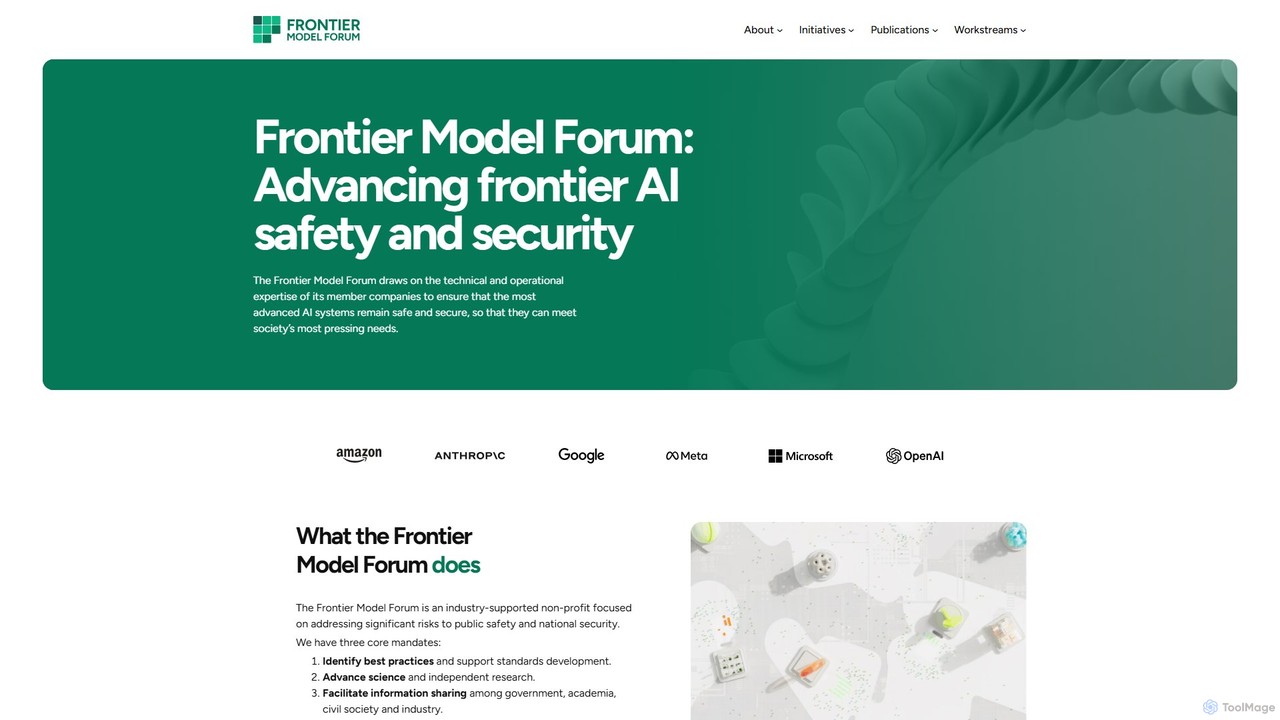
Frontier Model Forum

Frontier Model Forum

The Frontier Model Forum is an industry-led non-profit organization dedicated to ensuring the safe and responsible development of …

10.2K

About Reports & Publications

AI Reports & Publications tools are specialized applications designed to automate and enhance the creation of structured documents like academic papers, business reports, and technical manuals. Leveraging natural language processing and data analysis models, they can conduct literature reviews, generate text from data, and ensure proper formatting and citation. These tools streamline the entire publication workflow, from initial research to final proofreading, enabling users to produce high-quality, data-backed documents with greater efficiency. As a key part of the Education ecosystem, they focus specifically on the output of research and analysis.

Core Features

  • Automated Literature Review: Scans and summarizes vast amounts of academic papers and articles to identify key themes and findings.
  • Data-to-Text Generation: Transforms raw data from spreadsheets or databases into narrative summaries, charts, and tables.
  • Advanced Citation Management: Automatically generates in-text citations and bibliographies in various styles (e.g., APA, MLA, Chicago).
  • Structural Outlining: Creates logical outlines and frameworks for complex reports and research papers based on input topics.
  • Fact-Checking & Source Verification: Cross-references claims and data points against a database of reliable sources to ensure accuracy.

Applicable Scenarios

These tools are invaluable for academics, researchers, students, business analysts, and technical writers. In academia, they accelerate the process of writing dissertations and journal articles. In the corporate world, they are used to compile market analysis reports, annual financial statements, and technical whitepapers, ensuring consistency and accuracy across complex documents.

Selection Criteria

When choosing a tool, consider the depth of its research database and the quality of its literature summaries. Evaluate its data integration capabilities—can it connect to your specific data sources? Also, check the range of supported citation styles and the flexibility of its formatting options. Finally, assess the user interface for ease of use, especially for complex, multi-section documents.

Reports & PublicationsUse Cases

1

Drafting an Academic Research Paper

A postgraduate student uses an AI publication tool to streamline their dissertation writing. They input their research topic, and the AI performs a comprehensive literature search, summarizing key papers and identifying research gaps. The student then uses the outline generator to structure their chapters. While writing, the tool suggests relevant citations, paraphrases complex sentences for clarity, and automatically formats the entire document, including the bibliography in APA style, saving dozens of hours of manual formatting and reference checking.

2

Generating a Quarterly Business Report

A business analyst is tasked with creating a quarterly performance report. They connect the AI tool to the company's sales database and financial spreadsheets. The tool automatically analyzes the data, identifies key trends, and generates visualizations like charts and graphs. It then drafts the narrative sections of the report, such as the executive summary and performance analysis, using the analyzed data. This reduces the time to create the report from days to hours and minimizes the risk of human error in data interpretation.

3

Creating a Technical Whitepaper

A marketing team at a tech company needs to produce a whitepaper on a complex new technology. They use an AI tool to research existing literature and competitor documents to ensure their content is unique and comprehensive. The AI helps structure the whitepaper with a logical flow, from problem statement to solution and technical specifications. It also assists in simplifying technical jargon into accessible language for a broader audience while maintaining accuracy. The tool can cross-reference claims with published studies, adding credibility to the final publication.

4

Compiling a Market Research Report

A market research firm gathers survey data and industry statistics. An analyst uses an AI report generator to process this large dataset. The AI identifies correlations, segments the data, and generates key insights automatically. It then populates a report template with these findings, creating charts for visual representation and writing summaries for each section. This allows the analyst to focus on higher-level strategic interpretation rather than spending time on data processing and basic report writing, delivering the final report to the client faster.

5

Preparing Legal Briefs and Case Summaries

A paralegal at a law firm uses an AI tool to prepare for a case. They upload numerous case files, legal precedents, and depositions. The AI tool rapidly analyzes these documents, extracts key arguments, identifies relevant precedents, and generates a concise summary of the entire case history. It can also help draft sections of a legal brief by structuring arguments logically and citing the correct legal sources automatically. This significantly reduces the time spent on manual document review and ensures no critical information is overlooked.

6

Automating Annual Financial Report Sections

A corporate finance team needs to compile the company's annual report. They use an AI tool integrated with their accounting software. The AI pulls financial data (revenue, profit, expenses) and generates the text for the financial performance section, including year-over-year comparisons and variance analysis. It ensures consistency in terminology and calculations throughout the lengthy document. This allows the finance team to focus on strategic commentary and future outlook, rather than the repetitive task of writing data-driven narratives.

Reports & PublicationsFrequently Asked Questions