ToolMage
Sign in

Best 1 Simulations AI tools for Education

Popular Simulations AI tools in Education include GPT Games, helping you work more efficiently.

GPT Games
Freemium

GPT Games

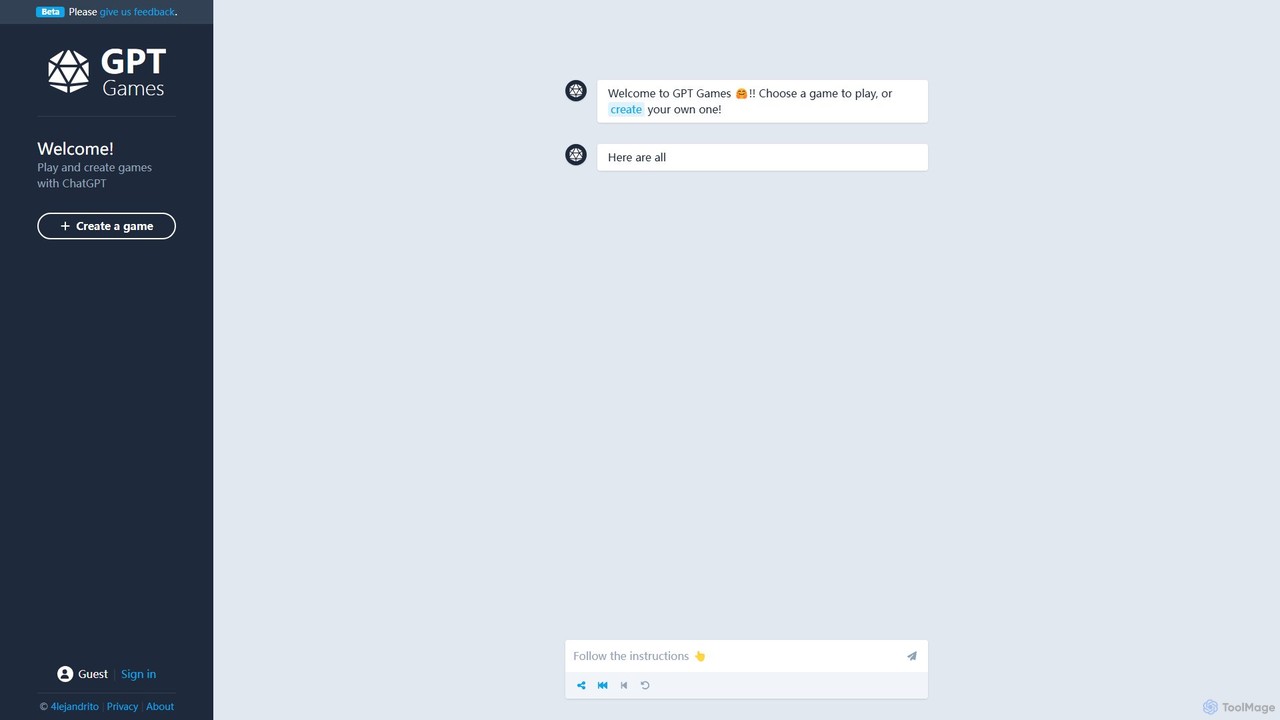
An innovative platform for playing and creating text-based games powered by AI. Choose from a library of existing games or unleash your creativity by designing unique interactive adventures with simple text prompts. No coding skills required.

Simulations
Visits 4.3KFavorites 113Likes 117

About Simulations

AI Simulations are tools that create dynamic, interactive virtual environments for training, analysis, and experimentation. Powered by advanced algorithms, these platforms model complex systems and behaviors to replicate real-world scenarios with high fidelity. They provide a safe, cost-effective, and repeatable space to practice skills, test strategies, and understand outcomes without real-world risks. Unlike static educational software, AI simulations adapt to user actions, offering personalized feedback and evolving challenges for a more immersive learning experience.

Core Features

  • Dynamic Scenario Generation: AI creates a wide range of realistic and unpredictable situations based on predefined parameters and user interactions.
  • Behavioral Modeling: Simulates complex human, system, or environmental behaviors with a high degree of realism.
  • Real-Time Feedback & Analysis: Provides immediate, context-aware feedback on user performance and decisions.
  • Predictive Analytics: Forecasts potential outcomes based on different actions taken within the simulated environment.
  • Risk-Free Environment: Allows users to experiment with high-stakes scenarios, such as surgical procedures or financial trading, without consequences.

Use Cases

AI simulations are widely used in sectors requiring practical skill development and strategic planning. This includes medical education for surgical training, aviation for pilot drills, business for leadership and negotiation practice, and scientific research for modeling complex phenomena like climate change or disease spread.

How to Choose

When selecting an AI simulation tool, consider the level of realism and fidelity required for your application. Evaluate its customization capabilities to tailor scenarios to specific learning objectives. Assess the depth of its analytics and reporting features for performance tracking. Also, consider its integration potential with existing systems like Learning Management Systems (LMS) and the technical expertise needed to operate it effectively.

Featured tool rankings

Simulations use cases

1

Medical Surgical Training

A medical student practices a complex laparoscopic surgery in a hyper-realistic virtual operating room. The AI simulation models patient anatomy and physiological responses in real-time. It provides haptic feedback through specialized controllers and flags potential errors in technique, such as imprecise movements or accidental tissue damage. This allows the student to build muscle memory and decision-making skills in a controlled, risk-free environment before operating on actual patients.

2

Corporate Leadership Development

A newly promoted manager uses an AI simulation to practice difficult conversations, such as performance reviews or conflict resolution. They interact with an AI-powered virtual employee that exhibits realistic emotional responses and conversational patterns. The AI analyzes the manager's word choice, tone, and empathy, providing instant feedback and suggestions for improvement. This helps develop crucial soft skills in a private setting, building confidence for real-world leadership challenges.

3

Financial Market Trading Practice

A finance student uses an AI platform that simulates real-time stock market conditions, including price volatility, news events, and algorithmic trading patterns. They can test various investment strategies with virtual capital, observing the immediate financial outcomes of their decisions. The AI models market behavior with high fidelity, allowing the student to learn risk management and strategy formulation without the danger of actual financial loss, preparing them for a career in trading.

4

Autonomous Vehicle System Testing

An automotive engineer uses an AI simulation to test a self-driving car's perception and decision-making algorithms. The platform generates a hyper-realistic virtual city with dynamic traffic, unpredictable pedestrians, and adverse weather conditions. The engineer can run millions of miles of virtual tests in a fraction of the time it would take in the real world, specifically creating rare and dangerous 'edge case' scenarios to ensure the vehicle's AI can handle them safely and reliably before road deployment.

5

Crisis Management and Emergency Response Drills

An emergency response team uses an AI simulation for a natural disaster drill, such as a hurricane or earthquake scenario. The AI controls dynamic variables like evolving weather patterns, infrastructure failures, and population movements. Team members must make critical decisions on resource allocation and evacuation strategies based on real-time, AI-generated information. The simulation tracks their response times and decision effectiveness, providing a detailed after-action report for improving future real-world crisis management.

6

Scientific Research and Hypothesis Testing

A climate scientist uses an AI-powered simulation to model the long-term effects of various carbon emission policies on global temperatures. The simulation processes vast datasets of historical climate information and complex atmospheric physics. By adjusting policy variables, the scientist can run hundreds of future scenarios in a short period, generating predictive models that show potential environmental impacts. This allows for robust hypothesis testing and provides data-driven insights to inform policymakers without waiting decades for real-world results.

Simulations FAQ

What are AI Simulations?

AI Simulations are sophisticated software tools that use artificial intelligence to create dynamic, interactive virtual environments. They replicate real-world systems, processes, or scenarios to allow for training, testing, and analysis in a controlled setting. Key features include adaptive scenarios that change based on user actions, realistic behavioral modeling of people or systems, and the ability to provide instant, data-driven feedback on performance.

How to choose the right AI Simulation tool?

Choosing the right tool depends on your specific needs. Consider these factors:

  • Fidelity and Realism: How closely does the simulation need to mimic reality? Medical or aviation training requires higher fidelity than a simple business negotiation practice.
  • Customization: Can you create or modify scenarios to fit your unique training objectives?
  • Data and Analytics: What kind of performance data does it capture? Look for tools with detailed reporting and actionable insights.
  • Integration: Does it need to connect with other systems, like a Learning Management System (LMS) or existing hardware?
  • Scalability: Can the tool support the number of users you anticipate, from a small team to an entire organization?
What's the difference between AI Simulations and traditional educational software?

The key difference is dynamism and adaptability. Traditional educational software, like quizzes or video tutorials, is often static and follows a predefined, linear path. AI Simulations, on the other hand, are non-linear and interactive. They create dynamic environments that react and adapt to the user's decisions in real-time. This allows for a more personalized and immersive learning experience where users can explore consequences and learn from mistakes in a way that static content cannot offer.

Who can benefit from using AI Simulation tools?

A wide range of users can benefit. In education, students in fields like medicine, engineering, and finance can gain practical experience. In the corporate world, professionals can use them for leadership training, sales negotiation practice, and safety drills. Researchers and scientists also use them to model complex systems, such as climate change, economic markets, or urban planning, to test hypotheses and predict future trends without real-world experimentation.

Are AI Simulations difficult to use?

The difficulty varies greatly depending on the tool's purpose. Many simulations designed for training (e.g., leadership or sales) have user-friendly interfaces that require little to no technical skill. However, platforms used for scientific research or engineering (e.g., creating a digital twin of a city) are highly complex and require expertise in data science, programming, and the specific domain being modeled. It's important to match the tool's complexity with the technical capabilities of the intended users.