ToolMage
Sign in

Best 4 Skill Assessment AI tools for Education

Popular Skill Assessment AI tools in Education include Uptoskills, SkillUply, DotsLive, and Vcble, helping you work more efficiently.

SkillUply
Freemium

SkillUply

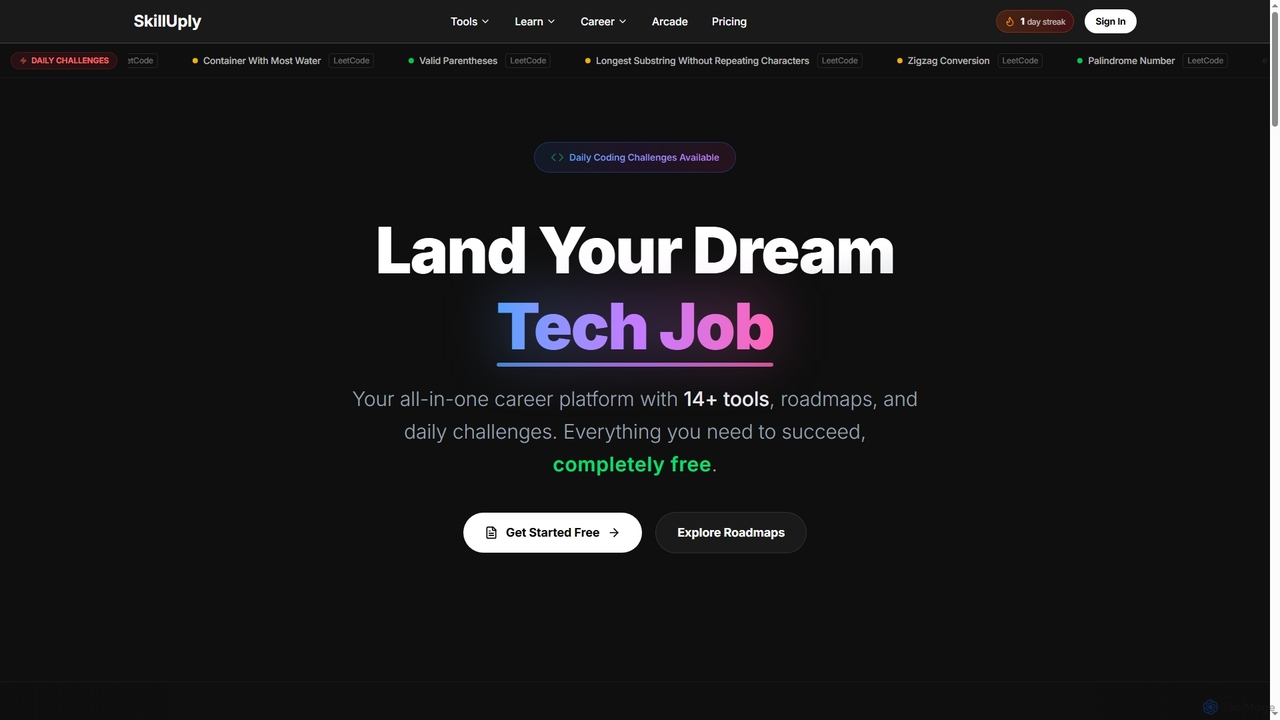
SkillUply is an all-in-one, AI-powered career platform designed to help students and professionals land their dream tech jobs. It offers over 14 tools, including resume builders, cover letter generators, ATS checkers, and interview preparation, alongside daily coding challenges, career roadmaps, and gamified learning experiences, with many resources available for free.

Job Search
Visits 5.5KFavorites 31Likes 27
Vcble
Freemium

Vcble

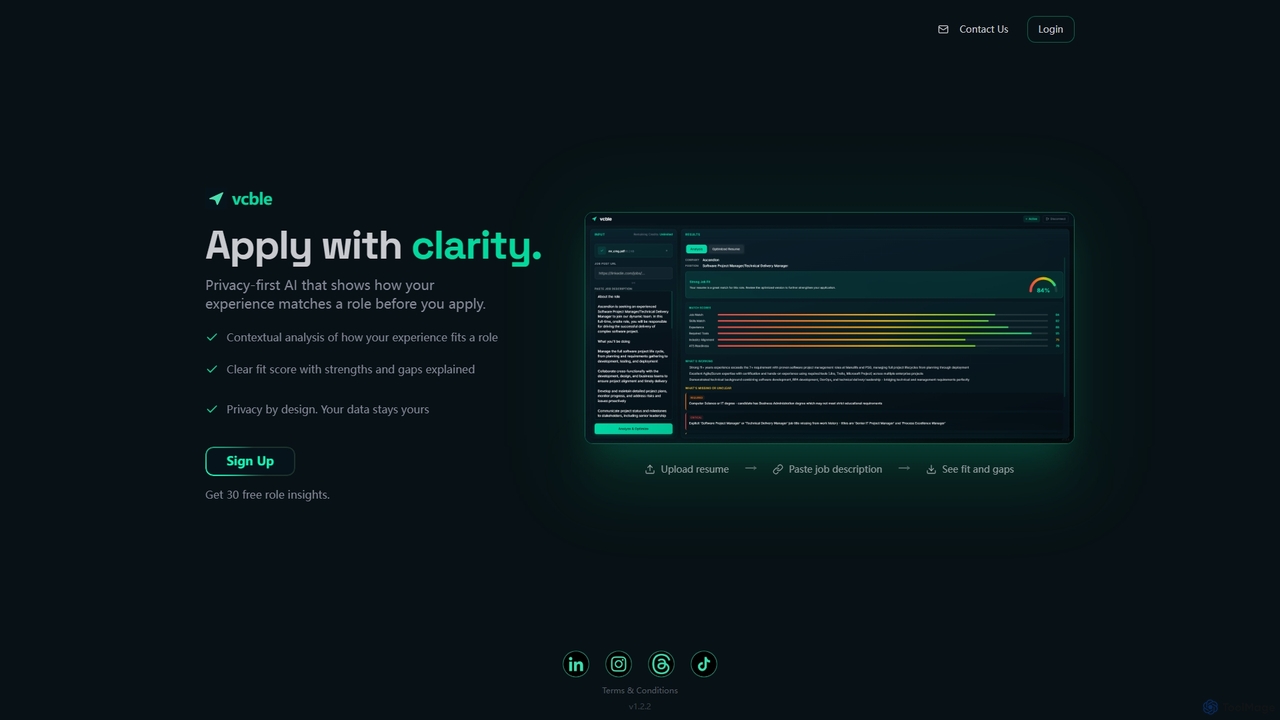
Vcble is a privacy-first AI resume analyzer that provides a clear fit score and contextual analysis of your experience against a job role before you apply. It helps job seekers understand their strengths and gaps to optimize their applications with clarity.

Job Search
Visits 5.4KFavorites 35Likes 38
Uptoskills

Uptoskills

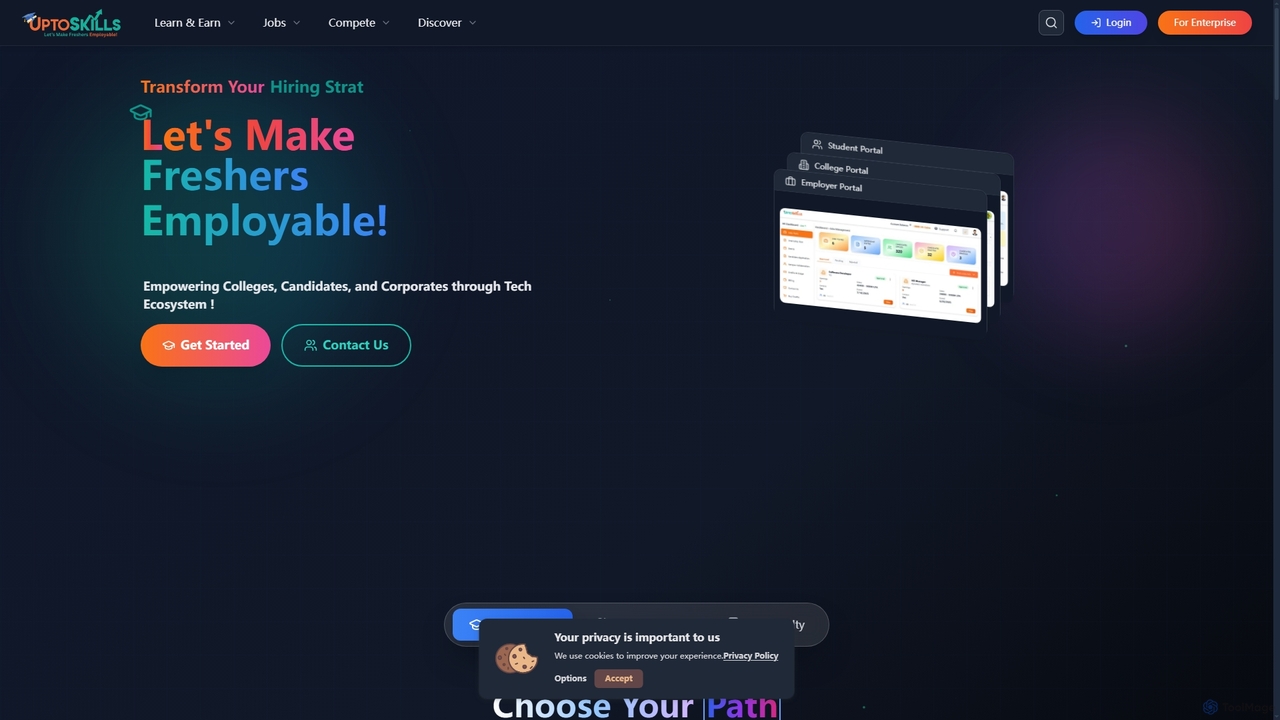
Uptoskills is an AI-powered career ecosystem designed to transform skill sets and enhance employability for students, faculty, and corporates. It offers advanced AI Interview and Assessment platforms, alongside a comprehensive suite of features for job discovery, internships, skill development, and competitive events.

Ai Interviewing
Visits 51KFavorites 143Likes 142
DotsLive
Freemium

DotsLive

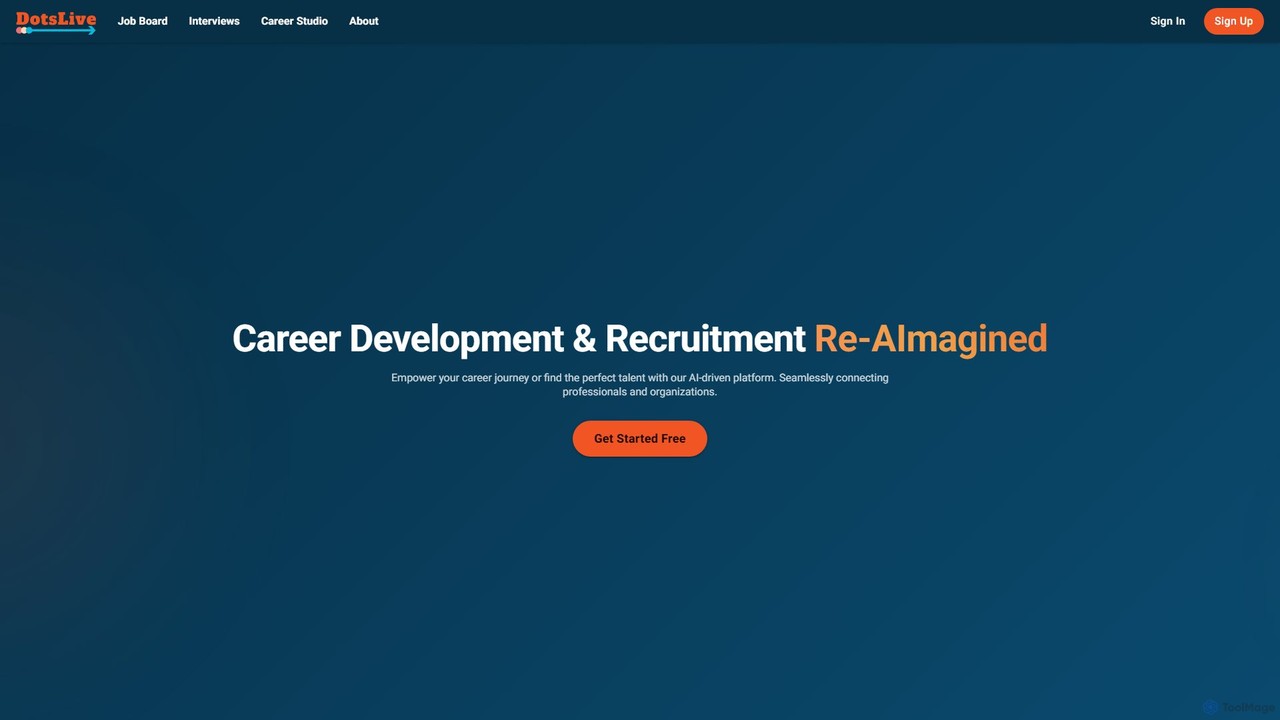
DotsLive is an AI-driven platform that reimagines career development and recruitment. It offers a virtual career coach for professionals with gamified skill challenges and an employability index, while providing companies with an automated solution for talent scouting, screening, and culture fit analysis.

Skill Assessment
Visits 5.4KFavorites 130Likes 143

About Skill Assessment

AI Skill Assessment tools are a specialized category of educational technology that automatically evaluates an individual's knowledge, abilities, and competencies. These platforms use machine learning and natural language processing to analyze responses from tests, simulations, or project submissions, providing objective, data-driven feedback. They are widely used in corporate recruitment, employee training, and academic settings to measure proficiency accurately. The primary value of these tools is their ability to deliver scalable, consistent, and in-depth skill analysis that surpasses traditional manual evaluation methods.

Core Features

  • Adaptive Testing: The difficulty of questions adjusts in real-time based on the user's performance, providing a more accurate assessment.
  • Performance Simulation: Creates realistic, interactive scenarios (e.g., coding challenges, case studies) to evaluate practical application of skills.
  • Automated Feedback Generation: Instantly provides detailed, constructive feedback on strengths and areas for improvement.
  • Skill Gap Analysis: Compares an individual's or team's skills against required benchmarks to identify specific training needs.
  • Proctoring and Security: Employs AI to monitor tests for cheating, ensuring the integrity and validity of the assessment results.

Use Cases

These tools are essential for Human Resources departments for pre-employment screening and internal mobility decisions. Corporate training and development teams use them to design targeted upskilling programs. Educational institutions and certification bodies also leverage them to validate learning outcomes and award credentials at scale.

How to Choose

When selecting an AI Skill Assessment tool, consider the types of skills you need to evaluate (e.g., technical, soft, cognitive). Assess its integration capabilities with your existing HRIS or LMS platforms. Evaluate the quality of the candidate experience and the depth of the analytics provided. Finally, ensure the tool complies with data privacy and anti-bias regulations.

Skill Assessment use cases

1

Screening Technical Candidates for Recruitment

A tech recruiter needs to evaluate over 200 applicants for a senior software engineer role. Instead of manual resume screening, they use an AI skill assessment platform to send a standardized coding challenge to all candidates. The AI automatically grades submissions based on correctness, code efficiency, complexity, and style. It then generates a ranked leaderboard, allowing the recruiter to focus interview time on the top 10% of candidates who have demonstrated strong, practical coding abilities, reducing hiring time by 60%.

2

Identifying Corporate Training and Upskilling Needs

A large enterprise wants to implement a data literacy program. The L&D (Learning and Development) manager uses an AI assessment tool to gauge the current data analysis skills of 5,000 employees across different departments. The tool provides a detailed dashboard showing skill distribution, identifying specific gaps (e.g., SQL querying, data visualization). Based on this data, the L&D team creates personalized learning paths, assigning advanced modules to proficient employees and foundational courses to those who need them, maximizing training ROI.

3

Automating Academic Proficiency Testing

A university's computer science department needs to assess the programming proficiency of all incoming freshmen to place them in appropriate course levels. They use an AI assessment platform that provides a secure, proctored environment for students to take a diagnostic test from home. The AI evaluates their problem-solving approaches and coding skills, then automatically recommends whether each student should enroll in the introductory, intermediate, or advanced programming course, ensuring a better learning experience and reducing dropout rates.

4

Evaluating Soft Skills for Leadership Roles

A company is promoting managers to director-level positions. To assess leadership potential, they use an AI tool that analyzes video interview responses. Candidates respond to simulated management challenges, and the AI evaluates their communication style, emotional intelligence, and problem-solving language. This provides objective data on soft skills that are difficult to quantify, helping the promotion committee make more informed and less biased decisions about who is ready for a leadership role.

5

Certifying Professional Competencies at Scale

A professional organization offers a project management certification to thousands of members globally. To maintain a high standard, they replace their multiple-choice exam with an AI-powered simulation. Candidates manage a virtual project, making decisions on budget, resources, and risk. The AI assesses their performance against a complex rubric, providing a more authentic measure of competency than a traditional test. This allows the organization to certify professionals based on demonstrated ability, enhancing the credential's value.

6

Personalizing Language Learning Paths

A language learning app uses an AI assessment engine to create a personalized curriculum for each user. Upon signing up, a user completes a short, adaptive test that evaluates their vocabulary, grammar, and pronunciation. The AI analyzes the results to pinpoint specific weaknesses, such as verb conjugations or particular phonetic sounds. It then generates a unique study plan with exercises and lessons tailored to address these gaps, accelerating the user's learning progress compared to a one-size-fits-all approach.

Skill Assessment FAQ

What are AI Skill Assessment tools?

AI Skill Assessment tools are software platforms that use artificial intelligence to measure a person's skills and knowledge objectively. Unlike simple quizzes, they often use adaptive testing, simulations, and analysis of complex responses (like code or text) to provide a deep, data-driven evaluation. They are commonly used in hiring to screen candidates and in corporate training to identify skill gaps.

How to choose the right AI Skill Assessment tool?

To choose the right tool, consider these factors:

  • Skill Coverage: Does the tool assess the specific skills you need (e.g., coding languages, soft skills, specific software proficiency)?
  • Assessment Method: Does it use methods appropriate for your needs, like simulations, adaptive tests, or project-based challenges?
  • Integration: Can it integrate with your existing Applicant Tracking System (ATS) or Learning Management System (LMS)?
  • Candidate Experience: Is the platform user-friendly and fair for the person being assessed?
  • Analytics and Reporting: Does it provide clear, actionable insights and reports?
What is the difference between AI assessment and a standard online quiz?

The key difference lies in complexity and depth. A standard online quiz typically uses multiple-choice or simple text-entry questions with a fixed set of correct answers. An AI assessment tool can analyze nuanced, open-ended responses, evaluate practical skills through simulations (like writing code), and adapt the difficulty of questions in real-time. This provides a more comprehensive and accurate measure of a person's true capabilities, not just their ability to recall facts.

Can AI Skill Assessment tools be biased?

Yes, like any AI system, skill assessment tools can potentially reflect biases present in the data they were trained on. Reputable providers actively work to mitigate this by using diverse training data, regularly auditing their algorithms for fairness, and providing transparency in how assessments are scored. When choosing a tool, it is important to inquire about the steps the vendor takes to ensure fairness and reduce algorithmic bias, especially for hiring purposes.

What types of skills can be measured with these tools?

AI Skill Assessment tools can measure a wide range of skills, which can be broadly categorized:

  • Technical Skills: Such as proficiency in programming languages (Python, Java), data science concepts, or using specific software (e.g., Salesforce, Adobe Creative Suite).
  • Cognitive Abilities: Including problem-solving, critical thinking, numerical reasoning, and attention to detail.
  • Soft Skills: Such as communication, leadership, teamwork, and emotional intelligence, often analyzed through video or text responses.
  • Language Proficiency: Assessing reading, writing, speaking, and listening skills in a specific language.