ToolMage
Sign in

Best 35 Skill Development AI tools for Education

Popular Skill Development AI tools in Education include Bossed, InterviewAI, GreetAI, Faltah, Waivly, InterviewIgniter, Wyspa, Career Compass AI, STAR Method, and Duos, helping you work more efficiently.

Sapio AI
Freemium

Sapio AI

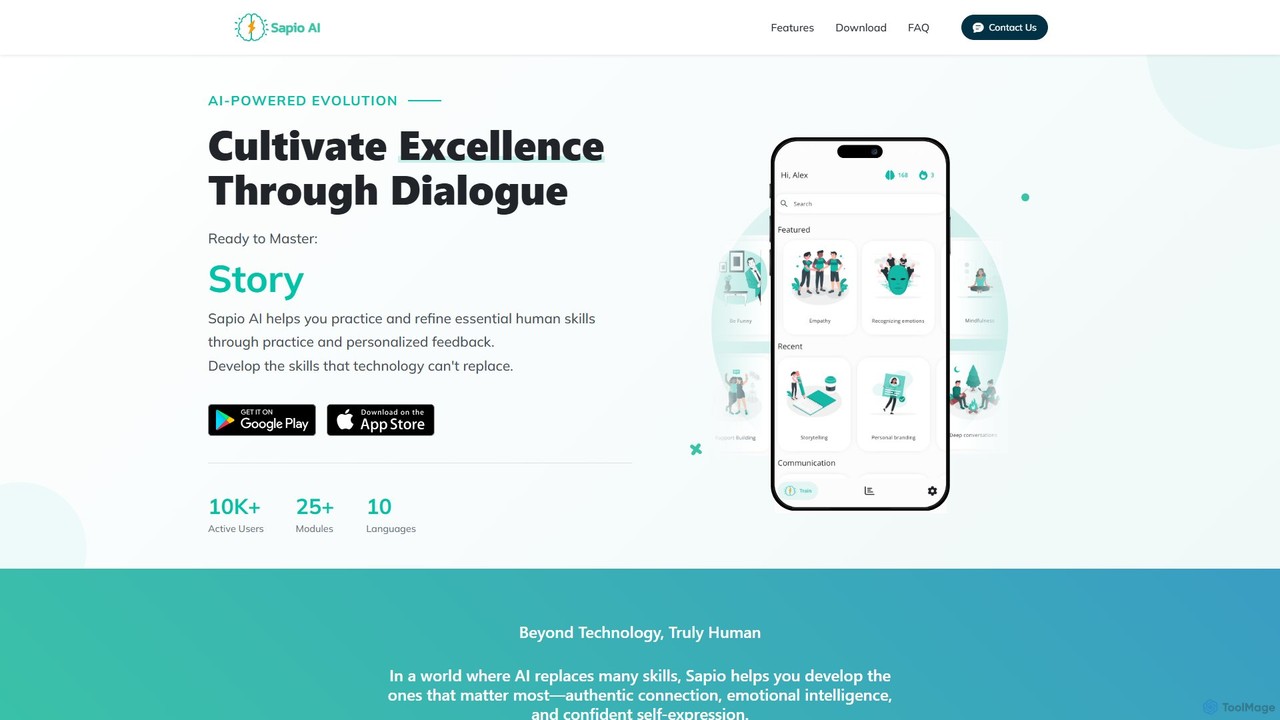
Sapio AI is a personal AI coach designed to master essential life skills, focusing on communication. It helps users enhance their authentic presence, professional resonance, and relational depth through personalized feedback, interactive scenarios, and reflective intelligence.

Interview Preparation
Visits 5.6KFavorites 156Likes 159
Faltah
Freemium

Faltah

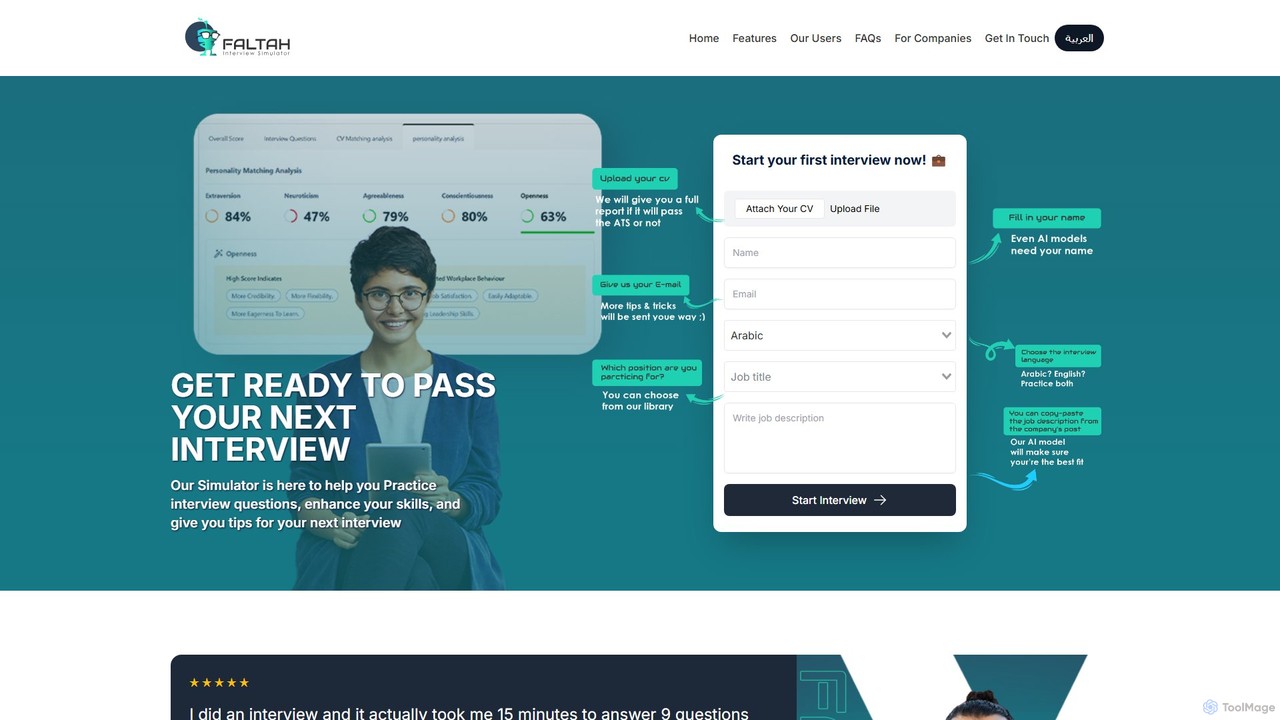
Faltah is an AI-powered interview simulator designed to help job seekers prepare for and ace their interviews. It provides realistic practice sessions with tailored questions, real-time feedback, and in-depth analysis of performance, personality, and CV alignment with job descriptions.

Interview Preparation
Visits 10KFavorites 148Likes 176
Bossed
Freemium

Bossed

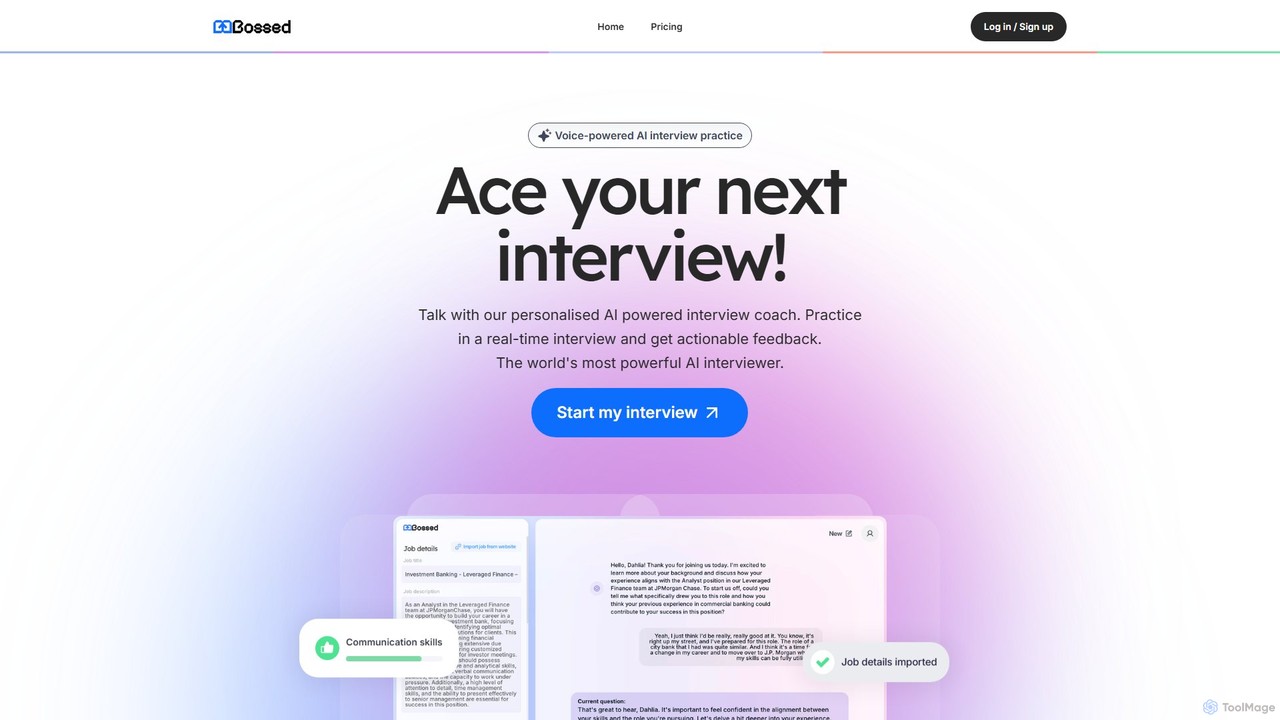
Bossed is an AI-powered interview coach that provides personalized, voice-based practice interviews. By importing your CV and a job description, you can engage in realistic mock interviews tailored to your specific profile and the role you're applying for. The tool offers instant, actionable feedback on your communication, technical skills, and overall performance, helping you build confidence and ace your next job interview. It features multiple difficulty levels to progressively enhance your skills.

Interview Preparation
Visits 28.8KFavorites 125Likes 135
GreetAI
Freemium

GreetAI

GreetAI is an AI-powered platform for job interview practice, screening, and evaluation. It allows users to simulate interviews with an AI, receive instant, detailed feedback on their answers, voice tone, and facial expressions, and track their improvement over time. It's designed for both job seekers wanting to build confidence and companies looking to streamline their screening process.

Interview Preparation
Visits 10.2KFavorites 149Likes 152
Zilta
Paid

Zilta

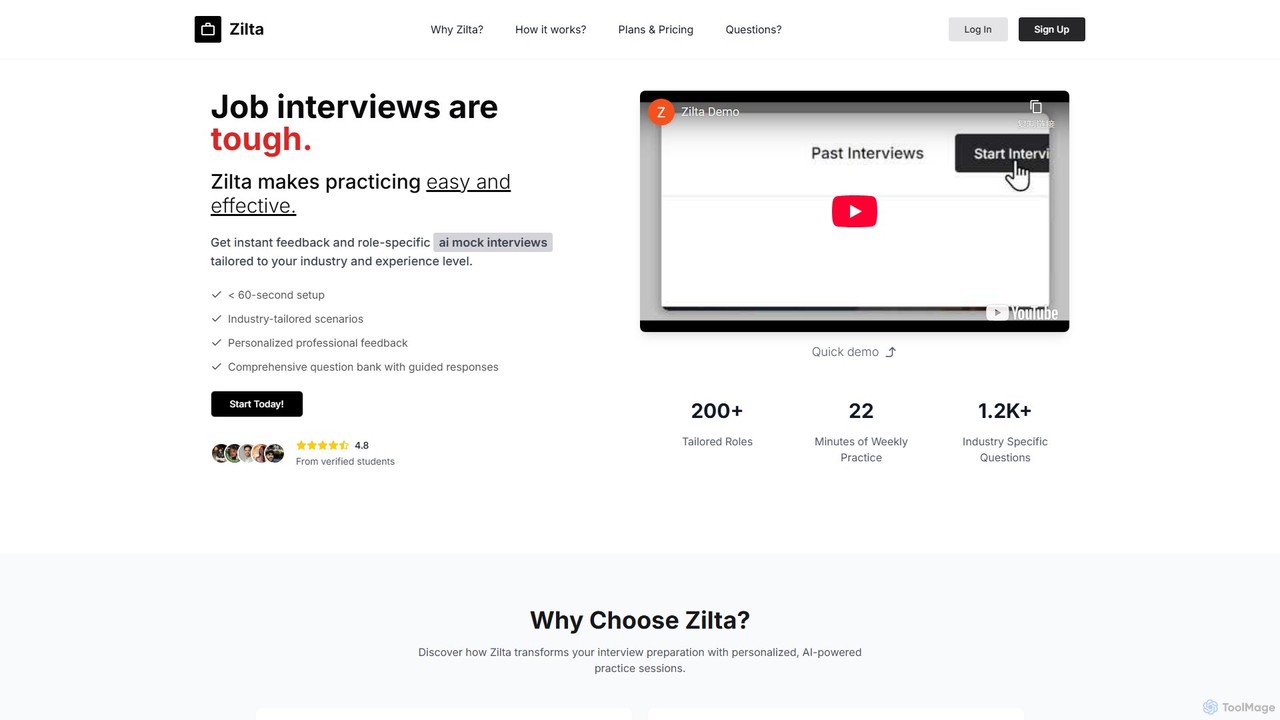
Zilta is an AI-powered interview coach that helps job seekers practice for interviews effectively. It provides role-specific mock interviews, instant AI-driven feedback, and a vast question bank to help users build confidence, identify areas for improvement, and ace their next job interview.

Interview Preparation
Visits 5.6KFavorites 113Likes 115
applicado
Paid

applicado

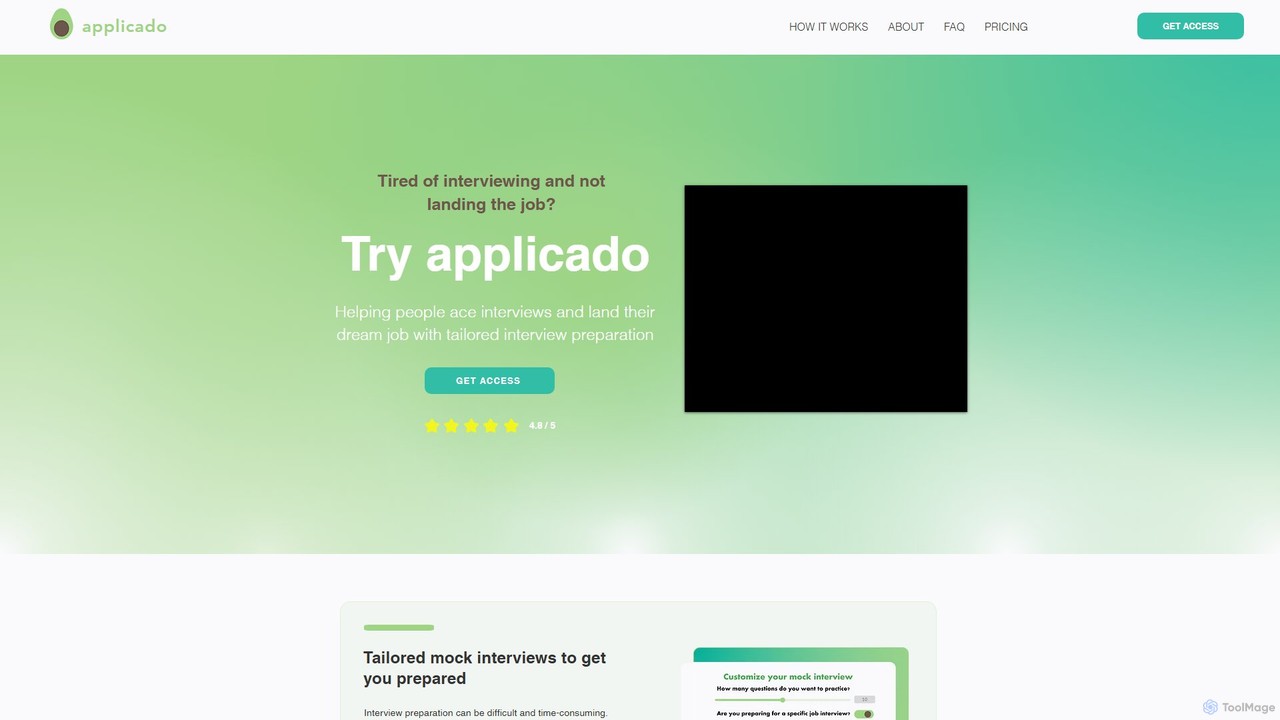
applicado is an AI-powered interview coach designed to help job seekers succeed. It offers unlimited, tailored mock interviews with real-time, actionable feedback, enabling users to build confidence, refine their answers, and land their dream job faster.

Interview Preparation
Visits 5.5KFavorites 147Likes 155
Mocktalk
Freemium

Mocktalk

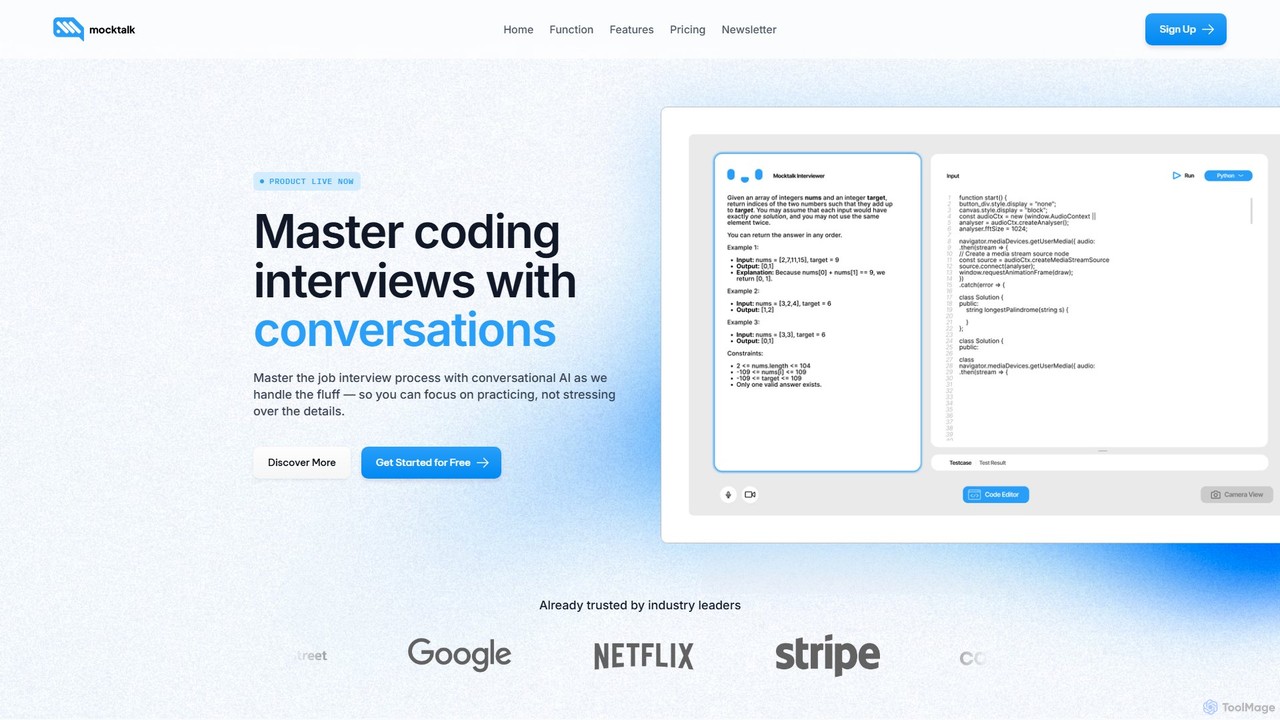
Mocktalk is an AI-powered conversational platform designed to help job seekers master their interviews. It provides a realistic, human-like AI interviewer for both technical and behavioral practice. Users get personalized questions based on job descriptions, receive instant, actionable feedback, and can practice anytime, anywhere to build confidence and land their dream job.

Interview Preparation
Visits 5.6KFavorites 123Likes 142
Skillzo
Freemium

Skillzo

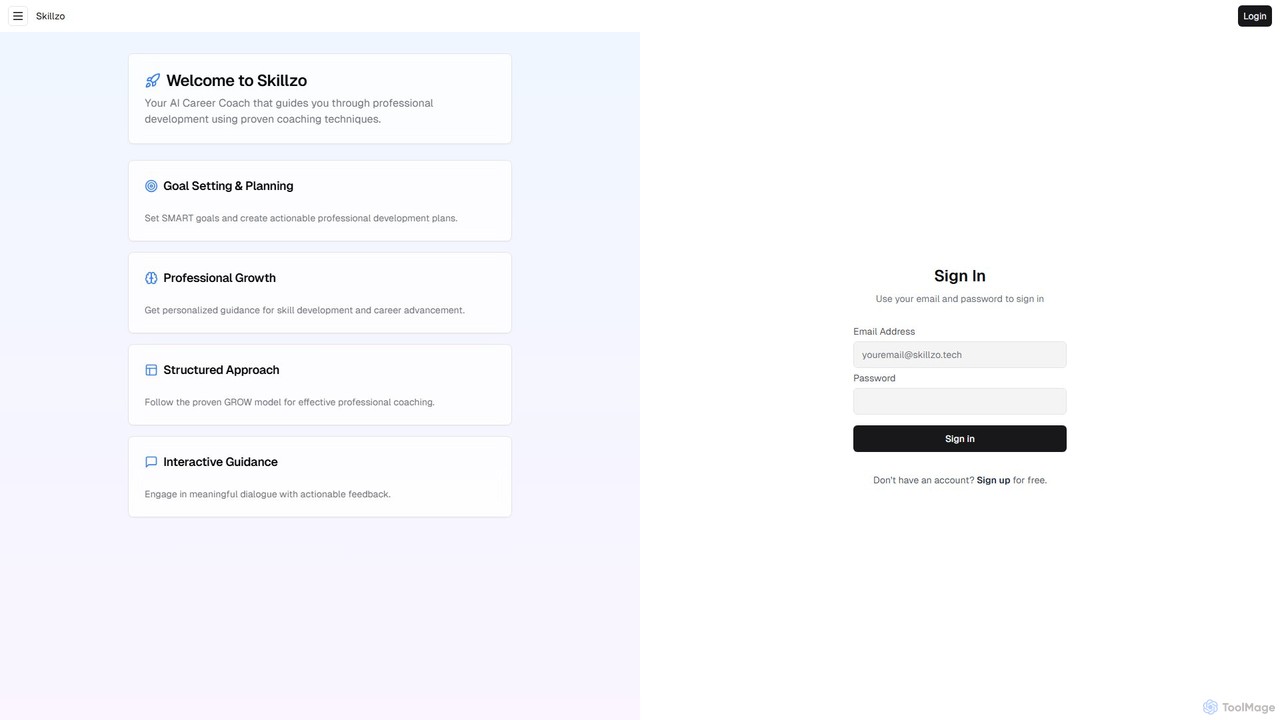
Skillzo is your personal AI Career Coach, designed to guide your professional development using the proven GROW coaching model. It helps you set SMART goals, create actionable plans, identify skill gaps, and receive personalized guidance for career advancement and skill enhancement.

Skill Development
Visits 5.6KFavorites 114Likes 129
Mock Interviewer AI
Freemium

Mock Interviewer AI

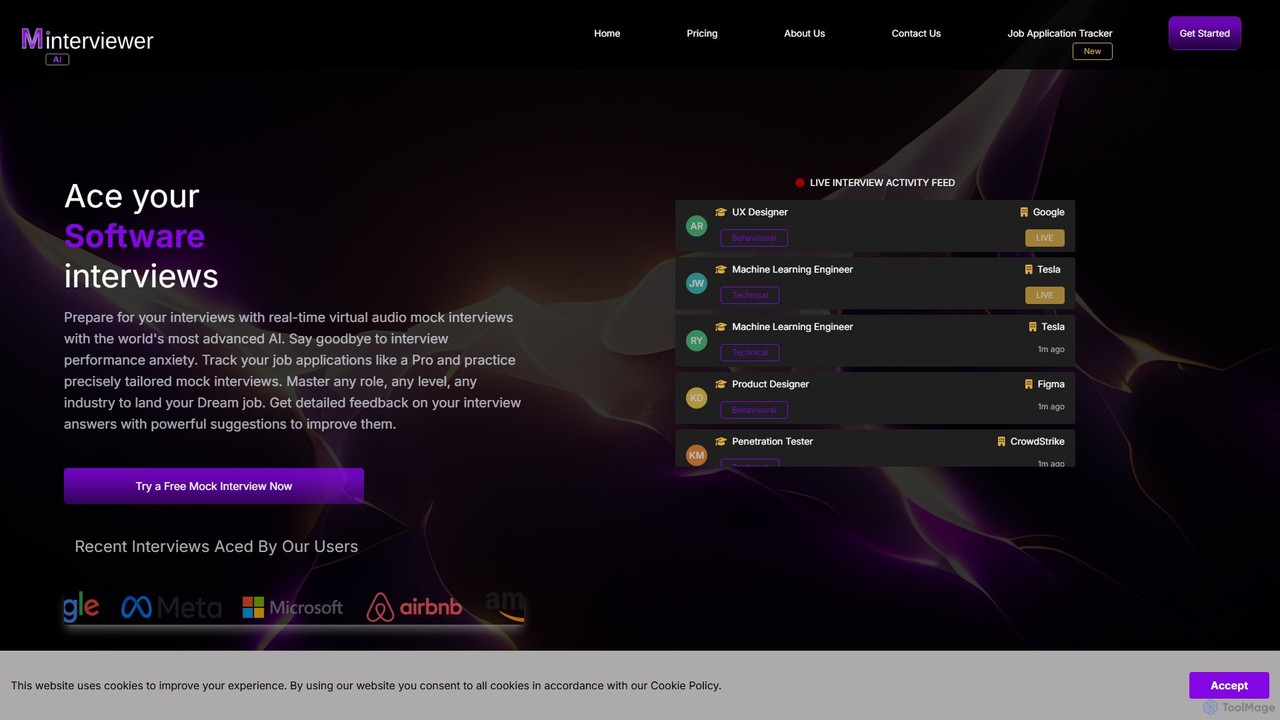
An AI-powered platform for real-time voice mock interviews. It helps job seekers practice for any role, receive detailed performance feedback, and track job applications to overcome interview anxiety and land their dream job.

Interview Preparation
Visits 6.4KFavorites 147Likes 156
STAR Method
Freemium

STAR Method

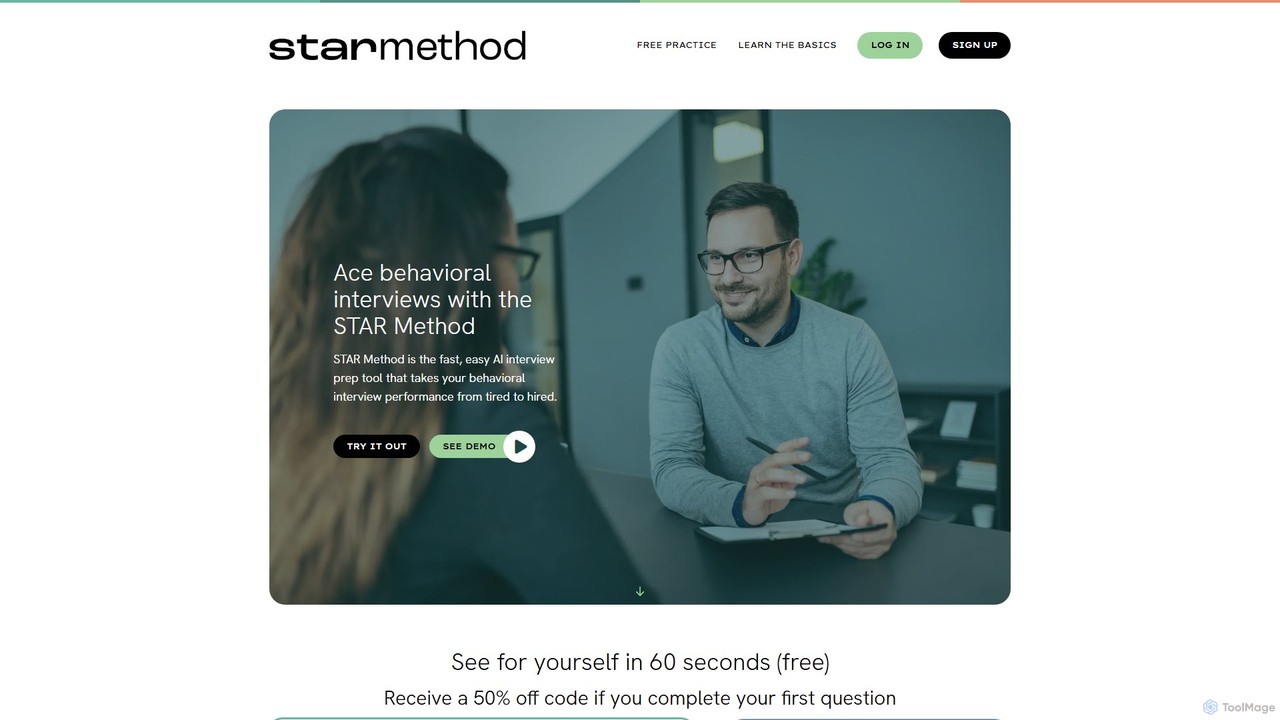
STAR Method is an AI-powered interview preparation tool designed to help job seekers master behavioral interviews. It uses the proven STAR (Situation, Task, Action, Result) framework to provide personalized practice questions, real-time coaching, and detailed performance feedback, enabling users to build confidence and deliver compelling, structured answers to land their dream job.

Interview Preparation
Visits 7.5KFavorites 136Likes 148
Type-A-Holic
Free

Type-A-Holic

Type-A-Holic is an AI-powered online typing tutor designed to enhance your typing speed and accuracy. It offers multiple engaging game modes, real-time performance tracking (WPM, accuracy), and personalized practice exercises. Ideal for students, professionals, and anyone looking to master their keyboard skills in a fun, interactive way.

Skill Development
Visits 5.5KFavorites 122Likes 124

About Skill Development

AI Skill Development tools are a specialized category of educational software that uses artificial intelligence to create personalized learning experiences. These platforms go beyond traditional content delivery by offering interactive exercises, real-time feedback, and adaptive learning paths tailored to an individual's performance. Their primary value lies in accelerating the mastery of practical skills, from coding and language proficiency to soft skills like communication and leadership. Within the broader field of education, these tools represent the shift towards active, hands-on practice and measurable improvement.

Core Features

  • Personalized Learning Paths: The AI assesses a user's current proficiency and dynamically creates a customized curriculum to address specific weaknesses and goals.
  • Interactive Simulations: Users can practice skills in realistic, AI-driven environments, such as coding sandboxes, conversation simulators, or virtual case studies.
  • Instant Performance Feedback: AI algorithms analyze user input—be it code, speech, or written text—to provide immediate, actionable suggestions for improvement.
  • Skill Gap Analysis: These tools identify and visualize the gap between a user's current abilities and their desired skill level, guiding their learning focus.

Use Cases

These tools are widely used by professionals seeking to upskill or reskill, students preparing for the job market, and organizations for corporate training. For example, a software developer might use a platform to practice complex algorithms before a technical interview, while a sales team could use a simulator to refine their negotiation tactics in a risk-free setting.

How to Choose

When selecting a Skill Development tool, consider the specificity of the skill domain—is it for a technical skill like Python or a soft skill like public speaking? Evaluate the quality and depth of the AI-driven feedback. Also, consider the underlying learning methodology (e.g., project-based, gamified) and whether it integrates with existing Learning Management Systems (LMS) if needed for corporate use.

Featured tool rankings

Skill Development use cases

1

Technical Interview Preparation for Developers

A software developer preparing for job interviews uses an AI coding platform. The platform provides a curated list of algorithmic challenges based on the target company's typical questions. As the developer writes code, the AI offers real-time feedback on efficiency (Big O notation), style, and potential bugs. It also simulates a mock interview environment, helping the developer practice explaining their thought process under pressure, significantly increasing their confidence and performance in actual interviews.

2

Practicing Conversational Language Skills

A marketing manager who needs to improve their business Spanish for a new market expansion uses an AI language tutor. Instead of just memorizing vocabulary, they engage in simulated conversations with an AI chatbot that plays the role of a potential client. The AI provides instant feedback on their grammar, pronunciation, and use of idiomatic expressions. This targeted, interactive practice allows the manager to build practical communication skills much faster than with traditional methods, preparing them for real-world business negotiations.

3

Refining Public Speaking and Presentation Skills

A project manager uses an AI presentation coach to rehearse for a critical stakeholder meeting. They upload their slides and record themselves delivering the presentation. The AI tool analyzes their speech for filler words ('um', 'ah'), pacing, and tone modulation. It also provides a transcript with highlighted areas for improvement. This objective, data-driven feedback helps the manager identify and correct nervous habits, ensuring their final delivery is clear, confident, and impactful, which is difficult to achieve without a human coach.

4

Corporate Sales Team Training

A company's sales department implements an AI-powered role-playing tool to onboard new hires. Instead of practicing on real customers, trainees interact with an AI avatar that simulates various customer personas and objections. The system scores their performance on key metrics like empathy, product knowledge accuracy, and objection handling. This standardized, scalable training method ensures all new sales reps reach a consistent level of proficiency before they engage with actual clients, reducing ramp-up time and improving initial sales outcomes.

5

Mastering a Musical Instrument

An amateur piano player uses an AI music tutor app to improve their technique. They place their phone on the piano, and the app listens as they play a piece. Using audio recognition, the AI provides real-time feedback on timing, note accuracy, and dynamics. It highlights specific bars where they made mistakes and suggests targeted exercises to correct them. This personalized practice partner helps the musician identify issues that they might not notice on their own, leading to more efficient practice sessions and faster improvement.

6

Medical Procedure Simulation for Students

A medical student uses a specialized AI simulation tool to practice patient diagnosis. The tool presents a virtual patient with a set of symptoms and medical history. The student must ask questions, order tests, and interpret results to arrive at a diagnosis. The AI provides feedback on their diagnostic process, highlighting missed questions or misinterpreted data. This risk-free environment allows students to build critical thinking and diagnostic skills by repeatedly practicing on a wide variety of virtual cases before they interact with real patients.

Skill Development FAQ

What are AI Skill Development tools?

AI Skill Development tools are software applications that use artificial intelligence to provide personalized, interactive training for specific skills. Unlike passive learning from videos or articles, these tools actively engage users through simulations, exercises, and real-time feedback. Key features often include adaptive learning paths that adjust to the user's progress, performance analytics to track improvement, and realistic practice environments. They are designed to accelerate the process of turning knowledge into practical, applicable ability.

How do AI Skill Development tools differ from online courses?

The primary difference lies in their focus: online courses are centered on content delivery, while AI Skill Development tools focus on active practice and feedback. An online course provides structured knowledge through videos and texts. A skill development tool provides an environment to apply that knowledge and receive personalized, AI-driven coaching to improve performance. For example, an online course might teach you the theory of negotiation, whereas an AI tool would let you practice negotiating with a simulated counterpart and analyze your performance.

How do I choose the right AI Skill Development tool?

Choosing the right tool depends on your specific goals. Consider these factors:

  • Skill Specificity: Does the tool specialize in the exact skill you want to learn (e.g., Python coding, conversational French, sales pitching)? General-purpose tools may be less effective.
  • Feedback Quality: Look for tools that provide detailed, actionable feedback. Vague comments are less helpful than specific suggestions tied to performance data.
  • Learning Methodology: Does the tool's approach match your learning style? Some use gamification, others use realistic simulations or structured drills.
  • Progress Tracking: A good tool should offer clear analytics to show your improvement over time and identify persistent weak spots.
Who can benefit most from AI Skill Development tools?

A wide range of individuals and organizations can benefit. Key groups include:

  • Professionals: Individuals looking to upskill for a promotion, reskill for a career change, or master new technologies relevant to their job.
  • Students: Those preparing for the job market who need to bridge the gap between academic knowledge and practical, in-demand industry skills.
  • Corporate Training Departments: Companies seeking scalable, consistent, and data-driven methods to train employees in areas like sales, customer service, and leadership.
  • Lifelong Learners: Anyone with a personal interest in mastering a new hobby or skill, such as learning a language or a musical instrument.
How does the AI provide personalized feedback?

The mechanism for feedback varies by skill. For coding, an AI might analyze code for syntax, efficiency, and adherence to best practices. For language learning, Natural Language Processing (NLP) models assess grammar, pronunciation, and fluency. For public speaking, AI can use computer vision to analyze body language and audio processing to detect filler words and pacing. In all cases, the AI compares the user's performance against a vast dataset of expert examples or established rules to generate specific, targeted recommendations for improvement.