ToolMage
Sign in

Best 3 Special Needs AI tools for Education

Popular Special Needs AI tools in Education include Better Speech, Finni Health, and The Cognity, helping you work more efficiently.

Finni Health
Paid

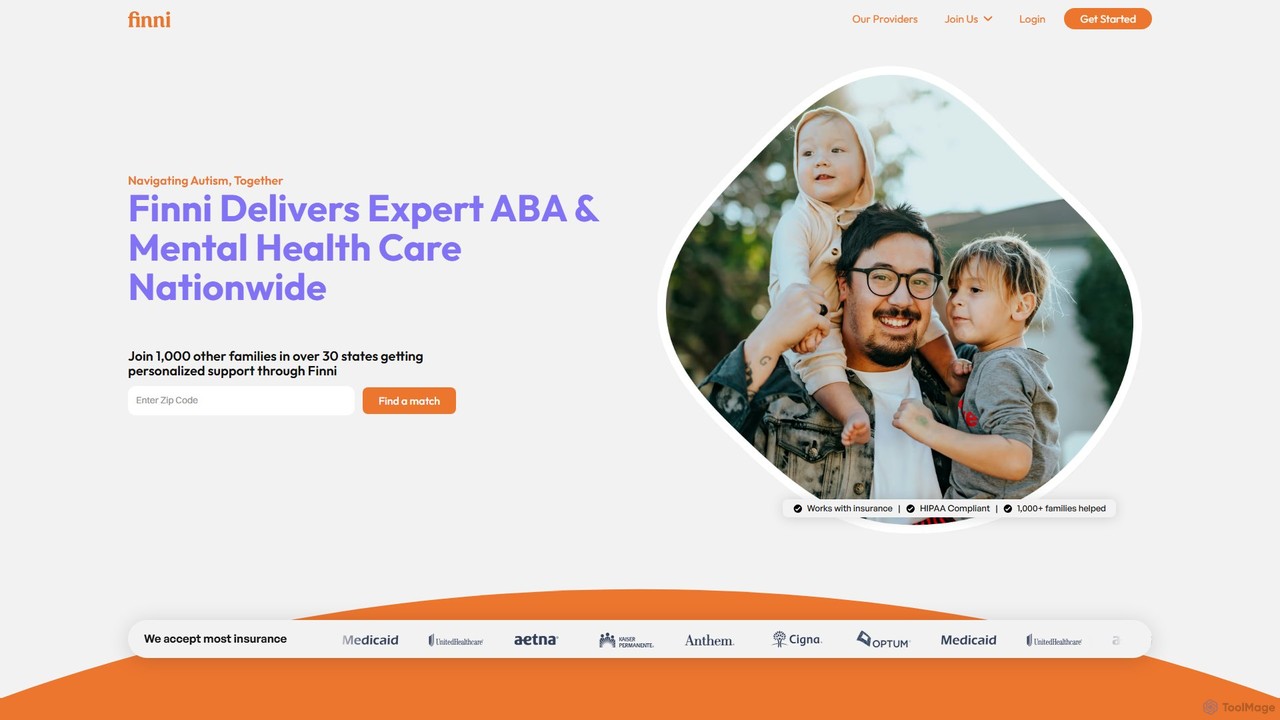
Finni Health

Finni Health is a comprehensive platform for autism care, connecting families with expert ABA therapists and providing practitioners with an all-in-one solution to launch and manage their own practice. It combines personalized, insurance-covered therapy for children with a robust backend system for clinicians, including EHR, billing, and scheduling tools.

Special Needs
Visits 14.7KFavorites 113Likes 112
Better Speech
Paid

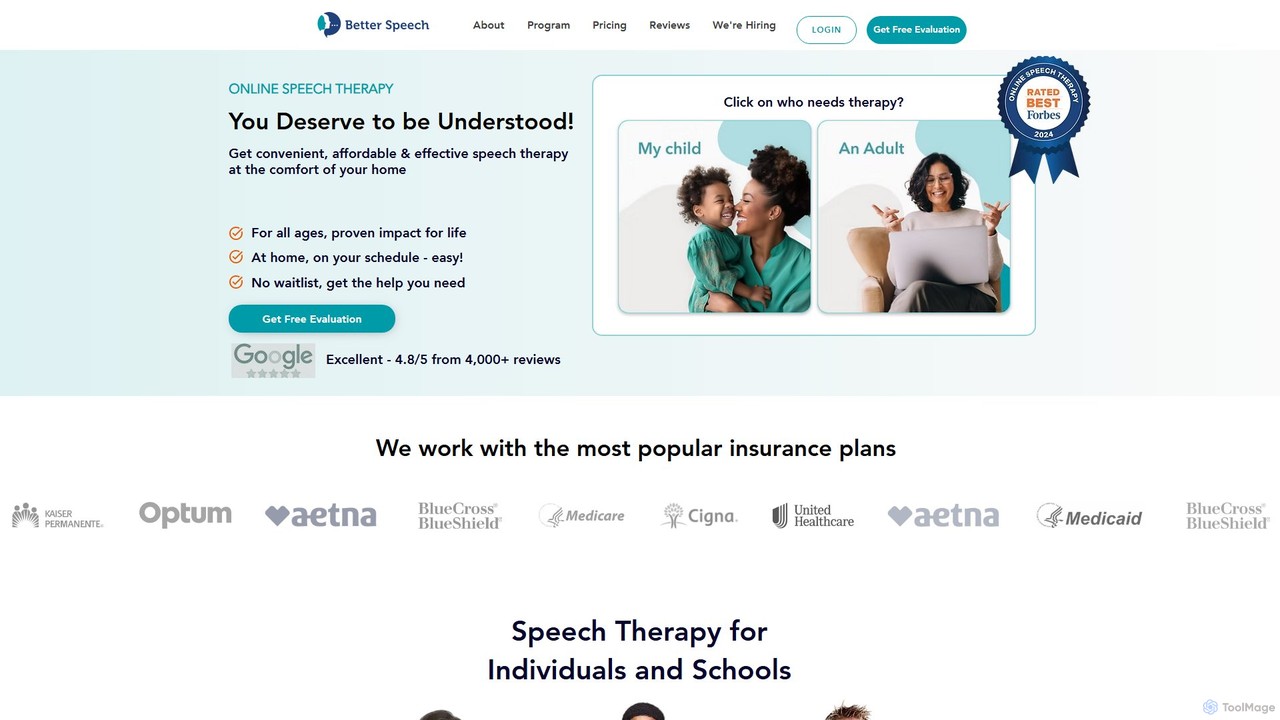
Better Speech

Better Speech is an online platform providing convenient, affordable, and effective speech therapy for all ages. It connects users with over 250 licensed and certified therapists for live weekly sessions via Zoom, supplemented by unlimited practice exercises. With no waitlists and support for insurance plans, it makes professional speech-language pathology accessible from the comfort of home.

Special Needs
Visits 45.5KFavorites 134Likes 140
The Cognity
Freemium

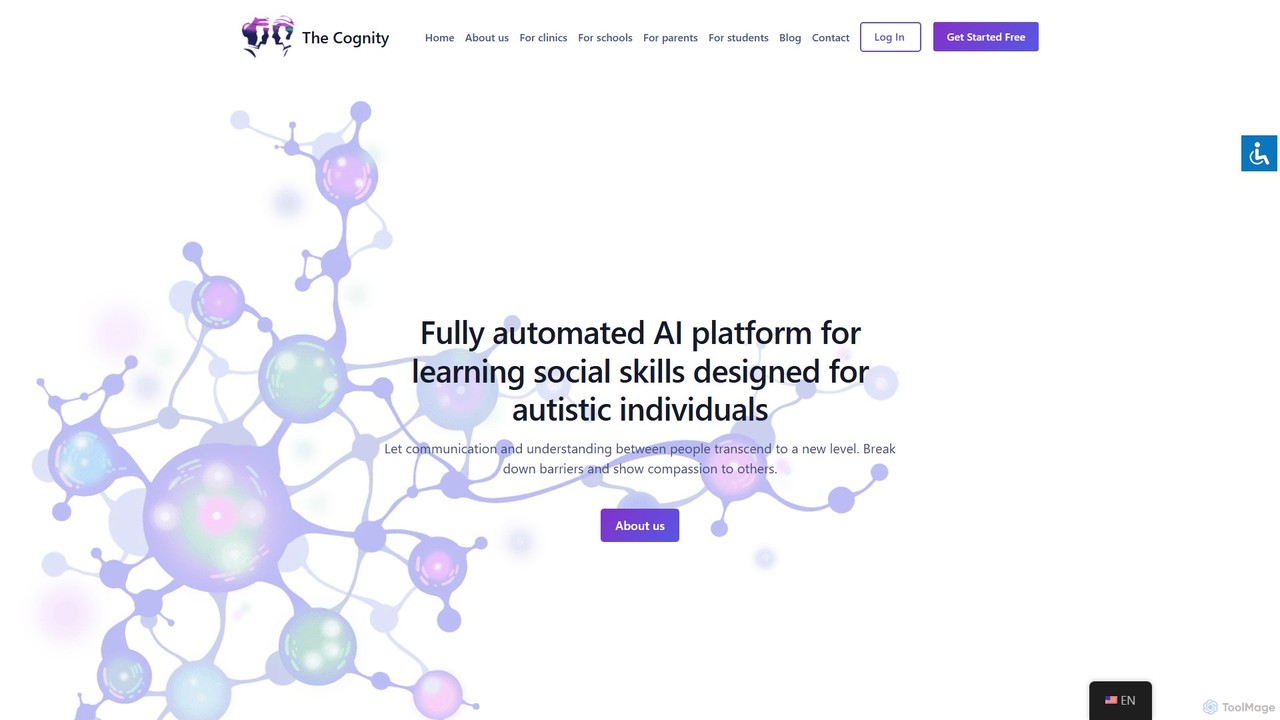
The Cognity

The Cognity is a fully automated AI platform designed to help autistic individuals learn and train social skills. It provides personalized learning journeys, practical exercises with automated feedback, and a dedicated administration panel for therapists to enhance therapy sessions and track progress.

Special Needs
Visits 5.1KFavorites 147Likes 139

About Special Needs

Special Needs AI tools are designed to provide personalized support and enhance learning experiences for individuals with diverse educational requirements. These tools leverage advanced AI, including natural language processing and adaptive learning algorithms, to offer tailored content, assistive technologies, and specialized educational resources. They aim to foster inclusivity and empower learners by addressing specific challenges in communication, comprehension, and accessibility within the educational context.

Core Features

  • Adaptive Learning Paths: Dynamically adjusts curriculum and pace based on individual learner progress and needs.
  • Assistive Communication: Provides text-to-speech, speech-to-text, and augmentative communication (AAC) support.
  • Personalized Content Generation: Creates customized learning materials, exercises, and visual aids.
  • Emotional and Behavioral Support: Monitors engagement and provides prompts or interventions for focus and well-being.
  • Accessibility Enhancements: Offers tools for screen reading, alternative input methods, and sensory adjustments.

Use Cases

These tools are invaluable for educators, therapists, parents, and individuals with special needs in various educational settings. They facilitate individualized education plans (IEPs), support remote learning for students with disabilities, and provide supplementary resources for skill development.

How to Choose

When selecting Special Needs AI tools, consider the specific disability or learning challenge addressed, the level of personalization offered, integration capabilities with existing educational platforms, and compliance with accessibility standards (e.g., WCAG). Evaluate user-friendliness for both learners and educators, data privacy policies, and the availability of multilingual support.

Special Needs use cases

1

Creating Personalized Learning Modules for Dyslexia

An educator uses an AI tool to generate reading materials with adjustable font sizes, line spacing, and color contrasts, along with text-to-speech options, specifically tailored for students with dyslexia to improve reading comprehension and engagement.

2

Facilitating Communication for Non-Verbal Students

A speech therapist employs an AI-powered AAC (Augmentative and Alternative Communication) app that learns a student's communication patterns and preferences, suggesting relevant words or phrases, and converting text or symbols into spoken language, enabling more effective interaction.

3

Adaptive Math Practice for ADHD Students

A parent utilizes an AI-driven platform that provides short, focused math exercises with gamified elements and immediate feedback, adapting difficulty and minimizing distractions to help a child with ADHD maintain focus and build mathematical skills.

4

Generating Visual Schedules for Autistic Learners

A special education teacher uses an AI tool to quickly create customizable visual schedules and social stories with appropriate imagery and simplified language, aiding autistic students in understanding daily routines and social expectations.

5

Real-time Language Translation for Hearing-Impaired Students

In an inclusive classroom, an AI tool provides real-time transcription and translation of spoken lectures into text or sign language avatars, ensuring hearing-impaired students can fully participate and comprehend classroom discussions.

6

Developing Social Skills through AI Role-Playing

A therapist uses an AI-powered virtual assistant that simulates social interactions, allowing individuals with social anxiety or autism to practice conversational skills, interpret non-verbal cues, and receive constructive feedback in a safe, controlled environment.

Special Needs FAQ

What are Special Needs AI tools?

Special Needs AI tools are artificial intelligence applications specifically designed to support individuals with diverse learning, cognitive, physical, or emotional challenges within educational and developmental contexts. They leverage AI to personalize learning, provide assistive technologies, and create accessible content, aiming to overcome barriers and enhance independence for learners with special requirements.

How do Special Needs AI tools differ from general educational AI?

While general educational AI focuses on broad learning enhancement, Special Needs AI tools are uniquely tailored to address specific disabilities or learning differences. They incorporate features like adaptive algorithms for individualized education plans, specialized assistive communication, and accessibility adjustments (e.g., screen readers, alternative input) that go beyond standard educational software to meet highly specific requirements.

What are the key benefits of using AI for special needs education?

AI tools offer significant benefits, including highly personalized learning experiences that adapt to individual paces and styles, enhanced accessibility through various assistive technologies, and the ability to automate repetitive tasks for educators. They can also provide consistent, non-judgmental support, foster greater independence for learners, and offer data-driven insights for educators to refine teaching strategies.

What features should I look for when choosing a Special Needs AI tool?

When selecting a tool, prioritize features such as robust personalization and adaptive learning capabilities, comprehensive assistive technologies (e.g., text-to-speech, AAC), and strong accessibility compliance. Also, consider ease of use for both learners and educators, data privacy and security, compatibility with existing devices or platforms, and the availability of customizable content options to meet diverse needs.

Can Special Needs AI tools replace human educators or therapists?

No, Special Needs AI tools are designed to augment and support human educators and therapists, not replace them. They serve as powerful assistants, automating tasks, providing personalized resources, and offering data insights. However, the nuanced understanding, emotional connection, and individualized judgment of human professionals remain indispensable for comprehensive special needs education and therapy.