GitaGPT
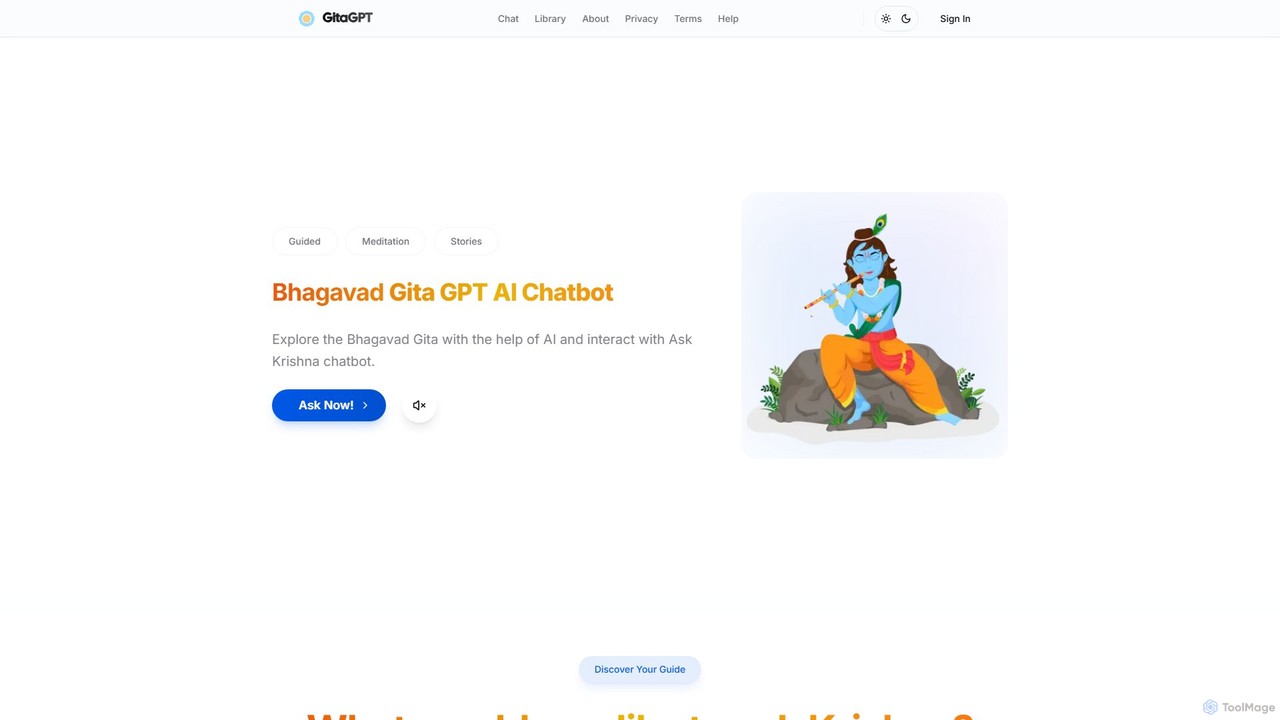
GitaGPT is an AI-powered platform offering spiritual guidance through conversations with AI chatbots based on the Bhagavad Gita …
GitaGPT is an AI-powered platform offering spiritual guidance through conversations with AI chatbots based on the Bhagavad Gita and other spiritual figures. It helps users explore ancient wisdom, find answers to life's profound questions, and receive personalized advice for mental clarity and self-discovery.
About Spiritual
Spiritual AI tools are applications designed to support personal growth, mindfulness, and self-exploration through artificial intelligence. These tools often use algorithms to analyze personal data like birth dates or user inputs to generate personalized insights, such as astrological charts, numerology reports, or tarot card interpretations. They provide users with accessible and interactive ways to engage with spiritual practices and gain deeper self-awareness. By blending technology with ancient wisdom, these tools offer a modern gateway to introspection and personal development within the broader educational landscape of self-improvement.
Core Features
- Personalized Readings: Generates custom astrological charts, numerology reports, and tarot interpretations based on user data.
- AI-Guided Meditation: Offers tailored meditation sessions that adapt to the user's mood, goals, or experience level.
- Dream Analysis: Utilizes AI to interpret symbols and themes from user-recorded dreams, providing potential insights.
- Mindfulness Prompts: Delivers daily affirmations, gratitude prompts, and mindfulness exercises to foster mental well-being.
- Spiritual Guidance Chatbots: Provides a conversational interface for users to ask questions and receive AI-generated spiritual advice or reflections.
Use Cases
These tools are primarily used by individuals on a path of self-discovery, mindfulness practitioners seeking to deepen their practice, and those curious about disciplines like astrology and numerology. For example, a user might consult an AI tarot reader for clarity on a life decision, or use a guided meditation app to manage daily stress. They serve as digital companions for personal reflection and spiritual exploration.
How to Choose
When selecting a Spiritual AI tool, consider the specific practice you're interested in (e.g., astrology, meditation, tarot). Evaluate the depth and quality of the insights provided and the level of personalization. Check the platform's data privacy policy, especially since you may be sharing personal information. Finally, consider the user interface and whether its design and tone resonate with your personal approach to spirituality.
SpiritualUse Cases
Daily Astrological Guidance
An individual curious about astrology uses an AI Spiritual tool to get daily insights. After entering their birth date, time, and location, the tool generates a detailed natal chart. Each day, the app provides a personalized horoscope based on current planetary transits relative to their chart, highlighting potential opportunities, challenges, and themes for the day. This helps the user align their activities with astrological energies and fosters a greater sense of self-awareness and connection to cosmic cycles.
AI Tarot Reading for Clarity
Someone facing a career crossroads uses an AI tarot reader for guidance. They formulate a specific question about their professional path and perform a digital card spread, such as the Celtic Cross. The AI provides a detailed interpretation for each card's position and meaning within the spread, synthesizing the information into a coherent narrative. This offers the user a new perspective, helping them reflect on their situation, uncover subconscious factors, and consider potential outcomes, empowering them to make a more informed decision.
Personalized Meditation for Stress Relief
A busy professional uses an AI meditation app to manage work-related stress. Based on their input about feeling 'anxious' and having '10 minutes' available, the AI generates a custom guided meditation session. The session includes calming vocal guidance, soothing background sounds, and breathing exercises specifically chosen to address anxiety. The AI adapts future sessions based on user feedback, creating a progressively more effective and personalized mindfulness practice that fits seamlessly into a hectic schedule.
Dream Journaling and AI Interpretation
A user interested in understanding their subconscious mind keeps a digital dream journal within a Spiritual AI app. After waking, they record a detailed account of their dream. The AI then analyzes the text, identifying key symbols, recurring themes, and emotional tones. It provides a potential interpretation based on common archetypes and psychological theories, offering insights into the user's current life challenges, fears, or desires. This practice helps the user engage with their inner world in a structured and insightful way.
Numerology Life Path Analysis
An individual seeking self-understanding inputs their full name and date of birth into a numerology AI tool. The application calculates their core numerology numbers, such as the Life Path, Expression, and Soul Urge numbers. It then generates a comprehensive report detailing the meanings of these numbers, outlining inherent strengths, potential challenges, and the overarching themes of their life's journey. This provides a structured framework for personal reflection, helping the user better understand their personality and purpose from a numerological perspective.
Cultivating a Daily Gratitude Practice
A user wants to foster a more positive mindset and uses an AI tool for daily mindfulness prompts. Each morning, the app sends a notification with a unique gratitude prompt, such as 'What is something beautiful you saw today?' or 'Who is someone who supported you this week?'. The user journals their response within the app. Over time, the AI can identify recurring themes in their entries, helping them recognize patterns of positivity in their life. This simple, guided practice helps build a consistent habit of gratitude and mindfulness.