ToolMage
Sign in

Best 75 Storytelling AI tools for Education

Popular Storytelling AI tools in Education include Sleepytale, magicalchildrensbook, Readkidz, AI Comic Generator, Oscar Stories, BabyStoryAI, Storywizard.ai, StoryBee, mystorybot, and Scarlett Panda, helping you work more efficiently.

LearningStory

LearningStory

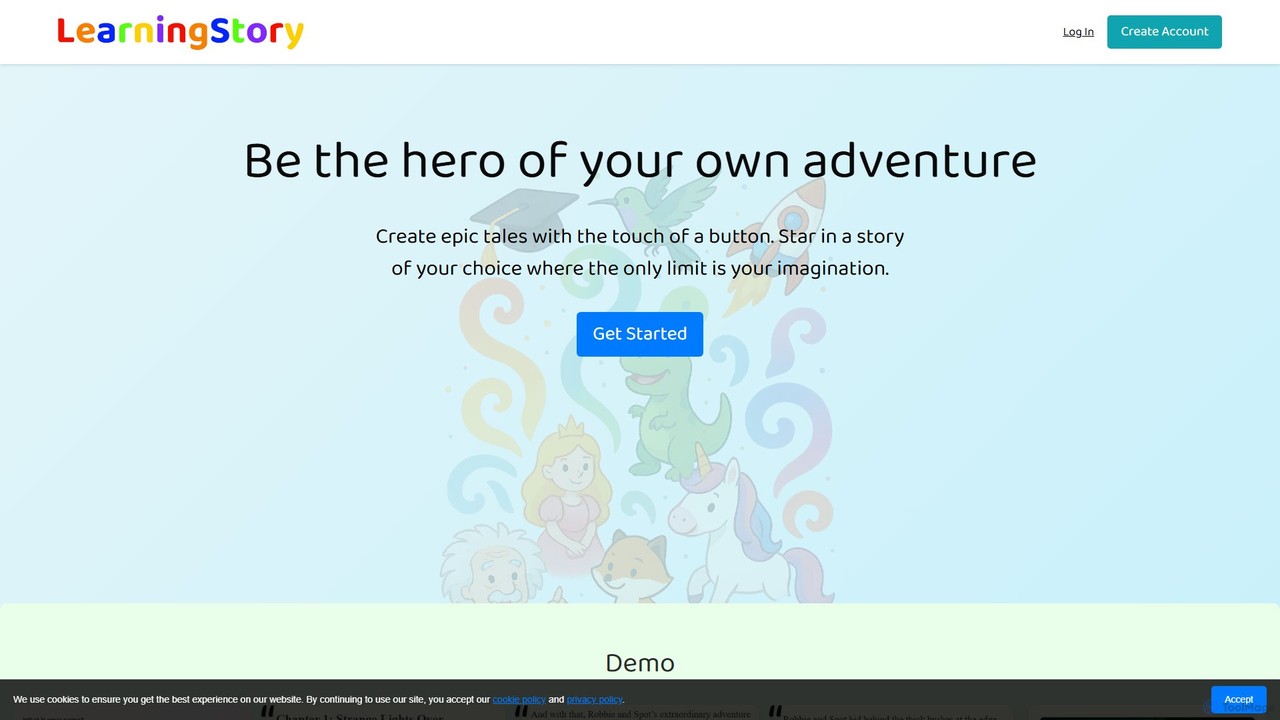
LearningStory is an AI-powered platform that creates personalized stories for children. By placing the child as the main character, it transforms reading into an exciting adventure, helping to boost literacy, creativity, and a lifelong love for learning in an engaging and interactive way.

Writing
Visits 6.6KFavorites 144Likes 134
Plotlime
Freemium

Plotlime

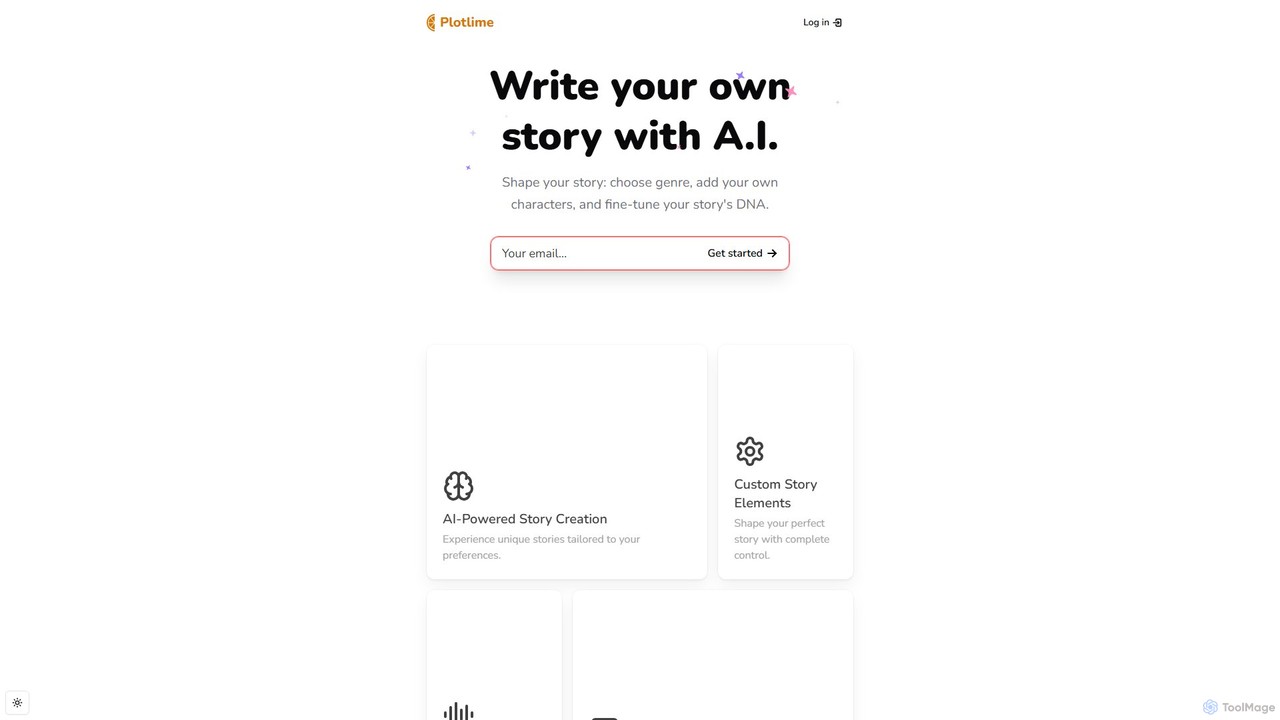
Plotlime is an AI-powered storytelling platform that enables users to create unique, personalized stories. Shape your narrative by choosing genres, adding custom characters, and fine-tuning plot details. Each story is enhanced with AI-generated cover art and an immersive audio version, making it perfect for children, young adults, and aspiring writers.

Text To Speech
Visits 6KFavorites 119Likes 121
Once Upon a Bot
Freemium

Once Upon a Bot

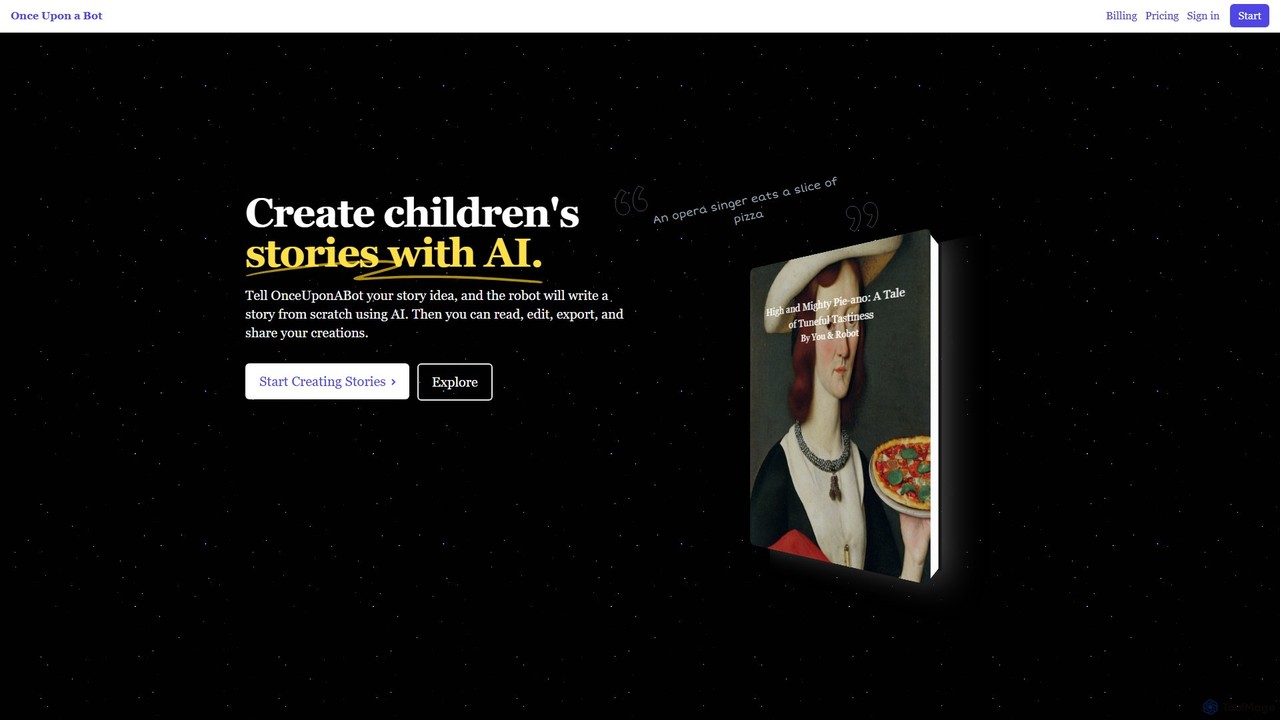
Once Upon a Bot is an AI-powered platform for creating unique, illustrated children's stories from your ideas. It combines advanced AI for text and images to generate personalized tales. Features include adjustable reading levels, multi-language support, audio narration, and the ability to star in your own story by uploading photos. It's an ideal tool for parents, teachers, and young readers to foster creativity and literacy.

Writing
Visits 11.5KFavorites 114Likes 119

About Storytelling

AI Storytelling tools are a specialized class of software that leverages generative AI to create, structure, and enhance narratives. They utilize large language models (LLMs) trained on vast literary corpora to generate plot points, character profiles, dialogue, and even complete story drafts from simple prompts. These tools serve as creative partners, helping educators, writers, and developers to brainstorm ideas, overcome writer's block, and build compelling narrative experiences. Their primary value lies in accelerating the initial stages of story creation and exploring diverse narrative possibilities within an educational or creative context.

Core Features

  • Plot Generation: Creates structured story outlines, plot twists, and scene progressions based on user inputs.
  • Character Development: Generates detailed character backstories, motivations, personality traits, and dialogue styles.
  • Interactive Narrative Design: Facilitates the creation of branching storylines and choice-based adventures for games or educational modules.
  • Genre and Style Emulation: Adapts the narrative's tone, voice, and structure to match specific genres like fantasy, sci-fi, or thriller.
  • World-Building Assistance: Helps construct fictional settings, histories, cultures, and rules for immersive story worlds.

Use Cases

These tools are widely used in education to teach narrative structure and creative writing. Authors and screenwriters use them for brainstorming and drafting, while game developers employ them to design complex quests and character dialogues. Marketers also leverage them to craft engaging brand stories and content marketing campaigns.

How to Choose

When selecting an AI Storytelling tool, consider the level of creative control it offers—from simple prompt generation to detailed parameter adjustments. Evaluate its specialization in specific genres or formats (e.g., screenplays, novels). Also, check the output formats and integration capabilities with other writing or development software. Finally, assess the user interface's intuitiveness for your specific workflow.

Featured tool rankings

Storytelling use cases

1

Crafting Interactive Educational Scenarios

An instructional designer needs to create an engaging compliance training module. Using an AI Storytelling tool, they define a workplace scenario with multiple ethical dilemmas. The tool generates branching narratives where each employee choice leads to a different consequence, complete with realistic dialogue. This transforms a static lesson into an interactive simulation, improving learner retention and decision-making skills without extensive programming.

2

Overcoming Writer's Block for a Novel

A fiction author is stuck on a key plot point in their fantasy novel. They input their main character's profile, the current situation, and their desired outcome into an AI Storytelling tool. The AI generates several potential plot twists, character conflicts, and dialogue exchanges. The author uses these suggestions not as final text, but as a catalyst to spark new ideas, helping them break through the creative impasse and continue writing their manuscript.

3

Designing Narrative Quests for a Video Game

A small indie game development team needs to populate their open-world game with compelling side quests. Lacking a dedicated writer, they use an AI Storytelling tool to generate quest outlines. By providing inputs like location, key NPCs, and desired reward, the tool creates dozens of unique quest structures, from simple fetch quests to complex mystery investigations, complete with character motivations and potential dialogue trees, significantly speeding up the content creation phase.

4

Generating Personalized Bedtime Stories

A parent wants to create unique bedtime stories for their child featuring the child as the main character. They use an AI Storytelling tool, inputting their child's name, favorite animals, and a moral theme like 'bravery' or 'kindness.' The tool weaves these elements into a short, age-appropriate story. This allows the parent to generate a new, personalized adventure every night, fostering a love for reading and creativity.

5

Developing Brand Narratives for Marketing

A marketing team is launching a new sustainable product and needs a powerful brand story. They use an AI Storytelling tool to explore different narrative angles. By inputting their brand values, target audience, and product features, the AI generates several story concepts, including a founder's journey, a customer success story, and a future-vision narrative. The team then refines the most compelling concept into a full-fledged marketing campaign.

6

Brainstorming Screenplay Scenes and Dialogue

A screenwriter is working on a thriller and needs to write a tense interrogation scene. They provide the AI Storytelling tool with the context: two characters, their conflicting goals, and the desired emotional arc of the scene. The AI generates multiple versions of the dialogue, exploring different subtexts, power dynamics, and reveals. This provides a strong foundation that the screenwriter can then polish and adapt to fit their unique voice and vision.

Storytelling FAQ

What are AI Storytelling tools?

AI Storytelling tools are applications that use artificial intelligence, primarily large language models, to assist in the creation and development of narratives. They go beyond simple text generation by focusing on core story elements like plot structure, character arcs, dialogue, and world-building. These tools can generate ideas, outline entire stories, or help refine specific scenes, acting as a creative collaborator for writers, educators, and game designers.

How do I choose the right AI Storytelling tool?

To choose the right tool, first identify your primary need. Are you looking for high-level plot ideas or detailed scene-by-scene generation? Consider these key factors:

  • Control vs. Automation: Do you want a tool that provides suggestions or one that writes full drafts?
  • Genre Focus: Some tools excel at specific genres like fantasy or sci-fi.
  • Output Format: Check if it can export to formats you use, like scriptwriting software or plain text.
  • User Interface: Ensure the tool's workflow matches your creative process.
What's the difference between AI Storytelling tools and general AI writers?

The key difference lies in their focus and structure. General AI writers (like those for articles or marketing copy) excel at producing coherent, informative text on a given topic. AI Storytelling tools, however, are specifically designed to understand and generate narrative structures. They incorporate concepts like plot points, character development, rising action, climax, and dialogue, which are not the primary focus of a general-purpose AI writer. They are specialized for creative, fictional content.

Who can benefit from using AI Storytelling tools?

A wide range of creators can benefit. Fiction writers and screenwriters use them to brainstorm and overcome writer's block. Game developers use them to create quests and character backstories. Educators and instructional designers create engaging, interactive learning content. Marketers craft compelling brand narratives. Even hobbyists and parents can use them to create personalized stories for entertainment or education.

Can AI Storytelling tools write a complete, publishable novel on their own?

Currently, AI Storytelling tools are best used as powerful assistants rather than autonomous authors. While they can generate large volumes of text and complete story drafts, the output often lacks the deep emotional nuance, consistent voice, and unique human perspective required for a high-quality, publishable novel. They are excellent for generating first drafts, exploring ideas, and structuring plots, but human creativity, editing, and refinement remain essential to produce a final, polished work.