Education Best in category 1 results Students AI Tool

Popular AI tools in the Students field of Education include SciSummary, etc., helping you quickly improve efficiency.

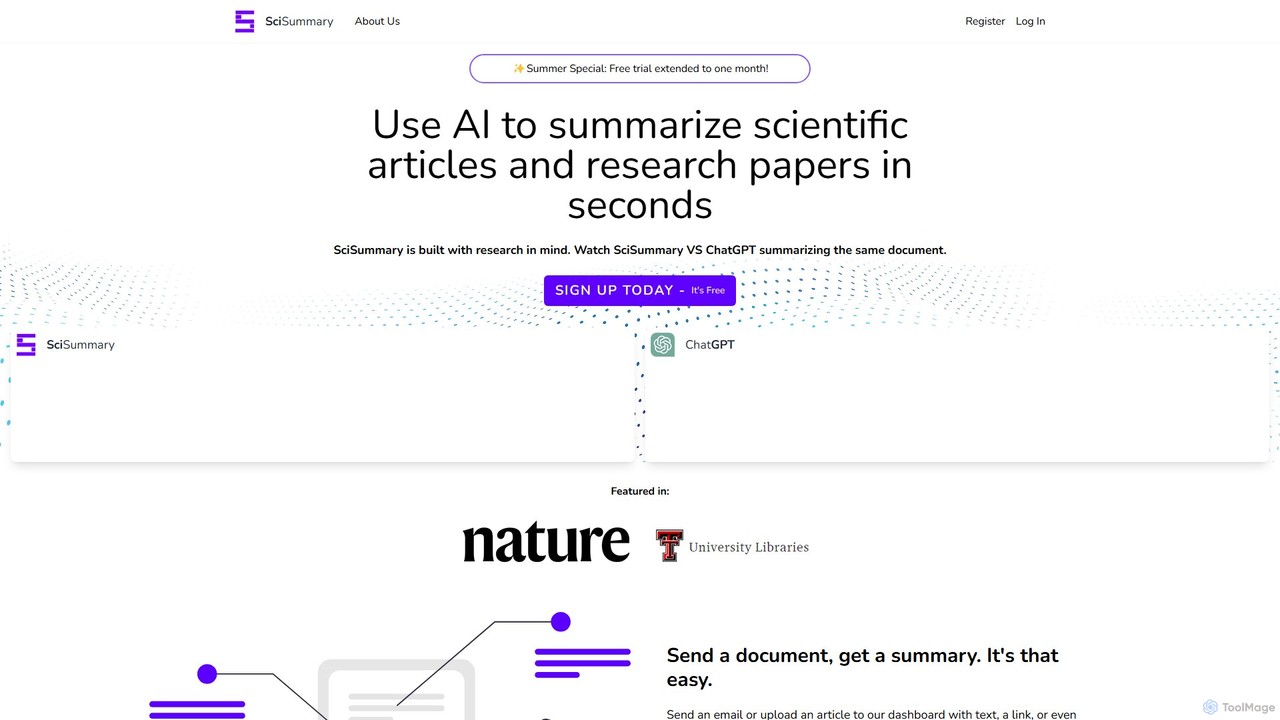
SciSummary

SciSummary

SciSummary is an AI-powered tool that summarizes scientific articles and research papers in seconds. Designed for researchers, students, …

80.7K

About Students

AI tools for Students are a specialized category of software designed to support academic tasks and enhance the learning process. These tools leverage AI, including natural language processing and machine learning, to assist with research, writing, problem-solving, and study management. They help students organize information, improve writing quality, understand complex topics, and manage their study schedules more effectively. Unlike general productivity tools, they often include features like citation generation, plagiarism checking, and subject-specific learning aids.

Core Features

  • AI Writing Assistance: Provides grammar correction, style suggestions, paraphrasing, and idea generation for essays and reports.
  • Research & Summarization: Quickly condenses long articles, research papers, or textbook chapters into key points and summaries.
  • Interactive Learning Aids: Generates flashcards, quizzes, and concept explanations from notes or documents to support active learning.
  • Academic Problem Solvers: Offers step-by-step solutions and explanations for problems in subjects like math, science, and coding.
  • Citation & Bibliography Management: Automatically formats sources and creates bibliographies in various academic styles (APA, MLA, Chicago, etc.).

Use Cases

These tools are widely used by high school, college, and university students across all disciplines, from humanities to STEM. Graduate students utilize them for intensive literature reviews and thesis preparation. They are particularly valuable for completing complex assignments, preparing for exams, and managing heavy academic workloads.

How to Choose

When selecting an AI tool for students, consider its focus on academic integrity; look for features that explain concepts rather than just providing answers. Evaluate its subject specificity—whether it's a general tool or specialized for a field like mathematics. Also, assess its ease of use, integration with your existing workflow (e.g., Google Docs), and the fairness of its pricing model for students.

StudentsUse Cases

1

Assistance with Essay and Report Writing

A university student writing a 10-page history paper can use AI tools to streamline the entire process. Initially, they can use an AI brainstormer to generate thesis statements and outline key arguments. During the research phase, an AI summarizer helps quickly digest academic articles. While writing, an AI assistant can paraphrase complex sentences for clarity, check for grammatical errors, and suggest stylistic improvements. This approach allows the student to focus more on critical analysis and argument construction, resulting in a higher-quality, well-structured paper completed more efficiently.

2

Efficient Research for Literature Reviews

A graduate student beginning a thesis must review dozens of academic papers. Instead of spending weeks reading each one fully, they can use an AI research assistant. This tool can scan a library of PDFs, extract key findings, methodologies, and conclusions from each paper, and even identify thematic connections between different sources. The student can quickly build an annotated bibliography and identify research gaps, reducing the initial research time by more than half and allowing them to move on to the analysis and writing phases much faster.

3

Interactive Exam Preparation

A high school student preparing for a biology final can turn their class notes and textbook chapters into a dynamic study guide. By uploading the materials to an AI learning tool, it can automatically generate flashcards for key terms, create multiple-choice quizzes to test comprehension, and formulate short-answer questions that mimic the exam format. The student can engage in active recall practice instead of passive reading, which is proven to improve memory retention. The tool can also identify topics the student struggles with and generate more questions on those areas for targeted review.

4

Solving Complex Math and Science Problems

An engineering student stuck on a difficult calculus homework problem can use an AI problem solver for guidance. Instead of just providing the final answer, the tool shows a detailed, step-by-step derivation of the solution. It explains each logical step, the theorems applied, and the calculations performed. This allows the student to understand the underlying methodology rather than simply copying the result. They can use this process to learn how to approach similar problems in the future, effectively turning a moment of frustration into a valuable learning opportunity and reinforcing their problem-solving skills.

5

Automating Citations and Bibliographies

Any student writing a research paper knows the tedious task of managing citations. An AI citation tool automates this process entirely. As the student finds sources online or in databases, a browser extension can capture the metadata with one click. When writing, the tool integrates with their word processor to insert in-text citations in the correct format (e.g., APA, MLA). Upon completion, it generates a perfectly formatted bibliography or works cited page in seconds. This not only saves hours of manual work but also significantly reduces the risk of plagiarism and formatting errors, ensuring academic compliance.

6

Creating Professional Presentations Quickly

A business student needs to create a presentation for a class project on short notice. Instead of starting from a blank template, they can input their research paper or a detailed outline into an AI presentation maker. The tool analyzes the content, divides it into logical sections, and generates a complete slide deck. It automatically suggests appropriate layouts, finds relevant stock images or icons, and summarizes text into concise bullet points. The student can then fine-tune the design and content, producing a visually appealing and well-structured presentation in a fraction of the time, allowing them to focus on practicing their delivery.

StudentsFrequently Asked Questions