ToolMage
Sign in

Best 7 Teaching Aids AI tools for Education

Popular Teaching Aids AI tools in Education include ColorPenguin, Coloringbook, Doodle AI, ColoringMaker, Aicoloringpages, coloring_pages.app, and PalettePlay, helping you work more efficiently.

Doodle AI
Paid

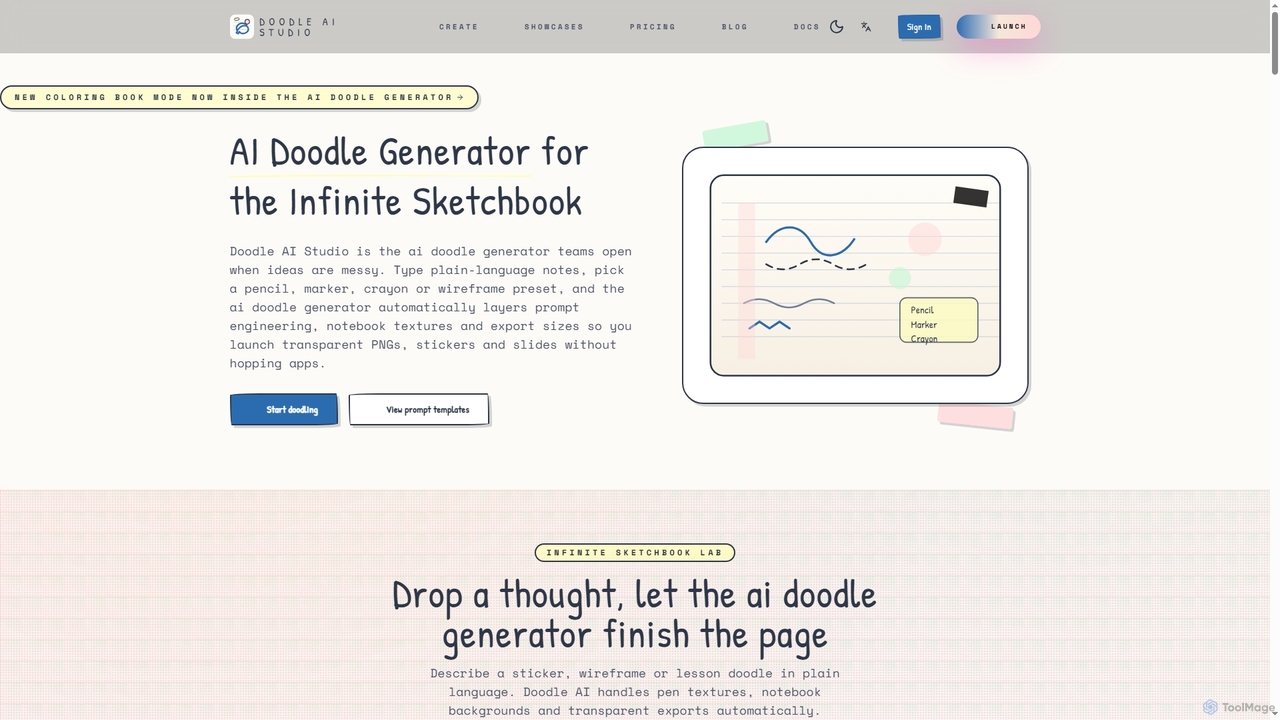
Doodle AI

Doodle AI is an innovative AI doodle generator and infinite sketchbook designed to transform plain language notes into tactile, hand-drawn style visuals. It offers various pen textures, notebook backgrounds, and transparent export options, making it ideal for educators, product teams, and creatives to quickly visualize and share ideas.

Digital Sketching
Visits 6.8KFavorites 81Likes 81
Coloringbook
Freemium

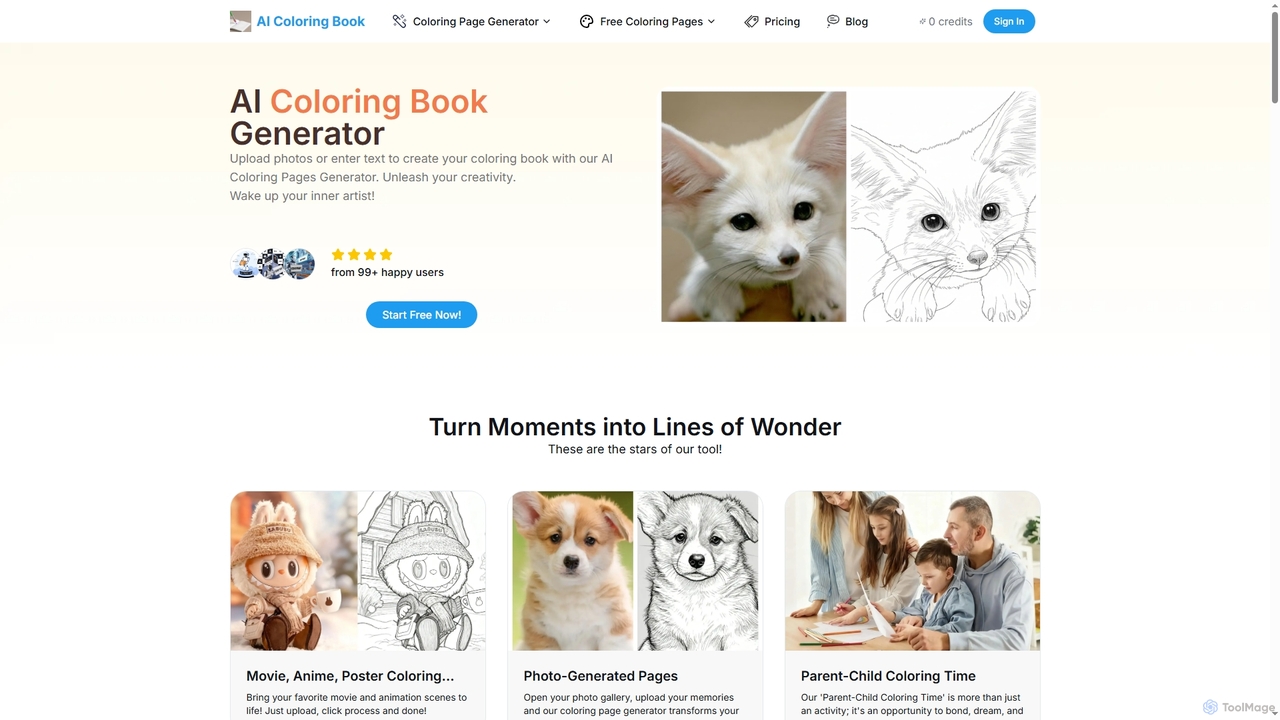
Coloringbook

An AI-powered tool that transforms text prompts and personal photos into unique, printable coloring pages. It features digital painting tools, a vast library of pre-made templates, and plans for both personal and commercial use. Ideal for hobbyists, creators, educators, and entrepreneurs looking to generate custom coloring books for relaxation, gifting, or selling.

Generative Art
Visits 7.5KFavorites 126Likes 113
Aicoloringpages
Freemium

Aicoloringpages

Aicoloringpages is an AI-powered tool that generates unique, printable coloring pages from simple text prompts. Leveraging DALL-E 3 technology, it allows users to create endless designs for children, educators, and hobbyists. The platform is user-friendly, cost-effective, and offers various credit-based plans to suit different needs, from a free trial to advanced packages.

Image Generation
Visits 5.4KFavorites 139Likes 153
ColorPenguin
Freemium

ColorPenguin

ColorPenguin is an AI-powered tool that transforms any text idea into unique, personalized coloring pages in seconds. Designed for parents, educators, artists, and creators, it allows users to specify themes, styles, and complexity levels. Generate everything from simple animal shapes for kids to intricate mandalas for adults, and export high-quality designs for printing or digital use.

Coloring Book Generation
Visits 8KFavorites 127Likes 149
PalettePlay
Freemium

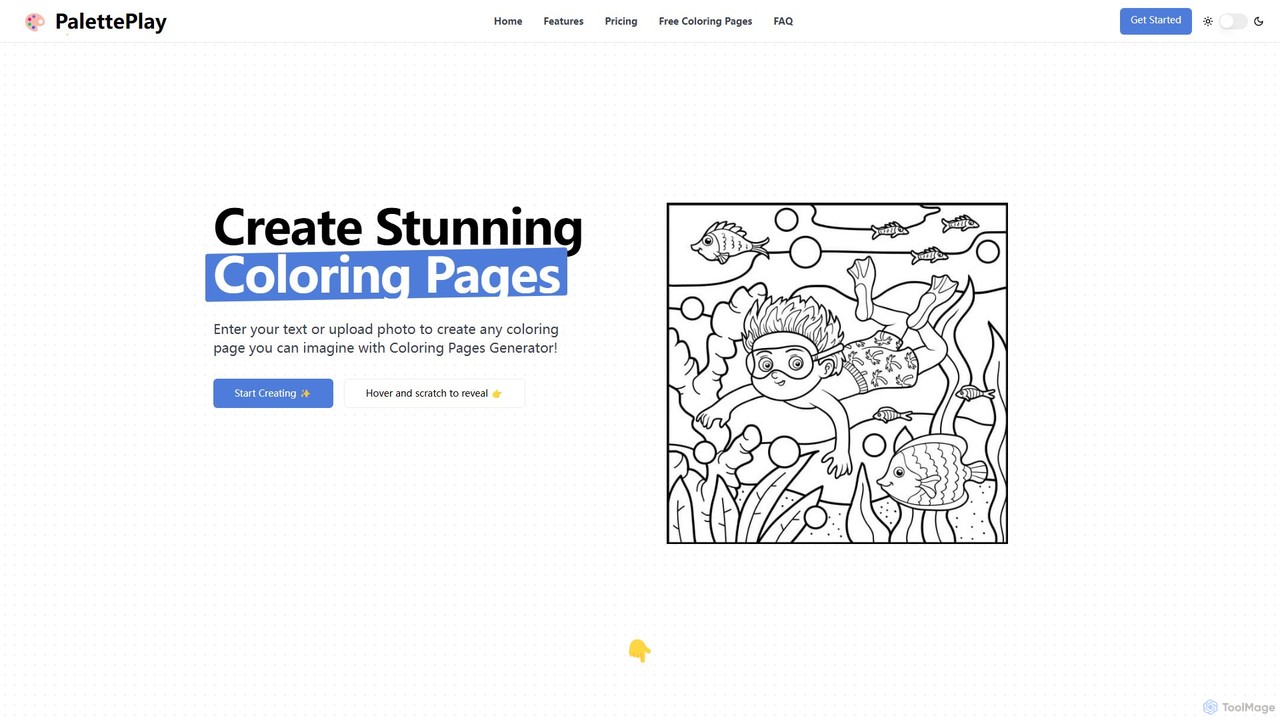
PalettePlay

PalettePlay is an AI-powered coloring page generator that transforms text prompts or photos into unique, high-quality line art. Ideal for parents, educators, and hobbyists, it allows users to create custom coloring sheets for all ages, from toddlers to adults. Unleash your imagination and generate endless printable activities, personal art projects, or even commercial content with its user-friendly interface and versatile features.

Image Generation
Visits 5.3KFavorites 129Likes 128
ColoringMaker
Freemium

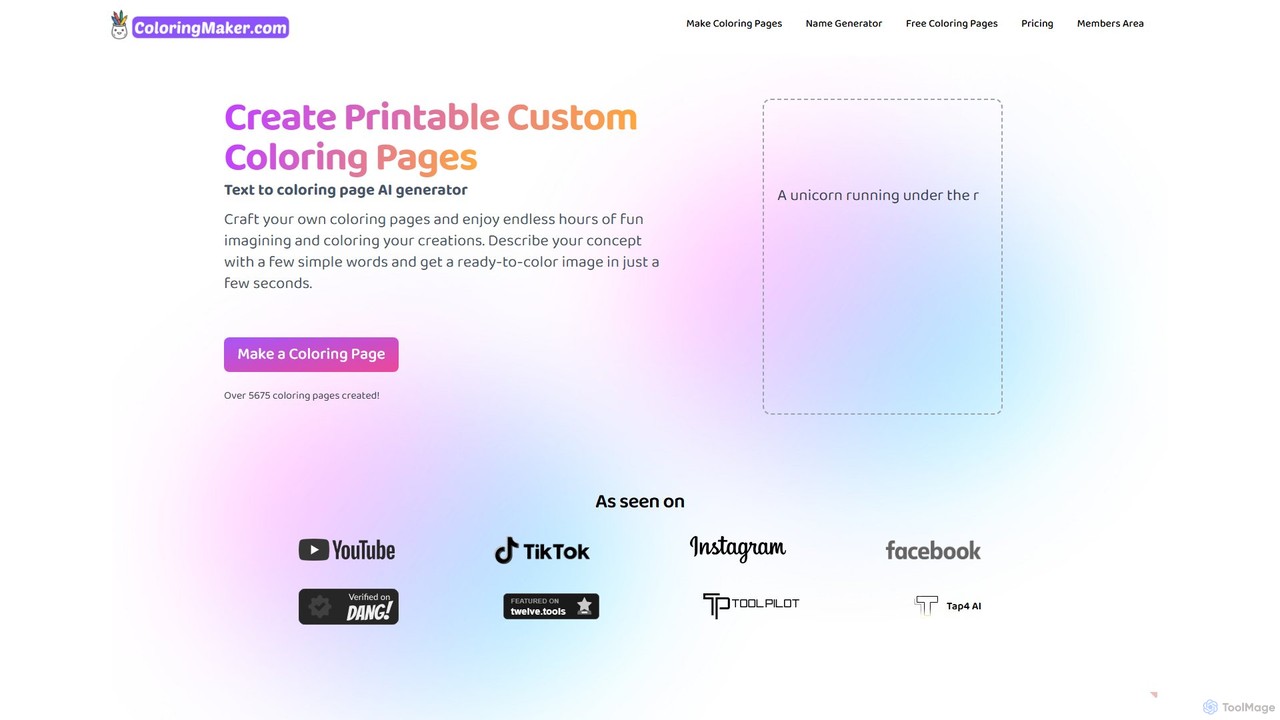
ColoringMaker

An AI-powered tool that generates unique, printable coloring pages from simple text descriptions and names. Perfect for kids, parents, teachers, and coloring enthusiasts to create personalized artistic activities in seconds.

Image Generation
Visits 6.3KFavorites 156Likes 176
coloring_pages.app
Freemium

coloring_pages.app

An AI-powered tool that generates custom, printable coloring pages from text prompts or photos in seconds. Designed for kids, adults, parents, and educators, it offers adjustable difficulty levels and a vast library of pre-made themes. Core features are free and require no sign-up.

Image Generation
Visits 5.4KFavorites 139Likes 147

About Teaching Aids

Teaching Aids are AI-powered tools designed to assist educators in creating, managing, and delivering engaging learning experiences. These tools leverage artificial intelligence to automate routine tasks, personalize content, and provide insightful analytics, significantly enhancing the efficiency and effectiveness of teaching. They empower teachers to focus more on student interaction and less on administrative burdens, fostering a more dynamic and responsive educational environment within the broader field of education technology.

Core Features

  • Automated Content Generation: Quickly create lesson plans, quizzes, presentations, and diverse learning materials tailored to specific topics or student levels.
  • Personalized Learning Paths: Adapt educational content and activities to individual student needs, learning styles, and progress, ensuring targeted support.
  • Intelligent Assessment & Feedback: Automate grading of assignments, provide instant, constructive feedback, and identify areas where students may need additional help.
  • Interactive Learning Material Creation: Develop engaging simulations, educational games, and multimedia resources to make complex concepts more accessible and fun.
  • Classroom Management Support: Streamline administrative tasks such as scheduling, attendance tracking, and progress monitoring, freeing up valuable teaching time.

Applicable Scenarios

AI teaching aids are invaluable for K-12 teachers, university lecturers, corporate trainers, and curriculum developers. They are used to prepare engaging lectures, design differentiated instruction for diverse classrooms, and create adaptive assessments that truly measure student understanding. These tools help educators manage large class sizes more effectively and provide timely, individualized support.

How to Choose

When selecting AI teaching aids, consider their integration capabilities with existing Learning Management Systems (LMS) and other educational platforms. Evaluate the tool's customization options for content and assessments, ensuring it aligns with your curriculum and teaching philosophy. Prioritize user-friendly interfaces, robust data privacy features, and responsive customer support. Also, assess the tool's ability to provide actionable insights into student performance and engagement.

Teaching Aids use cases

1

Automate Lesson Plan Generation

A K-12 teacher needs to create weekly lesson plans for multiple subjects and grade levels. Using an AI teaching aid, they can input learning objectives, topics, and desired activities. The tool then generates a structured lesson plan, including suggested resources and assessment ideas, saving hours of preparation time and ensuring curriculum alignment for each class.

2

Create Personalized Quizzes and Assessments

A university lecturer wants to assess student comprehension for a diverse class with varying prior knowledge. An AI teaching aid allows them to input core concepts and generate multiple versions of a quiz, each with questions adapted to different difficulty levels. This ensures fair assessment and provides targeted feedback based on individual student performance, improving learning outcomes.

3

Develop Interactive Presentation Materials

A corporate trainer needs to deliver engaging training sessions on complex software to new employees. Using an AI teaching aid, they can transform static slides into interactive presentations with embedded quizzes, polls, and simulations. This approach keeps trainees actively involved, allows for immediate knowledge checks, and helps reinforce key concepts more effectively than traditional methods.

4

Automate Essay Grading and Feedback

An English literature professor faces a large volume of essays to grade each semester. An AI teaching aid can analyze student essays for grammar, style, coherence, and even content relevance against a rubric. It provides preliminary scores and detailed, actionable feedback on writing quality, allowing the professor to review and refine, significantly reducing grading time while maintaining consistent feedback standards.

5

Adapt Curriculum Content for Diverse Learners

A curriculum developer needs to make existing educational content accessible to students with different learning disabilities or language backgrounds. An AI teaching aid can rephrase complex texts into simpler language, generate summaries, or even translate content into multiple languages. This ensures that all students, regardless of their individual challenges, can engage with and comprehend the core curriculum effectively.

6

Create Virtual Lab Experiments and Simulations

A high school science teacher wants to provide students with hands-on experience for dangerous or expensive experiments. An AI teaching aid can generate virtual lab simulations where students can manipulate variables, observe outcomes, and analyze data in a safe, controlled digital environment. This allows for repeated practice and exploration without the constraints of physical resources, enhancing scientific inquiry skills.

Teaching Aids FAQ

What are AI Teaching Aids?

AI Teaching Aids are specialized artificial intelligence tools designed to support educators in various aspects of teaching and learning. They typically feature capabilities like automated content generation, personalized learning path creation, and intelligent assessment. Their core purpose is to streamline administrative tasks, enhance student engagement, and provide data-driven insights to improve educational outcomes, making teaching more efficient and effective.

How do AI Teaching Aids enhance learning?

AI Teaching Aids enhance learning by offering personalized experiences, automating feedback, and creating engaging content. They can adapt to individual student paces and styles, providing targeted support where needed. Automated grading and instant feedback help students understand their mistakes quickly. Furthermore, these tools can generate interactive simulations and multimedia, making complex subjects more accessible and fostering deeper engagement and comprehension.

What are the key features to look for in AI Teaching Aids?

When evaluating AI Teaching Aids, prioritize tools with robust content generation capabilities for diverse formats (text, quizzes, presentations). Look for strong personalization features that adapt to individual student needs and learning styles. Effective assessment automation with detailed feedback is crucial. Additionally, consider ease of integration with existing educational platforms, data privacy and security measures, and the availability of comprehensive analytics to track student progress and engagement.

Can AI Teaching Aids replace human teachers?

No, AI Teaching Aids are designed to augment, not replace, human teachers. While they excel at automating repetitive tasks like grading, generating content, and providing basic feedback, they lack the nuanced understanding of human emotions, complex social interactions, and the ability to foster critical thinking and creativity in the same way a human educator can. AI tools serve as powerful assistants, freeing up teachers to focus on higher-level instruction, mentorship, and personalized student support.

What's the difference between general AI Education tools and AI Teaching Aids?

General AI Education tools encompass a broad range of AI applications in education, including tools for students (e.g., AI tutors, language learning apps) and administrative systems for institutions. AI Teaching Aids, specifically, are a subset focused on empowering educators. They are designed to assist teachers directly with tasks like lesson planning, content creation, assessment, and classroom management, rather than primarily serving students or institutional operations. The distinction lies in their primary user and purpose within the educational ecosystem.