instabooks
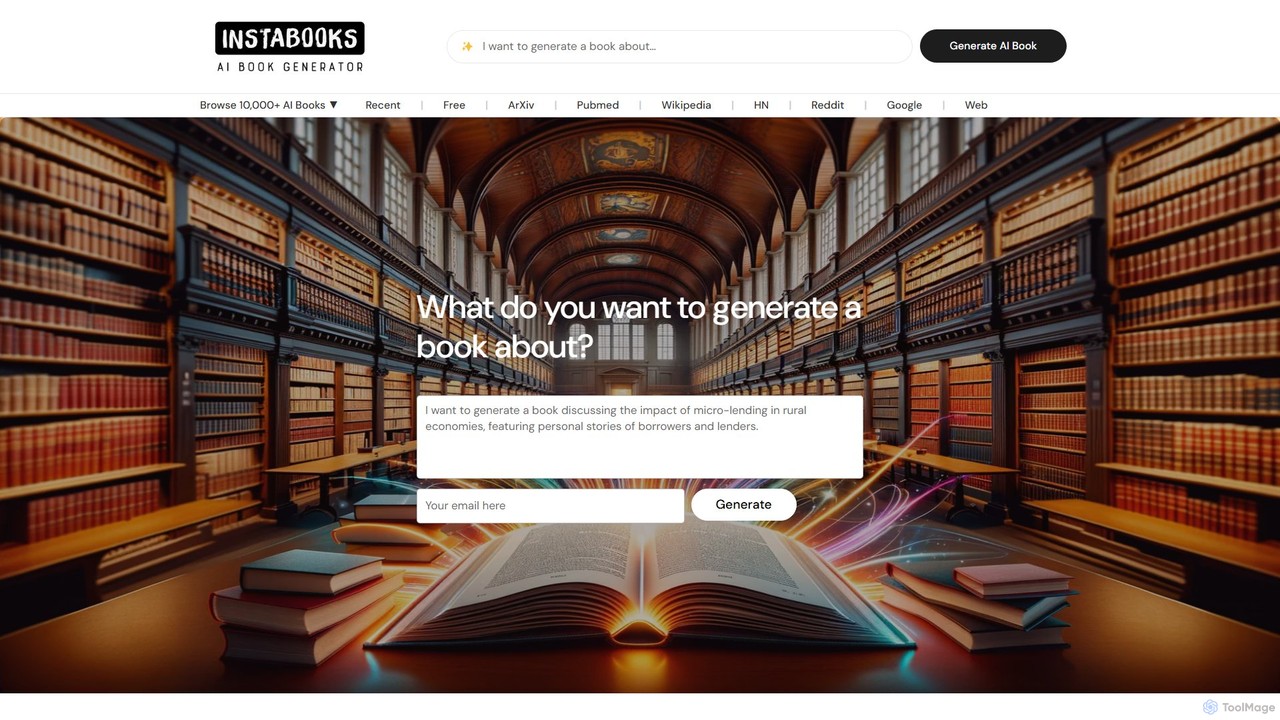
instabooks is an AI-powered book generator that allows users to create complete, well-structured books on virtually any topic …
instabooks is an AI-powered book generator that allows users to create complete, well-structured books on virtually any topic in minutes. Simply provide a subject or a prompt, and the AI researches, writes, and organizes an entire book, complete with chapters. It's an ideal tool for authors, researchers, educators, and anyone looking to quickly generate detailed written content.
About Textbook Generation
Textbook Generation tools are AI-powered platforms designed to automate and streamline the creation of educational textbooks, course materials, and learning modules. Leveraging advanced natural language processing and content structuring algorithms, these tools can synthesize information, organize it pedagogically, and present it in a coherent, engaging format. They empower educators, publishers, and corporate trainers to rapidly develop high-quality, customized learning content tailored to specific curricula and learner needs.
Core Features
- Automated Content Structuring: Organizes raw information into chapters, sections, and sub-sections with logical flow.
- Curriculum Alignment: Generates content that adheres to specific educational standards or learning objectives.
- Assessment Creation: Automatically produces quizzes, exercises, and practice questions based on the generated text.
- Multimedia Integration: Suggests or embeds relevant images, diagrams, and videos to enhance learning.
- Personalized Learning Paths: Adapts content difficulty and examples to individual student profiles or learning styles.
Use Cases
These tools are invaluable for educators creating custom course packs, publishers accelerating textbook development cycles, and corporate L&D teams designing training manuals. They also support students in generating personalized study guides from lecture notes or research materials.
How to Choose
When selecting an AI textbook generation tool, consider its ability to align with specific curricula, the flexibility of content customization, the range of output formats (e.g., PDF, ePub, SCORM), and its capacity for multimedia integration. Evaluate the accuracy of generated content and the ease of human oversight and editing.

Textbook GenerationUse Cases
Creating Custom Course Materials for University Lecturers
University lecturers can input lecture notes, research papers, and syllabus requirements to generate comprehensive, structured course textbooks or supplementary readings. This streamlines the process of compiling diverse academic resources into a cohesive learning package, saving significant time in content organization and formatting. The AI ensures consistent terminology and logical progression, allowing lecturers to focus on refining pedagogical approaches rather than manual content assembly.
Accelerating Textbook Development for Educational Publishers
Educational publishers can utilize AI textbook generators to rapidly prototype new textbook editions or create specialized versions for different regions or academic levels. By feeding in core subject matter and pedagogical guidelines, the AI can quickly produce initial drafts, including chapter outlines, content summaries, and even preliminary assessment questions. This drastically reduces the time and cost associated with early-stage content creation, enabling faster market entry for new educational products.
Developing Corporate Training Manuals for L&D Departments
Corporate Learning & Development teams can leverage these tools to quickly create or update training manuals for new software, compliance procedures, or skill development programs. Inputting technical specifications, process flows, or company policies allows the AI to structure the information into digestible modules, complete with examples, case studies, and knowledge checks. This ensures employees receive up-to-date and relevant training materials efficiently, improving onboarding and continuous professional development.
Generating Personalized Study Guides for Students
Students can use AI textbook generators to transform their class notes, research articles, or even recorded lectures into personalized study guides. The AI can summarize key concepts, create flashcards, generate practice questions, and highlight areas needing further review based on the input. This tailored approach helps students reinforce learning, prepare for exams more effectively, and understand complex topics from multiple perspectives.
Designing Specialized Curriculum for K-12 Educators
K-12 educators can employ AI tools to design specialized curriculum units or supplementary materials for diverse student needs, such as advanced learners or those requiring remedial support. By specifying learning objectives, grade levels, and content topics, the AI can generate age-appropriate explanations, activities, and examples. This allows teachers to differentiate instruction more effectively, providing targeted resources without extensive manual preparation.
Rapid Content Prototyping for E-learning Platforms
E-learning platform developers and content creators can use AI textbook generation for rapid prototyping of new courses or modules. They can quickly generate initial content structures, lesson outlines, and even draft explanations for various topics. This accelerates the ideation and development phase, allowing for quicker iteration and testing of new educational offerings before investing heavily in full human-authored content.