Education Best in category 1 results Workforce Development AI Tool

Popular AI tools in the Workforce Development field of Education include Emerge Career, etc., helping you quickly improve efficiency.

Emerge Career

Emerge Career

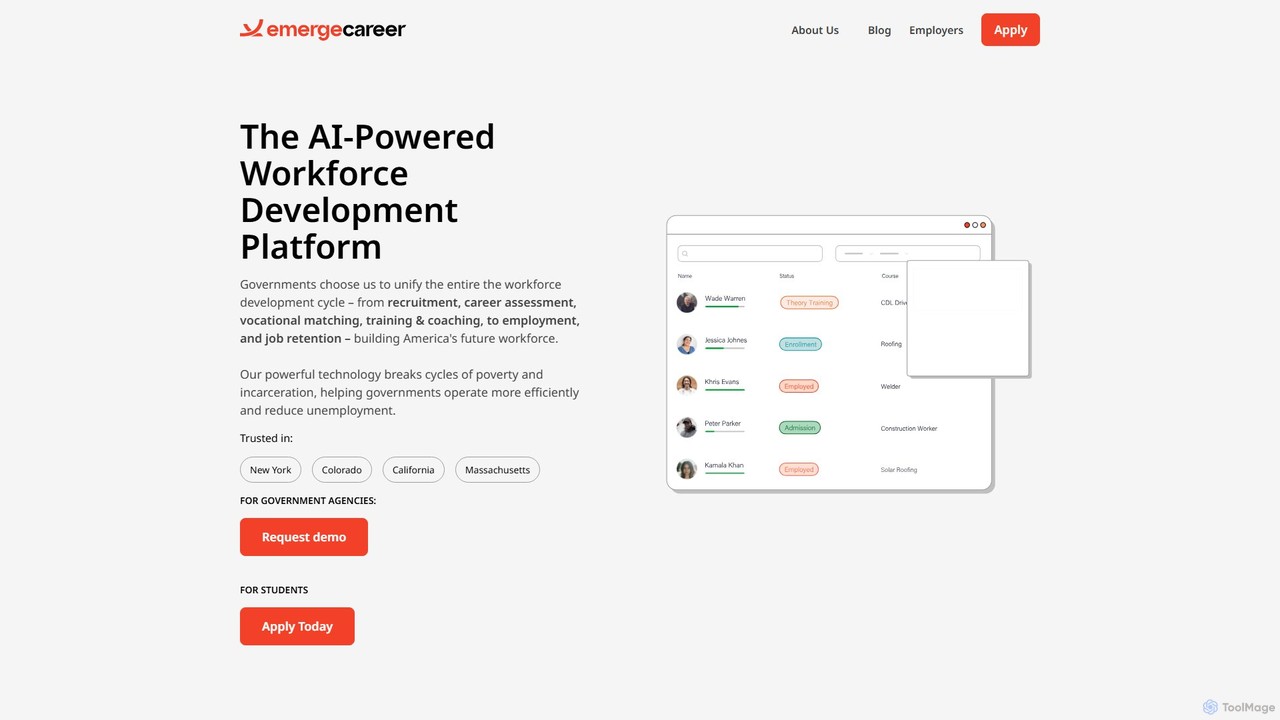
Emerge Career is an AI-powered workforce development platform designed for government agencies. It unifies the entire employment cycle, …

48.5K

About Workforce Development

Workforce Development AI tools are intelligent solutions designed to enhance employee skills, facilitate continuous learning, and optimize talent management within organizations. Leveraging advanced AI algorithms, these platforms personalize training experiences, identify critical skill gaps, and automate administrative tasks associated with employee growth. They empower businesses to build a more skilled, adaptable, and engaged workforce, directly contributing to productivity and innovation.

Core Features

  • Personalized Learning Paths: AI analyzes individual performance and learning styles to recommend tailored courses and resources.
  • Skill Gap Analysis: Automatically identifies discrepancies between current employee skills and future business needs, suggesting targeted training.
  • Automated Onboarding & Training: Streamlines the integration of new hires and automates recurring training modules with interactive AI assistants.
  • Performance Coaching & Feedback: Provides AI-driven insights and real-time feedback to employees for continuous improvement and development.
  • Content Curation & Generation: AI sifts through vast amounts of information to curate relevant learning content or even generate custom training materials.

Applicable Scenarios

These tools are invaluable for HR departments, learning & development (L&D) teams, and corporate trainers aiming to modernize their employee growth strategies. They are used in large enterprises for company-wide upskilling initiatives, by small businesses to efficiently onboard new staff, and in specialized industries like tech or healthcare to keep professionals abreast of rapidly evolving skills and compliance requirements.

How to Choose

When selecting Workforce Development AI tools, consider the depth of personalization offered, the accuracy of skill gap identification, and integration capabilities with existing HRIS or LMS platforms. Evaluate the scalability to accommodate your organization's growth, the quality and customizability of learning content, and the robustness of analytics for measuring training effectiveness and ROI.

Workforce DevelopmentUse Cases

1

Developing Personalized Upskilling Programs

HR teams and L&D managers utilize AI to assess individual employee competencies, learning styles, and career aspirations. The AI then generates customized learning paths with recommended courses, projects, and resources to close identified skill gaps and prepare employees for future roles, ensuring targeted and effective professional growth.

2

Automating New Employee Onboarding

Companies deploy AI-powered virtual assistants and interactive modules to guide new hires through orientation, company policies, and initial skill development. This automation reduces the administrative burden on HR, ensures consistent information delivery, and allows new employees to quickly become productive members of the team, improving the overall onboarding experience.

3

Identifying Critical Skill Gaps Across Departments

L&D managers leverage AI analytics to scan employee performance data, project requirements, and industry trends to proactively identify emerging skill deficiencies within teams or across entire departments. This enables organizations to make data-driven decisions on targeted training investments, ensuring the workforce remains competitive and aligned with strategic business goals.

4

Enhancing Sales Team Product Knowledge

Sales organizations utilize AI-driven micro-learning platforms that deliver bite-sized, adaptive training modules on new products or services. This ensures sales representatives are always up-to-date with the latest offerings, can effectively articulate value propositions, and confidently address customer inquiries, leading to improved sales performance and customer satisfaction.

5

Facilitating Continuous Professional Development

Professionals in rapidly evolving fields (e.g., IT, healthcare, finance) use AI tools to curate relevant industry news, research papers, and online courses. These tools help individuals stay current with the latest advancements, maintain certifications, and proactively acquire new skills, fostering a culture of lifelong learning and ensuring their expertise remains cutting-edge.

6

Optimizing Leadership Training and Coaching

Organizations employ AI to analyze leadership behaviors, team dynamics, and communication patterns, providing personalized feedback and coaching recommendations to managers. This fosters more effective leadership styles, improves team performance, and cultivates a stronger leadership pipeline by addressing specific development areas with data-driven insights.

Workforce DevelopmentFrequently Asked Questions