ToolMage
Sign in

Best 2 Simulation AI tools for Engineering

Popular Simulation AI tools in Engineering include Rescale and Navier AI, helping you work more efficiently.

Navier AI
Paid

Navier AI

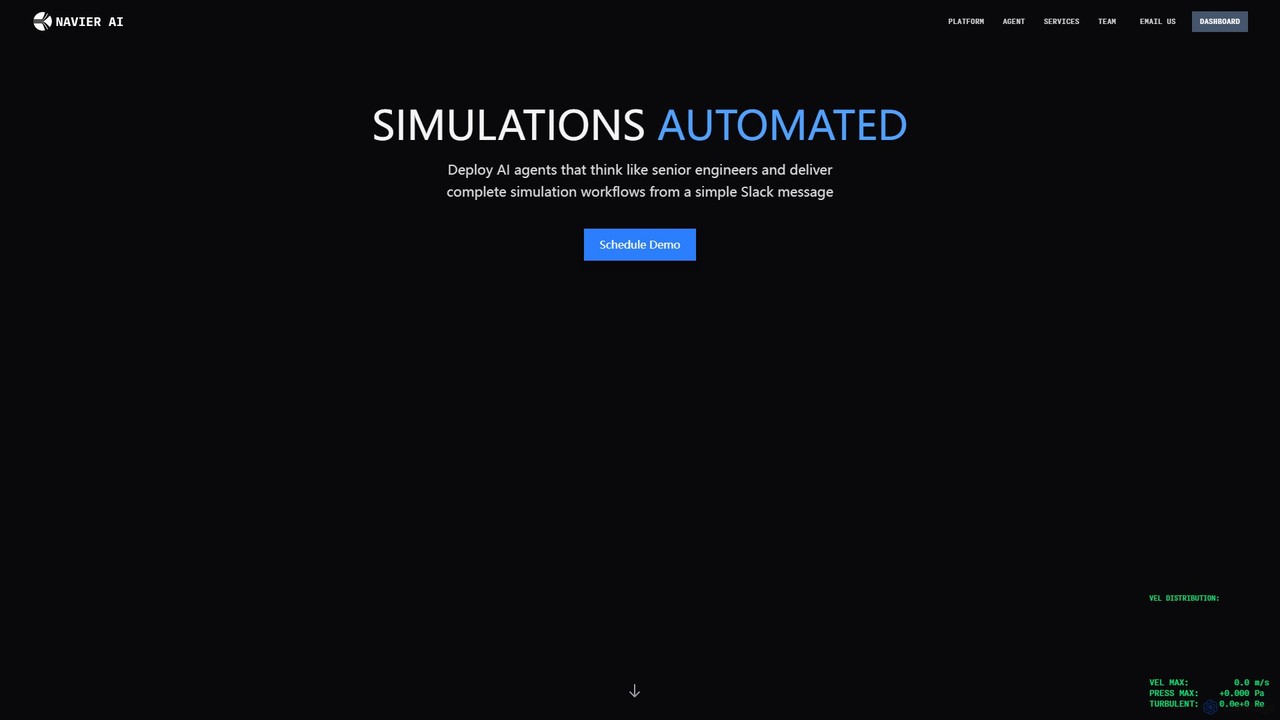
Navier AI deploys an autonomous AI agent that functions like a senior engineer, automating complete Computational Fluid Dynamics (CFD) simulation workflows from a simple Slack message. It integrates simulation, AI, and collaboration to accelerate design, analysis, and iteration cycles, offering a 95% reduction in time.

Api
Visits 10.8KFavorites 142Likes 140
Rescale
Paid

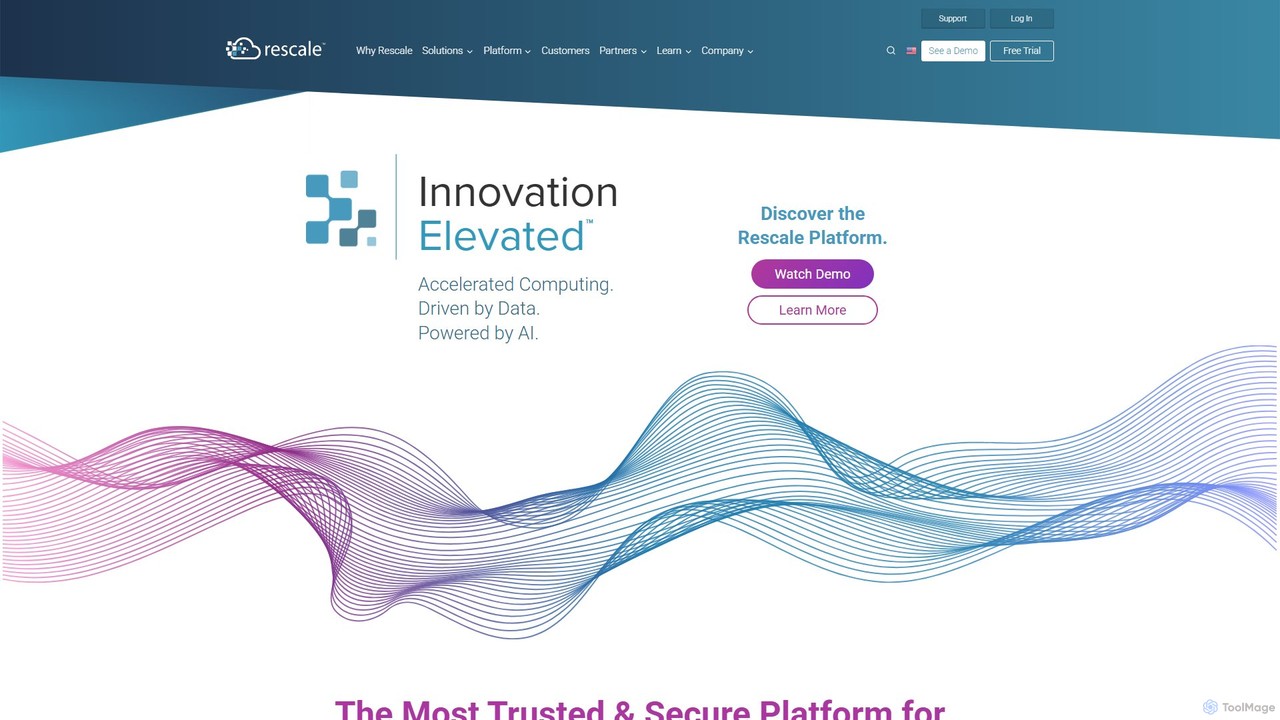
Rescale

Rescale is a cloud-based High Performance Computing (HPC) platform designed to accelerate engineering and scientific R&D. It provides on-demand access to a multi-cloud infrastructure, a vast catalog of simulation and AI software, and a unified environment for managing complex workflows, data, and security. It empowers organizations in aerospace, automotive, life sciences, and more to innovate faster and more efficiently.

High Performance Computing (Hpc)
Visits 123.3KFavorites 152Likes 130

About Simulation

AI Simulation tools are advanced software solutions that leverage artificial intelligence to create, execute, and analyze virtual models of real-world systems, processes, or environments. These tools integrate machine learning algorithms to enable more intelligent behavior, predictive analysis, and adaptive responses within simulated scenarios. They provide engineers and researchers with powerful capabilities to test designs, optimize performance, and explore complex interactions without physical constraints. This technology significantly accelerates development cycles and reduces costs in various engineering disciplines.

Core Features

  • Intelligent Agent Behavior: AI-driven entities within simulations learn and adapt, mimicking complex human or environmental interactions.
  • Predictive Modeling: Utilize historical data and ML to forecast outcomes and identify potential issues before they occur.
  • Parameter Optimization: Automatically explore vast parameter spaces to find optimal configurations for designs or processes.
  • Digital Twin Integration: Connect virtual models with real-world assets for real-time monitoring, analysis, and predictive maintenance.
  • Scenario Generation & Analysis: Rapidly create and evaluate diverse "what-if" scenarios to assess robustness and resilience.

Applicable Scenarios

Engineers in automotive design use AI simulation to test vehicle aerodynamics and crash safety virtually, optimizing designs for performance and compliance. Urban planners employ these tools to model traffic flow and pedestrian movement, identifying bottlenecks and improving infrastructure layouts. Manufacturing firms leverage AI simulations for process optimization, predicting equipment failures and streamlining production lines to enhance efficiency.

How to Choose

When selecting an AI simulation tool, consider its compatibility with existing engineering software and data formats. Evaluate the complexity of AI models it supports, such as reinforcement learning or neural networks, for your specific needs. Assess its scalability for handling large-scale simulations and the availability of pre-built libraries or templates for your industry. Finally, review its visualization and reporting capabilities for effective analysis and communication of results.

Simulation use cases

1

Optimizing Autonomous Vehicle Navigation

Automotive engineers use AI simulation to train and test self-driving car algorithms in diverse virtual environments, simulating various road conditions, traffic patterns, and unexpected events. This allows for safe and efficient iteration of navigation logic and sensor fusion, significantly reducing the need for costly and time-consuming real-world testing and accelerating development cycles.

2

Predictive Maintenance for Industrial Machinery

Manufacturing companies deploy AI simulation to create digital twins of factory equipment. By feeding real-time sensor data into these simulated models, AI can predict potential machinery failures, optimize maintenance schedules, and identify root causes of downtime, thereby minimizing operational disruptions and extending equipment lifespan.

3

Designing Smart City Infrastructure

Urban planners and civil engineers utilize AI simulation to model the impact of new infrastructure projects, such as public transport systems or smart grids. They can simulate population growth, energy consumption, and traffic patterns to optimize resource allocation, reduce congestion, and ensure sustainable urban development before physical construction begins.

4

Drug Discovery and Molecular Dynamics

Pharmaceutical researchers employ AI simulation for accelerated drug discovery. These tools simulate molecular interactions and protein folding, predicting the efficacy and potential side effects of new drug candidates. This drastically reduces the need for extensive laboratory experiments, speeding up the identification of promising compounds.

5

Supply Chain Resilience Planning

Logistics and supply chain managers use AI simulation to model complex global supply networks. By simulating disruptions like natural disasters, geopolitical events, or sudden demand shifts, they can identify vulnerabilities, test contingency plans, and optimize inventory levels and routing strategies to build more resilient and efficient supply chains.

6

Robotics Path Planning and Collaboration

Robotics engineers leverage AI simulation to develop and test robot behaviors, path planning algorithms, and human-robot collaboration in virtual factory or warehouse settings. This allows for safe experimentation with complex tasks, collision avoidance, and multi-robot coordination, ensuring optimal performance and safety before deploying physical robots.

Simulation FAQ

What are AI Simulation tools?

AI Simulation tools are software applications that use artificial intelligence, particularly machine learning, to build and run virtual models of real-world systems. Unlike traditional simulations, they can learn from data, adapt to changing conditions, and make intelligent predictions, offering deeper insights into complex behaviors and optimizing outcomes. They are crucial for testing, design, and predictive analysis in various fields.

How do AI Simulation tools differ from traditional simulation software?

Traditional simulation software relies on predefined rules and mathematical models, requiring explicit programming for every scenario. AI Simulation tools, however, integrate machine learning to learn patterns from data, adapt to unforeseen variables, and generate more realistic, intelligent behaviors within the simulation. This allows for greater autonomy, predictive power, and optimization capabilities, especially in complex, dynamic systems.

What are the key benefits of using AI Simulation in engineering?

In engineering, AI Simulation offers several key benefits: it accelerates design cycles by enabling rapid virtual prototyping and testing; it improves accuracy in predicting system performance and identifying potential flaws; it optimizes complex parameters for better efficiency and cost reduction; and it allows for the exploration of a wider range of "what-if" scenarios, leading to more robust and innovative solutions.

Who typically uses AI Simulation tools?

AI Simulation tools are primarily used by engineers (e.g., automotive, aerospace, civil, manufacturing), researchers, data scientists, urban planners, and product designers. They are valuable for anyone involved in designing, testing, optimizing, or predicting the behavior of complex systems, processes, or products across industries like automotive, healthcare, logistics, and smart cities.

What should I consider when integrating AI Simulation into my workflow?

When integrating AI Simulation, consider the quality and availability of your data, as AI models are data-hungry. Assess the computational resources required, as complex simulations can be intensive. Evaluate the expertise needed to develop and interpret AI models. Finally, ensure the tool offers robust integration capabilities with your existing engineering software and provides clear visualization and reporting features for actionable insights.