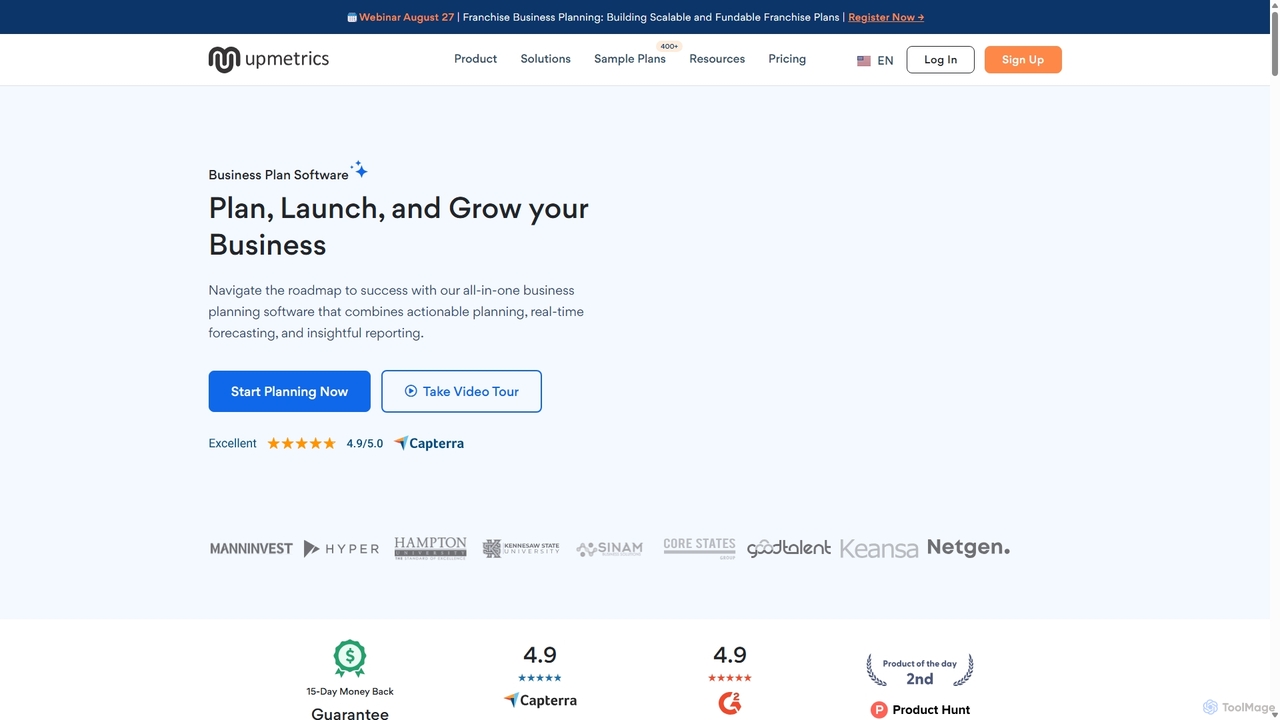
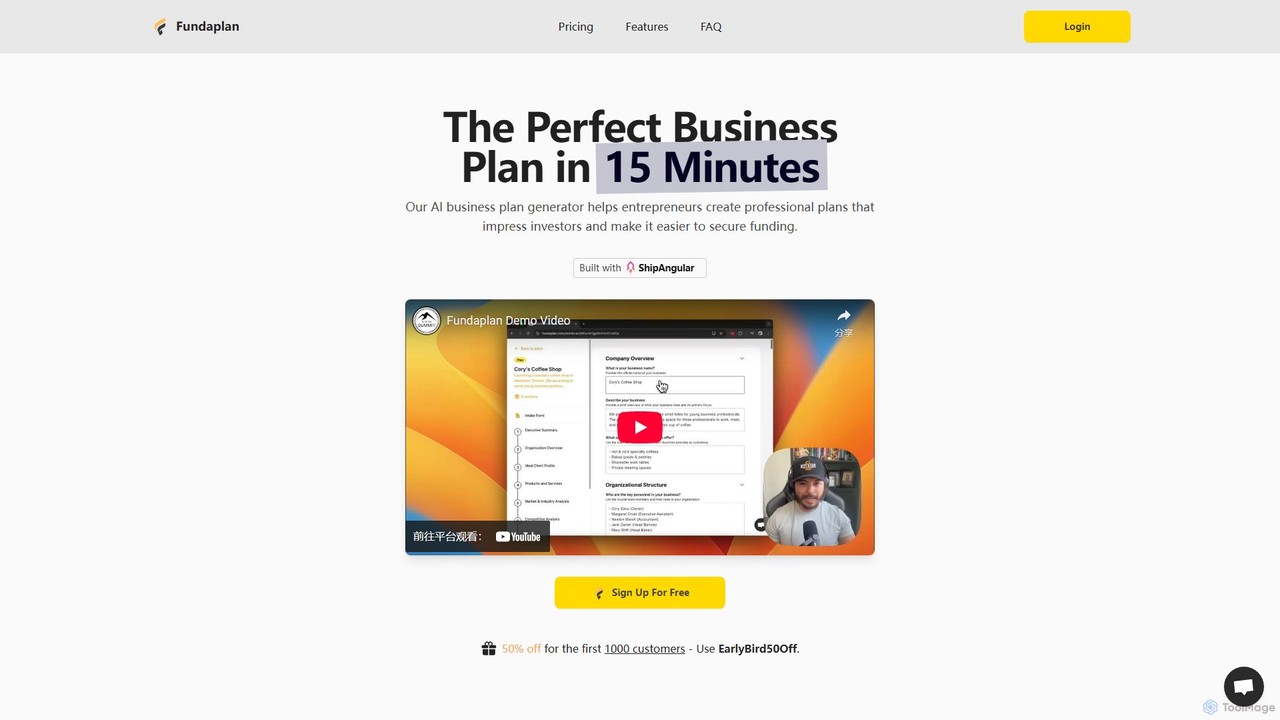
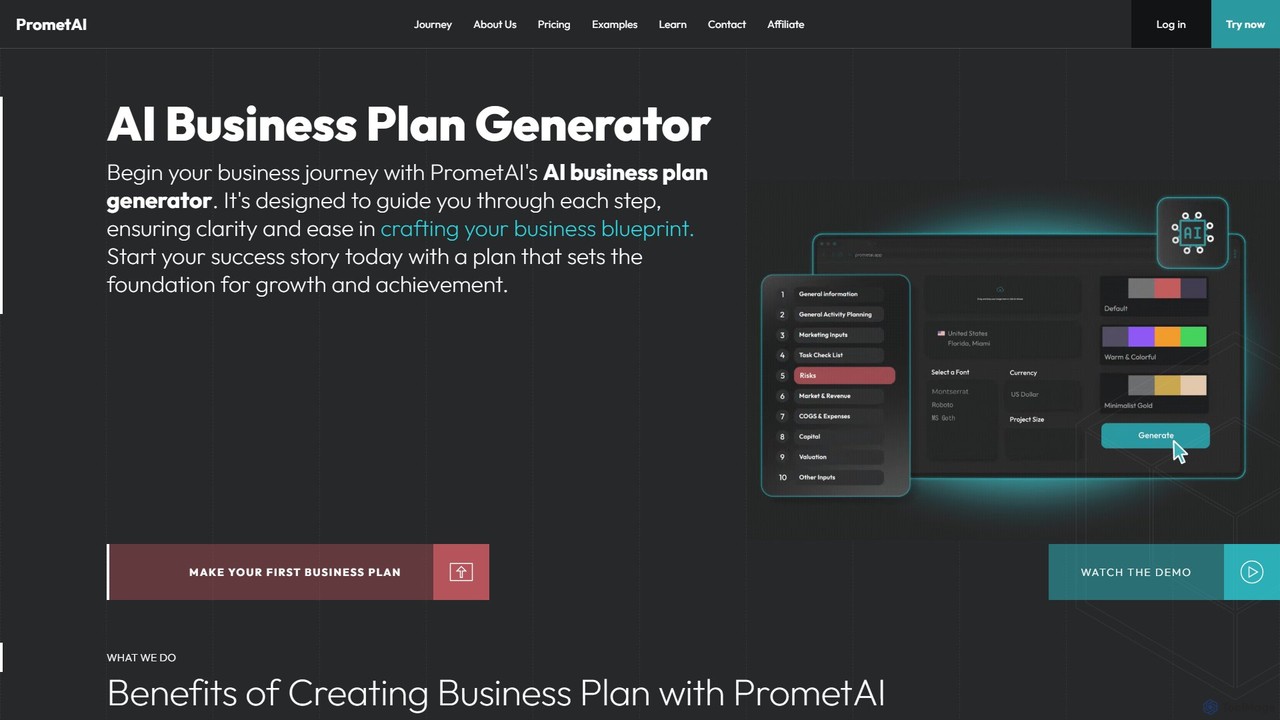
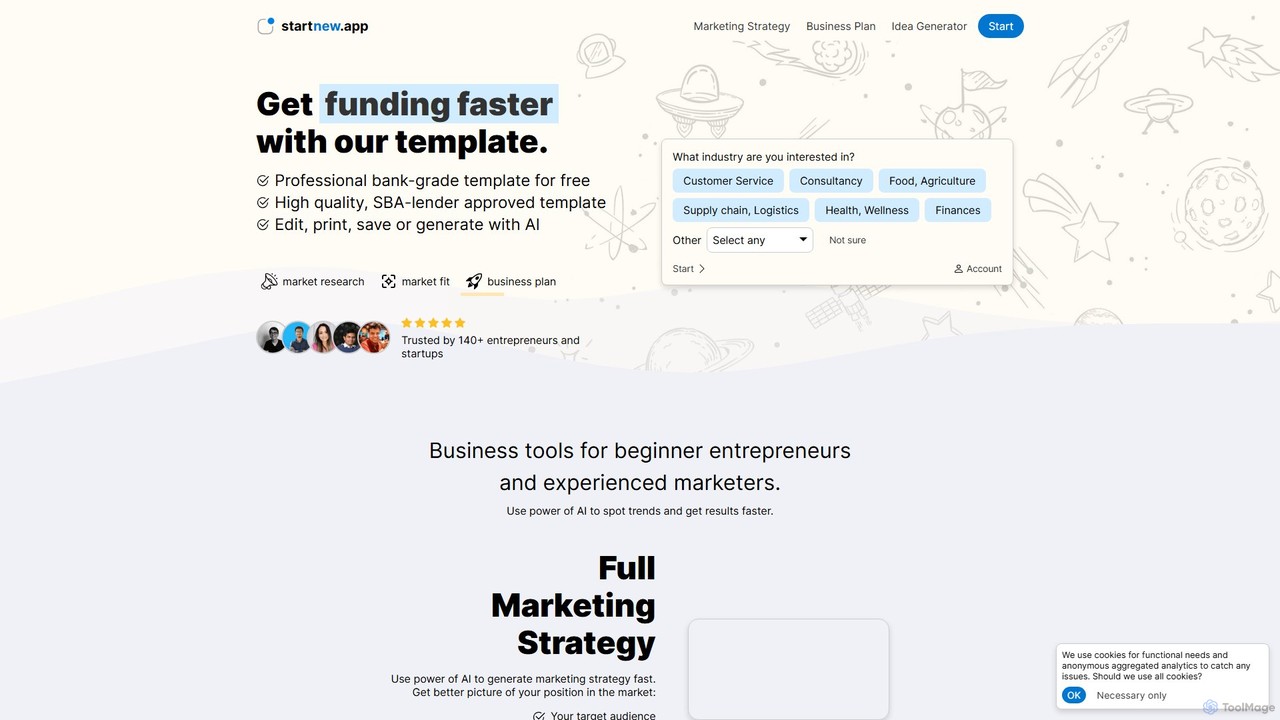
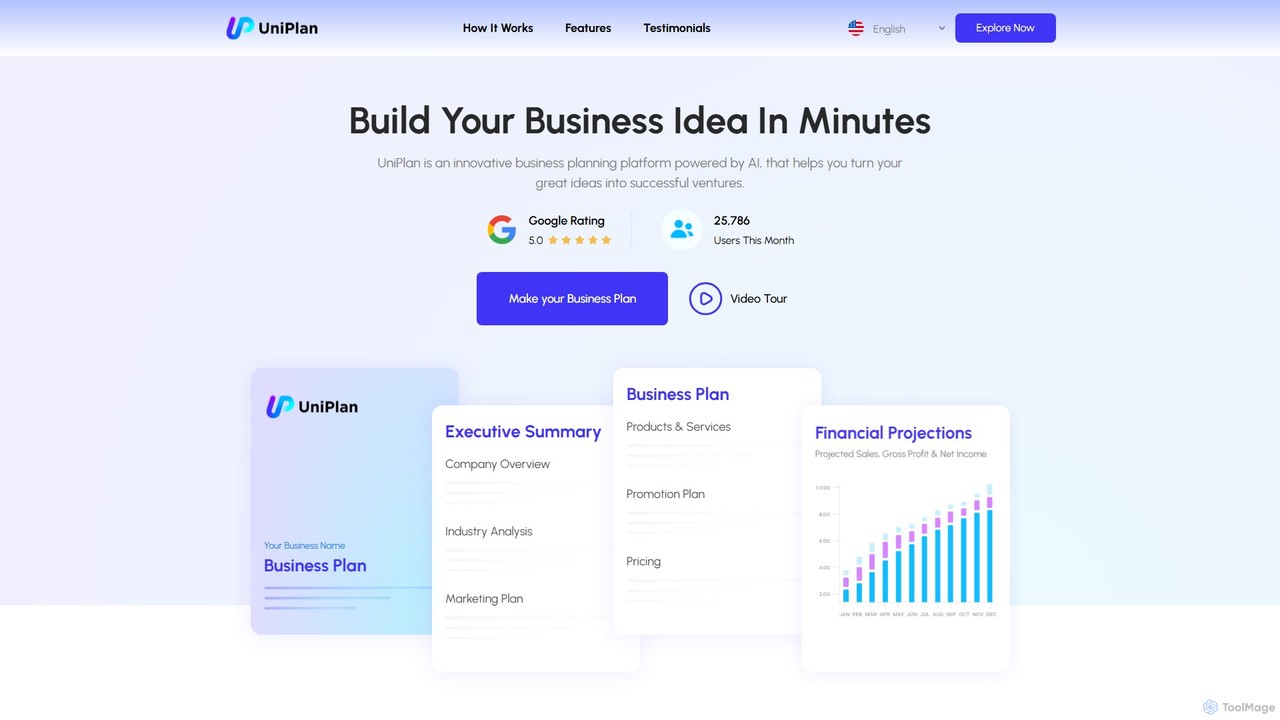
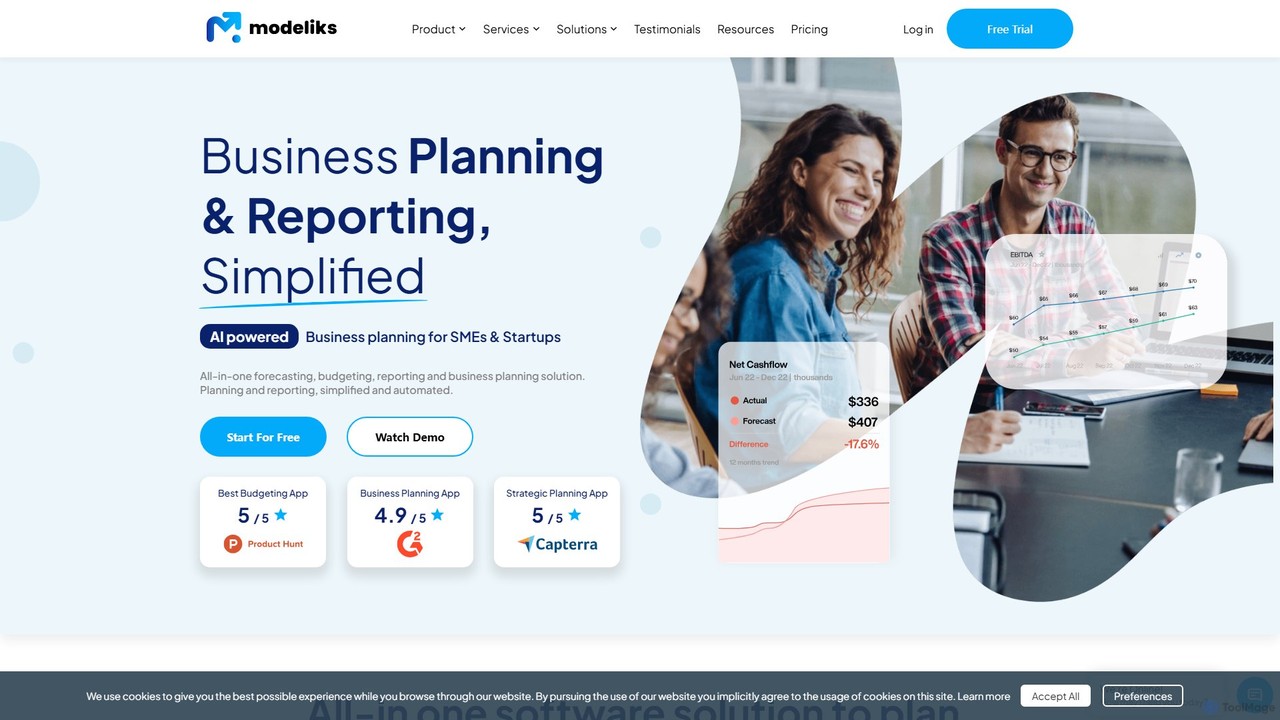
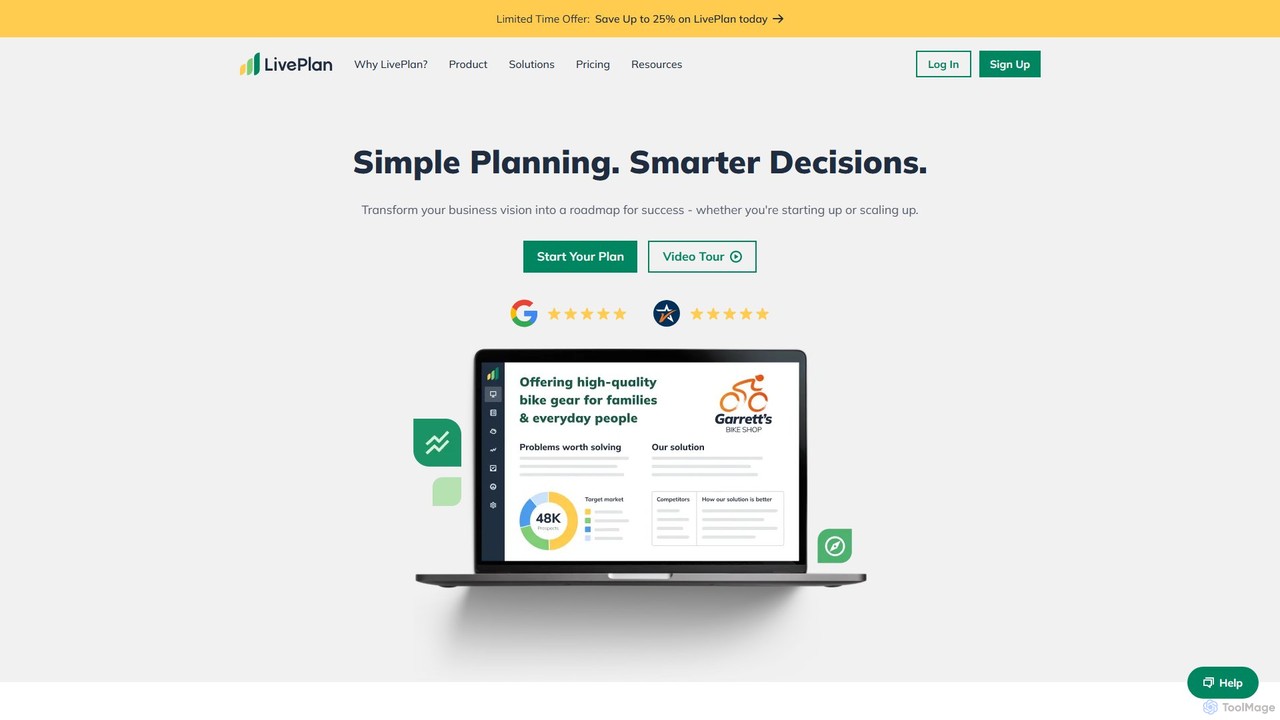
AI Business Planning tools are a category of sophisticated software designed to assist individuals and organizations in developing, analyzing, and refining strategic business plans. These tools leverage artificial intelligence, machine learning, and data analytics to automate complex processes, provide data-driven insights, and simulate various business scenarios. Within the broader Finance category, they specifically focus on forward-looking strategic decision-making, financial forecasting, and market analysis, helping to shape the future financial health and direction of an enterprise.
Core Features
- Strategic Framework Generation: Automatically generates business model canvases, SWOT analyses, and strategic roadmaps based on user inputs and industry data.
- Financial Projection & Modeling: Creates detailed revenue forecasts, expense budgets, cash flow statements, and profit-and-loss projections, often with scenario analysis capabilities.
- Market Research & Analysis: Utilizes AI to analyze market trends, competitive landscapes, customer demographics, and identify growth opportunities.
- Risk Assessment & Mitigation: Identifies potential business risks, evaluates their impact, and suggests strategies for mitigation based on historical data and predictive analytics.
- Operational Planning: Assists in optimizing resource allocation, supply chain management, and workflow design to support strategic objectives.
Use Cases
AI Business Planning tools are invaluable for entrepreneurs launching startups, established businesses seeking growth, and corporate strategists refining long-term visions. They enable faster, more accurate plan development, facilitate data-driven decision-making, and provide a comprehensive view of potential outcomes. From validating new product ideas to optimizing existing operations, these tools empower users to build robust and adaptable business strategies.
How to Choose
When selecting an AI Business Planning tool, consider its core functionalities, such as financial modeling depth, market analysis capabilities, and strategic framework support. Evaluate its integration with existing financial or operational software, ease of use for your team, and the quality of its data sources. Scalability, pricing models, and the level of customization offered are also crucial factors to ensure the tool aligns with your specific business needs and growth trajectory.