ToolMage
Sign in

Best 1 Collections AI tools for Finance

Popular Collections AI tools in Finance include Prodigal, helping you work more efficiently.

Prodigal
Paid

Prodigal

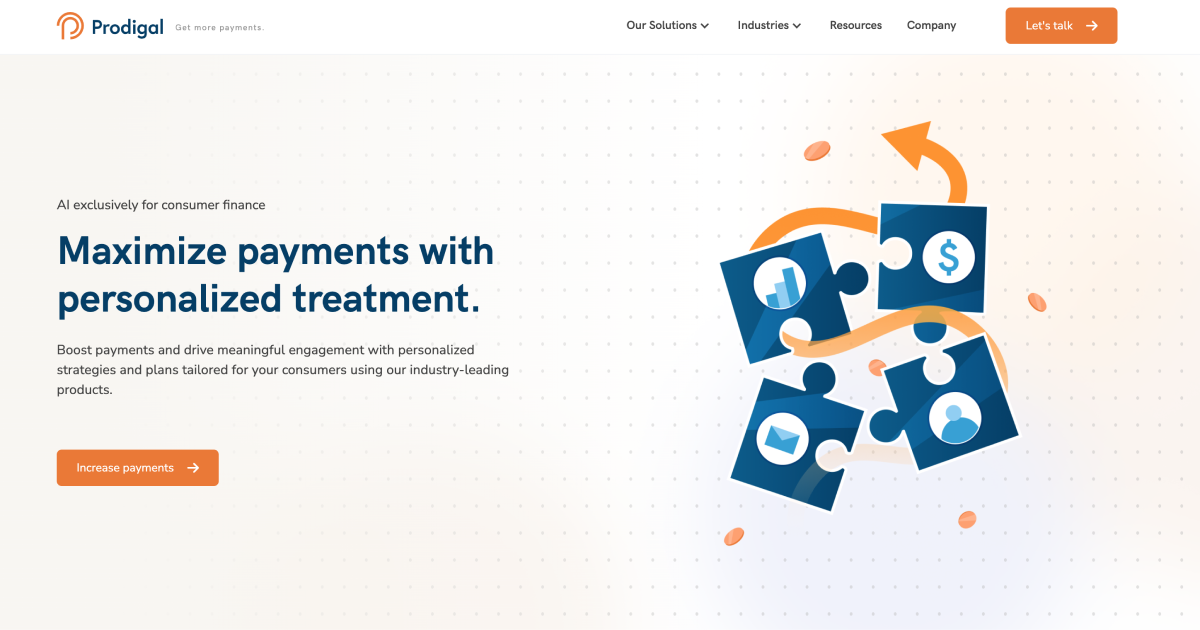
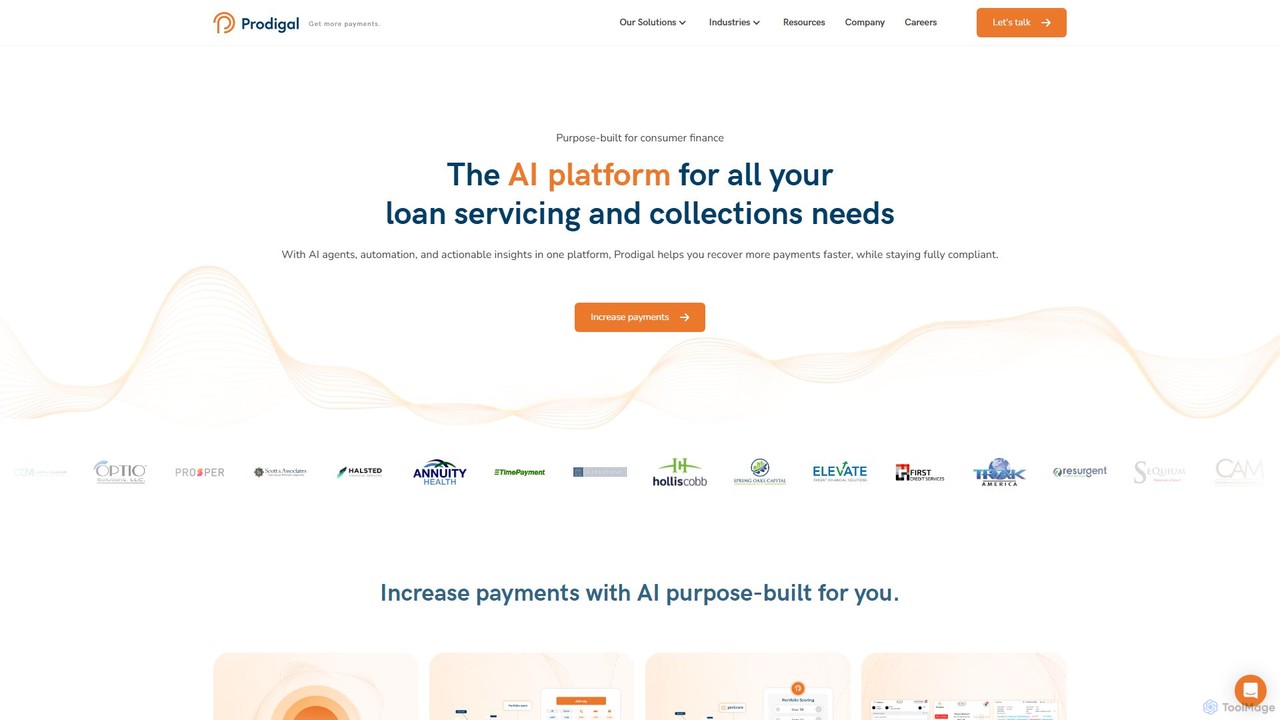
Prodigal is a purpose-built AI platform for the consumer finance industry, specializing in loan servicing and collections. It uses AI agents, automation, and actionable insights to increase payment recovery, enhance agent performance, and ensure full compliance. The platform is trained on over half a billion industry-specific interactions, delivering human-like accuracy and significant operational improvements.

Call Center Automation
Visits 48.4KFavorites 118Likes 126

About Collections

AI Collections tools are specialized AI-powered solutions designed to automate and optimize the process of debt recovery and receivables management within the finance sector. These tools leverage advanced machine learning, natural language processing, and predictive analytics to streamline communication, identify optimal collection strategies, and enhance recovery rates. They provide financial institutions and businesses with intelligent capabilities to manage outstanding payments more efficiently and effectively.

Core Features

  • Automated Communication: AI-driven generation and scheduling of personalized reminders via email, SMS, and automated calls.
  • Predictive Analytics: Algorithms analyze debtor behavior and payment history to forecast payment likelihood and suggest optimal contact times.
  • Personalized Strategies: Tailoring collection approaches and payment plans based on individual debtor profiles and risk assessments.
  • Compliance Monitoring: Ensuring all collection activities adhere to relevant financial regulations and data privacy laws.
  • Dispute Resolution Assistance: AI-powered support for identifying and categorizing payment disputes, guiding agents or automating initial responses.

Applicable Scenarios

AI Collections tools are vital for financial institutions, credit companies, and businesses with large volumes of outstanding invoices. They are used to automate early-stage delinquency reminders, optimize strategies for high-value debt recovery, and manage complex payment plans across diverse customer segments. These tools significantly reduce manual effort and improve the overall efficiency of the collections department.

How to Choose

When selecting an AI Collections tool, consider its integration capabilities with existing CRM and ERP systems, ensuring seamless data flow. Evaluate its scalability to handle your current and future volume of accounts, and assess its compliance features for adherence to local and international debt collection regulations. Look for robust customization options for communication strategies and comprehensive reporting tools to track performance metrics effectively.

Featured tool rankings

Collections use cases

1

Automating Early-Stage Delinquency Reminders

Financial institutions utilize AI Collections tools to automatically send personalized reminders to customers with recently overdue payments. The AI analyzes past payment behavior to determine the best communication channel and timing, significantly reducing manual follow-up efforts and preventing accounts from escalating to severe delinquency.

2

Optimizing High-Volume Debt Recovery

Large collection agencies deploy AI to manage thousands of outstanding accounts simultaneously. The AI prioritizes accounts based on payment likelihood, suggests optimal contact strategies, and automates initial outreach, allowing human agents to focus on complex cases and negotiations, thereby increasing overall recovery rates.

3

Personalizing Payment Plan Offers

Banks and lenders use AI Collections to analyze individual borrower financial situations and propose tailored payment plans. This personalized approach, driven by AI, increases the likelihood of successful repayment by offering flexible options that debtors are more likely to accept, improving customer retention and reducing write-offs.

4

Reducing Utility Bill Delinquency

Utility companies leverage AI to predict which customers are at risk of late payments and proactively send targeted reminders or offer flexible payment arrangements. This predictive approach helps to significantly lower delinquency rates, maintain consistent cash flow, and reduce the need for service disconnections.

5

Ensuring Regulatory Compliance in Collections

Companies operating in highly regulated financial sectors use AI Collections tools to monitor all communication and collection activities. The AI ensures adherence to strict consumer protection laws and data privacy regulations (e.g., GDPR, FDCPA), minimizing legal risks and maintaining ethical collection practices.

6

Analyzing Debtor Behavior for Credit Risk

Credit departments integrate AI Collections data to gain deeper insights into debtor payment patterns and responses to different collection strategies. This analysis helps refine credit scoring models, improve future lending decisions, and develop more effective risk mitigation strategies across the organization.

Collections FAQ

What are AI Collections tools in finance?

AI Collections tools are advanced software solutions that use artificial intelligence to automate and enhance the process of recovering outstanding debts and managing accounts receivable. They leverage machine learning, natural language processing, and predictive analytics to make collection efforts more efficient, personalized, and effective. These tools help businesses streamline communication, prioritize accounts, and improve overall cash flow.

How do AI Collections tools improve debt recovery rates?

AI Collections tools improve recovery rates by enabling more strategic and personalized outreach. They use predictive analytics to identify the best time and method to contact debtors, and they can tailor communication messages and payment offers based on individual profiles. This data-driven approach increases the likelihood of successful engagement and payment, reducing the number of accounts that go unrecovered compared to traditional methods.

What is the difference between traditional and AI-powered collections?

Traditional collections often rely on manual processes, generic communication, and reactive strategies, leading to inefficiencies and inconsistent results. AI-powered collections, conversely, are proactive, data-driven, and highly automated. They use algorithms to predict behavior, personalize interactions, and optimize workflows, allowing for faster, more compliant, and significantly more effective debt recovery with less human intervention.

What types of data do AI Collections tools utilize?

AI Collections tools typically utilize a wide range of data to inform their strategies. This includes historical payment data, customer communication logs, credit scores, demographic information, and interaction history. By analyzing these datasets, the AI can build comprehensive debtor profiles, predict payment likelihood, and recommend the most effective collection actions, ensuring a data-informed approach.

Are AI Collections tools compliant with financial regulations?

Yes, reputable AI Collections tools are designed with compliance in mind. They incorporate features to ensure adherence to strict financial regulations such as the Fair Debt Collection Practices Act (FDCPA), GDPR, and other local consumer protection laws. These tools can automate compliance checks, record interactions, and provide audit trails, significantly reducing the risk of legal violations and maintaining ethical collection practices.