ToolMage
Sign in

Best 1 Crypto Asset Management AI tools for Finance

Popular Crypto Asset Management AI tools in Finance include Quant Matter, helping you work more efficiently.

Quant Matter

Quant Matter

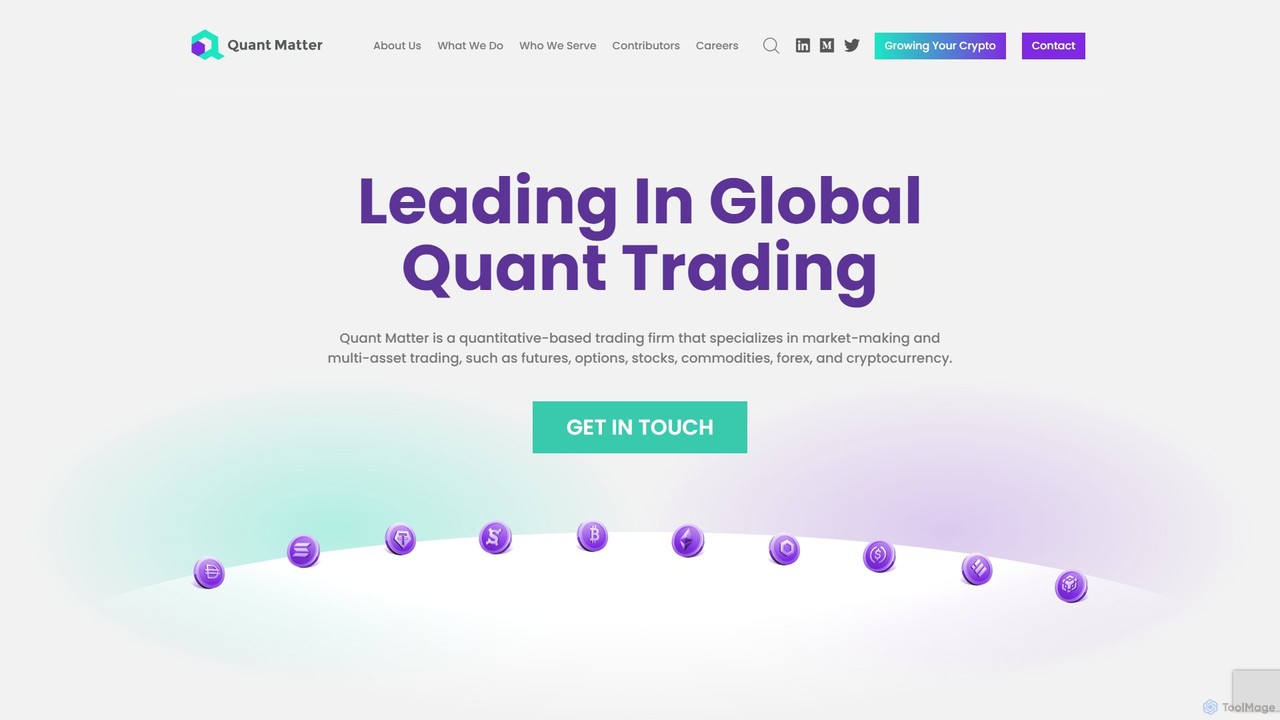
Quant Matter is a global quantitative trading and digital asset management firm. It leverages proprietary technology for algorithmic trading, market making, and treasury management across various assets, including cryptocurrencies, stocks, and forex. The firm provides regulated, high-yield investment solutions and liquidity services for crypto projects.

Crypto Asset Management
Visits 11.2KFavorites 186Likes 159

About Crypto Asset Management

Crypto Asset Management tools are AI-powered platforms designed to help individuals and institutions effectively track, manage, and optimize their digital asset portfolios. These tools leverage advanced algorithms and blockchain data to provide real-time insights, automate trading strategies, and enhance security for cryptocurrencies and other digital holdings. They empower users to make informed decisions, mitigate risks, and maximize returns in the volatile crypto market.

Core Features

  • Portfolio Tracking: Real-time monitoring of diverse crypto holdings across multiple exchanges and wallets.
  • Automated Trading: AI-driven strategies for rebalancing, dollar-cost averaging, and executing trades based on market conditions.
  • Risk Management: Tools for analyzing portfolio volatility, setting stop-loss limits, and identifying potential risks.
  • Tax Reporting: Automated generation of transaction histories and reports for tax compliance.
  • DeFi Integration: Seamless connection with decentralized finance protocols for staking, lending, and yield farming.

Use Cases

Individual investors use these tools to consolidate their crypto holdings from various platforms into a single dashboard, enabling comprehensive performance analysis and simplified tax preparation. Institutional investors leverage them for advanced risk modeling, compliance monitoring, and executing complex trading strategies across large portfolios. Fund managers utilize these platforms to manage client assets, generate performance reports, and ensure regulatory adherence in the rapidly evolving digital asset space.

How to Choose

When selecting a Crypto Asset Management tool, consider its supported exchanges and wallets, the breadth of its portfolio tracking and reporting features, and the sophistication of its automated trading and risk management capabilities. Evaluate its security protocols, user interface, and integration with DeFi platforms. Additionally, assess its pricing model and customer support to ensure it aligns with your investment goals and technical proficiency.

Crypto Asset Management use cases

1

Automated Portfolio Rebalancing for Individual Investors

An individual crypto investor with holdings across several assets uses an AI crypto asset management tool to automatically maintain their desired portfolio allocation. By setting target percentages for each cryptocurrency, the tool executes trades to buy or sell assets when market fluctuations cause deviations, ensuring the portfolio stays aligned with their long-term strategy without constant manual intervention. This saves significant time and reduces emotional trading decisions.

2

Institutional Crypto Fund Performance Reporting

A crypto hedge fund manager needs to provide detailed performance reports to their limited partners. They utilize a crypto asset management platform to aggregate data from all trading activities, including spot, futures, and DeFi positions. The tool automatically generates comprehensive reports on ROI, P&L, and asset allocation, streamlining the reporting process and ensuring transparency and accuracy for stakeholders.

3

Optimizing DeFi Yield Farming Strategies

A decentralized finance (DeFi) enthusiast seeks to maximize returns from various yield farming protocols. An AI-powered crypto asset management tool helps them identify the most profitable liquidity pools, automatically rebalance assets between different protocols to chase higher yields, and manage impermanent loss risks. The tool monitors gas fees and network congestion, executing transactions at optimal times to enhance overall profitability.

4

Streamlining Crypto Tax Compliance

A freelance crypto trader faces the complex task of calculating capital gains and losses for tax season. They connect all their exchange accounts and wallets to a crypto asset management platform. The tool automatically categorizes transactions, calculates cost bases, and generates detailed tax reports compliant with local regulations (e.g., FIFO, LIFO), significantly reducing the time and effort required for tax preparation and minimizing audit risk.

5

Real-time Risk Monitoring for Large Holdings

A corporate treasury managing a significant portion of its reserves in stablecoins and Bitcoin requires robust risk management. They employ a crypto asset management system that provides real-time alerts on market volatility, large price swings, and potential smart contract vulnerabilities. The system allows them to set custom risk thresholds and automatically trigger protective measures, safeguarding their digital assets against adverse market events.

6

Multi-Exchange Arbitrage Strategy Execution

A professional trader aims to profit from price discrepancies across different cryptocurrency exchanges. An AI crypto asset management tool is configured to monitor real-time prices on multiple platforms. Upon detecting a profitable arbitrage opportunity, the tool automatically executes simultaneous buy and sell orders on the respective exchanges, capitalizing on fleeting price differences with high speed and precision, which is impossible to achieve manually.

Crypto Asset Management FAQ

What are Crypto Asset Management tools?

Crypto Asset Management tools are software platforms designed to help users track, manage, and optimize their cryptocurrency and digital asset portfolios across various exchanges and wallets. They consolidate all your holdings into a single view, offering features like real-time market data, performance analytics, and automated trading capabilities. These tools aim to simplify the complexities of the crypto market, enabling more informed decision-making and efficient portfolio oversight for both individual and institutional investors.

How do AI tools enhance crypto asset management?

AI significantly enhances crypto asset management by providing advanced analytics, predictive insights, and automation. AI algorithms can analyze vast amounts of market data to identify trends, predict price movements, and optimize trading strategies like rebalancing or dollar-cost averaging. They also improve risk management by detecting anomalies and potential fraud, and can personalize investment advice. This automation and intelligence help users make more data-driven decisions, save time, and potentially achieve better returns.

What's the difference between a crypto wallet and a crypto asset management tool?

A crypto wallet is primarily for securely storing your private keys and sending/receiving cryptocurrencies, acting like a digital bank account. It focuses on custody. A crypto asset management tool, on the other hand, is a broader platform that connects to your wallets and exchange accounts to provide a holistic view of your entire portfolio. It offers features beyond storage, such as performance tracking, analytics, automated trading, and tax reporting, focusing on strategic oversight and optimization rather than just holding assets.

What security features should I look for in a crypto asset management platform?

When choosing a crypto asset management platform, prioritize robust security features. Look for multi-factor authentication (MFA), end-to-end encryption for data, and secure API integrations with exchanges. Reputable platforms often undergo regular security audits and may offer insurance for certain types of losses. Cold storage options for assets, if the platform offers custody, are also a strong indicator of security. Always ensure the platform has a clear privacy policy and a strong track record of protecting user data.

Can these tools help with DeFi and NFTs?

Yes, many modern crypto asset management tools are increasingly integrating support for decentralized finance (DeFi) protocols and Non-Fungible Tokens (NFTs). For DeFi, they can track your staked assets, liquidity pool positions, and yield farming returns across various protocols, providing a consolidated view of your DeFi portfolio. For NFTs, some tools allow you to track the value and ownership of your digital collectibles, offering insights into their performance and market trends, though full integration can vary by platform.