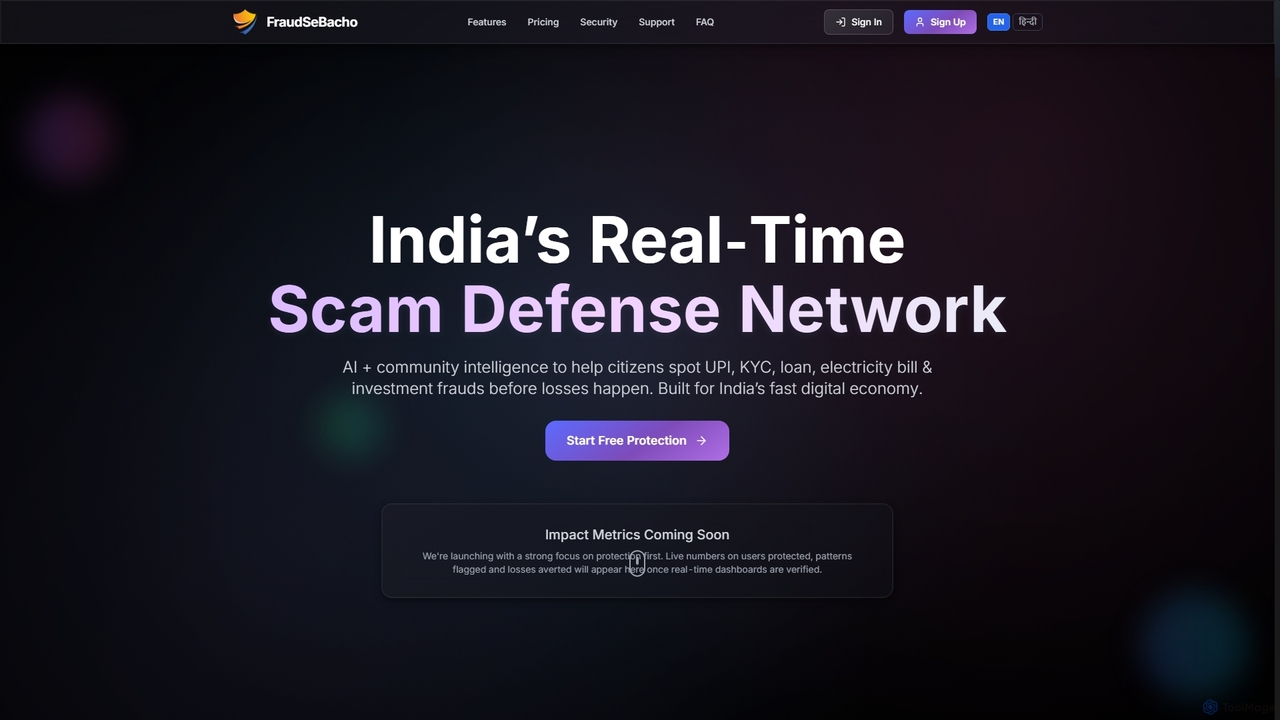
Fraudsebacho
An AI-powered real-time scam detection and protection platform for India. It combines AI with community intelligence to help …
An AI-powered real-time scam detection and protection platform for India. It combines AI with community intelligence to help users identify and avoid digital frauds such as UPI, KYC, loan, and investment scams before financial loss occurs.
About Cybersecurity
Cybersecurity AI tools are advanced solutions that leverage artificial intelligence and machine learning to protect digital systems, networks, and data from evolving cyber threats. These tools analyze vast amounts of data to detect anomalies, identify malicious patterns, and predict potential attacks, offering a proactive and adaptive defense posture. Within the broader Finance sector, AI-powered cybersecurity is indispensable for safeguarding sensitive financial information, preventing sophisticated fraud schemes, and ensuring stringent regulatory compliance, thereby protecting assets and maintaining customer trust in an increasingly digital landscape.
Core Features
- Real-time Threat Detection: Continuously monitors network traffic, system logs, and user behavior to identify and alert on suspicious activities, including zero-day exploits, instantly.
- Vulnerability Management: Automatically scans IT infrastructure, applications, and cloud environments for security weaknesses, prioritizing and recommending remediation steps based on risk assessment.
- Fraud Detection & Prevention: Analyzes complex transaction patterns, user profiles, and behavioral biometrics to detect and prevent various forms of financial fraud, such as credit card fraud, money laundering, and account takeovers.
- Automated Incident Response: Initiates predefined actions to contain and mitigate cyber incidents, such as isolating compromised systems or blocking malicious IPs, significantly reducing response times and minimizing potential damage.
- Compliance Monitoring: Ensures continuous adherence to industry regulations (e.g., GDPR, CCPA, SOX, PCI DSS) and internal security policies by automating audits of security controls, data access, and reporting.
Applicable Scenarios
Financial institutions, fintech startups, and large enterprises handling sensitive financial data heavily rely on these tools to protect customer accounts, secure online transactions, and comply with stringent financial regulations. They are essential for preventing data breaches, detecting sophisticated phishing and ransomware attacks, and safeguarding critical banking and payment infrastructure from advanced persistent threats. These tools also play a vital role in identifying insider threats and ensuring the integrity of financial reporting systems.
How to Choose
When selecting AI cybersecurity tools, consider their integration capabilities with your existing financial systems and security stack, the accuracy and adaptability of their threat intelligence models, and their scalability to handle large and growing volumes of financial data. Evaluate their compliance certifications (e.g., ISO 27001, SOC 2), the level of automation in incident response, and the clarity of their reporting and analytics features to ensure effective risk management and regulatory adherence.

CybersecurityUse Cases
Automated Fraud Detection in Digital Banking
Banks utilize AI to analyze millions of daily transactions, user login patterns, and behavioral biometrics. This allows for real-time identification of anomalous activities, such as unusual spending habits or login attempts from new locations, automatically flagging potential credit card fraud, account takeovers, or money laundering attempts, thereby protecting customer assets and reducing financial losses.
Proactive Threat Intelligence for Investment Firms
Investment firms deploy AI-powered platforms to continuously monitor global cyber threat landscapes, analyze dark web activities, and track emerging attack vectors. This enables them to predict potential targeted attacks on trading platforms or client portfolios, proactively strengthen defenses, and protect high-value financial assets from sophisticated state-sponsored or organized crime groups.
Enhanced Data Loss Prevention (DLP) for Fintech Startups
Fintech companies, often handling vast amounts of sensitive personal and financial data, implement AI-driven DLP solutions. These tools monitor data movement across networks, endpoints, and cloud services, identifying and preventing unauthorized sharing, exfiltration, or accidental exposure of customer financial records, ensuring compliance with data privacy regulations like GDPR.
Vulnerability Management for Payment Gateway Infrastructure
E-commerce platforms and payment processors use AI to conduct continuous, automated vulnerability assessments of their payment gateway infrastructure, APIs, and web applications. The AI prioritizes identified weaknesses based on exploitability and potential impact, guiding security teams to patch critical vulnerabilities rapidly and maintain PCI DSS compliance, safeguarding transaction integrity.
Insider Threat Detection in Financial Institutions
Large financial organizations employ AI to analyze employee network activity, access patterns, and communication data. By establishing baselines of normal behavior, AI can detect deviations that might indicate malicious insider activity, such as unauthorized data access, attempts to bypass security controls, or unusual data transfers, protecting proprietary financial strategies and client information.
Automated Regulatory Compliance Auditing
Financial institutions leverage AI tools to automate the auditing and reporting processes required by regulatory bodies (e.g., SOX, Basel III, Dodd-Frank). AI can continuously scan configurations, access logs, and security policies to ensure they meet compliance standards, automatically generating reports and alerting on non-compliance issues, significantly reducing manual effort and audit risks.