ToolMage
Sign in

Best 1 E Commerce AI tools for Finance

Popular E Commerce AI tools in Finance include WinDispute.pro, helping you work more efficiently.

WinDispute.pro
Paid

WinDispute.pro

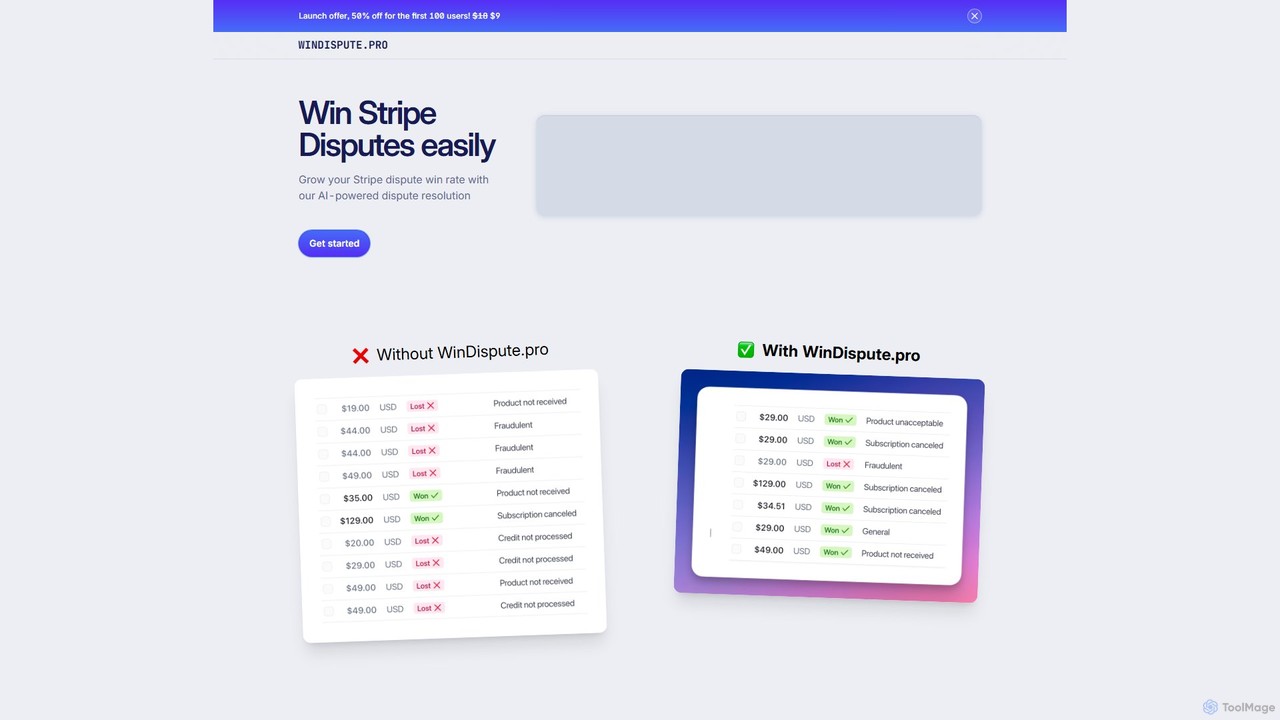
WinDispute.pro is an AI-powered tool designed for Stripe merchants to streamline and win payment disputes. By analyzing your uploaded evidence, the AI assistant, AI-lfred, crafts compelling and structured dispute responses to significantly increase your chargeback win rate, saving you time and recovering lost revenue.

E Commerce
Visits 6.4KFavorites 135Likes 124

About E Commerce

E Commerce AI tools are a category of artificial intelligence applications specifically designed to optimize various aspects of online retail operations. These tools leverage machine learning, natural language processing, and predictive analytics to enhance customer experience, streamline business processes, and drive sales growth. They play a crucial role in modern e-commerce by automating tasks, personalizing interactions, and providing data-driven insights, contributing significantly to a business's financial performance within the broader finance ecosystem.

Core Features

  • Personalized Recommendations: AI analyzes customer behavior and preferences to suggest relevant products, increasing conversion rates.
  • Automated Customer Service: AI chatbots handle inquiries, provide instant support, and guide shoppers through their purchase journey 24/7.
  • Dynamic Pricing Optimization: AI algorithms adjust product prices in real-time based on market demand, competitor pricing, and inventory levels.
  • Inventory & Demand Forecasting: AI predicts future sales trends to optimize stock levels, minimizing overstocking and preventing stockouts.
  • Fraud Detection & Security: AI identifies suspicious transactions and patterns to protect businesses from financial losses due to fraud.

Use Cases

E-commerce businesses across various sectors utilize AI tools to gain a competitive edge. For instance, online fashion retailers use AI for personalized styling advice and virtual try-ons, while electronics stores deploy AI for dynamic pricing and inventory management. These tools are essential for improving operational efficiency and enhancing the overall customer journey.

How to Choose

When selecting an E Commerce AI tool, consider its integration capabilities with existing platforms, the breadth of its features (e.g., personalization, fraud detection, inventory), its scalability to handle growth, and the clarity of its pricing model. Evaluate the accuracy of its AI models and its compliance with data privacy regulations to ensure reliable and secure operations.

E Commerce use cases

1

Enhancing Product Discovery

Online retailers use AI-powered recommendation engines to analyze customer browsing history, purchase patterns, and demographic data. This allows them to present highly relevant product suggestions, personalized search results, and curated collections, significantly improving the shopping experience and increasing the likelihood of a purchase. For example, a customer viewing a specific type of shoe might be shown complementary accessories or similar styles.

2

Streamlining Customer Support

E-commerce businesses deploy AI chatbots and virtual assistants to handle a large volume of customer inquiries around the clock. These AI tools can answer common questions about order status, product details, shipping policies, and returns, providing instant support. This reduces the workload on human customer service teams, lowers operational costs, and ensures customers receive quick, consistent responses, leading to higher satisfaction.

3

Optimizing Inventory Management

AI-driven demand forecasting tools analyze historical sales data, market trends, seasonal fluctuations, and external factors to predict future product demand with high accuracy. This enables e-commerce managers to optimize stock levels, preventing both costly overstocking and missed sales due to stockouts. By maintaining optimal inventory, businesses can reduce warehousing costs and improve cash flow.

4

Personalizing Marketing Campaigns

AI allows marketers to segment their customer base into highly specific groups based on behavior, preferences, and demographics. It then generates and delivers personalized marketing content, such as tailored email promotions, targeted ad campaigns, and customized website experiences. This level of personalization significantly increases engagement rates, improves campaign ROI, and fosters stronger customer loyalty.

5

Detecting Payment Fraud

E-commerce platforms utilize AI systems to monitor and analyze transaction data in real-time for suspicious patterns and anomalies. These AI models can identify fraudulent activities, such as unusual purchase amounts, rapid successive orders, or mismatched billing/shipping addresses, often before they are completed. This proactive fraud detection protects businesses from financial losses and maintains customer trust in the security of their transactions.

6

Automating Dynamic Pricing

AI algorithms continuously monitor market conditions, competitor pricing, product demand, and inventory levels to automatically adjust product prices. This dynamic pricing strategy helps e-commerce businesses maximize revenue and profit margins by setting optimal prices that respond to real-time market changes. For instance, prices might increase during peak demand or decrease to clear excess inventory, all managed autonomously by AI.

E Commerce FAQ

What are AI E-commerce tools?

AI E-commerce tools are software applications that integrate artificial intelligence technologies like machine learning, natural language processing, and computer vision into online retail operations. They are designed to automate tasks, personalize customer experiences, optimize business processes, and provide data-driven insights across various aspects of e-commerce, from marketing and sales to logistics and customer service.

How do AI E-commerce tools differ from traditional E-commerce platforms?

Traditional e-commerce platforms provide the foundational infrastructure for online stores, including product listings, shopping carts, and payment gateways. AI E-commerce tools, however, add an intelligent layer on top, enabling advanced functionalities like personalized product recommendations, AI-powered chatbots, dynamic pricing, and predictive analytics for inventory. They transform static platforms into dynamic, responsive, and highly optimized selling environments.

What are the main benefits of using AI in E-commerce?

The primary benefits of using AI in e-commerce include enhanced customer experience through personalization and 24/7 support, increased operational efficiency by automating tasks like inventory management and customer service, improved sales and conversion rates via targeted marketing and dynamic pricing, and robust fraud detection to minimize financial risks. AI also provides valuable insights for strategic decision-making.

How can AI help with E-commerce customer service?

AI significantly enhances e-commerce customer service through intelligent chatbots and virtual assistants that can handle routine inquiries, provide instant answers to FAQs, guide customers through product selection, and even process simple returns or exchanges. AI can also analyze customer sentiment to prioritize urgent cases and route complex issues to human agents, ensuring faster resolution and higher customer satisfaction.

What should I consider when choosing an AI E-commerce solution?

When selecting an AI E-commerce solution, evaluate its compatibility with your existing e-commerce platform and other business tools. Consider the specific AI features it offers (e.g., personalization, fraud, inventory), its scalability to grow with your business, and its pricing structure. Also, assess the vendor's reputation, data security practices, and the quality of their customer support to ensure a reliable partnership.