ToolMage
Sign in

Best 2 Fp&A AI tools for Finance

Popular Fp&A AI tools in Finance include abacum and Aleph, helping you work more efficiently.

Aleph
Freemium

Aleph

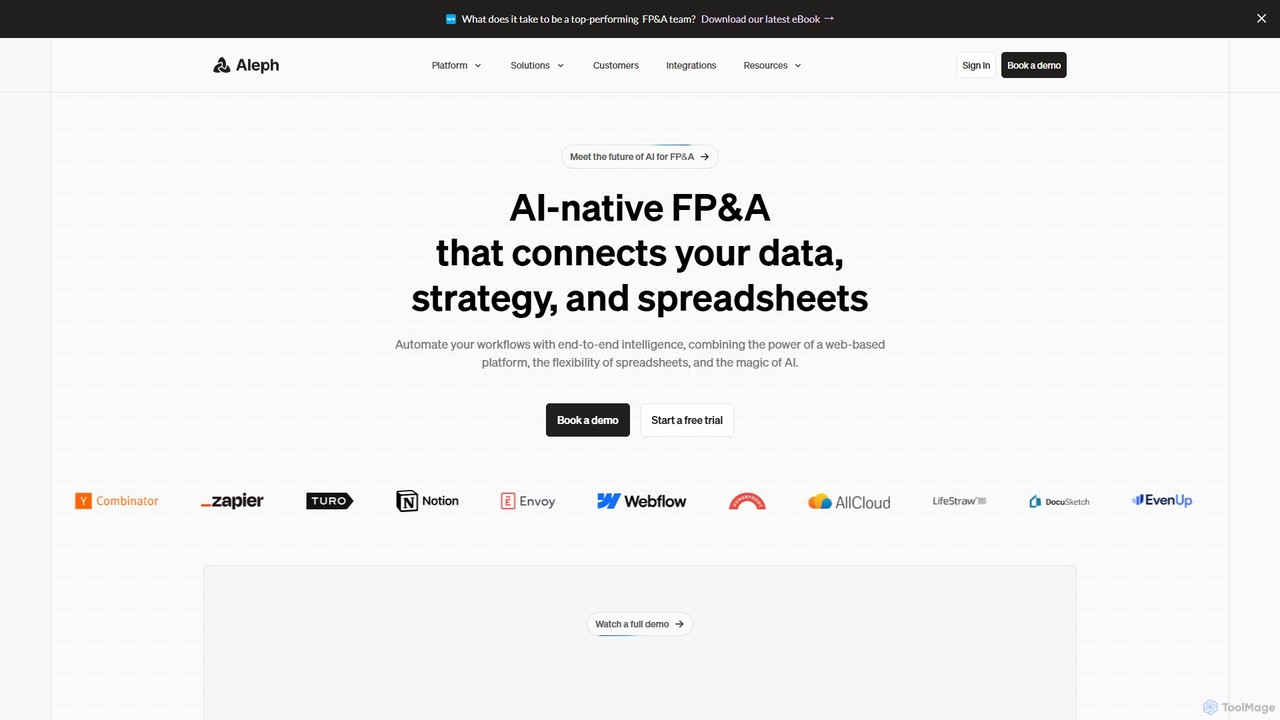
Aleph is an AI-native FP&A (Financial Planning & Analysis) platform designed for modern finance teams. It automates tedious financial tasks, consolidates data from various systems into a single source of truth, and supercharges familiar tools like Excel and Google Sheets. By leveraging AI, Aleph helps teams multiply their output, reduce manual work, and focus on high-value strategic analysis.

Fp&A
Visits 42.6KFavorites 129Likes 151
abacum
Paid

abacum

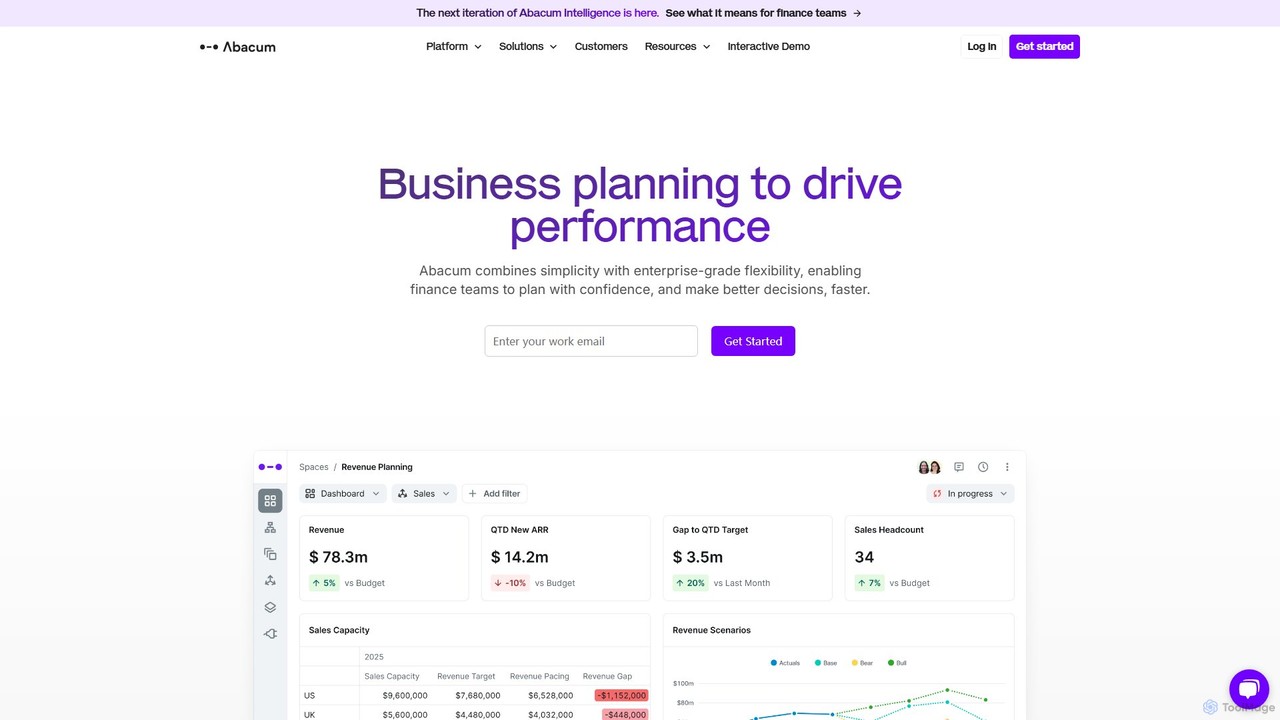
Abacum is an AI-powered Financial Planning and Analysis (FP&A) platform designed for modern finance teams. It automates data collection, streamlines budgeting and forecasting, and provides real-time insights to drive strategic decision-making. By integrating with over 50 business systems, Abacum eliminates manual tasks, enhances collaboration, and transforms finance departments into key drivers of business growth.

Analytics
Visits 110.6KFavorites 117Likes 146

About Fp&A

Fp&A (Financial Planning & Analysis) AI tools are specialized platforms that leverage artificial intelligence to transform financial forecasting, budgeting, and performance management. These tools utilize machine learning algorithms to analyze vast financial datasets, identify complex patterns, and generate highly accurate predictive models. They empower finance professionals to move beyond traditional data crunching, enabling more strategic, data-driven decision-making and agile financial planning.

Core Features

  • Automated Forecasting: Generates precise financial forecasts (revenue, expenses, cash flow) using historical data and external factors, adapting to market changes.
  • Intelligent Budgeting: Assists in creating dynamic budgets, identifying optimal resource allocation, and flagging potential variances before they occur.
  • Scenario Modeling: Simulates various financial outcomes based on different business assumptions, helping evaluate risks and opportunities.
  • Performance Analytics: Provides deep insights into financial performance, identifying key drivers, anomalies, and areas for improvement.
  • Data Integration: Connects with ERP, CRM, and other financial systems to consolidate data for comprehensive analysis.

Use Cases

Finance departments use Fp&A AI tools for continuous planning cycles, strategic investment analysis, and optimizing operational costs. They are crucial for businesses seeking to enhance financial agility and gain a competitive edge through proactive financial insights.

How to Choose

When selecting Fp&A AI tools, consider the depth of forecasting capabilities, ease of integration with existing financial systems, the flexibility of scenario modeling, and the clarity of performance dashboards. Evaluate the tool's ability to handle specific industry data, its scalability, and the level of customization offered to align with unique business processes.

Fp&A use cases

1

Optimizing Quarterly Financial Forecasts

Finance teams use Fp&A AI to rapidly process sales data, market trends, and operational costs, generating highly accurate revenue and expense forecasts for the upcoming quarter. This allows for proactive adjustments to resource allocation and strategic planning, minimizing discrepancies from actual results.

2

Dynamic Budget Allocation for Projects

Project managers and finance controllers leverage Fp&A AI to dynamically allocate budget to new initiatives. By analyzing historical project costs, resource availability, and potential ROI, the tool suggests optimal budget distribution, ensuring efficient spending and maximizing project success rates.

3

Strategic Scenario Planning for Market Volatility

Business leaders employ Fp&A AI to model the financial impact of various market disruptions, such as supply chain issues or economic downturns. The tool simulates outcomes under different scenarios, providing insights into potential risks and enabling the development of robust contingency plans.

4

Identifying Cost Efficiencies in Operations

Operations managers collaborate with finance using Fp&A AI to pinpoint areas of excessive spending or inefficiency. The AI analyzes granular operational data, identifies cost drivers, and recommends specific actions to reduce expenses without compromising quality or output.

5

Evaluating M&A Target Financial Health

Corporate development teams utilize Fp&A AI to conduct thorough financial due diligence on potential acquisition targets. The tool quickly processes target company financials, projects future performance, and assesses integration risks, providing a data-driven basis for valuation and negotiation.

6

Automating Cash Flow Management and Prediction

Treasury departments use Fp&A AI to predict future cash inflows and outflows with high precision. By integrating bank data, sales forecasts, and payment schedules, the tool provides real-time cash position insights, helping to optimize liquidity and investment decisions.

Fp&A FAQ

What are Fp&A AI tools?

Fp&A AI tools are software solutions that apply artificial intelligence, primarily machine learning, to automate and enhance financial planning and analysis processes. They go beyond traditional spreadsheets by providing advanced capabilities for predictive forecasting, intelligent budgeting, scenario modeling, and real-time performance monitoring. These tools help finance professionals make more informed, strategic decisions by transforming raw data into actionable insights.

How do Fp&A AI tools differ from traditional financial software?

Unlike traditional financial software that often relies on manual data entry and rule-based calculations, Fp&A AI tools leverage machine learning to automatically identify patterns, predict future trends, and adapt to changing conditions. They offer dynamic scenario planning, anomaly detection, and continuous forecasting, significantly reducing manual effort and improving accuracy compared to static spreadsheet models or basic ERP reporting.

What are the key benefits of implementing Fp&A AI in a business?

Implementing Fp&A AI offers several key benefits, including significantly improved forecasting accuracy, which leads to better resource allocation and reduced financial risk. It enables faster and more agile budgeting cycles, allowing businesses to respond quickly to market changes. Additionally, these tools provide deeper insights into financial performance, automate repetitive tasks, and support more strategic decision-making, ultimately driving greater efficiency and profitability.

Who typically uses Fp&A AI tools within an organization?

Fp&A AI tools are primarily used by finance professionals, including Fp&A analysts, finance managers, controllers, and CFOs. However, their insights are also valuable for other departments. Business unit leaders use them for operational planning, sales managers for revenue forecasting, and executive leadership for strategic decision-making and understanding overall business health. The collaborative nature of these tools often extends their utility across various organizational levels.

What should I consider when integrating Fp&A AI with existing systems?

When integrating Fp&A AI tools, it's crucial to consider compatibility with your existing ERP, CRM, and other financial data sources. Look for tools that offer robust APIs and pre-built connectors to ensure seamless data flow and minimize manual data preparation. Evaluate the security protocols for data transfer, the ease of data mapping, and the vendor's support for integration challenges. A smooth integration ensures that the AI tools can access comprehensive, real-time data for accurate analysis.