ToolMage
Sign in

Best 6 Investment Research AI tools for Finance

Popular Investment Research AI tools in Finance include Fiscal.ai, Quartr, Captide, Trata, Jiff Genius AI, and NewsDeck, helping you work more efficiently.

Quartr
Freemium

Quartr

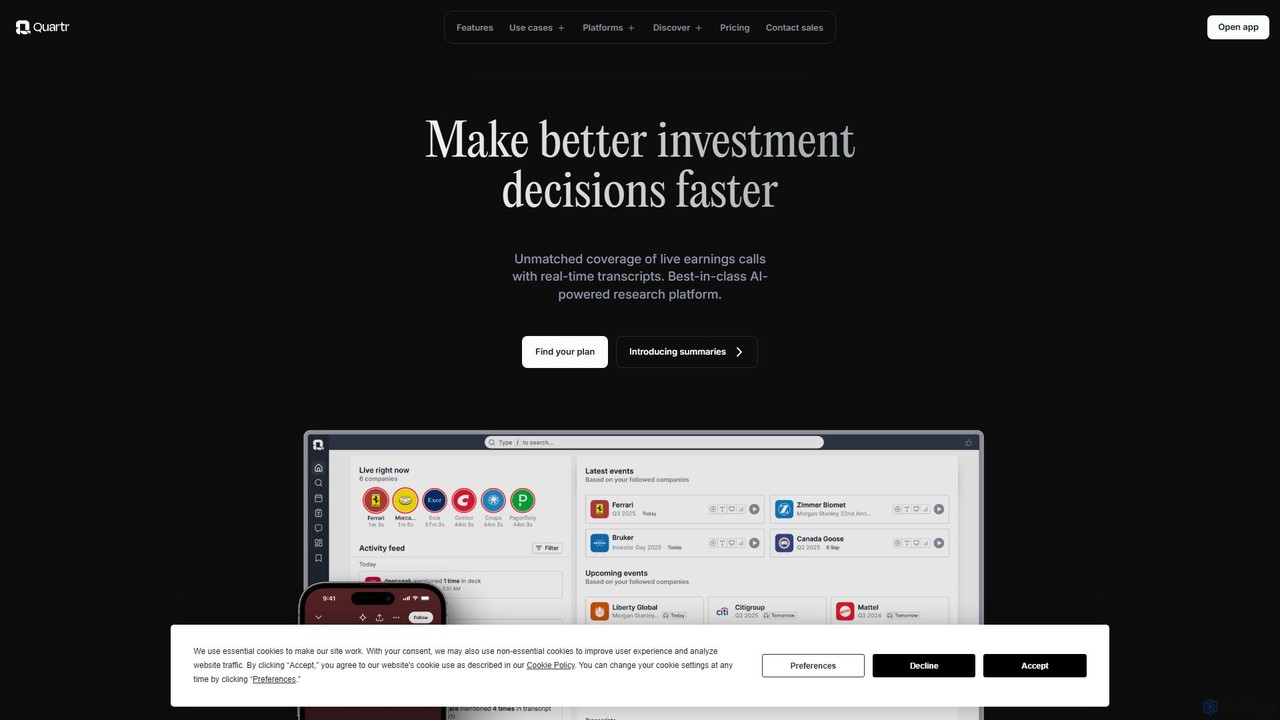
Quartr is an AI-powered financial research platform designed for investors and analysts. It provides access to live earnings calls, real-time transcripts, reports, and an AI chat to analyze over 13,000 public companies. Streamline your qualitative research and make faster, more informed investment decisions.

Data Extraction
Visits 464KFavorites 131Likes 111
Jiff Genius AI
Freemium

Jiff Genius AI

Jiff Genius AI is an advanced financial platform that empowers investors and traders with a suite of AI-driven tools. It features an AI Broker Copilot for automated trading via natural language, a comprehensive financial analysis suite called Reporto for deep research, and a customizable AI knowledge base. It streamlines decision-making, boosts productivity, and makes sophisticated trading accessible to all skill levels.

Investment Research
Visits 5.8KFavorites 99Likes 114
Trata
Paid

Trata

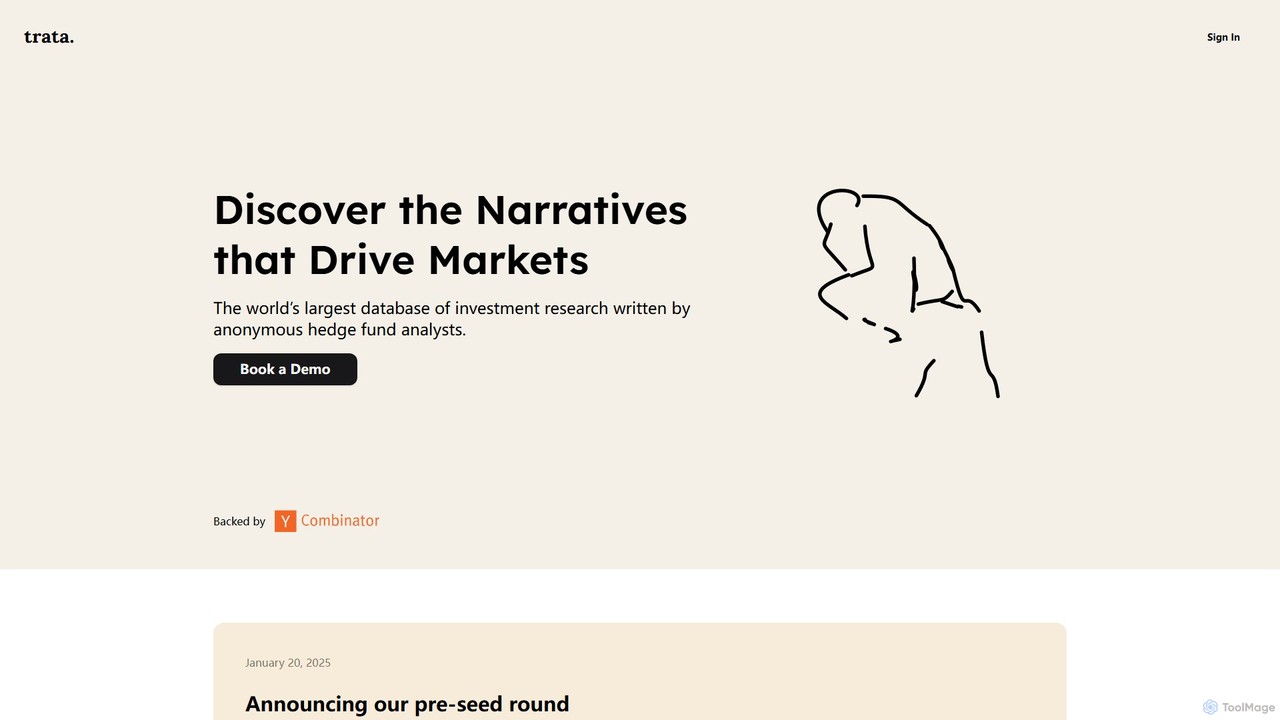
Trata is an AI-powered investment research platform offering the world's largest database of insights from anonymous hedge fund analysts. It identifies and aggregates key "tension points"—the critical debates driving a company's valuation—to help investors discover market-moving narratives and generate ideas efficiently.

Investment Research
Visits 7.8KFavorites 150Likes 159
Fiscal.ai
Freemium

Fiscal.ai

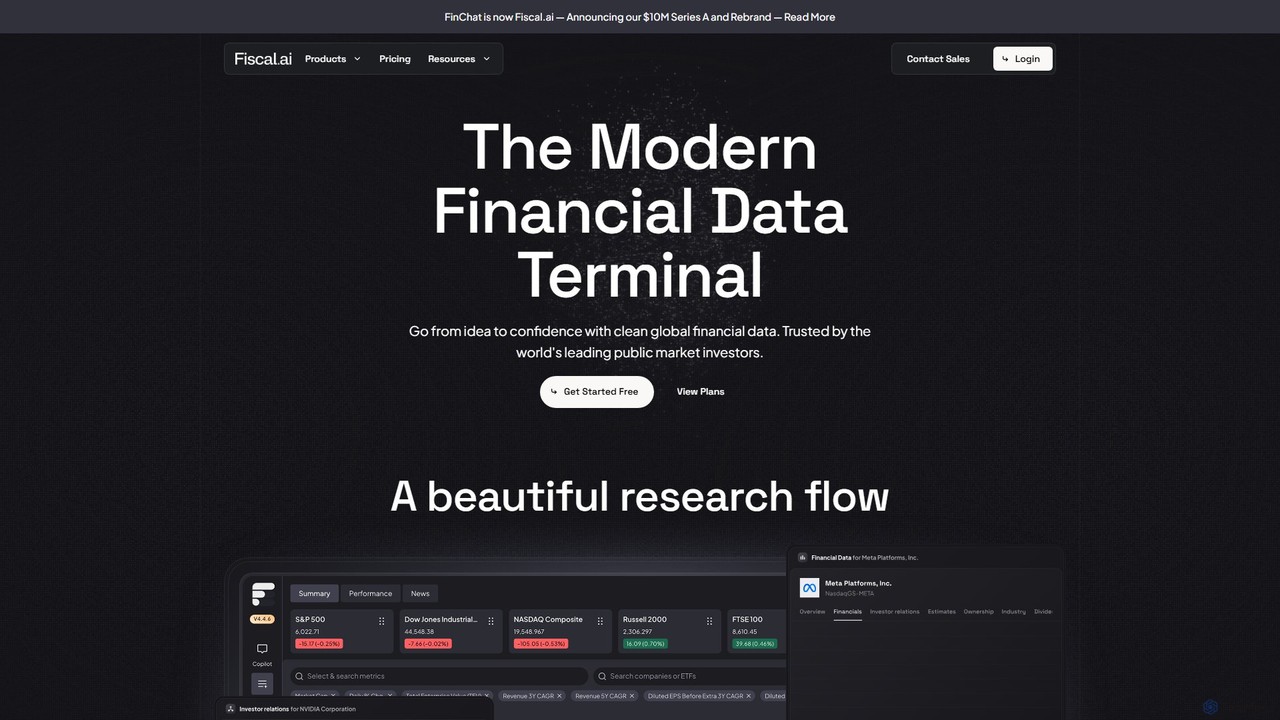
Fiscal.ai (formerly FinChat) is an AI-powered stock research platform offering institutional-grade global financial data. It combines a modern data terminal with an AI assistant to help investors analyze equities, ETFs, and funds. Users can ask complex financial questions in natural language, visualize data, track portfolios, and access comprehensive investor relations content, streamlining the entire investment research process.

Investment Research
Visits 822KFavorites 130Likes 144
Captide
Paid

Captide

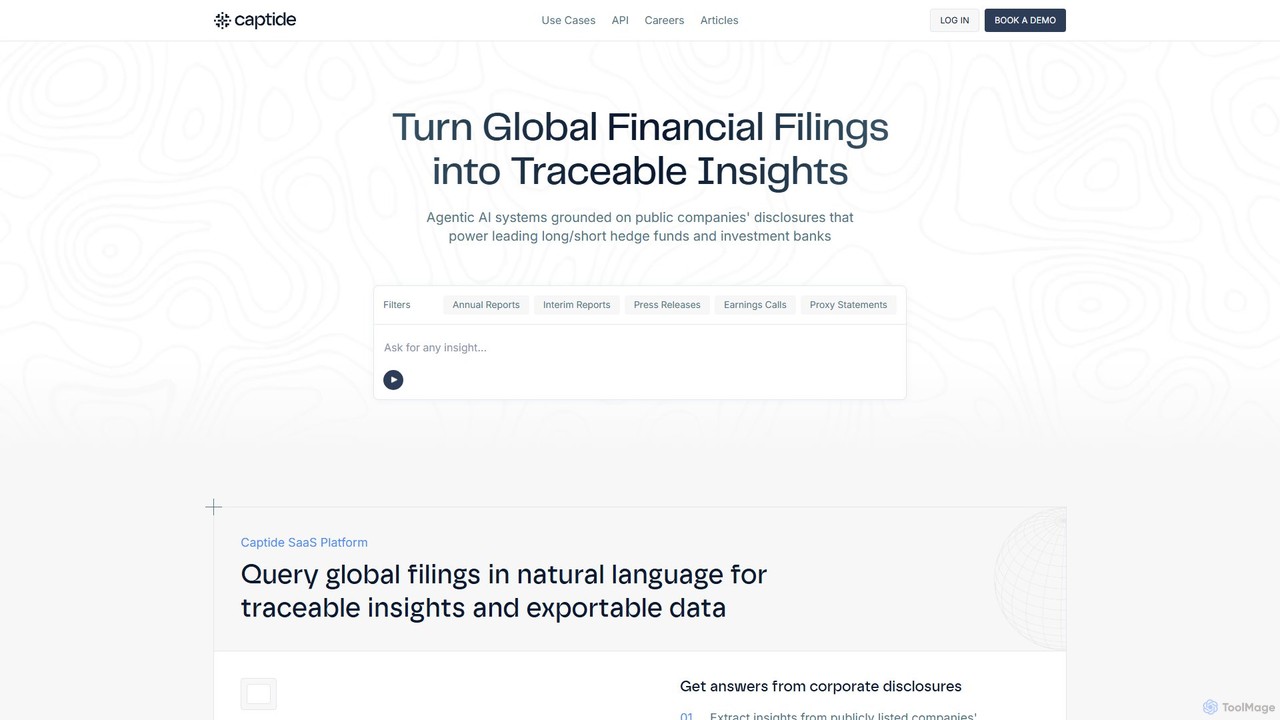
Captide is an AI-powered platform for financial professionals that transforms global financial filings into actionable, traceable insights. Using natural language queries, it automates data extraction, comparative analysis, and research workflows, enabling hedge funds, investment banks, and asset managers to make faster, data-driven decisions.

Api
Visits 9.6KFavorites 128Likes 137
NewsDeck
Freemium

NewsDeck

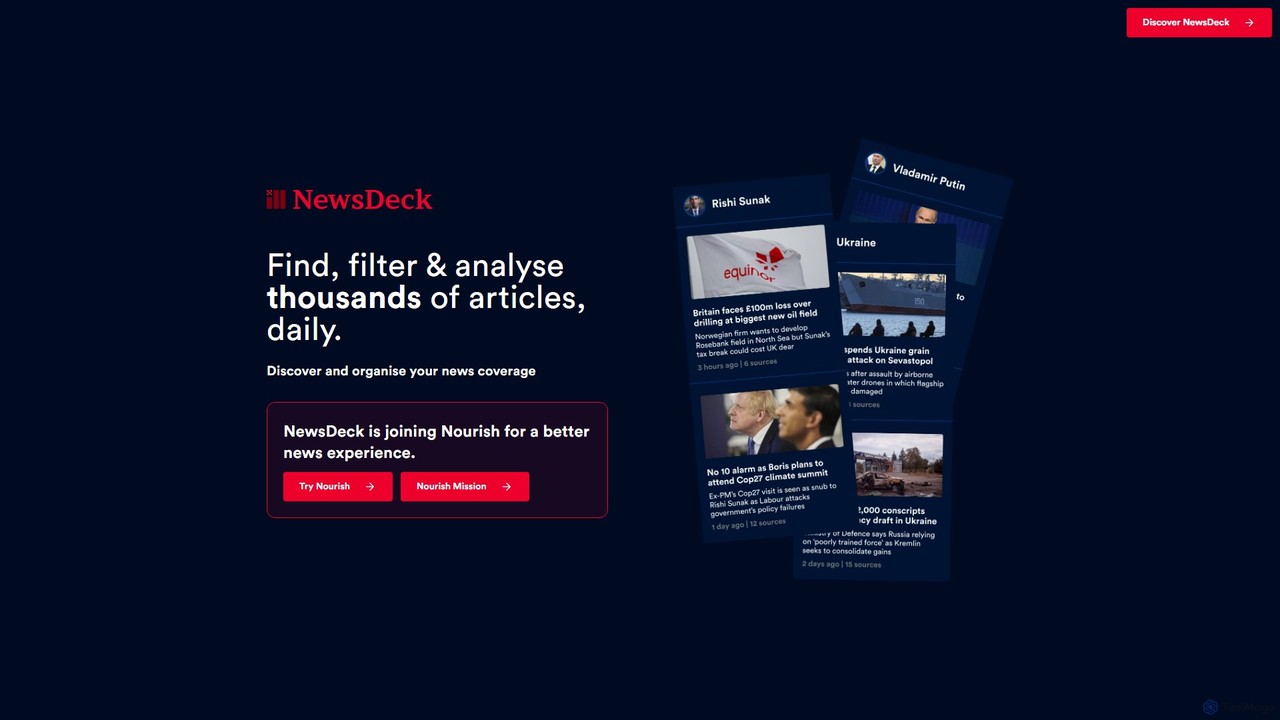
NewsDeck is an AI-powered news intelligence platform designed to find, filter, and analyze thousands of articles daily. It helps users track over 500,000 topics, companies, and individuals, correlating coverage across hundreds of publishers to provide deep, actionable insights. Now part of the Nourish ecosystem, it focuses on delivering a transparent and ethical news analysis experience.

Market Research
Visits 5.7KFavorites 147Likes 146

About Investment Research

AI Investment Research tools are specialized platforms that leverage artificial intelligence to analyze vast amounts of financial data for actionable insights. These tools employ machine learning, natural language processing (NLP), and predictive analytics to process market data, company reports, news sentiment, and economic indicators. They empower investors by automating complex data analysis, identifying hidden patterns, and quantifying risks, leading to more informed and data-driven investment decisions. This focus on deep analysis distinguishes them within the broader financial technology landscape.

Core Features

  • Quantitative Analysis: Processes numerical data like stock prices, financial statements, and economic metrics to identify trends and valuation opportunities.
  • Sentiment Analysis: Uses NLP to gauge market and public sentiment from news articles, social media, and analyst reports.
  • Predictive Modeling: Applies machine learning algorithms to forecast market trends, asset performance, and potential economic shifts.
  • Automated Reporting: Generates concise summaries of earnings calls, financial filings (like 10-K reports), and significant market events.
  • Risk Assessment: Identifies and evaluates potential risks in individual assets or entire portfolios based on volatility and market factors.

Use Cases

These tools are valuable for a wide range of users, from individual retail investors performing due diligence to institutional investors like hedge funds and asset managers. Financial analysts use them to accelerate research, while venture capitalists employ them to screen startups and analyze market landscapes. They streamline the process of generating investment theses and monitoring existing portfolios.

How to Choose

When selecting an AI Investment Research tool, consider the breadth and quality of its data sources (e.g., global markets, alternative data). Evaluate the sophistication of its analytical models—whether you need basic screening or advanced predictive analytics. Also, assess its user interface, integration capabilities with brokerage platforms, and the transparency of its methodology. Finally, match the pricing model to your usage frequency and budget.

Investment Research use cases

1

Screening Undervalued Stocks for Retail Investors

A retail investor aims to build a portfolio of undervalued technology stocks. Instead of spending days manually sifting through financial reports, they use an AI investment research tool. They set specific criteria such as a P/E ratio below 20, year-over-year revenue growth above 15%, and a positive news sentiment score. The AI instantly scans thousands of stocks, analyzes their fundamentals and recent news, and presents a ranked list of potential investments that meet the criteria. This allows the investor to focus their deep-dive research on a pre-vetted shortlist, saving significant time and uncovering opportunities they might have otherwise missed.

2

Automating Earnings Call Analysis for Analysts

A financial analyst at a hedge fund needs to cover dozens of companies during earnings season. Manually listening to every earnings call and reading transcripts is extremely time-consuming. By using an AI research tool, the analyst can upload audio files or transcripts of the calls. The AI automatically generates a summary, highlights key financial metrics, identifies recurring themes, and performs sentiment analysis on the Q&A session to gauge management's confidence. This process reduces hours of work per company to minutes, allowing the analyst to cover more ground and identify critical insights faster than competitors.

3

Monitoring Portfolio Risk and Macroeconomic Events

A portfolio manager is responsible for a large, diversified portfolio and needs to stay ahead of market-moving events. They use an AI investment tool to continuously monitor their holdings. The tool is configured to track specific risk factors, such as interest rate sensitivity and exposure to certain geopolitical regions. It scans global news, central bank announcements, and economic data in real-time, sending alerts when an event could negatively impact the portfolio. For example, it might flag a sudden spike in oil prices affecting their energy holdings, allowing the manager to hedge the position proactively.

4

Conducting Due Diligence for Venture Capital

A venture capital (VC) analyst is evaluating a potential investment in a tech startup. The due diligence process requires a deep analysis of the market, competitors, and technological landscape. The analyst uses an AI tool to aggregate and analyze vast amounts of unstructured data, including patent filings, academic research papers, industry reports, and news mentions related to the startup's niche. The AI identifies key competitors, maps out the technology adoption curve, and summarizes market size projections from various sources. This provides the VC firm with a comprehensive, data-backed overview in a fraction of the time it would take to compile manually.

5

Identifying Macroeconomic Trends for Asset Allocation

An asset management firm needs to adjust its strategic asset allocation based on evolving macroeconomic trends. Analysts use an AI research platform to analyze a wide array of global economic indicators, central bank policy statements, and geopolitical news. The AI model identifies correlations and leading indicators that humans might miss, such as a link between shipping container costs in Asia and future inflation in Europe. Based on these insights, the platform might suggest increasing allocation to inflation-protected securities or shifting focus to emerging markets with stronger growth forecasts, enabling the firm to make proactive, data-informed allocation decisions.

6

Generating Investment Theses on Niche Sectors

An investment analyst wants to develop an investment thesis on a niche sector, such as lab-grown diamonds or vertical farming. Information on these emerging industries is often fragmented and hard to find. The analyst uses an AI tool to scan thousands of sources, including scientific journals, patent databases, industry conference transcripts, and regulatory filings. The tool synthesizes this information to identify key players, map the value chain, analyze technological hurdles, and project market growth. The output is a comprehensive research brief that forms the foundation of a new investment thesis, a task that would have taken weeks of manual research to complete.

Investment Research FAQ

What are AI Investment Research tools?

AI Investment Research tools are advanced software platforms that use artificial intelligence, particularly machine learning and natural language processing (NLP), to analyze financial markets. They automate the process of gathering and interpreting vast amounts of data, including stock prices, financial reports, news articles, and social media sentiment. Unlike traditional tools, they can identify complex patterns, forecast trends, and provide data-driven insights to help investors make more informed decisions. Their primary goal is to augment human analytical capabilities, not replace them entirely.

How to choose the right AI Investment Research tool?

Choosing the right tool depends on your specific needs. Consider the following factors:

  • Data Coverage: Ensure the tool covers the markets, asset classes (stocks, crypto, etc.), and data types (e.g., alternative data) you are interested in.
  • Analytical Features: Do you need basic screening and sentiment analysis, or advanced predictive modeling and risk assessment? Match the tool's capabilities to your analytical depth.
  • User Interface (UI): Select a tool with a UI that matches your technical skill level. Some are designed for beginners, while others are built for quantitative analysts.
  • Integration: Check if the tool can integrate with your existing brokerage accounts or other financial software for a seamless workflow.
  • Cost and Pricing Model: Evaluate the subscription cost against the value it provides. Some offer tiered plans based on features or data access.
What's the difference between AI Investment Research tools and traditional stock screeners?

The primary difference lies in complexity and data sources. A traditional stock screener filters stocks based on user-defined quantitative criteria, such as P/E ratio, market cap, and dividend yield. AI Investment Research tools go much further. They can analyze unstructured data like news text and social media posts for sentiment, use machine learning to identify complex, non-obvious patterns, and generate predictive forecasts about future performance. In essence, screeners answer 'what is', while AI research tools attempt to answer 'what if' and 'what next'.

Can AI Investment Research tools guarantee profits?

No, no investment tool, AI-powered or otherwise, can guarantee profits. Financial markets are inherently complex and influenced by countless unpredictable factors. AI tools are powerful analytical aids that can process more data and identify patterns more efficiently than humans, thereby increasing the probability of making a well-informed decision. However, they provide probabilistic insights, not certainties. All investments carry risk, and these tools should be used to augment your own research and judgment, not as a substitute for them.

Who are the primary users of AI Investment Research tools?

These tools serve a broad spectrum of users in the financial world. Key user groups include:

  • Retail Investors: Individuals who want to make data-driven decisions without spending countless hours on manual research.
  • Financial Analysts: Professionals at investment banks and research firms who use these tools to accelerate their workflow and uncover deeper insights.
  • Portfolio Managers: Managers at asset management firms and hedge funds who use them for idea generation, portfolio construction, and risk monitoring.
  • Venture Capitalists: VCs and private equity analysts who leverage them for due diligence, market analysis, and competitive intelligence on private companies.