Calculator Studio
Calculator Studio is a no-code platform that transforms your spreadsheets into interactive web calculators. Easily build and embed …
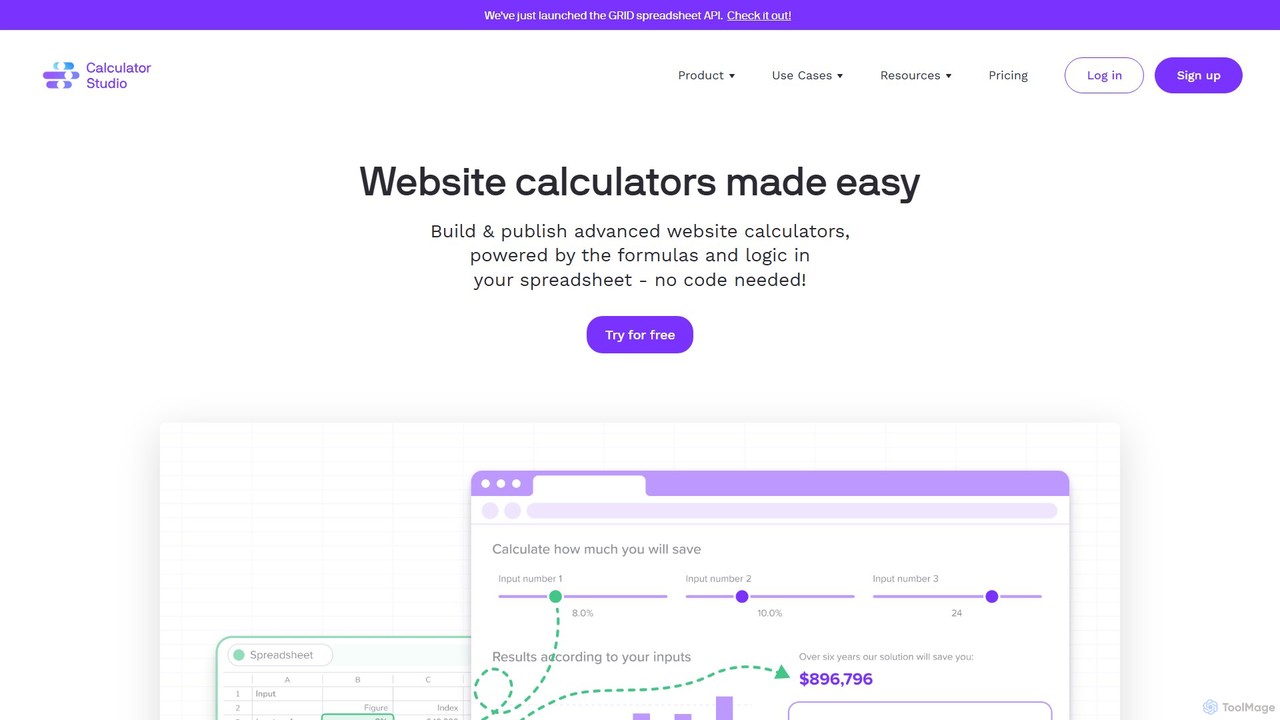
Calculator Studio is a no-code platform that transforms your spreadsheets into interactive web calculators. Easily build and embed tools for lead generation, price quoting, and ROI analysis to engage visitors, capture qualified leads, and boost conversions without writing a single line of code.
About Modeling
AI Modeling tools in finance are a class of software that automates the creation, analysis, and forecasting of financial statements and business scenarios. These tools leverage machine learning algorithms to process vast datasets, identify complex patterns, and generate dynamic models for valuation, budgeting, and risk assessment. They empower financial analysts and decision-makers to build more accurate, robust, and forward-looking models with greater speed and efficiency, moving beyond the limitations of traditional spreadsheets.
Core Features
- Automated Data Integration: Automatically pulls and syncs financial data from various sources like ERPs, accounting software, and market data feeds.
- Predictive Forecasting: Utilizes machine learning to generate forecasts for revenue, expenses, and cash flow with higher accuracy than historical trend analysis.
- Scenario & Sensitivity Analysis: Allows users to instantly model the impact of different variables (e.g., interest rate changes, market downturns) on financial outcomes.
- Model Validation & Auditing: Provides features to check for formula errors, logical inconsistencies, and maintain an audit trail of changes for compliance.
- Dynamic Three-Statement Models: Automatically links and updates the Income Statement, Balance Sheet, and Cash Flow Statement to ensure consistency.
Applicable Scenarios
These tools are essential in corporate finance departments for financial planning and analysis (FP&A), investment banking for M&A valuation, private equity for LBO modeling, and for portfolio managers conducting risk analysis. For instance, an FP&A team can use them to create rolling forecasts that update in real-time, while an investment banker can build complex valuation models in a fraction of the time.
Selection Criteria
When choosing an AI financial modeling tool, consider its integration capabilities with your existing data sources (e.g., QuickBooks, SAP). Evaluate the range and complexity of models it supports (DCF, LBO, etc.). Also, assess its collaboration features for team-based work and ensure its security protocols meet industry compliance standards like SOC 2.

ModelingUse Cases
Automating M&A Valuation Models
An investment banking analyst uses an AI modeling tool to evaluate a potential acquisition target. The tool automatically integrates the target's historical financial data from public filings and internal data rooms. It then constructs a detailed Discounted Cash Flow (DCF) model, projecting future cash flows based on AI-driven industry growth forecasts. The analyst can instantly run sensitivity analyses on key assumptions like WACC and terminal growth rate, generating multiple valuation scenarios in minutes instead of hours, significantly accelerating the due diligence process.
Dynamic Corporate Budgeting and Forecasting
An FP&A manager at a retail company needs to create the annual budget and rolling forecasts. Instead of relying on static spreadsheets, they use an AI modeling platform. The platform connects to their sales POS system and accounting software, automatically updating actuals. Its predictive engine analyzes seasonality and market trends to generate a baseline forecast. The manager can then create various scenarios (e.g., 'new store opening', 'competitor price drop') to understand potential impacts, fostering more agile and strategic financial planning across the organization.
Portfolio Risk Simulation with Monte Carlo
A portfolio manager at an asset management firm wants to assess the risk of their equity portfolio. They use an AI modeling tool with built-in Monte Carlo simulation capabilities. The tool models the potential future price paths of hundreds of stocks in the portfolio, considering historical volatility and correlations. It runs thousands of simulations to generate a probability distribution of potential portfolio returns, allowing the manager to quantify downside risk (e.g., Value at Risk - VaR) and stress-test the portfolio against various market shocks, leading to more informed risk management decisions.
Building LBO Models for Private Equity Deals
A private equity associate is analyzing a potential leveraged buyout (LBO). Using an AI financial modeling tool, they can quickly build a complex LBO model. The tool automates the creation of debt schedules, sources and uses tables, and links the three financial statements. The associate can easily toggle different debt structures (e.g., senior debt, mezzanine) and exit assumptions (e.g., exit multiple, sale year) to see the impact on IRR and MOIC. This allows the PE firm to rapidly assess deal viability and structure offers more effectively.
Generating Financial Projections for Startups
A startup founder needs to create a 5-year financial projection for their pitch deck to secure seed funding. Using an AI modeling tool, they input key business drivers like customer acquisition cost, churn rate, and pricing. The tool then generates a complete three-statement model (P&L, Balance Sheet, Cash Flow) automatically. It also allows the founder to create best-case, base-case, and worst-case scenarios by adjusting assumptions, providing investors with a clear and comprehensive view of the company's potential financial trajectory and capital needs.
Credit Risk Assessment and Scoring
A credit analyst at a commercial bank evaluates a loan application from a mid-sized business. They use an AI modeling tool that integrates with the applicant's accounting data and external credit bureaus. The AI analyzes financial ratios, cash flow patterns, and industry benchmarks to generate a predictive credit score. It also identifies key risk factors, such as declining profitability or high leverage. This automated, data-driven approach provides a more objective and consistent assessment than manual analysis, improving the quality and speed of lending decisions.