ToolMage
Sign in

Best 2 Payments AI tools for Finance

Popular Payments AI tools in Finance include Nevermined and Plink, helping you work more efficiently.

Plink

Plink

Plink is a commerce automation platform designed for local small businesses. It leverages "smart transaction" technology to create personalized marketing campaigns, automate social media advertising, and capture customer data. By integrating with payment systems, Plink helps businesses run targeted promotions, increase customer engagement, and drive sales without complex technical overhead, bridging the gap between online marketing and in-store purchases.

Social Media Advertising
Visits 10.1KFavorites 121Likes 124
Nevermined
Freemium

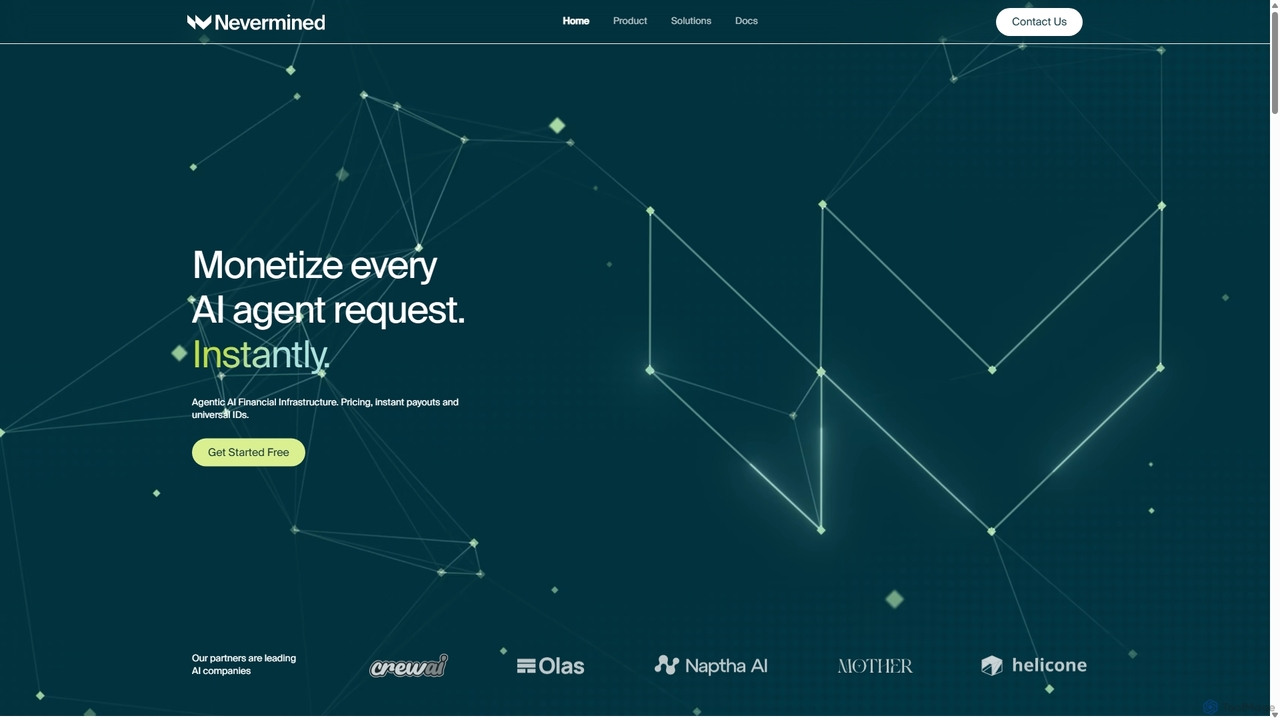
Nevermined

Nevermined is a specialized billing and payments infrastructure designed for the AI economy. It enables developers and businesses to instantly monetize every AI agent request through flexible, AI-native pricing models like usage-based, outcome-based, and value-based billing. It provides real-time metering, instant payouts, and universal agent IDs to support both human-to-agent and agent-to-agent transactions, future-proofing applications for the emerging agentic commerce landscape.

Monetization
Visits 14KFavorites 143Likes 166

About Payments

AI-powered Payments tools streamline financial transactions and management by leveraging artificial intelligence. These tools utilize machine learning to automate processes like fraud detection, reconciliation, and personalized payment experiences. They enhance security, reduce operational costs, and provide valuable insights into financial flows for businesses of all sizes.

Core Features

  • Automated Reconciliation: Automatically matches transactions across various accounts and systems, reducing manual effort and errors.
  • Fraud Detection & Prevention: Employs AI algorithms to identify suspicious patterns and anomalies in real-time, minimizing financial risks.
  • Personalized Payment Experiences: Analyzes user behavior to offer customized payment options and optimize checkout flows.
  • Dynamic Pricing & Billing: Adjusts pricing models and automates complex billing cycles based on market conditions or customer segments.
  • Predictive Analytics for Cash Flow: Forecasts future cash inflows and outflows, enabling proactive financial planning and liquidity management.

Applicable Scenarios

Businesses across e-commerce, SaaS, and traditional retail leverage AI payment tools to optimize their financial operations. E-commerce platforms use them for secure, seamless checkout processes and fraud prevention. SaaS companies automate subscription billing and revenue recognition. Financial institutions deploy them for enhanced security and compliance, while also gaining deeper insights into customer spending habits.

How to Choose

When selecting AI payment tools, consider the scope of your financial operations, including transaction volume and complexity. Evaluate integration capabilities with existing ERP or CRM systems, ensuring seamless data flow. Assess the robustness of fraud detection features and compliance with industry regulations. Finally, compare pricing models and the level of customization offered to align with your specific business needs and budget.

Payments use cases

1

Real-time Fraud Prevention for E-commerce

E-commerce businesses face constant threats from fraudulent transactions. AI payment tools analyze vast amounts of data, including transaction history, user behavior, and device information, in real-time to detect and flag suspicious activities. This allows merchants to block fraudulent payments before they are processed, significantly reducing chargebacks and financial losses, while ensuring legitimate customers experience smooth transactions.

2

Automating Subscription Billing for SaaS

SaaS companies manage complex recurring billing cycles with varying plans, upgrades, and downgrades. AI payment platforms automate the entire subscription lifecycle, from initial sign-up and recurring charges to prorated billing for changes and dunning management for failed payments. This ensures accurate revenue recognition, reduces manual administrative burden, and improves customer retention by proactively addressing payment issues.

3

Optimizing Payment Gateways for Global Retail

Global retailers need to offer diverse payment options and optimize transaction success rates across different regions. AI payment tools intelligently route transactions through the most efficient and cost-effective payment gateways based on factors like currency, location, and payment method. This minimizes processing fees, increases conversion rates by reducing failed transactions, and provides customers with their preferred local payment methods.

4

Streamlining Accounts Receivable Reconciliation

Finance departments often spend significant time manually reconciling incoming payments with invoices. AI-powered payment solutions automate this process by matching bank statements with outstanding invoices, identifying discrepancies, and flagging exceptions for review. This drastically reduces the time spent on reconciliation, improves accuracy, and provides a clearer, real-time view of cash flow and outstanding receivables.

5

Personalizing Checkout Experiences for Mobile Apps

Mobile app developers aim to reduce cart abandonment by offering a frictionless and personalized checkout. AI payment tools analyze user preferences and past behavior to suggest preferred payment methods, pre-fill details, and offer relevant one-click payment options. This tailored approach simplifies the payment process, enhances user satisfaction, and significantly boosts conversion rates within the app.

6

Predictive Cash Flow Forecasting for SMEs

Small and medium-sized enterprises (SMEs) often struggle with accurate cash flow management. AI payment tools integrate with accounting systems to analyze historical payment data, predict future inflows and outflows, and identify potential liquidity gaps. This enables SMEs to make informed financial decisions, manage working capital more effectively, and avoid unexpected cash shortages, supporting sustainable growth.

Payments FAQ

What are AI Payments tools?

AI Payments tools are software solutions that integrate artificial intelligence, particularly machine learning, to automate, secure, and optimize financial transaction processes. They go beyond traditional payment systems by intelligently analyzing data to detect fraud, streamline reconciliation, personalize user experiences, and provide predictive insights. These tools are designed to enhance efficiency, reduce costs, and improve the overall financial health of businesses.

How do AI Payments tools enhance security?

AI Payments tools significantly enhance security through advanced fraud detection and prevention mechanisms. They continuously monitor transactions for unusual patterns, anomalies, and behavioral deviations that might indicate fraudulent activity, often in real-time. By learning from vast datasets of legitimate and fraudulent transactions, AI can identify sophisticated threats that rule-based systems might miss, providing a proactive defense against financial crime and protecting sensitive payment information.

What is the difference between traditional payment systems and AI Payments tools?

Traditional payment systems primarily focus on processing transactions based on predefined rules and manual inputs. AI Payments tools, while also processing transactions, add an intelligent layer by using machine learning to analyze, learn, and adapt. This allows them to automate complex tasks like fraud detection, dynamic pricing, and reconciliation with greater accuracy and efficiency, offering predictive insights and personalized experiences that traditional systems cannot.

Can AI Payments tools help with compliance and regulations?

Yes, AI Payments tools can significantly assist with compliance and regulatory requirements. By automating data collection, transaction monitoring, and reporting, they help businesses adhere to standards like PCI DSS, GDPR, and AML regulations. AI can identify potential compliance breaches by flagging suspicious transactions or data handling inconsistencies, providing audit trails, and ensuring that financial operations meet legal and industry standards, thereby reducing regulatory risks.

Who benefits most from implementing AI Payments solutions?

A wide range of entities benefits from AI Payments solutions, particularly businesses with high transaction volumes or complex financial operations. This includes e-commerce platforms, SaaS providers, financial institutions, and large enterprises seeking to reduce fraud, automate reconciliation, and gain deeper financial insights. SMEs also benefit from improved cash flow management and streamlined billing, making these tools valuable across various sectors for enhancing efficiency and security.