ToolMage
Sign in

Best 2 Research AI tools for Finance

Popular Research AI tools in Finance include Fira Research and alphawatch, helping you work more efficiently.

alphawatch
Paid

alphawatch

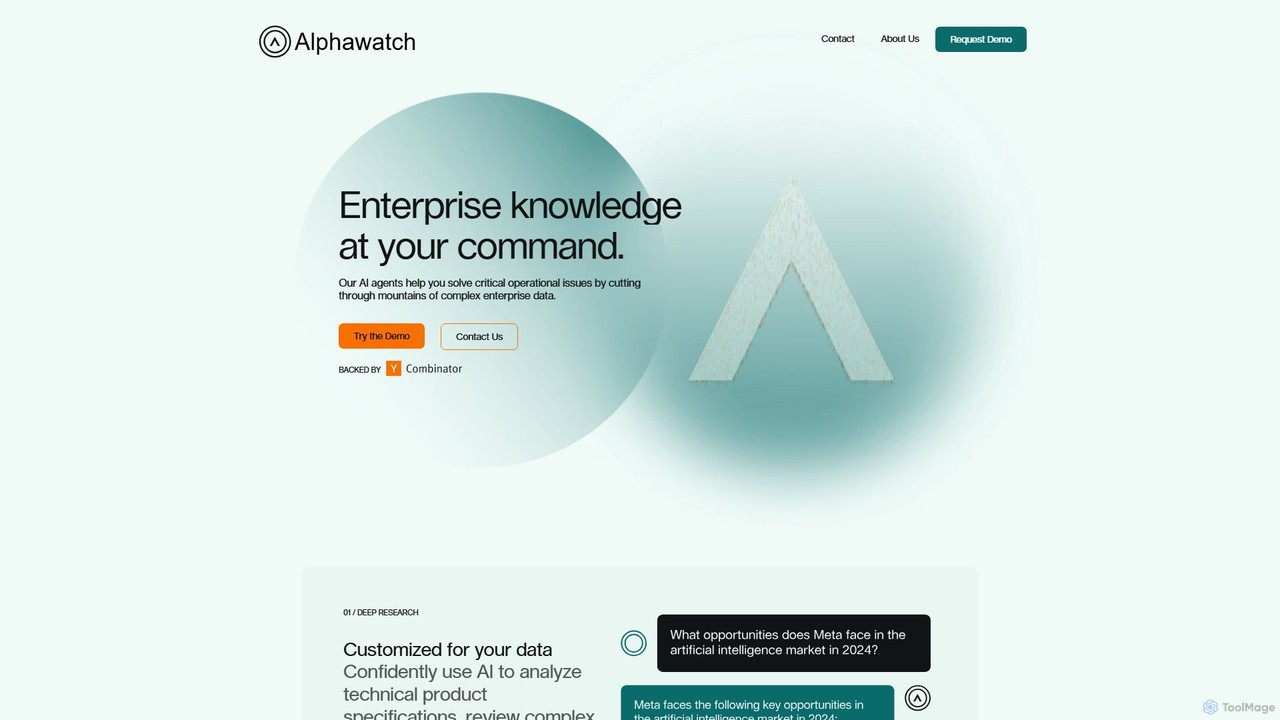
alphawatch provides enterprise-grade AI agents that analyze vast amounts of complex business data to solve critical operational issues. It offers customized AI assistants, workflow automation, and neural search capabilities, designed for sectors like finance, private equity, and industrial firms. The platform emphasizes security, human-in-the-loop oversight, and multilingual support to enhance productivity and decision-making for global teams.

Knowledge Management
Visits 5.3KFavorites 116Likes 114
Fira Research
Paid

Fira Research

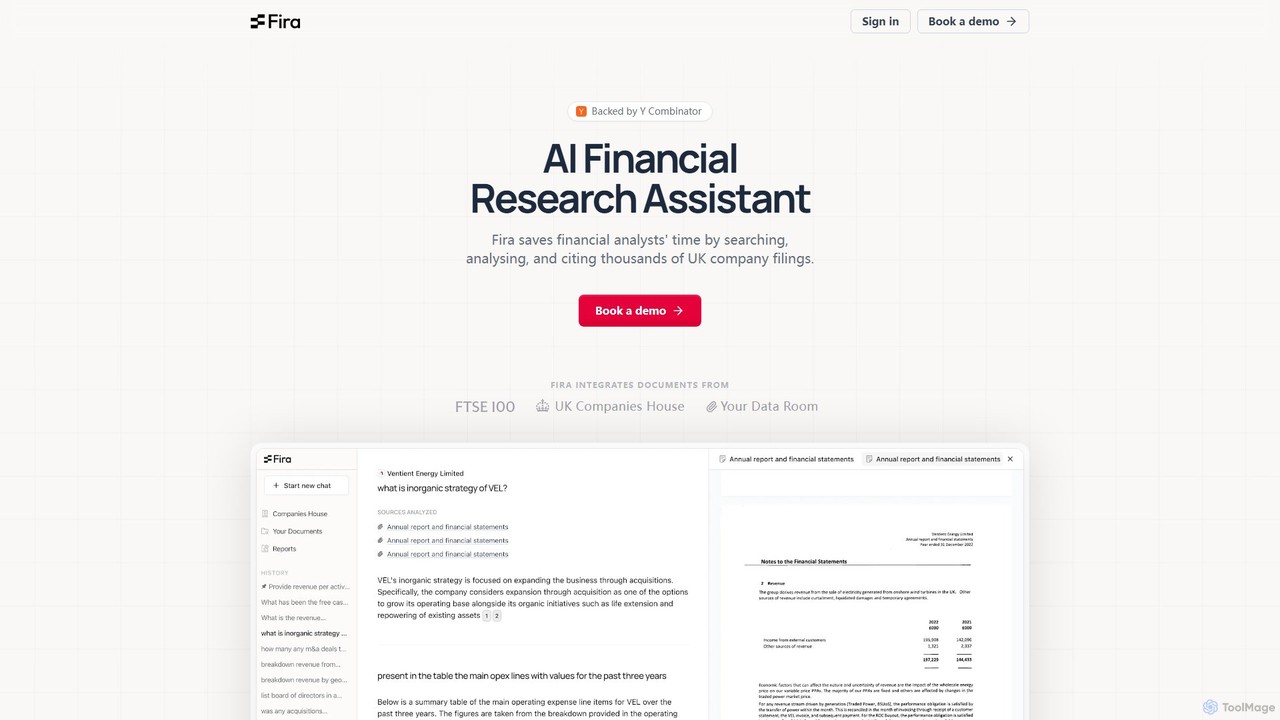
Fira Research is a Y Combinator-backed AI financial research assistant designed for financial analysts. It automates the process of searching, analyzing, and citing thousands of UK company filings, providing instant, accurate, and source-linked insights to accelerate research and due diligence.

Research
Visits 9.6KFavorites 146Likes 119

About Research

AI Research tools in Finance are specialized platforms that leverage artificial intelligence to analyze vast amounts of financial data, identify patterns, and generate actionable insights. These tools utilize advanced algorithms, including machine learning and natural language processing, to process market data, economic indicators, company reports, and news feeds. Their primary value lies in enhancing decision-making for investment, risk management, and strategic planning within the financial sector, providing a competitive edge through data-driven intelligence.

Core Features

  • Market Trend Analysis: Predicts future market movements and asset performance based on historical data and real-time indicators.
  • Automated Report Processing: Extracts key information and sentiment from financial statements, earnings calls, and analyst reports.
  • Risk Factor Identification: Pinpoints potential risks in portfolios, individual assets, or market conditions through comprehensive data evaluation.
  • Sentiment Analysis: Gauges market and investor sentiment from news articles, social media, and other textual data sources.
  • Economic Indicator Tracking: Monitors and interprets macroeconomic data to inform financial strategies.

Applicable Scenarios

Financial analysts use these tools for in-depth market forecasting, while portfolio managers leverage them for dynamic risk assessment and optimization. Investment bankers apply AI research for comprehensive due diligence during mergers and acquisitions, and corporate strategists utilize them for competitive intelligence and strategic positioning within the financial landscape.

How to Choose

When selecting AI research tools for finance, consider the breadth and quality of integrated data sources, the sophistication of analytical models (e.g., predictive accuracy, explainability), and the ability to customize research parameters. Evaluate integration capabilities with existing financial systems, the level of technical expertise required, and the vendor's compliance with financial regulations and data security standards.

Featured tool rankings

Research use cases

1

Market Trend Prediction for Investment

Investment analysts use AI research tools to forecast stock prices, commodity movements, and currency fluctuations by analyzing historical data, news, and economic indicators. This enables them to make more informed trading decisions and portfolio adjustments, optimizing returns and mitigating risks based on data-driven predictions.

2

Automated Financial Report Analysis

Financial professionals employ these tools to rapidly process and summarize quarterly earnings reports, annual statements, and analyst briefings. AI extracts key financial metrics, growth drivers, and potential red flags much faster than manual review, significantly reducing the time spent on data extraction and allowing more focus on strategic interpretation.

3

Risk Assessment for Portfolio Management

Portfolio managers utilize AI to continuously monitor and assess various risk factors—market risk, credit risk, operational risk—across their holdings. The tools identify vulnerabilities, quantify potential impacts, and suggest rebalancing strategies to mitigate potential losses, enabling proactive risk management and portfolio optimization.

4

Sentiment Analysis of Financial News

Traders and strategists leverage AI research to analyze the sentiment expressed in thousands of financial news articles, social media posts, and expert opinions in real-time. This provides crucial insights into market psychology, potential short-term price movements, and investor reactions, allowing for quicker and more informed trading decisions.

5

Due Diligence for Mergers & Acquisitions

M&A teams use AI tools to conduct extensive due diligence on target companies, analyzing financial health, market position, regulatory compliance, and potential synergies or risks. By rapidly processing vast datasets, AI significantly accelerates the due diligence process, providing comprehensive insights that inform critical acquisition decisions.

6

Competitive Landscape Analysis in Finance

Financial institutions apply AI research to monitor competitors' strategies, product launches, market share changes, and regulatory responses. This provides strategic intelligence to maintain a competitive edge, identify new market opportunities, and adapt business models effectively in a rapidly evolving financial landscape.

Research FAQ

What are AI Research tools in Finance?

AI Research tools in Finance are advanced software solutions that use artificial intelligence, including machine learning and natural language processing, to automate and enhance the analysis of financial data. They are designed to process vast quantities of structured and unstructured information—such as market data, economic reports, company filings, and news—to uncover insights, predict trends, and support complex financial decision-making.

How do AI Research tools differ from traditional financial analysis methods?

AI Research tools differ from traditional methods primarily in their scale, speed, and ability to identify complex, non-obvious patterns. While traditional analysis relies on human interpretation of limited datasets, AI tools can process petabytes of data in real-time, incorporate diverse data types (e.g., text, satellite imagery), and apply sophisticated algorithms to detect subtle correlations and predict outcomes with greater accuracy and efficiency.

What specific types of financial data can AI research tools analyze?

AI research tools can analyze a wide array of financial data, including historical and real-time market data (stock prices, trading volumes), macroeconomic indicators (GDP, inflation rates), company-specific data (financial statements, earnings call transcripts), alternative data (satellite imagery for retail traffic, credit card transactions), and unstructured text data from news, social media, and regulatory filings.

How to choose the right AI Research tool for financial analysis?

When selecting an AI research tool for finance, consider its data integration capabilities (can it connect to your existing data sources?), the sophistication and transparency of its analytical models (is it a black box or explainable AI?), its customization options for specific research needs, and its compliance with financial industry regulations. Also, evaluate user-friendliness, scalability, and the vendor's support and security protocols.

How do AI Research tools enhance financial decision-making?

AI Research tools enhance financial decision-making by providing deeper, faster, and more comprehensive insights than human analysts alone. They enable more accurate market predictions, better risk identification, optimized portfolio allocation, and quicker responses to market changes. By automating data processing and pattern recognition, these tools free up human experts to focus on strategic interpretation and complex problem-solving, leading to more robust and data-driven financial strategies.