ToolMage
Sign in

Best 7 Startups AI tools for Finance

Popular Startups AI tools in Finance include Venturekit, startuptools.ai, plansnack, businessplanfactory, Use Melville, CaseGenius, and DeckGuru, helping you work more efficiently.

plansnack
Free

plansnack

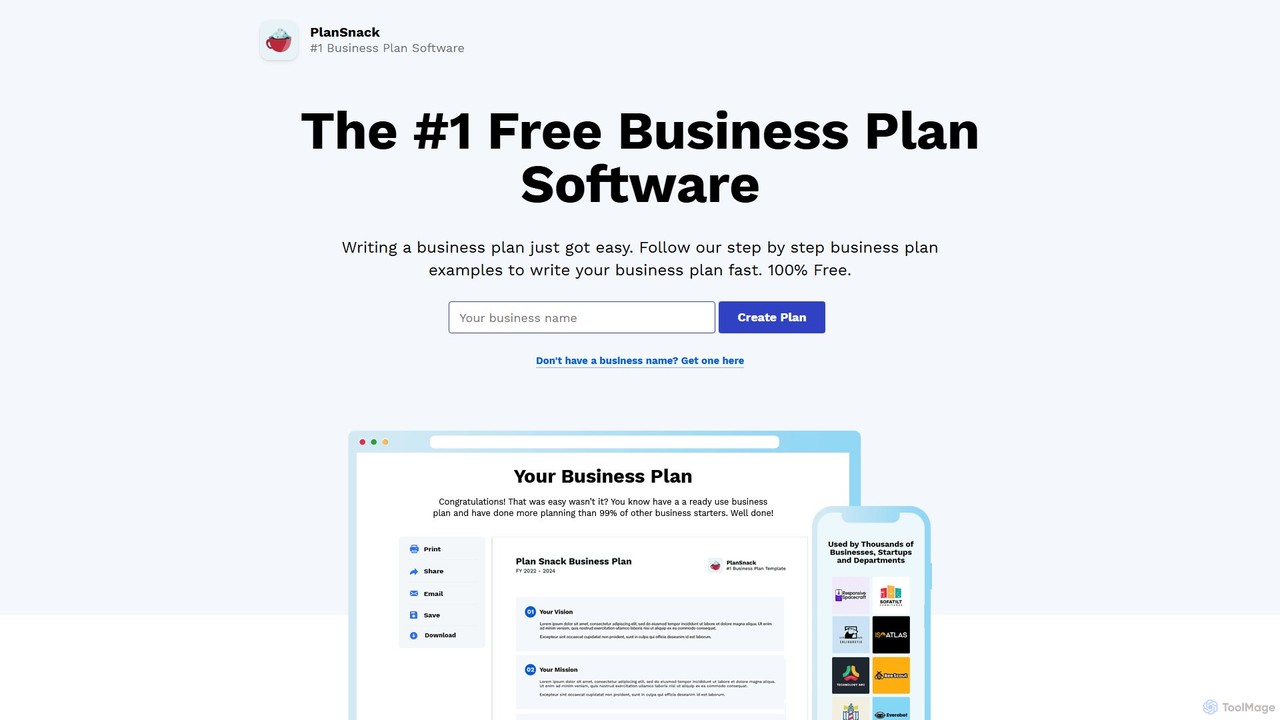
PlanSnack is a 100% free business plan software designed to help entrepreneurs and startups create a concise, one-page business plan in minutes. It simplifies the planning process with a guided, 5-step wizard and pre-written examples, eliminating the complexity of traditional business plans. Ideal for any new venture, from coffee shops to online stores, it allows you to focus on the essential elements needed to launch and grow your business successfully. Download, print, and share your plan for free.

Planning
Visits 3.7KFavorites 108Likes 105
DeckGuru
Freemium

DeckGuru

DeckGuru is an AI-powered tool that provides instant, actionable feedback on your pitch decks. Designed for entrepreneurs, it analyzes your presentation for clarity, structure, and investor appeal, helping you refine your pitch before sending it to investors.

Analytics
Visits 3.3KFavorites 99Likes 94
CaseGenius
Freemium

CaseGenius

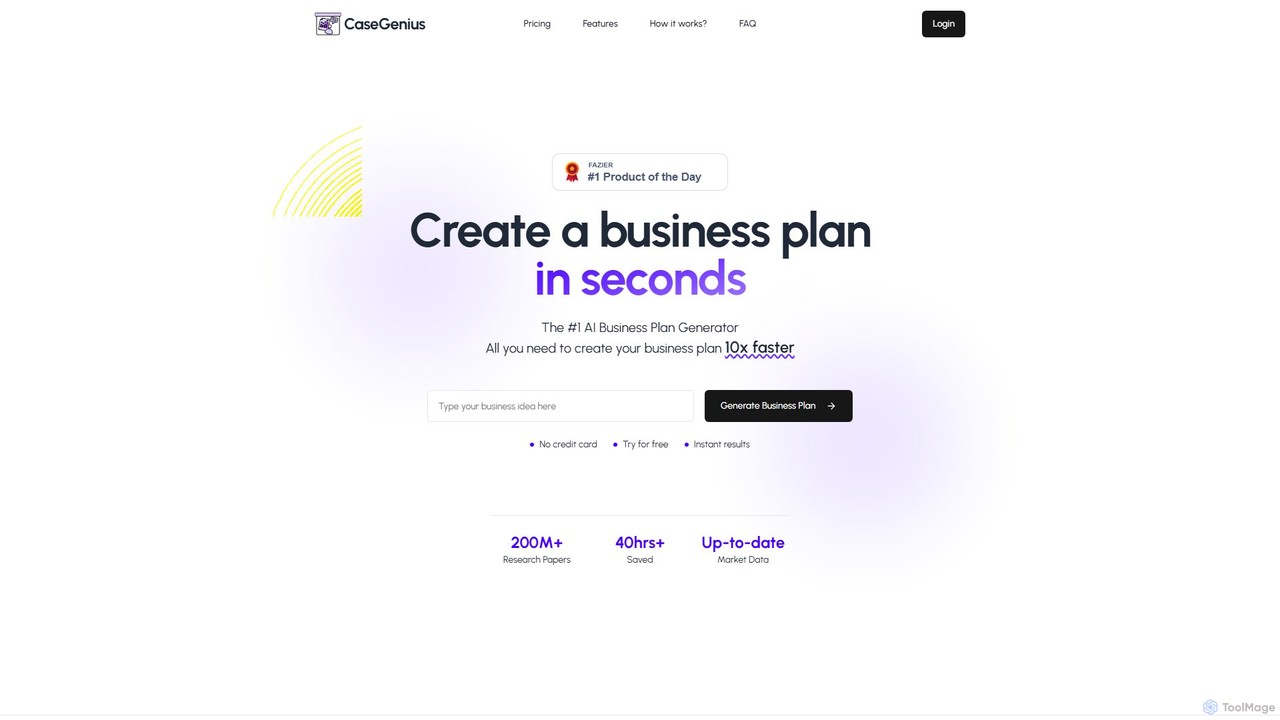
CaseGenius is an AI-powered business plan generator that creates comprehensive, data-backed business plans in minutes. It automates market research, financial analysis, and data visualization by leveraging real-time data from sources like SEC filings, academic papers, and market reports, saving users over 40 hours of manual work per plan.

Startups
Visits 3.4KFavorites 117Likes 118
Use Melville
Freemium

Use Melville

Use Melville is an AI-powered legal tech platform that simplifies business formation and compliance. It provides entrepreneurs with personalized, step-by-step guidance for starting an LLC, automates legal document generation, and offers a comprehensive knowledge base on state-specific regulations, making the startup process efficient and accessible.

Startups
Visits 3.4KFavorites 121Likes 126
Venturekit
Paid

Venturekit

Venturekit is an AI-powered platform that helps entrepreneurs and small business owners create comprehensive, professional business plans. It simplifies the complex process of business planning, market analysis, and financial projections, enabling users to launch and grow their ventures successfully.

Planning
Visits 59KFavorites 115Likes 109
businessplanfactory
Freemium

businessplanfactory

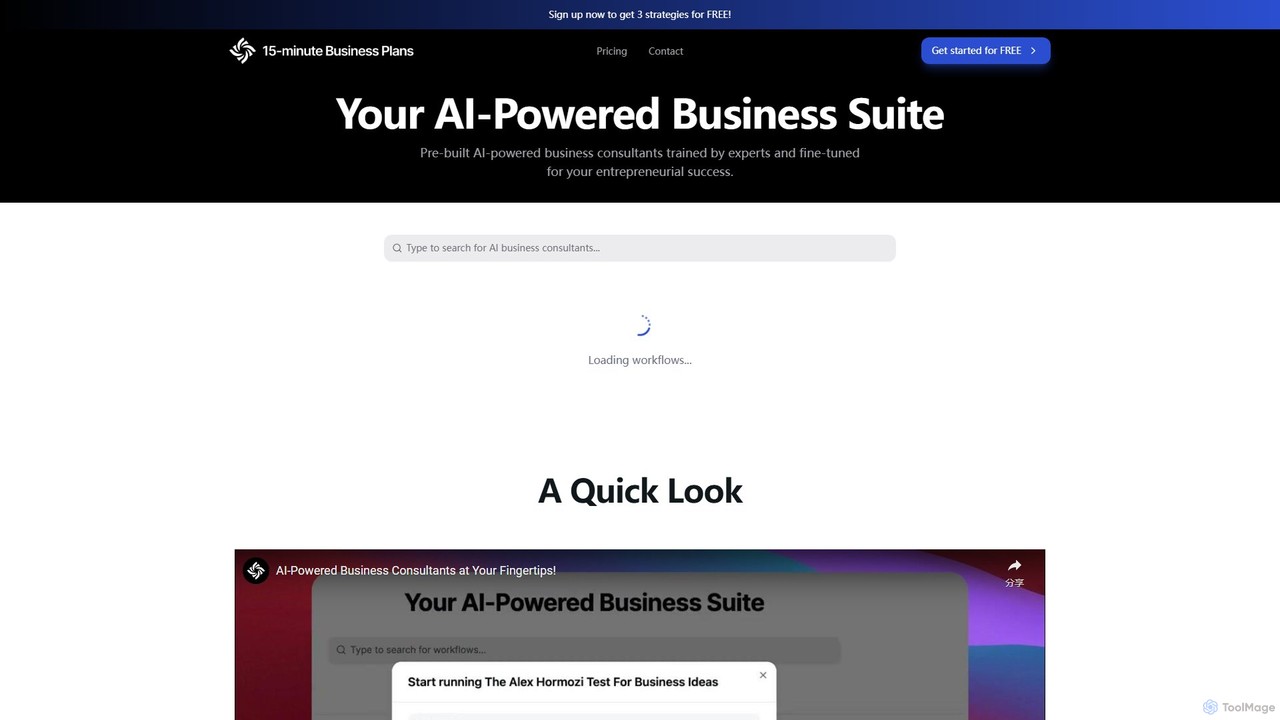
An AI-powered business suite that enables entrepreneurs to create comprehensive, expert-level business plans in just 15 minutes. Trained by serial entrepreneur Marc Kramer, it provides guided workflows to develop strategies for funding, growth, and new ventures.

Planning
Visits 3.6KFavorites 119Likes 105
startuptools.ai
Freemium

startuptools.ai

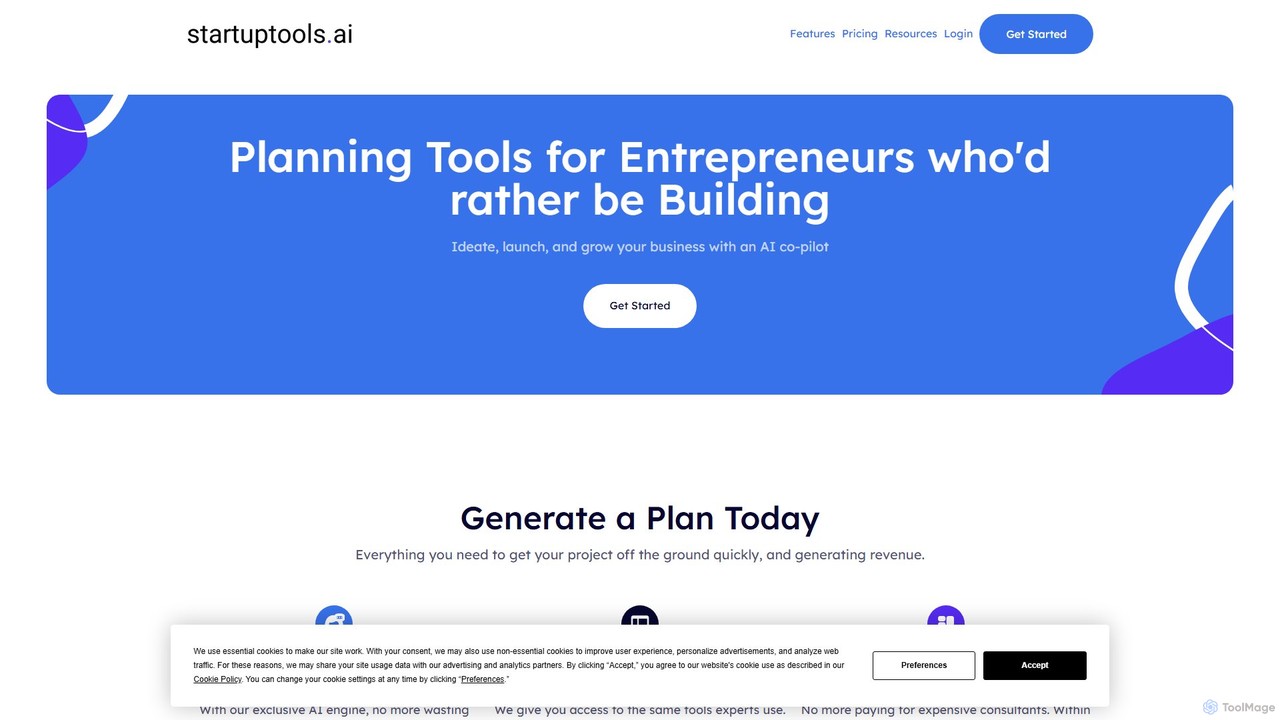
startuptools.ai is an AI-powered platform designed for entrepreneurs and innovators to generate comprehensive business plans in minutes. It streamlines the idea-to-execution journey by automating the creation of crucial documents like executive summaries, SWOT analyses, marketing plans, and pitch decks. This allows founders to save time and resources, focusing on building their business rather than on paperwork.

Planning
Visits 4.8KFavorites 109Likes 121

About Startups

AI tools for startups are specialized solutions designed to empower new businesses by streamlining operations, accelerating growth, and optimizing resource allocation. These tools leverage artificial intelligence to automate repetitive tasks, provide data-driven insights, and enhance decision-making across various business functions, enabling lean teams to achieve more with limited resources. They are crucial for early-stage companies aiming for rapid scalability and sustainable development.

Core Features

  • Automated Marketing & Sales: AI-driven lead generation, personalized outreach, content creation, and social media management to acquire and retain customers efficiently.
  • Financial Management & Forecasting: AI for budget tracking, cash flow prediction, expense categorization, and generating insights for fundraising and financial health.
  • Operational Efficiency: AI-powered chatbots for customer support, intelligent HR tools for recruitment, and project management assistants to boost productivity.
  • Market Research & Product Development: AI for analyzing market trends, validating product ideas, gathering customer feedback, and accelerating innovation cycles.

Applicable Scenarios

Early-stage companies with lean teams utilize these tools to automate core business processes, from customer acquisition and support to financial oversight. Founders and small business owners leverage AI to gain competitive intelligence, optimize marketing spend, and make informed strategic decisions without extensive manual effort or large dedicated departments.

How to Choose

When selecting AI tools for a startup, prioritize solutions that offer scalability, seamless integration with existing platforms, and a clear return on investment. Evaluate ease of use, cost-effectiveness, and the specific features that address your most pressing business challenges, such as customer acquisition, financial planning, or operational automation. Data security and compliance are also critical considerations.

Featured tool rankings

Startups use cases

1

Automated Lead Generation & Sales Outreach

For early-stage sales teams, AI tools automate the identification of high-potential leads and personalize outreach campaigns. A startup can use AI to analyze market data, segment prospects, draft tailored email sequences, and schedule follow-ups, significantly reducing manual effort and accelerating the sales pipeline. This allows small teams to engage a larger volume of potential customers efficiently.

2

Streamlined Financial Planning & Budgeting

Startup founders often manage tight budgets. AI financial tools help by automatically categorizing expenses, tracking cash flow in real-time, and generating accurate financial forecasts. This enables founders to monitor spending patterns, identify areas for cost reduction, and make informed decisions about resource allocation, crucial for maintaining financial health and attracting investors.

3

Efficient Customer Support with AI Chatbots

To provide 24/7 support without a large team, startups deploy AI chatbots. These bots handle common customer inquiries, provide instant answers to FAQs, and guide users through basic troubleshooting. This frees up human support agents to focus on complex issues, improving customer satisfaction and reducing operational costs for the startup.

4

Data-Driven Market Research & Competitor Analysis

Product managers and strategists in startups use AI to quickly gather and analyze vast amounts of market data, customer feedback, and competitor activities. AI tools can identify emerging trends, pinpoint unmet customer needs, and assess competitor strengths and weaknesses, providing critical insights for product development and market positioning without extensive manual research.

5

Personalized Marketing Content Creation

Marketing teams with limited resources leverage AI to generate diverse and personalized content. AI tools can draft social media posts, blog outlines, ad copy, and email newsletters based on target audience profiles and brand guidelines. This accelerates content production, ensures consistency, and helps startups engage their audience effectively across multiple channels.

6

Optimized HR & Recruitment Processes

For growing startups, efficient hiring is vital. AI HR tools automate resume screening, identify qualified candidates based on job requirements, and streamline interview scheduling. They can also personalize candidate communications, improving the candidate experience and reducing the time-to-hire, allowing startups to build their teams faster and more effectively.

Startups FAQ

What are AI tools for Startups?

AI tools for startups are specialized software solutions that utilize artificial intelligence to help new businesses automate tasks, gain insights, and optimize various operations. They are designed to address the unique challenges of early-stage companies, such as limited resources, rapid growth demands, and the need for data-driven decision-making. These tools span functions like marketing, finance, customer support, and product development.

How do AI tools help startups grow?

AI tools accelerate startup growth by enhancing efficiency and enabling data-driven strategies. They automate repetitive tasks, freeing up valuable human capital for strategic initiatives. By providing predictive analytics and insights into market trends, customer behavior, and financial performance, AI empowers startups to make informed decisions, optimize resource allocation, and scale operations more effectively, leading to faster market penetration and sustainable expansion.

What's the difference between general AI tools and AI tools specifically for startups?

While general AI tools offer broad functionalities, AI tools for startups are often tailored with specific considerations: cost-effectiveness, scalability, and ease of integration. They typically feature simpler interfaces, lower entry barriers, and pricing models suitable for lean budgets. Their focus is on solving common startup pain points like rapid customer acquisition, efficient resource management, and quick market validation, rather than complex enterprise-level solutions.

What are the key considerations when choosing AI tools for a startup?

When selecting AI tools, startups should prioritize solutions that align with their core business needs and budget. Key considerations include: Scalability (can it grow with your business?), Integration (does it connect with your existing tech stack?), Ease of Use (can your team adopt it quickly?), Cost-effectiveness (does it offer a strong ROI?), and Specific Features (does it solve your most critical problems, e.g., lead generation or financial forecasting?). Data security and vendor support are also crucial.

Can AI tools assist with fundraising for startups?

Yes, AI tools can significantly assist startups in their fundraising efforts. They can analyze market data to refine business models and pitch decks, identify potential investors whose portfolios align with the startup's industry, and even help forecast financial projections more accurately. Some tools also assist in crafting compelling narratives and presentations by analyzing successful pitches, thereby increasing the likelihood of securing investment.