ToolMage
Sign in

Best 35 Stock Market AI tools for Finance

Popular Stock Market AI tools in Finance include Public.com, TrendSpider, Tradytics, Prospero.ai, Incite AI, Value Sense, Fiscal.ai, finlo, Moontower, and Capital Companion, helping you work more efficiently.

Leeway
Freemium

Leeway

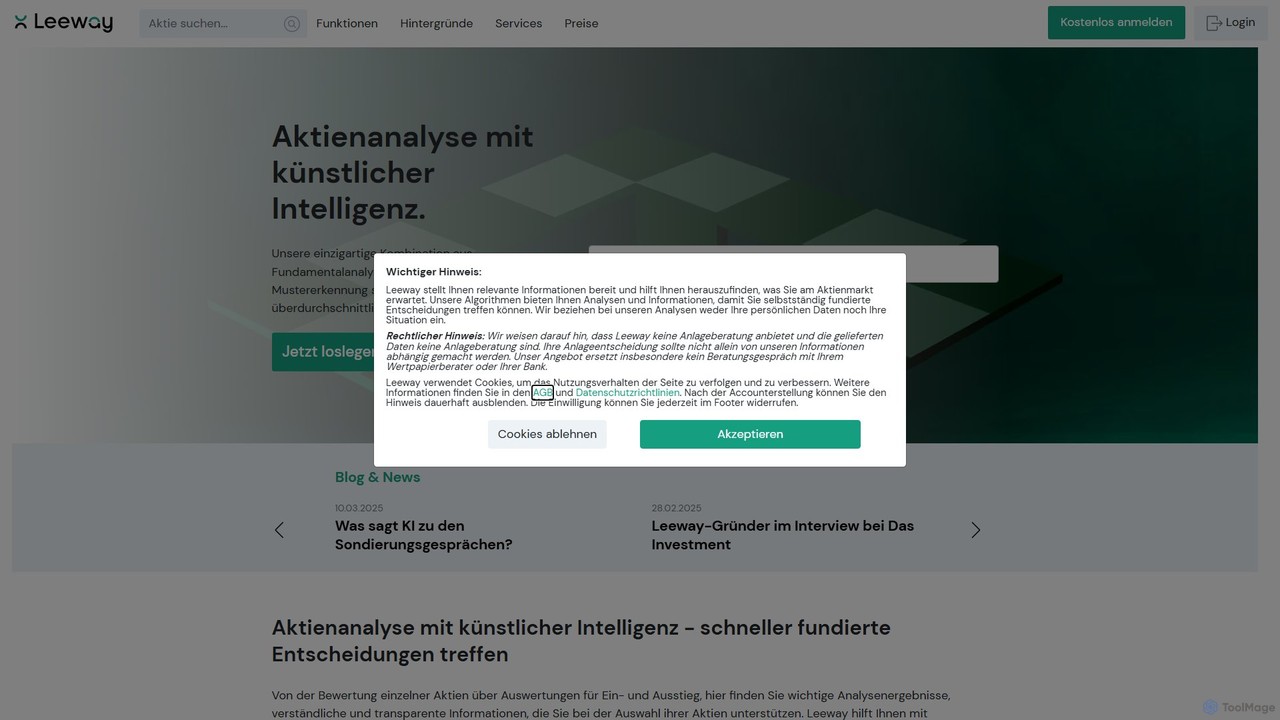
Leeway is an AI-powered stock analysis platform designed for private investors. It simplifies investment decisions by providing clear, data-driven insights. The tool analyzes over 25,000 global stocks using a proprietary "Market-Fit Score" based on 18 fundamental metrics. It also offers market sentiment analysis, crash warnings, and portfolio diversification support, helping users of all experience levels to invest more confidently and strategically.

Investing
Visits 9.7KFavorites 185Likes 167
Candlestick
Paid

Candlestick

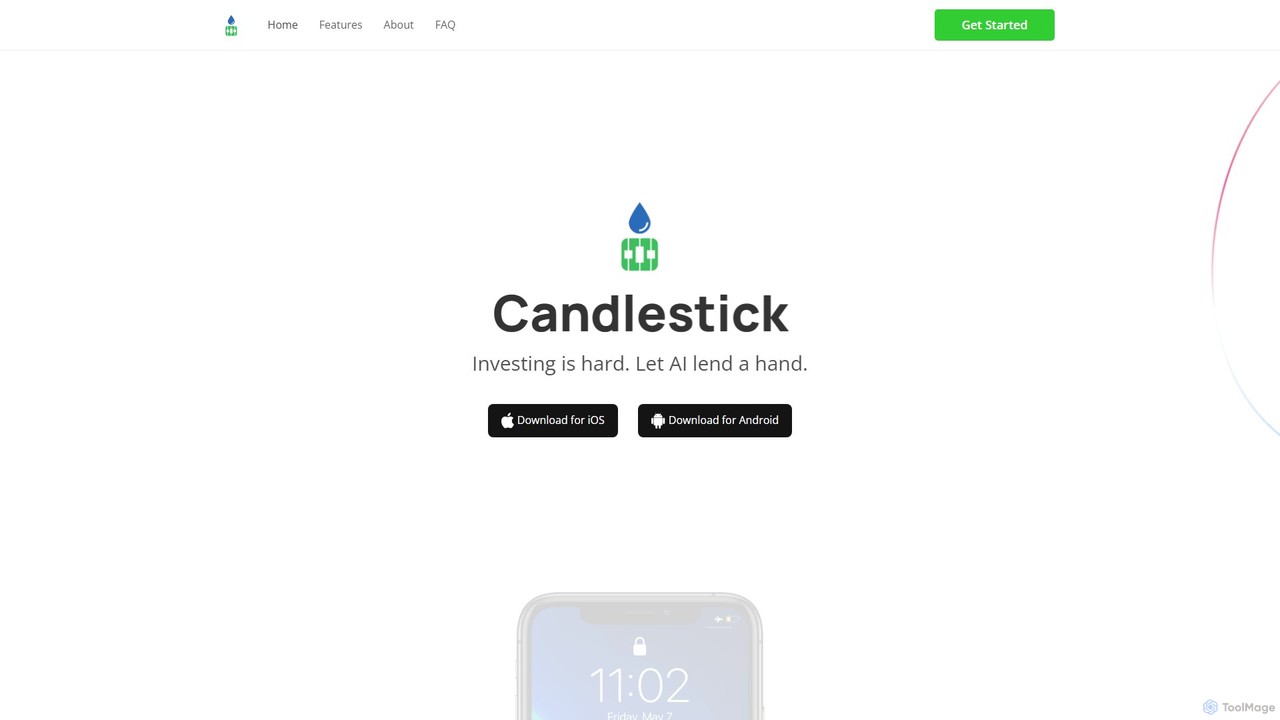
Candlestick is an AI-powered investment platform designed to help investors make smarter, data-driven decisions. As an SEC-registered investment advisor, it provides AI-generated stock recommendations, in-depth market analysis, and portfolio management tools. The platform leverages advanced algorithms to analyze market data, identify trends, and offer actionable insights for both novice and experienced investors.

Investing
Visits 9.2KFavorites 149Likes 158
Tradytics
Freemium

Tradytics

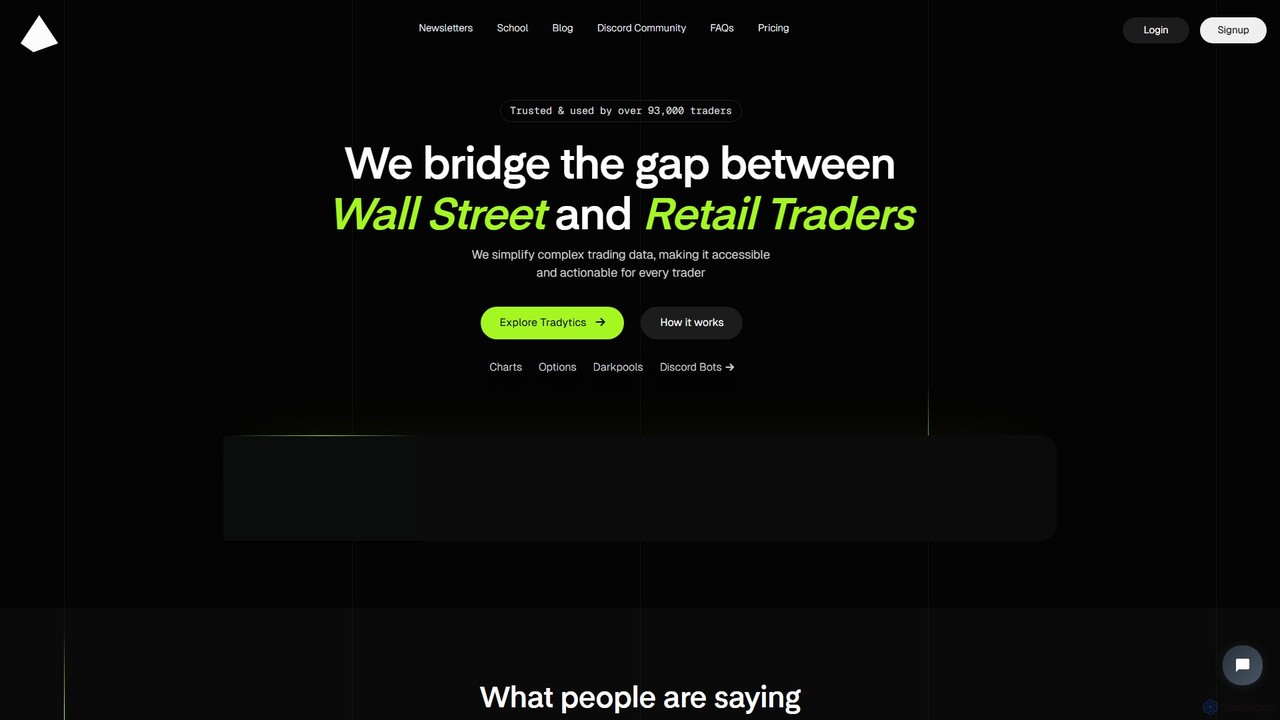
Tradytics is an AI-powered trading analytics platform that provides retail traders with institutional-grade data and actionable insights. It simplifies complex market information, including options flow, dark pool data, and AI-generated trade ideas, to help traders find their edge. The platform is accessible via web, mobile apps, and Discord bots.

Stock Market
Visits 127.5KFavorites 116Likes 123
Finroo
Freemium

Finroo

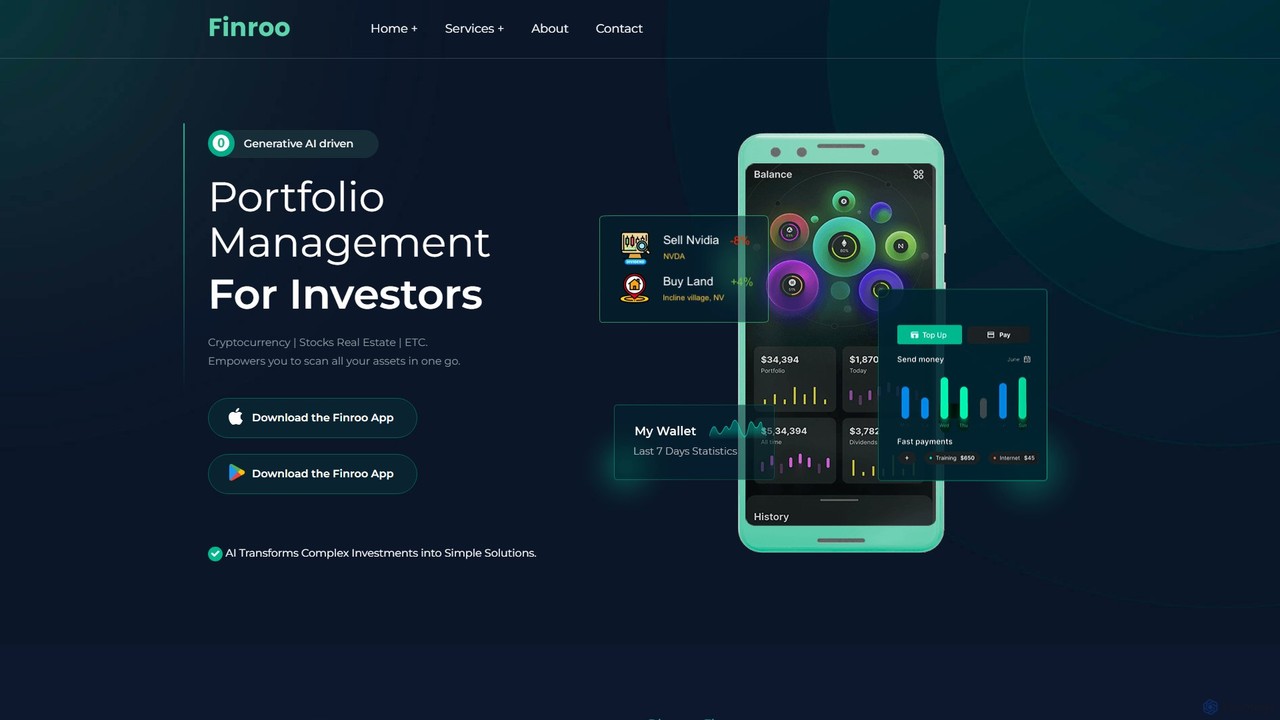
Finroo is an AI-powered investment platform that democratizes trading across stocks, crypto, real estate, and derivatives. It leverages a generative AI engine and a proprietary neural network to analyze market data, social sentiment, and news, providing users with simplified, actionable insights for maximizing returns.

Cryptocurrency
Visits 5.9KFavorites 160Likes 155
stocknewsai.com
Freemium

stocknewsai.com

An AI-powered platform that analyzes and summarizes global stock market news, providing investors with real-time sentiment analysis, trend identification, and personalized insights to make informed, data-driven trading decisions.

Stock Market
Visits 6KFavorites 132Likes 126
Capital Companion
Freemium

Capital Companion

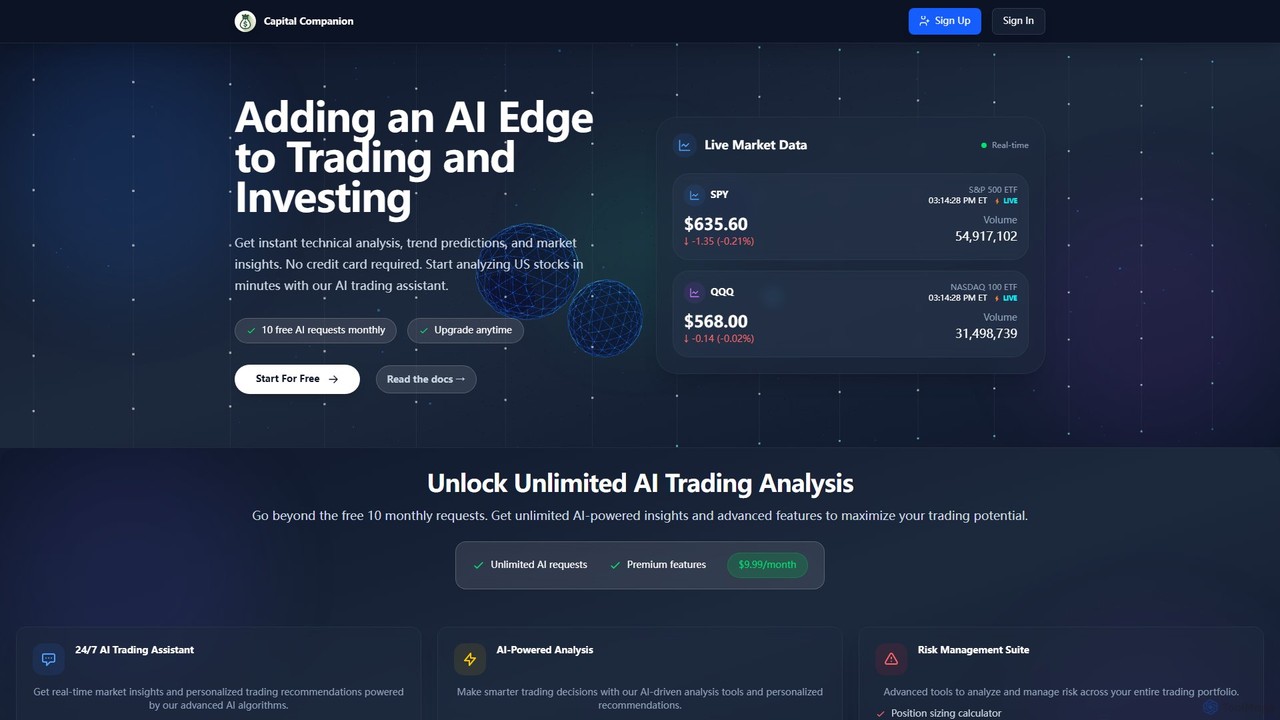
Capital Companion is an AI-powered trading and investing assistant designed for retail traders. It provides instant technical analysis, trend predictions, and real-time market insights for US stocks. The platform acts as an affordable alternative to enterprise-grade terminals, offering a suite of tools for analysis, risk management, and portfolio optimization to help users make smarter, data-driven trading decisions.

Investing
Visits 15.1KFavorites 147Likes 138
Raguie

Raguie

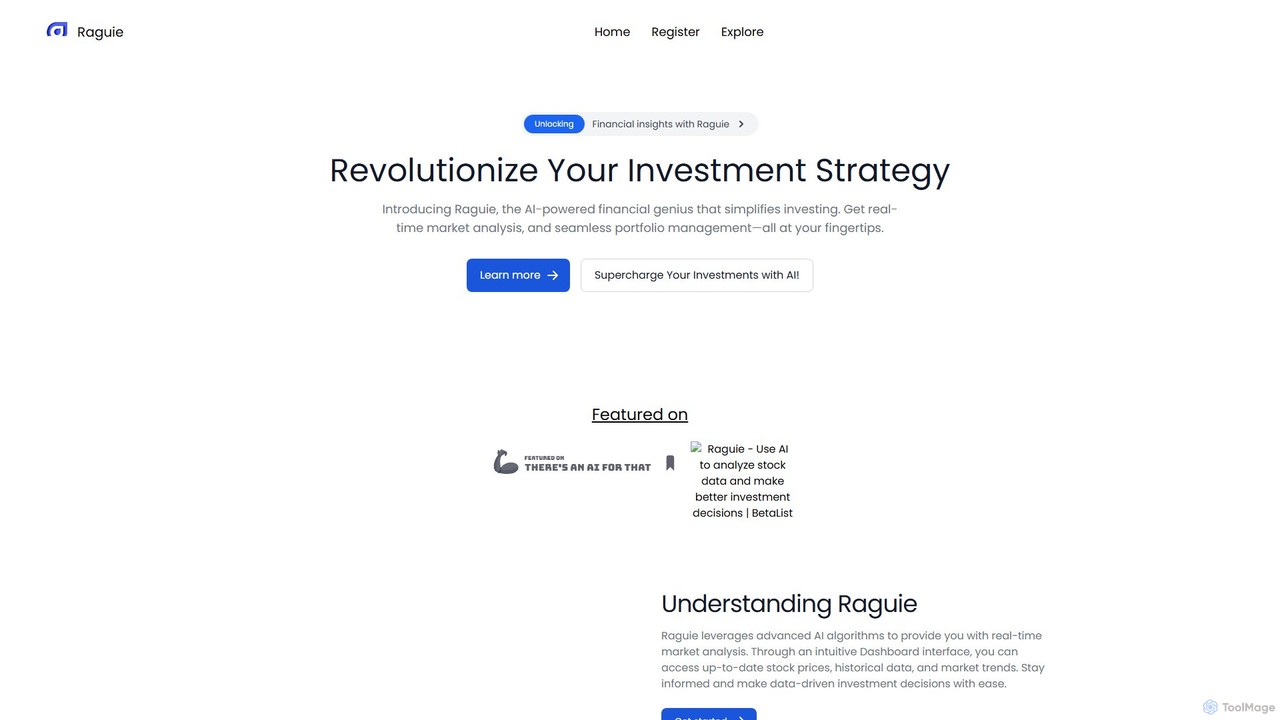
Raguie is an AI-powered financial assistant designed to simplify investing. It provides real-time market analysis, personalized portfolio monitoring, and actionable insights by analyzing financial data, news, and social media trends. It empowers investors of all levels to make informed, data-driven decisions through an intuitive dashboard and chat interface.

Investing
Visits 5.9KFavorites 111Likes 117
Borea AI
Freemium

Borea AI

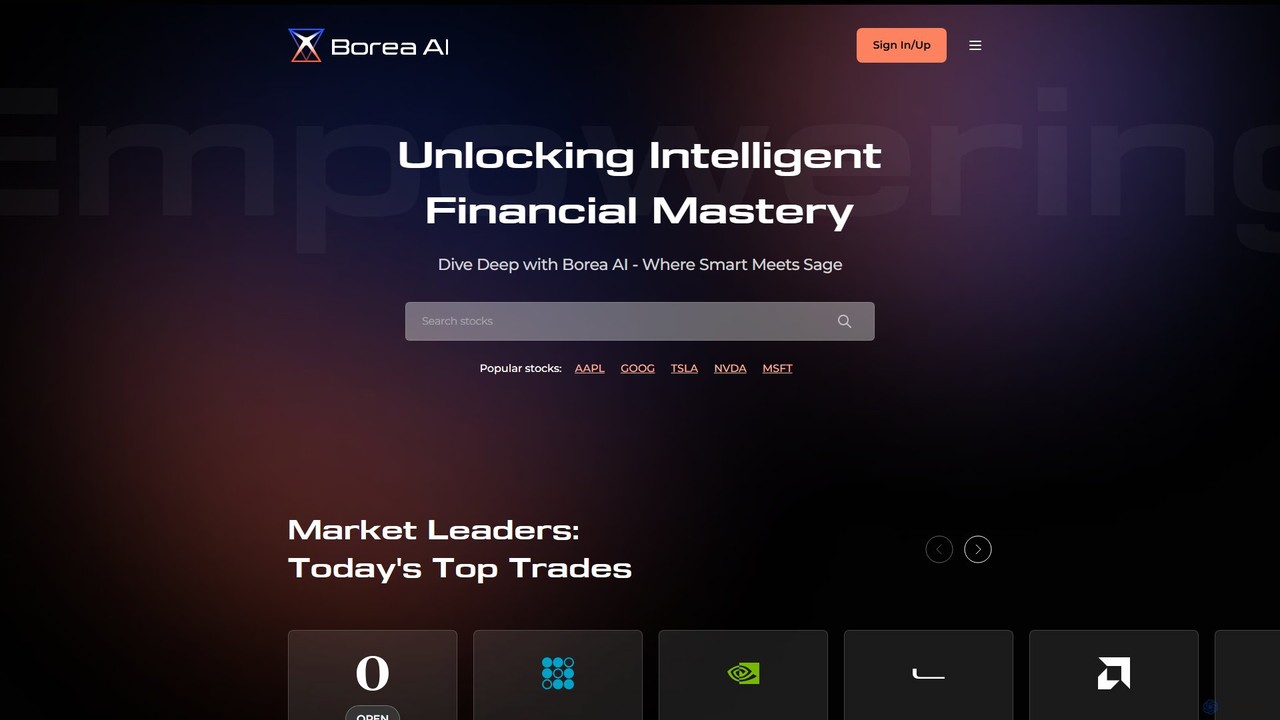
Borea AI is an AI-powered financial platform designed to empower retail investors. It provides institutional-grade tools, including AI-driven stock ratings, price predictions, and a financial assistant named BoreaGPT. By analyzing vast datasets like company financials, news, and market sentiment, Borea AI simplifies complex information, making it accessible for both novice and experienced investors to make informed decisions and achieve their financial goals.

Investing
Visits 5.9KFavorites 158Likes 146
ceobuysell
Paid

ceobuysell

ceobuysell is an AI-powered platform that tracks real-time stock transactions made by company CEOs. It provides instant notifications and detailed analysis, allowing individual investors to gain an edge by trading alongside insiders and making informed decisions based on executive confidence.

Investment
Visits 5.9KFavorites 119Likes 120
ai_stock_predictions
Freemium

ai_stock_predictions

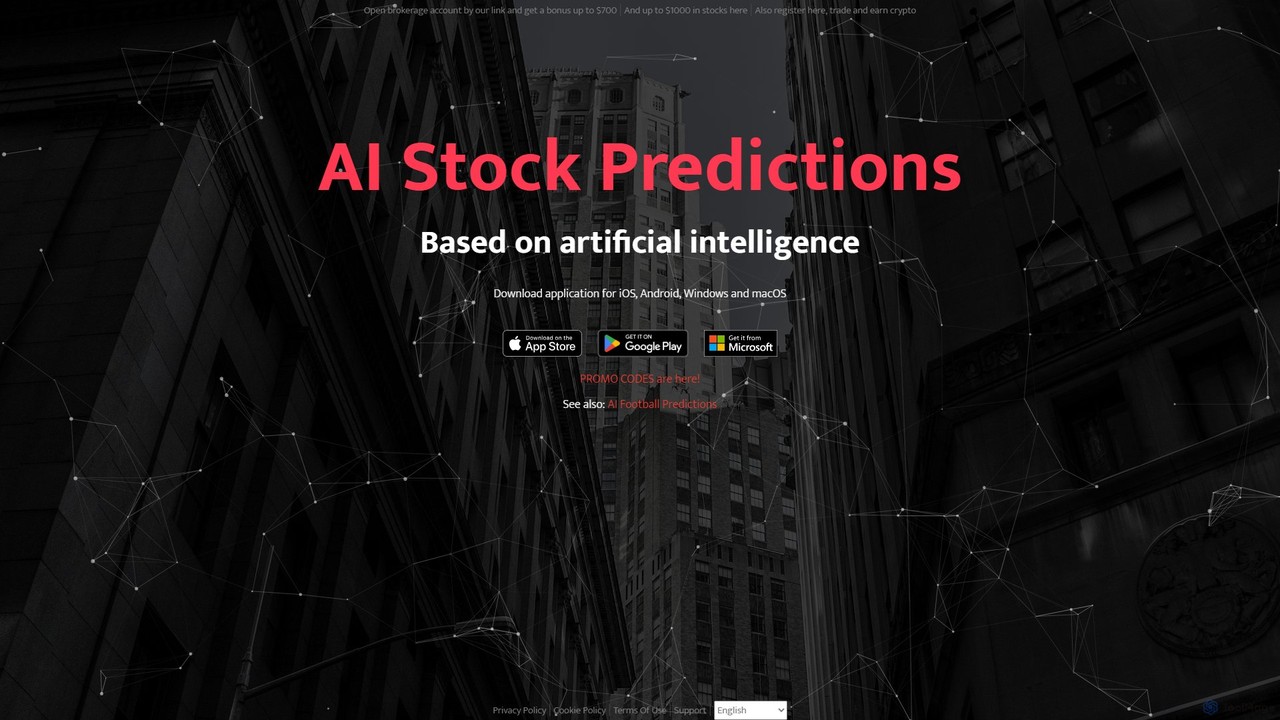
An AI-powered platform providing stock market predictions, trading signals, and securities forecasts. Available on iOS, Android, Windows, and macOS, it helps investors make data-driven decisions by leveraging artificial intelligence to analyze market trends.

Investing
Visits 7.6KFavorites 130Likes 122
feetr
Paid

feetr

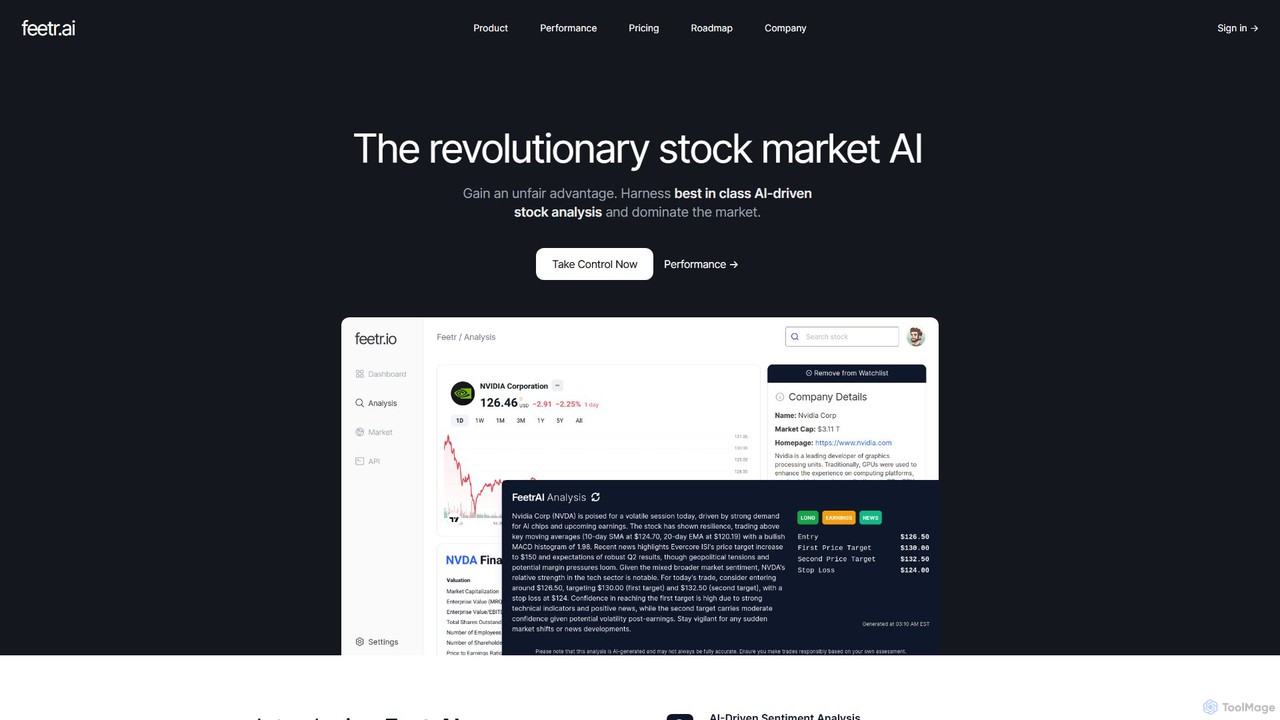
Feetr is an advanced AI-powered platform for stock market analysis. It provides traders with a competitive edge by delivering real-time, data-driven insights, global sentiment analysis, and precise price targets. The tool is designed for retail, whale, and institutional traders.

Stock Market
Visits 5.9KFavorites 151Likes 155

About Stock Market

AI Stock Market tools are a specialized category of financial software that leverages artificial intelligence to analyze market data, predict trends, and automate trading decisions. These tools utilize machine learning models, natural language processing (NLP), and quantitative analysis to process vast amounts of information, including price movements, financial news, and economic indicators. They empower investors and traders to identify potential opportunities, manage risk, and execute strategies with greater speed and precision. Unlike general finance tools, they are specifically designed for the high-velocity, data-intensive environment of equity markets.

Core Features

  • Predictive Market Analysis: Uses historical data and machine learning to forecast potential stock price movements.
  • Algorithmic Trading: Automates the execution of buy and sell orders based on predefined rules and AI signals.
  • Sentiment Analysis: Scans news, social media, and reports to gauge market sentiment towards specific stocks.
  • Portfolio Optimization: Recommends asset allocation adjustments to maximize returns for a given risk level.
  • Risk Assessment: Identifies and quantifies potential risks in individual stocks or entire portfolios using advanced models.

Use Cases

These tools are widely used by retail investors, quantitative analysts (quants), hedge fund managers, and financial advisors. They are applied in day trading to capture short-term fluctuations, in long-term investment strategies to identify undervalued assets, and in institutional portfolio management for sophisticated risk control and performance optimization.

How to Choose

When selecting an AI Stock Market tool, consider the quality and latency of its data feeds, the level of strategy customization it allows, and its integration capabilities with your brokerage account. Also, evaluate the tool's technical complexity—whether it's suited for beginners with visual interfaces or for advanced users requiring API access and coding environments.

Featured tool rankings

Stock Market use cases

1

Automated Day Trading for Retail Investors

A retail trader uses an AI tool to deploy an automated strategy. The tool connects to their brokerage account, monitors specific tech stocks for volatility patterns, and executes small, frequent trades throughout the day based on its predictive model. This approach aims to capture minor price fluctuations without requiring constant manual oversight, allowing the trader to manage their positions more efficiently.

2

Market Sentiment Analysis for Investment Research

A financial analyst uses an AI platform to analyze sentiment across thousands of news articles, earnings call transcripts, and social media posts related to an industry. The tool provides a sentiment score and identifies key themes, helping the analyst gauge public perception and uncover risks or opportunities not yet fully reflected in the stock price, leading to more informed investment theses.

3

AI-Powered Portfolio Rebalancing

A financial advisor manages multiple client portfolios using an AI tool that continuously monitors asset allocation against each client's risk tolerance. When market movements cause a portfolio to drift from its target allocation, the tool automatically suggests or executes rebalancing trades. This ensures portfolios remain aligned with long-term goals while optimizing for factors like tax efficiency.

4

Quantitative Strategy Backtesting

A quantitative analyst develops a new trading hypothesis. They use an AI tool with extensive historical market data to backtest the strategy over several years. The platform simulates trades based on the proposed logic, calculates key performance metrics like Sharpe ratio and maximum drawdown, and helps refine the algorithm's parameters before it is deployed with real capital, reducing the risk of unforeseen losses.

5

Identifying Undervalued Stocks with AI Screeners

A long-term value investor uses an AI-powered stock screener. Instead of relying on simple filters like P/E ratio, the tool uses machine learning to analyze hundreds of fundamental and technical indicators simultaneously. It identifies stocks that are potentially undervalued relative to their peers and historical performance, presenting a ranked list of investment candidates for deeper due diligence.

6

Risk Management for an Institutional Portfolio

A portfolio manager at a hedge fund uses an AI risk assessment tool to run stress tests on their portfolio. The system simulates the impact of various macroeconomic events, such as sudden interest rate hikes or geopolitical conflicts, on their holdings. This analysis identifies concentrated risks and suggests potential hedging strategies, helping the fund to mitigate potential losses and protect capital more effectively.

Stock Market FAQ

What are AI Stock Market tools?

AI Stock Market tools are software applications that use artificial intelligence, particularly machine learning, to analyze stock market data. They help investors make more informed decisions by providing predictive analytics, automating trades, and analyzing market sentiment. Unlike general financial software, they are specifically built to handle the complexity and high speed of equity trading environments.

How do I choose the right AI Stock Market tool?

Choosing the right tool depends on your needs. Consider these key factors:

  • Experience Level: Select a tool that matches your expertise, from user-friendly interfaces for beginners to advanced APIs for quantitative analysts.
  • Trading Strategy: Ensure the tool supports your style, whether it's day trading, swing trading, or long-term value investing.
  • Data Quality & Speed: Verify the sources and latency of the market data provided, as real-time data is crucial for many strategies.
  • Brokerage Integration: Check for seamless connectivity with your trading account to enable automated execution.
What's the difference between AI Stock Market tools and traditional charting software?

Traditional charting software provides historical data and technical indicators (like moving averages) for manual analysis by a trader. AI Stock Market tools go a step further. They use machine learning models to analyze this data, identify complex patterns invisible to the human eye, generate predictive signals, and in some cases, automate trading based on those signals. Essentially, AI adds a layer of intelligent analysis and automation on top of data visualization.

Can AI tools guarantee profits in the stock market?

No, no tool can guarantee profits in the stock market, as it is inherently unpredictable. AI tools are powerful analytical aids that process vast amounts of data to identify probabilities and potential opportunities based on historical patterns. However, they are still subject to market volatility and unforeseen 'black swan' events. They should be used as one component of a well-rounded investment strategy that includes robust risk management.

Are AI Stock Market tools suitable for beginners?

Many AI Stock Market tools are designed with beginners in mind. These platforms often feature intuitive interfaces, pre-built trading strategies, educational resources, and clear data visualizations. They can help newcomers understand market dynamics and execute data-driven trades without needing deep expertise in quantitative analysis. However, it is crucial for beginners to start with a small amount of capital, understand the underlying strategies, and be fully aware of the risks involved.