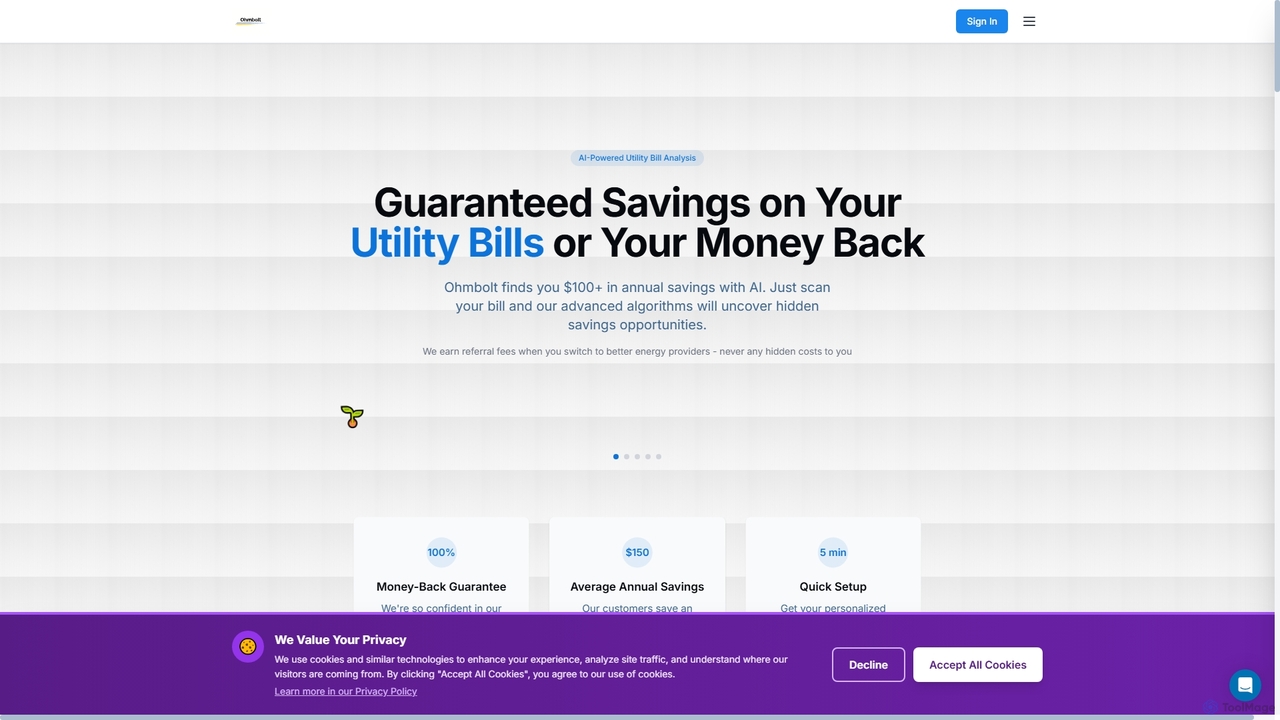
Utility Management tools are AI-powered solutions designed to streamline the tracking, analysis, and optimization of recurring service expenses within financial management. These tools leverage AI to automate bill aggregation, predict usage patterns, and identify cost-saving opportunities across various utilities like electricity, water, gas, and internet. They empower users to gain granular control over their operational expenditures, ensuring financial efficiency and informed decision-making. By centralizing utility data, they transform complex billing cycles into manageable, transparent financial insights.
Core Features
- Automated Bill Aggregation: Automatically collects and organizes utility bills from multiple providers into a single dashboard.
- Usage Pattern Analysis: AI analyzes historical consumption data to predict future usage and identify anomalies or potential waste.
- Cost Optimization Recommendations: Provides data-driven suggestions for reducing utility expenses, such as identifying cheaper plans or energy-saving tips.
- Payment Scheduling & Alerts: Automates payment reminders and schedules, helping avoid late fees and ensuring timely settlements.
- Budgeting & Forecasting: Integrates utility costs into broader financial budgets and forecasts, offering a comprehensive spending overview.
Applicable Scenarios
Small to Medium Businesses (SMBs) with multiple locations can centralize bill management, track consumption across sites, and optimize operational costs. Property managers overseeing numerous residential or commercial properties can efficiently monitor and manage utility expenses for each unit. Households and individuals seeking to reduce monthly expenses can use these tools to track energy usage, compare providers, and identify areas for savings.
How to Choose
When selecting a tool, assess its integration capabilities with existing accounting software or financial platforms for seamless data flow. Verify the scope of utility coverage, ensuring it supports your specific utility types and local providers. Look for robust reporting and analytics features that offer customizable dashboards and actionable insights. Finally, evaluate the level of automation for bill aggregation, payment scheduling, and anomaly detection to minimize manual effort.