ToolMage
Sign in

Best 1 Vehicle Valuation AI tools for Finance

Popular Vehicle Valuation AI tools in Finance include valuemycar, helping you work more efficiently.

valuemycar
Free

valuemycar

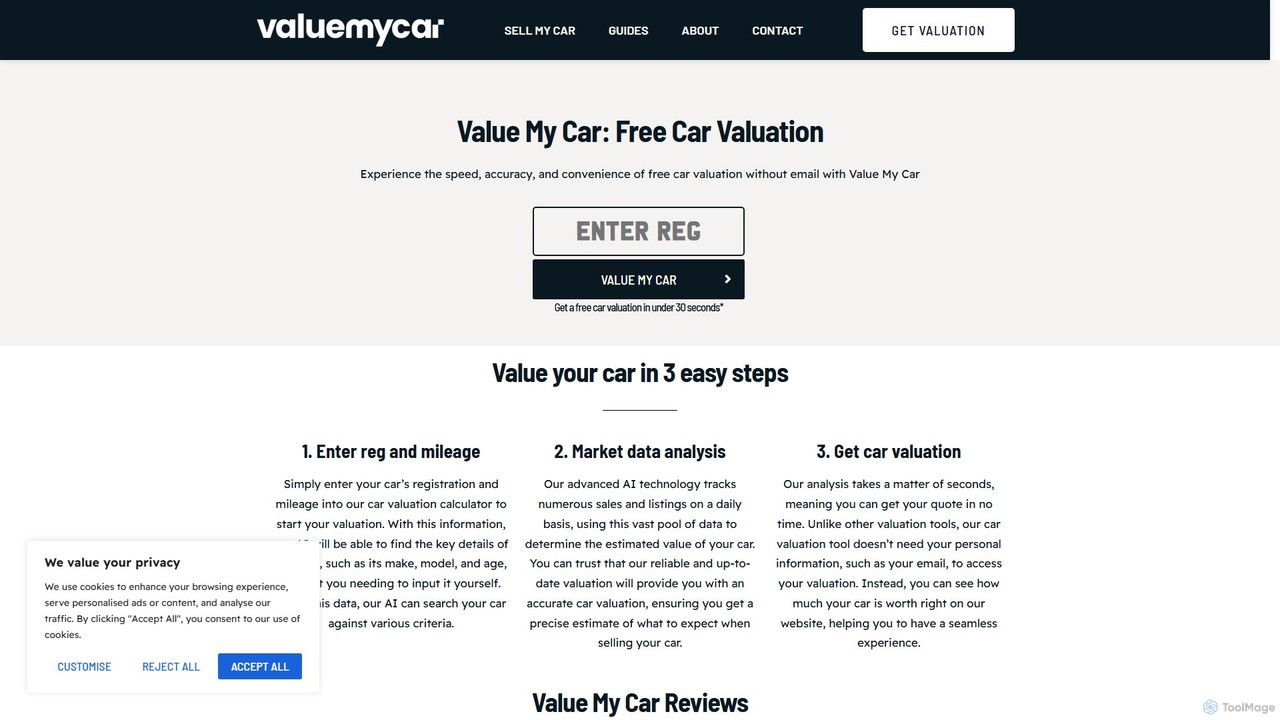
valuemycar is a free, AI-powered tool for instant car valuations in the UK. Simply enter your vehicle's registration and mileage to receive an accurate, data-driven estimate in under 30 seconds. The service is privacy-focused, requiring no email or personal information to view your car's market value, helping you make informed decisions when selling or buying.

Price Comparison
Visits 9.8KFavorites 149Likes 143

About Vehicle Valuation

Vehicle Valuation tools are AI-powered platforms designed to accurately estimate the market value of vehicles. Leveraging advanced algorithms, big data analytics, and machine learning, these tools analyze vast datasets including sales records, market trends, vehicle specifications, and condition reports. They provide rapid, objective, and data-driven valuations essential for buying, selling, insuring, or financing vehicles, offering transparency and efficiency in the automotive market.

Core Features

  • Automated Data Analysis: Processes extensive vehicle data points like make, model, year, mileage, and trim level.
  • Market Trend Integration: Incorporates real-time and historical market data, including supply-demand dynamics and regional pricing.
  • Condition-Based Adjustments: Allows for input of vehicle condition (e.g., damage, upgrades) to refine valuation accuracy.
  • Predictive Modeling: Utilizes machine learning to forecast future value depreciation or appreciation.
  • Report Generation: Produces detailed valuation reports with supporting data and methodology.

Use Cases

These tools are crucial for various stakeholders in the automotive and financial sectors. Car dealerships use them for inventory pricing and trade-in offers, while insurance companies rely on them for claims assessment. Lenders leverage these platforms for collateral valuation in auto loans, ensuring accurate risk assessment and fair financing terms.

How to Choose

When selecting a Vehicle Valuation tool, prioritize data accuracy and source reliability, ensuring it draws from comprehensive and up-to-date market information. Consider the tool's customization options for condition adjustments and specific market segments. Evaluate its integration capabilities with existing systems and the clarity of its valuation methodology and reporting features.

Vehicle Valuation use cases

1

Streamlining Dealership Trade-in Appraisals

Automotive dealerships utilize AI vehicle valuation tools to quickly and consistently appraise trade-in vehicles. Sales managers input basic vehicle details and condition, receiving an instant, data-backed market value. This accelerates the sales process, ensures competitive offers, and helps maintain profitable inventory turnover by providing objective pricing insights.

2

Accurate Insurance Claims Settlement

Insurance adjusters employ these tools to determine the fair market value of vehicles involved in accidents or theft for claims settlement. By inputting vehicle specifics and damage reports, the AI generates an unbiased valuation, facilitating quicker and more equitable payouts for policyholders and reducing disputes over vehicle worth.

3

Enhancing Auto Loan Underwriting

Financial institutions and lenders integrate vehicle valuation AI into their loan underwriting process. Before approving an auto loan, they assess the collateral's current and projected value to mitigate risk. The tool provides a reliable valuation, helping lenders set appropriate loan-to-value ratios and interest rates, ensuring secure lending practices.

4

Empowering Private Car Sellers

Individual car sellers use these platforms to get an objective estimate of their vehicle's worth before listing it for sale. By understanding the fair market price, sellers can set a competitive asking price, attract more serious buyers, and negotiate confidently, avoiding underpricing or overpricing their vehicle.

5

Optimizing Fleet Management Decisions

Fleet managers for businesses or rental companies leverage vehicle valuation tools to monitor the depreciation of their assets and inform decisions on vehicle acquisition and disposal. Regular valuations help identify optimal times for selling older vehicles and purchasing new ones, maximizing fleet value and minimizing operational costs.

6

Supporting Automotive Market Research

Market analysts and researchers use these tools to study trends in vehicle pricing, depreciation rates, and regional market variations. By analyzing aggregated valuation data, they can identify emerging patterns, assess the impact of economic factors on vehicle values, and provide strategic insights to manufacturers, dealers, and investors.

Vehicle Valuation FAQ

What are AI Vehicle Valuation tools?

AI Vehicle Valuation tools are software applications that use artificial intelligence, machine learning, and big data analytics to estimate a vehicle's market value. They process vast amounts of data, including sales records, market trends, and vehicle specifics, to provide objective and data-driven appraisals. These tools aim to offer transparency and efficiency in determining vehicle worth for various purposes.

How do AI Vehicle Valuation tools determine a car's value?

These tools determine value by analyzing multiple data points. They consider the vehicle's make, model, year, mileage, trim, and condition. Crucially, they integrate real-time market data, historical sales, regional demand, and economic indicators. AI algorithms then process these factors to identify patterns and predict a fair market price, often adjusting for specific features or damage.

How do AI Vehicle Valuation tools differ from traditional appraisal methods?

AI tools offer speed, objectivity, and data-driven insights compared to traditional methods. Traditional appraisals often rely on human expertise, manual data collection, and subjective judgment, which can be time-consuming and prone to bias. AI tools, conversely, process massive datasets instantly, providing consistent, unbiased valuations based on comprehensive market analysis, reducing human error and increasing efficiency.

Who benefits most from using Vehicle Valuation AI?

A wide range of users benefits, including car dealerships for trade-ins and inventory pricing, insurance companies for claims, and financial institutions for loan collateral assessment. Private sellers and buyers also gain from objective pricing insights, while fleet managers use them for asset management. Essentially, anyone needing a reliable, fast, and unbiased vehicle appraisal can benefit.

What factors should I consider when choosing an AI Vehicle Valuation tool?

When choosing, prioritize the accuracy and recency of the data sources the tool uses, ensuring it reflects current market conditions. Look for customization options that allow for detailed vehicle condition input. Consider its integration capabilities with your existing systems, the transparency of its valuation methodology, and the clarity and detail of the reports it generates. Cost and user-friendliness are also important.