
ToolMage
Sign in

Best 1 Elderly Care AI tools for Health

Popular Elderly Care AI tools in Health include MemoryLane, helping you work more efficiently.

MemoryLane
Freemium

MemoryLane

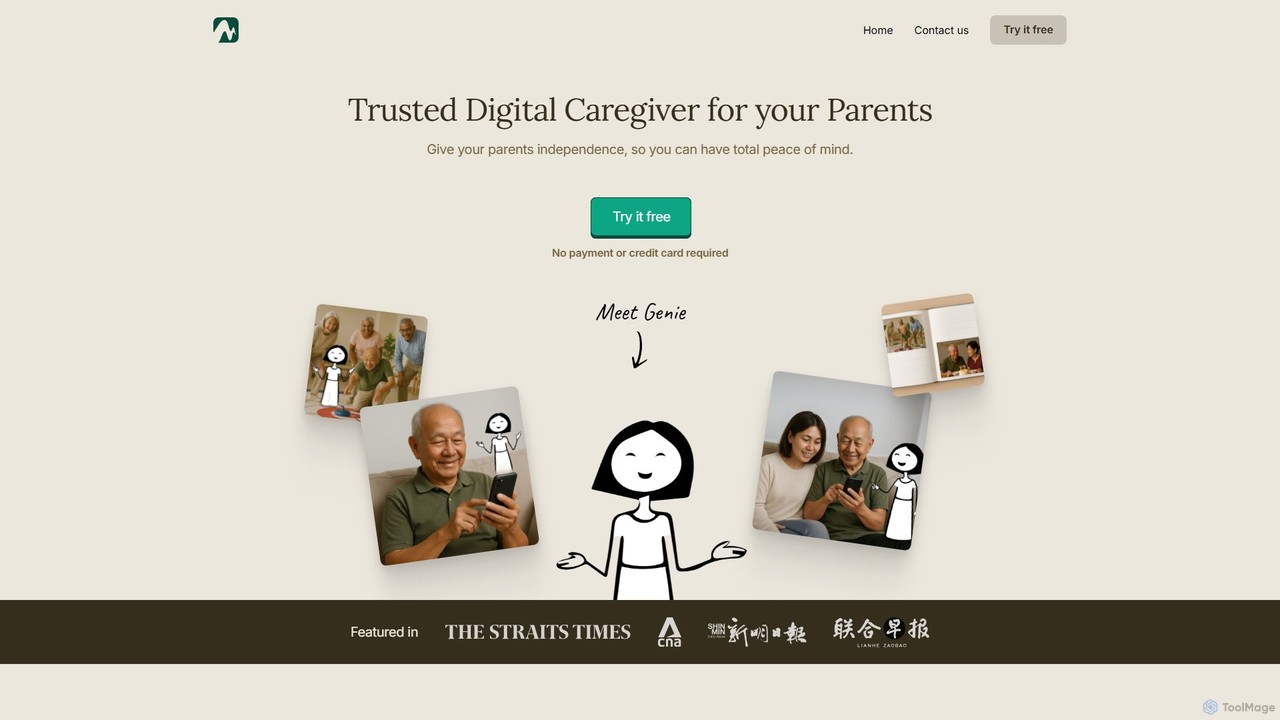
MemoryLane is an AI-powered digital caregiver designed for seniors. It provides on-screen tech support, scam protection, health monitoring, and companionship through an AI assistant named Genie. It empowers seniors to use technology independently while giving their families peace of mind through regular updates.

Elderly Care
Visits 7.2KFavorites 144Likes 134

About Elderly Care

AI Elderly Care tools are a specialized category of health technology that use artificial intelligence to support the safety, health, and well-being of seniors. These systems leverage sensors, machine learning, and natural language processing to provide remote monitoring, automated alerts, and social companionship. Their primary value lies in enabling older adults to live independently for longer while offering peace of mind to family members and caregivers. These tools can proactively identify potential health risks and facilitate timely interventions.

Core Features

  • Automated Fall Detection: Uses sensors or computer vision to identify falls and automatically alert caregivers or emergency services.
  • Medication Management: Provides intelligent reminders for medication schedules and can track adherence.
  • Behavioral Anomaly Detection: Learns a senior's daily routines and flags unusual patterns, such as prolonged inactivity, which may indicate a problem.
  • Voice-Activated Companionship: Offers conversational AI to reduce loneliness, answer questions, and control smart home devices.
  • Remote Vitals Monitoring: Integrates with health devices to track key metrics like heart rate, blood pressure, and sleep patterns.

Use Cases

These tools are widely used by family caregivers monitoring relatives living alone, in assisted living facilities to enhance resident safety, and by home care agencies to provide more efficient and proactive support. They are particularly valuable for managing chronic conditions and supporting individuals with mild cognitive impairment.

How to Choose

When selecting an AI Elderly Care tool, consider the specific needs of the senior, such as fall risk or social isolation. Evaluate the system's accuracy and reliability, especially for critical alerts. Prioritize user-friendliness for the senior and caregivers, robust data privacy policies, and the ability to integrate with existing emergency response services.

Elderly Care use cases

1

Remote Monitoring for Seniors Living Alone

A family caregiver uses an AI-powered system with discreet ambient sensors placed in their elderly parent's home. The system learns the parent's daily activity patterns. If it detects a significant deviation, like a lack of movement in the morning or a potential fall, it sends an immediate alert to the caregiver's phone. This provides peace of mind without using intrusive cameras, respecting the senior's privacy while ensuring their safety and allowing them to maintain independence.

2

Automated Medication Adherence Management

In an assisted living facility, staff use an AI-powered medication dispenser for residents. The device is programmed with each resident's schedule. At the correct time, it dispenses the pills and provides a visual and audible alert. If a dose is missed, the system automatically notifies the nursing station. This reduces the risk of medication errors, frees up staff time from manual reminders, and provides a detailed log of adherence for medical records.

3

AI Companionship to Combat Social Isolation

An elderly individual living alone interacts with a voice-activated AI companion, like a specialized smart speaker. They can ask it questions, request music from their youth, listen to audiobooks, or simply engage in conversation. The AI is designed to be empathetic and engaging. It also facilitates easy video calls with family, who can use a companion app to share photos that appear on the device's screen, helping the senior feel more connected to loved ones and reducing feelings of loneliness.

4

Proactive Fall Risk Assessment

A home care agency uses an AI tool that analyzes data from wearable sensors to assess a client's fall risk. The AI analyzes gait speed, balance, and stride length over time. If the algorithm detects a gradual decline in stability, it alerts the care manager. This allows the agency to proactively intervene with physical therapy recommendations or home modifications before a fall occurs, shifting from a reactive to a preventative care model.

5

Cognitive Health Monitoring and Engagement

A user engages with an AI-powered tablet application designed to support cognitive health. The app provides personalized brain games, puzzles, and memory exercises. The AI adjusts the difficulty based on performance, ensuring the user is challenged but not frustrated. It also tracks cognitive metrics over time, generating reports that can be shared with family or physicians to monitor for signs of cognitive decline, providing valuable early-stage data.

6

Wandering Detection for Dementia Care

For individuals with dementia who are at risk of wandering, caregivers can use AI-powered GPS tracking devices. These tools allow for the creation of 'safe zones' around the home. If the person wearing the device crosses the boundary of a safe zone, the AI system sends an instant alert to multiple caregivers. This technology provides a crucial safety net, allowing for greater freedom of movement within a secure area while minimizing the risk of a person becoming lost.

Elderly Care FAQ

What are AI Elderly Care tools?

AI Elderly Care tools are specialized technologies that use artificial intelligence to enhance the safety, health, and independence of older adults. Unlike general health apps, they focus on specific challenges faced by seniors, such as fall detection, medication management, loneliness, and monitoring for behavioral changes that could indicate health issues. They often use a combination of sensors, machine learning, and voice interfaces to provide proactive support and connect seniors with caregivers.

How to choose the right AI elderly care solution?

Choosing the right tool depends on the specific needs of the senior. Consider the following factors:

  • Primary Need: Is the main concern safety (fall detection), medication adherence, social isolation, or cognitive support? Choose a tool that excels in that area.
  • Ease of Use: The system must be simple for the senior to use, or operate passively in the background without requiring interaction.
  • Privacy: Ensure the provider has strong data privacy and security policies, especially if video or audio monitoring is involved.
  • Reliability and Alerts: Check reviews on the accuracy of alerts. The system for notifying caregivers or emergency services must be robust and dependable.
What's the difference between AI elderly care tools and general health trackers?

The key difference is their focus. General health trackers (like fitness watches) are designed for a broad audience and primarily monitor metrics like steps, heart rate during exercise, and sleep quality. AI elderly care tools are specifically designed for the risks and needs of seniors. They track different data, such as gait stability to predict fall risk, home activity patterns to detect anomalies, and medication adherence. Their alert systems are also more robust, designed to notify caregivers or emergency services directly in critical situations.

Are AI elderly care tools an invasion of privacy?

This is a valid concern. Reputable providers prioritize privacy through several methods. Many systems use non-visual sensors (like motion or infrared) instead of cameras to monitor activity, preserving dignity. For systems that do use audio or video, data is typically encrypted and access is restricted to authorized caregivers. It is crucial to choose a provider with a transparent privacy policy that clearly explains what data is collected, how it is used, and who can access it. Consent from the senior, when possible, is also a key ethical consideration.

Can these tools replace human caregivers?

No, AI elderly care tools are designed to augment, not replace, human caregivers. Their purpose is to handle repetitive tasks (like reminders), provide continuous monitoring that humans cannot, and offer an extra layer of safety. This frees up human caregivers—whether family or professionals—to focus on more meaningful interactions, complex care needs, and providing emotional support and companionship. They act as a support system to make caregiving more manageable and effective.