ToolMage
Sign in

Best 2 Medical AI tools for Health & Fitness

Popular Medical AI tools in Health & Fitness include PawTrack and Anatolink, helping you work more efficiently.

PawTrack
Freemium

PawTrack

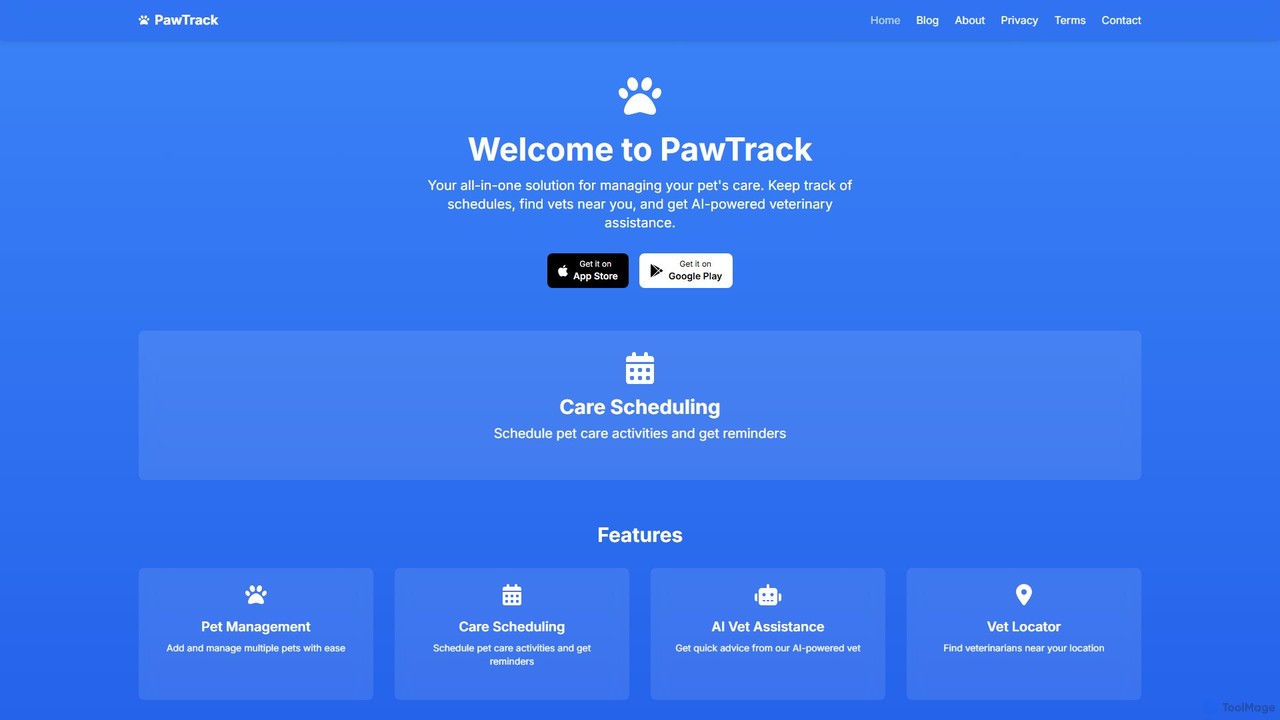
PawTrack is an all-in-one pet care management app that helps you track vaccinations, manage medical records, schedule appointments, and get instant AI-powered vet advice. Designed for dog and cat owners, it simplifies pet care, especially for multiple pets, ensuring your furry family stays healthy and happy.

Medical
Visits 7.4KFavorites 162Likes 156
Anatolink
Free

Anatolink

Anatolink is a free, AI-powered online tool for rapid injury assessment. Using generative AI and an interactive 3D body model, it analyzes your described symptoms to provide instant, comprehensive guidance. In just one minute, receive a preliminary assessment of your physical health concerns, helping you understand the potential injury and decide on the next steps for care. Ideal for sports injuries and everyday aches.

Medical
Visits 6KFavorites 135Likes 141

About Medical

AI Medical tools are a specialized class of software that leverages machine learning and data analysis to support clinical diagnosis, treatment planning, and biomedical research. These tools often utilize advanced algorithms like computer vision to interpret medical images and natural language processing (NLP) to extract insights from electronic health records. Their primary value lies in enhancing diagnostic accuracy, accelerating the drug discovery pipeline, and enabling personalized patient care. By analyzing complex datasets beyond human capacity, they provide critical decision support for healthcare professionals.

Core Features

  • Diagnostic Image Analysis: Automatically detects and highlights potential anomalies such as tumors, fractures, or pathologies in medical scans.
  • Predictive Modeling: Uses patient data to forecast disease progression, identify at-risk populations, and predict treatment outcomes.
  • Drug Discovery Acceleration: Analyzes molecular and genetic data to identify potential drug candidates and predict their efficacy.
  • Clinical Documentation Automation: Employs NLP to transcribe physician-patient conversations and automatically update electronic health records (EHR).
  • Personalized Treatment Planning: Recommends tailored treatment strategies based on an individual's genetic profile and clinical history.

Use Cases

AI Medical tools are primarily used in professional healthcare settings such as hospitals, diagnostic labs, research institutions, and pharmaceutical companies. Key users include radiologists, oncologists, pathologists, clinical researchers, and hospital administrators who rely on these tools for data-driven insights and workflow automation.

How to Choose

When selecting an AI Medical tool, prioritize solutions with regulatory approvals (e.g., FDA clearance, CE mark) and proven clinical validation. Key factors include integration capabilities with existing systems like EHR and PACS, robust data security and privacy compliance (e.g., HIPAA), and the specificity of the algorithm for your medical specialty.

Medical use cases

1

Automated Analysis of Radiological Scans

A radiologist in a busy hospital department uses an AI tool to perform an initial screening of hundreds of chest X-rays and CT scans. The software, trained on millions of images, automatically flags scans with suspicious nodules or other abnormalities. This allows the radiologist to prioritize their review of critical cases, reduce the chance of human error from fatigue, and significantly improve the speed and accuracy of diagnoses.

2

Personalized Cancer Treatment Recommendations

An oncologist treating a patient with a rare form of cancer inputs the patient's genomic data and clinical history into an AI platform. The system analyzes this complex information against a vast database of clinical trials and research. It then generates a report suggesting the most promising targeted therapies, along with predicted efficacy rates, empowering the oncologist to make a more informed, personalized treatment decision.

3

Accelerating Drug Discovery Research

Researchers at a pharmaceutical company use an AI platform to analyze massive datasets of molecular structures and their interactions. The AI predicts which compounds are most likely to be effective and have a low toxicity profile, narrowing down millions of possibilities to a few hundred promising candidates for lab testing. This process significantly reduces the time and cost of the initial discovery phase.

4

Automating Clinical Coding and Billing

A hospital's administrative department implements an AI tool that reads physicians' clinical notes and discharge summaries. The tool uses Natural Language Processing (NLP) to automatically identify diagnoses and procedures, assigning the correct ICD-10 and CPT codes for billing. This minimizes coding errors, reduces claim denials, and accelerates the revenue cycle, freeing up staff for more complex tasks.

5

AI-Assisted Dermatological Screening

A dermatologist in a primary care clinic uses an AI-powered mobile application during patient check-ups. When a patient presents a suspicious skin lesion, the dermatologist captures a high-resolution image. The AI algorithm analyzes the image for patterns associated with melanoma and other skin cancers, providing an instant risk score. This serves as a valuable second opinion, helping the doctor decide whether a biopsy is immediately necessary.

6

Real-time Clinical Trial Matching

A clinical research coordinator uses an AI tool that continuously scans the hospital's de-identified patient records. The AI understands the trial's complex inclusion and exclusion criteria and automatically identifies a list of potential candidates in real-time. This drastically shortens the patient recruitment process, which is often a major bottleneck in clinical research, and helps bring new treatments to market faster.

Medical FAQ

What are AI Medical tools?

AI Medical tools are sophisticated software applications that use artificial intelligence, particularly machine learning, to analyze complex medical data. Unlike general wellness apps, they are designed for clinical and research environments to assist healthcare professionals in tasks like diagnosing diseases from images, predicting patient outcomes, and personalizing treatments. They function as decision-support systems to enhance, not replace, expert medical judgment.

How do I choose a reliable AI Medical tool?

Choosing a reliable AI Medical tool requires careful evaluation. Prioritize the following factors:

  • Regulatory Approval: Check for clearance from bodies like the FDA (in the US) or a CE mark (in Europe), which certifies safety and efficacy.
  • Clinical Validation: Look for peer-reviewed studies that validate the tool's accuracy and performance in real-world clinical settings.
  • System Integration: Ensure it can seamlessly integrate with your existing infrastructure, such as Electronic Health Records (EHR).
  • Data Security: The tool must be compliant with data privacy regulations like HIPAA or GDPR to protect sensitive patient information.

What's the difference between AI Medical tools and Health & Fitness apps?

The primary difference lies in their purpose, user, and regulation. AI Medical tools are designed for clinical use by healthcare professionals (doctors, researchers) to aid in diagnosis and treatment, and are often regulated as medical devices. Health & Fitness apps are consumer-facing tools for tracking lifestyle and general wellness, and typically do not require regulatory approval. Medical tools handle sensitive patient data for clinical decisions, while health apps manage user-provided data for personal goals.

What are the main applications of AI in medicine?

AI has several high-impact applications in medicine. The most prominent include:

  • Medical Imaging: Analyzing scans to detect diseases like cancer or stroke faster and more accurately.
  • Drug Discovery: Speeding up the identification of new drug candidates by analyzing molecular data.
  • Predictive Analytics: Forecasting disease outbreaks or identifying patients at high risk for certain conditions.
  • Personalized Medicine: Tailoring treatment plans based on a patient's unique genetic and clinical data.
  • Administrative Automation: Automating tasks like medical coding, billing, and clinical documentation.

Is patient data safe when using AI Medical tools?

Reputable AI Medical tools are built with data security as a top priority. They are required to comply with strict data protection regulations like the Health Insurance Portability and Accountability Act (HIPAA) in the US. This involves using strong data encryption, secure cloud infrastructure, access controls, and often de-identifying or anonymizing data before it's used for AI model training to ensure patient privacy is maintained.