ToolMage
Sign in

Best 2 Personal Coaching AI tools for Health & Fitness

Popular Personal Coaching AI tools in Health & Fitness include Mewing App and Pathora, helping you work more efficiently.

Pathora

Pathora

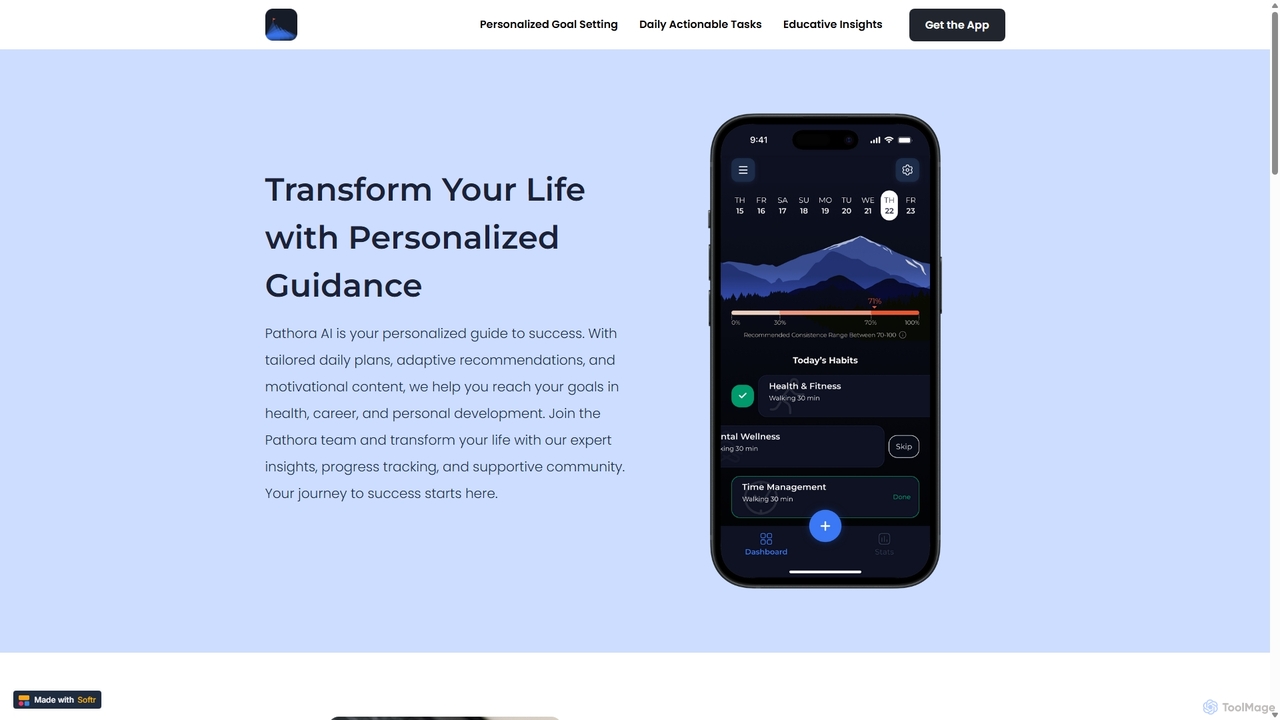
Pathora is an AI-powered personal guide designed to help you achieve success in health, career, and personal development. It provides tailored daily plans, adaptive recommendations, and motivational content to transform your goals into achievements. With expert insights and progress tracking, Pathora acts as your dedicated partner in building positive habits and realizing your full potential.

Personal Development
Visits 6.2KFavorites 140Likes 142
Mewing App
Freemium

Mewing App

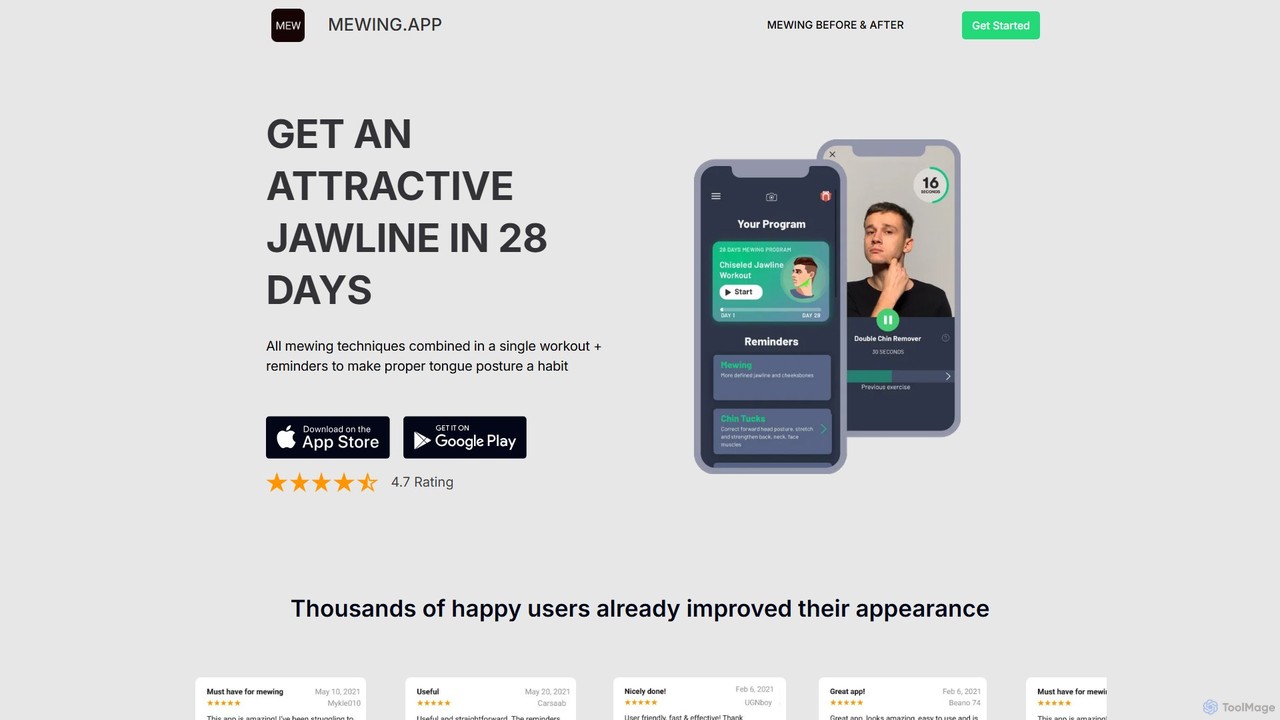
Mewing App is your personal AI-powered mewing coach, designed to help you achieve a better jawline, improve facial structure, and correct posture. Through personalized workouts, progress tracking, and an expert AI chatbot, the app provides a comprehensive guide to mastering the correct mewing technique for visible, long-lasting results.

Personal Coaching
Visits 86KFavorites 131Likes 113

About Personal Coaching

AI Personal Coaching tools are applications that use artificial intelligence to provide personalized guidance and support for achieving personal and professional goals. These platforms leverage conversational AI and behavioral science principles to simulate the experience of working with a human coach. They help users set clear objectives, track progress, and build positive habits in areas like career, wellness, and skill development. This approach offers a scalable and accessible way to engage in self-improvement within the broader Health & Fitness landscape.

Core Features

  • Personalized Goal Setting: AI helps define, track, and adjust specific, measurable goals based on user input.
  • Conversational Guidance: Chatbot-style interfaces provide real-time advice, motivation, and reflective prompts.
  • Behavioral Analysis: Algorithms analyze user data (e.g., journals, activity logs) to identify patterns and offer actionable insights.
  • Curated Content Delivery: Provides relevant articles, exercises, or learning modules tailored to the user's objectives.

Use Cases

These tools are ideal for professionals seeking career advancement, individuals aiming to build consistent habits (like meditation or exercise), and anyone looking for structured self-development. For instance, a team lead can use an AI coach to refine their leadership skills, while a student can use it to improve time management and study habits.

How to Choose

When selecting an AI Personal Coach, consider its area of specialization (e.g., career, wellness, finance). Evaluate the depth of personalization, the quality of the conversational AI, and its underlying methodology (e.g., based on Cognitive Behavioral Therapy). Also, review its data privacy policies, especially given the personal nature of the information shared.

Personal Coaching use cases

1

Enhancing Leadership Skills for Managers

A mid-level manager uses an AI coach to improve their communication and team management abilities. The tool provides daily micro-learning modules, simulates difficult conversations for practice, and analyzes journal entries to offer feedback on leadership style. This structured approach helps them build confidence and apply new strategies directly in their work environment, fostering better team performance.

2

Building Consistent Wellness Habits

An individual struggling with consistency uses an AI coach to establish a daily meditation and journaling routine. The AI helps set a realistic schedule, sends intelligent reminders, and uses positive reinforcement. It analyzes journal sentiment to suggest mindfulness exercises, helping the user reduce stress and improve mental clarity over time, making wellness an integrated part of their lifestyle.

3

Preparing for a Career Transition

A professional looking to switch industries uses an AI coach to navigate the process. The tool helps them identify transferable skills, creates a structured plan for acquiring new knowledge, provides resume-building tips, and offers practice for common interview questions. This structured guidance keeps them focused and motivated throughout their job search, increasing their chances of a successful transition.

4

Improving Public Speaking Confidence

A student or professional uses an AI coach to overcome their fear of public speaking. They can practice speeches with the AI, which provides feedback on pacing, filler words, and clarity. The tool also offers guided exercises for managing anxiety and building a confident stage presence, allowing for safe and repeatable practice before real-world presentations.

5

Mastering Time Management and Productivity

A freelancer or remote worker uses an AI coach to combat procrastination and optimize their workday. The AI helps them break down large projects into manageable tasks using techniques like the Pomodoro method, tracks their focus levels, and identifies productivity patterns. This leads to better work-life balance and more efficient project completion by transforming abstract goals into a concrete daily plan.

6

Developing Financial Literacy

A young adult uses an AI coach to build healthy financial habits. The tool guides them through creating a budget, setting savings goals, and understanding basic investment concepts. Through interactive lessons and personalized check-ins, it helps them track spending, avoid debt, and work towards long-term financial independence in a non-judgmental, educational environment.

Personal Coaching FAQ

What is AI Personal Coaching?

AI Personal Coaching refers to software that uses artificial intelligence to provide personalized guidance for self-improvement. Unlike simple task managers, these tools engage users conversationally to help set goals, track progress, and develop new habits in areas like career, wellness, and personal skills. They function as a digital mentor, offering motivation and data-driven insights to support personal growth.

How do I choose the right AI Personal Coaching tool?

To choose the right tool, first identify your primary goal (e.g., career growth, habit formation). Then, evaluate these factors:

  • Coaching Methodology: Does it align with principles you trust, like Cognitive Behavioral Therapy (CBT) or behavioral science?
  • Personalization Level: How well does it adapt to your specific needs and progress over time?
  • User Interface: Is the conversational experience engaging, intuitive, and easy to use daily?
  • Data Privacy: Review how your personal and sensitive data is collected, stored, and used.
What's the difference between an AI Personal Coach and a standard productivity app?

The key difference is guidance versus organization. A standard productivity app (like a to-do list or calendar) helps you organize tasks. An AI Personal Coach acts as a partner; it helps you understand *why* you might be procrastinating, offers strategies to overcome it, provides motivation, and adapts its advice based on your progress. It focuses on long-term behavioral change, not just short-term task management.

Can AI Personal Coaching replace a human coach?

AI Personal Coaching is best viewed as a complementary tool, not a complete replacement. It offers excellent accessibility, affordability, and 24/7 availability for structured guidance. However, human coaches provide deep empathy, nuanced understanding of complex personal situations, and a level of accountability that AI cannot fully replicate. AI is ideal for specific, well-defined goals, while human coaches excel at navigating complex life challenges.

Who can benefit most from AI Personal Coaching tools?

These tools are highly beneficial for self-motivated individuals who want structured support to achieve specific goals. This includes:

  • Professionals seeking to develop soft skills like leadership or communication.
  • Students aiming to improve study habits and time management.
  • Anyone looking to build positive habits related to health, wellness, or finance.
  • Individuals who find traditional coaching inaccessible due to cost or scheduling constraints.