PicnicHealth
PicnicHealth is an AI-powered platform that collects, digitizes, and unifies all your medical records into a single, comprehensive …
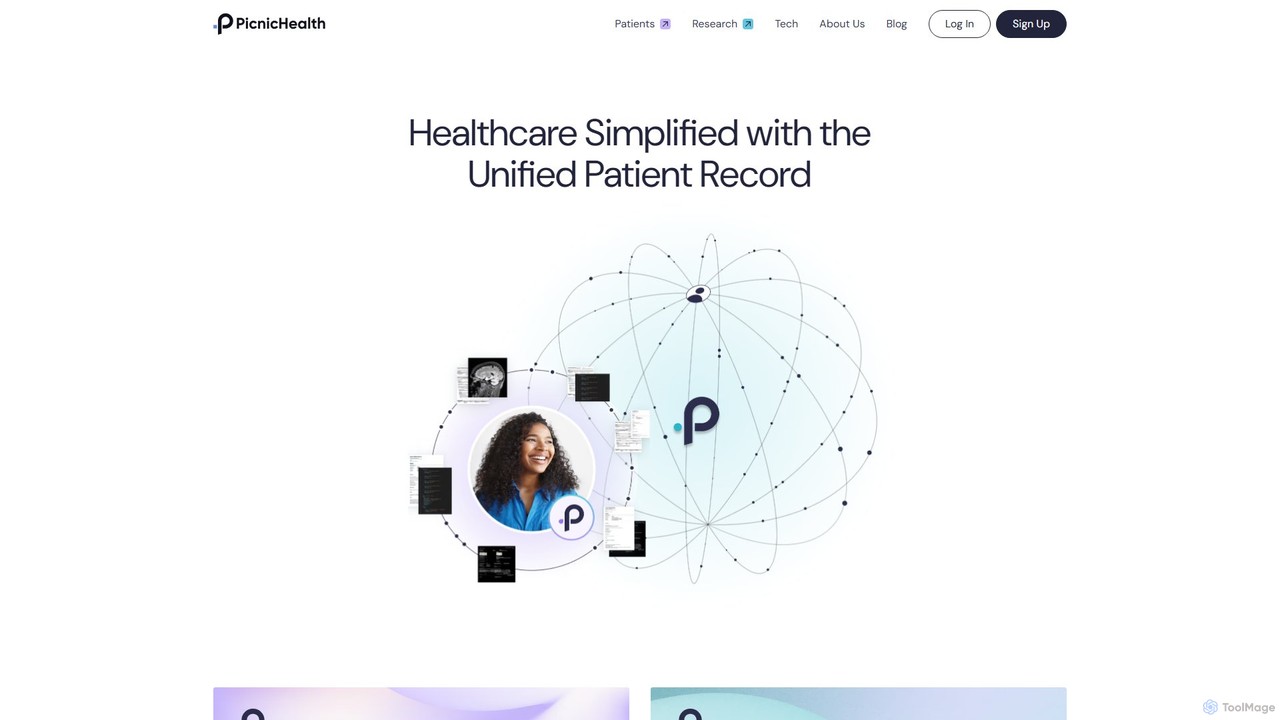
PicnicHealth is an AI-powered platform that collects, digitizes, and unifies all your medical records into a single, comprehensive timeline. It empowers patients to manage their health with an AI assistant and enables life sciences companies to conduct more efficient observational research with high-quality, real-world data.
About Medical Records
Medical Records AI tools are specialized platforms that leverage artificial intelligence to manage, process, and analyze patient health information. These tools utilize natural language processing (NLP), machine learning, and data analytics to transform unstructured clinical notes into structured data, automate documentation, and enhance data accessibility. They significantly improve the efficiency, accuracy, and security of handling sensitive medical data, supporting better clinical decision-making and administrative workflows within the broader health sector.
Core Features
- Automated Clinical Documentation: Transcribes physician-patient interactions and generates structured clinical notes, reducing manual entry.
- Intelligent Medical Coding: Analyzes patient records to suggest accurate diagnostic (ICD) and procedural (CPT) codes for billing and compliance.
- Data Extraction & Structuring: Converts free-text medical notes, lab results, and imaging reports into searchable, standardized data formats.
- Privacy & Security Management: Implements advanced encryption, access controls, and compliance checks (e.g., HIPAA) to protect sensitive patient information.
- Clinical Decision Support Integration: Provides relevant patient history summaries and alerts based on analyzed record data to assist healthcare professionals.
Applicable Scenarios
Healthcare providers, hospitals, clinics, and research institutions utilize AI medical records tools to streamline operations and improve patient care. For instance, clinicians can use these tools to quickly access comprehensive patient histories, while administrative staff can automate billing and compliance checks. Researchers benefit from efficient data abstraction for clinical trials and epidemiological studies, ensuring data integrity and accelerating insights.
How to Choose
When selecting an AI medical records tool, prioritize robust data security and HIPAA compliance. Evaluate its integration capabilities with existing Electronic Health Record (EHR) systems and other healthcare IT infrastructure. Consider the accuracy and scope of its NLP capabilities for documentation and coding, and assess its scalability to handle growing data volumes. User-friendliness and comprehensive training support are also crucial for successful adoption by medical staff.

Medical RecordsUse Cases
Automated Clinical Note Generation
For busy physicians and nurses, AI medical records tools can listen to patient consultations or review dictations to automatically generate structured clinical notes. This significantly reduces the time spent on manual documentation, ensuring accuracy and completeness while allowing healthcare professionals to focus more on patient interaction.
Optimizing Medical Coding and Billing
Medical coders and billing specialists leverage AI to analyze complex patient records, including diagnoses, procedures, and treatments, to suggest the most accurate ICD-10 and CPT codes. This automation minimizes coding errors, accelerates the billing cycle, and improves revenue integrity for healthcare facilities.
Efficient Patient Data Abstraction for Research
Clinical researchers utilize AI tools to rapidly extract specific data points—such as treatment outcomes, adverse events, or demographic information—from vast repositories of unstructured patient records. This accelerates the process of identifying eligible patients for trials, conducting retrospective studies, and generating real-world evidence.
Enhanced Secure Access and Information Sharing
Healthcare administrators deploy AI-powered systems to manage granular access permissions for patient records, ensuring only authorized personnel can view sensitive data. These tools also facilitate secure, compliant sharing of records between different departments, specialists, or external healthcare providers, improving care coordination while maintaining privacy.
Proactive Anomaly Detection in Patient Histories
Clinicians and data analysts use AI to scan patient medical records for inconsistencies, missing information, or unusual patterns that might indicate potential errors in diagnosis, treatment plans, or data entry. This proactive detection helps prevent medical errors, improves patient safety, and ensures data quality.
Personalized Patient Health Summaries
Care coordinators and patient navigators employ AI to synthesize complex medical histories into concise, easy-to-understand summaries for patients and their families. This improves patient engagement, helps them comprehend their health status and treatment plans, and facilitates better communication between patients and their care teams.